
First published June 2011
Shakin’ With The Devil – The Pirates
The Skuzzies – Easy Action
A tale of two power trios. Subtitled ‘The Best Of The Pirates 1977-79’ two CDs contain 52 tracks, comprising all three of the bands LPs plus unreleased tracks, B-sides and radio ads. Also included is a well-illustrated full colour booklet with sleeve-notes by long-term supporter Roy Carr. The numerous live tracks attest to a band most at ease onstage where Mick Green appeared to play lead and rhythm guitar simultaneously. The lack of quality original material becomes increasingly apparent, but there are enough rocking covers to compensate with Skull Wars out-takes The Witch Queen of New Orleans and Lonesome Train particularly impressive.
Coming bang up-to-date The Skuzzies are tirelessly promoted by their mentor Nina Antonia who contributes sleeve notes here. So the sonic resemblance to vintage Heartbreakers is unsurprising with singer and guitarist Jerome Alexander even sporting a Thunders haircut. ‘The Unknown Principle’ offers a welcome change of pace and producer Darren Jackson achieves a more varied sound on this and subsequent track ‘Are You Sleeping?’ The trio format allows Laura Clarke to play some agile bass whilst drummer Nik L’e West (oh yes) respects the space he is given by not over-playing. The moody ‘Heartache Accelerates’ suggests the Skuzzies could profitably expand beyond pop-punk into something with more darkness and light.


First published March 2009
The Only Ones / Even Serpents Shine / Baby’s Got A Gun (All Sony)
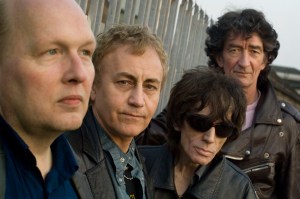
Finally Sony have re-released remastered versions of the first three Only Ones LPs on CD and yes, it was worth the wait. So ditch all previous versions – these are the keepers. The re-mastering by Alan Mair and Ray Staff allows these glorious songs to emerge in their full glory (and exposes a couple of clinkers to the cold light of day). The first two records can be seem as a continuum – songs pre-written before going into the studio, tight arrangements, nominally produced by the band themselves (actually by Alan and Peter Perrett). The bonus tracks here scoop up the band-released first single Lovers of Today/Peter And The Pets and some high-quality B-sides such as As My Wife Says and This Ain’t All…. Much changed with LP Number 3, Baby’s Got A Gun. Accepting the need for an external producer the band pushed for Martin Hannett but ended up with Colin Thurston, Sony’s choice on the basis of his work with Duran Duran. A version of ‘The Big Sleep’ was recorded with Hannett and is appended to this CD so we can judge for ourselves and it’s no contest: Hannett would have made the better record with more attack and John Perry’s guitar more to the fore. However by this time both Hannett and at least half the band were in a state of disarray so Thurston was undoubtedly the safer choice. And any producer would have struggled with unconvincing material such as Re-Union and Castle Made Of Sand. Despite this the CD is still essential, if only for The Big Sleep and Why Don’t You Kill Yourself plus the lead-off single Trouble In the World, currently a highlight in the re-invigorated bands live set a mere 29 years on. Plus the CD actually features the title track, inexplicably left off the original release. Presentation on the three CDs is superb – great vintage photos and articles and sleeve notes by Rod Liddle (yes, that Rod Liddle) who brackets the band with Big Star as the ultimate should-have-beens. Recent live performances by the Only Ones have showcased some impressive new Peter Perrett songs which means these three CDs are work-in-progress rather an obituary. Buy buy buy.
First published March 2008
Tricky gig, Koko. Euphoria, disbelief and media hype surrounded Shepherds Bush Empire last June but tonight was considerably more low-key, with virtually no advertising and early doors to accomodate a teenage disco later on.
Arriving at Koko (The Music Machine to all us ageing punkrockers) for a 5pm soundcheck proved to be a dispiriting experience. Whilst a lovely building, by daylight any tattiness in the decor is all too visible and the place reeks of loo cleaner (bring back smoking!). Spirits were not lifted by an in-house soundcrew who seemed not arsed and a monitor mix which gave Kellie real concerns.
No support band tonight so a marathon near-two hour DJ slot from me. The band were late (no!) so I tried to entice them from the dressing room with Beck’s Bolero which got a round of applause from the now-packed audience…but no band. They strolled on a couple of numbers later to a reassuringly raucous welcome.
First impressions were that Peter’s voice had strengthened although he seemed frail towards the end of the set, sitting on the riser at one point. The rhythm section were in vintage form – Kellie’s Bo Diddley shuffle throughout Me And My Shadow was worth the price of admission on its own. Being positioned stage left I had a great view of Alan’s bass technique and I realised he frequently strums rather than picks his nifty Les Paul Sunburst bass. John Perry played some phenomenal leads on his white Strat and Les Paul Junior, with the coda to She Dreamt She Could Fly outstanding.
A smattering of new material (Black Operations, Is This How Much) livened the set and showed great promise – look out for at least one new song on Jools Holland this week. Best song of the set for me was the encore, Transfixed. Originally released by The One as a B-side to Woke Up Sticky the Only Ones live version features three-part backing vocals and some emergent guitar lines which really nailed the melody. Transfixed was preceded by a pause whilst Chris and Manny swapped a defective Fender amp. The continuing applause which bridged this slight hiatus indicates the genuine affection in which Koko held the Only Ones.
Simon Wright
Playlist Before The Band
Mother’s Little Helper – Rolling Stones
Don’t Look Back – Remains
Police On My Back – Clash
Coast To Coast – Ducks Deluxe
Whole Wide World – Wreckless Eric
Children Of The Sun – Misunderstood
Rainbow Chaser – Nirvana
(If You Think You’re) Groovy – PP Arnold / Small Faces
Soda Pressing – Boys
Gobbing On Life _ Alberto Y Lost Trios Paranois
Open My Eyes – Nazz
You’re Gonna Miss Me – 13th Floor Elevators
Fall On You – Moby Grape
Bangkok – Alex Chilton
Do You Love Me? _ Heartbreakers
I Had Too Much To Dream Last Night – Electric Prunes
I Ain’t No Miracle Worker – Brogues
The Cops Are Coming – Criminals
Did You No Wrong – Sex Pistols
White Light White Heat – Velvet Underground
I Want You – Troggs
Why Are We Sleeping? – Soft Machine
This Perfect Day – Saints
Jail Guitar Doors – Clash
Desdemona – John’s Children
7 and 7 Is – Love
Final Solution – Pere Ubu
When I’m Bored – Snatch
Rosalyn – Pretty Things
Gloria – Patti Smith
See Emily Play – Pink Floyd
Looking At You – MC5
I Saw Her Standing There – Pink Fairies
(I’m Not Your) Stepping Stone – Monkees
Pushing Too Hard – Seeds
Sometimes Good Guys Don’t Wear White – Standells
Give Him A Great Big Kiss – Shangri Las
I Need You – Kinks
Manic Depression – Jimi Hendrix Experience
Beck’s Bolero – Jeff Beck Group
96 Tears – ? and the Mysterians
Playlist After The Band
My Way Of Giving – Small Faces
Memo From Turner – Mick Jagger
Playlist – Aftershow
Cherry Bomb – Runaways
Little Queenie – Flamin Groovies
Understanding – PP Arnold / Primal Scream
Paper Sun – Traffic
Transparent Day – West Coast Pop Art Experimental Band
Let’s Loot The Supermarket (Again) – Mick Farren and the Deviants
Seven Deadly Finns – Eno
32-20 – Charlatans
2000 Light Years From Home – Rolling Stones
Under My Thumb – Who
Little Girl – Syndicate Of Sound
White Rabbit – Jefferson Airplane
Child Of The Moon – Rolling Stones
I Got A Line On You – Spirit
Psychotic Reaction – Count Five
Tin Soldier – Small Faces
Do Ya – Move
Fire – Jimi Hendrix Experience
Don’t Bring Me Down – Pretty Things
We Love You – Rolling Stones
Roadhouse Blues – Doors
Baby Please Don’t Go – Them
Milk Cow Blues – Chocolate Watch Band
Woolly Bully – Sam The Sham And the Pharoahs
Billy’s Bag – Billy Preston
You Got Me Hummin – Sam and Dave
Call Me Lightning – Who
Route 66 – Count Bishops
Parchman Farm – John Mayall
C’mon C’mon – Von Bondies
First published January 2010
This film does something that is long overdue – it reinstates Dr. Feelgood to their rightful position as pioneers of all that is loud, fast and spiky. So it is good to hear from Glen Matlock, Joe Strummer, Clem Burke, Richard Hell and Andy Gill that far from starting from year zero, punk was inspired hugely by these “four guys who looked like they just done a bank-job”, roaring out of Canvey Island to terrorise London pubs and clubs before disappearing back into the “Thames Delta”.
What Julien Temple achieves here is to give a vivid sense of ‘terroir’ – that is he explains how the weirdly desolate geography and isolation of Canvey Island gave rise to a band who embodied insularity and a sense of being apart in both their music and in their attitude. He is aided by some evocative early footage of the band and fifth member Chris Fenwick at school and in the scouts which shows how the band turned into a tight-knit gang of five, via a couple of jug bands and some busking. Extensive recent interviews with Wilko Johnson, The Big Figure and Sparko are interspersed with older footage of Lee Brilleaux, supplemented by valuable insights from Lee’s widow and mother. Temple incorporates rather too much of his trademark ‘Brit-noir” footage, which if used more sparingly could have had a greater impact.
This is frustrating because the footage of the Feelgoods on stage is without exception stunning and there could have been more of it. Clips of Going Back Home, Back In the Night (Lee on slide), Roxette, I’m A Man and Riot In Cell Block Number Nine hint at their awesome live power. Central to this is the tension between Lee and Wilko – Lee in a very off-white suit, Willko in black. Lee immobile, seemingly oblivious to Wilko’s psychotic skittering. Much of this footage comes from mainland Europe, where by 1975 they were filling stadia. Riot… is a beautifully staged set-piece: spotlights raking the crowd as Wilko machine-guns them with his Tele (yup, just like Wayne Kramer used to). Elsewhere there is hilarious footage of a long-haired Wilko protesting about more oil refineries being built on Canvey, the band backing Heinz at the legendary Wembley Rock’n’Roll Festival in ’72 and the revelation that Lady Di was a frequent Feelgoods gig-goer when they played the Kensington.
The end is brutal. Holed up at Rockfield to record album number 4 tensions grew between chief songwriter and speed-freak Wilko and the rest of the band, by now solid boozers. Wilko introduced a song called Paradise, about his love for both his wife Irene and his mistress Maria. The other four freakedout at such outré behaviour and demanded that the song be replaced by Lew Lewis’ Lucky Seven. Wilko refused to back down and was sacked / leaves. Sadly both sides now regret the schism. Wilko admits candidly “I did have the misery a lot of the time…I was insufferable”. Whilst replacement guitarist Gypie Mayo was waiting in the wings the band never reached such artistic peaks again, although commercially they continued to do well for years. Temple wisely ends the tale here, restoring the Feelgoods to their rightful position as the missing link between the Yardbirds and the Clash, pioneers of manic energy at a time when all else lay fallow.
First published June 2009
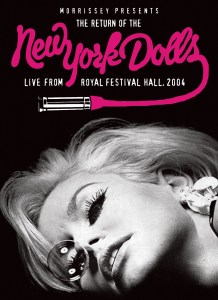
Even the absence of tubes could not stop a select band of Dolls enthusiasts gathering in the nether reaches of the Barbican Centre to watch the film ‘New York Doll’, preceded by a chat between Dolls aficionado Nina Antonia and Max Decharne, writer and lead singer of The Flaming Stars.
The film is a fascinating depiction of the rise, fall and resurgence of Arthur ‘Killer’ Kane, whos bass playing did so much to anchor the Dolls effervescence. Following the demise of the Dolls Arthur went through hard times until finding a second career as a Mormon librarian in Los Angeles. As Max pointed out, what makes this film so special is that it was made by two Mormon film-makers and so lacks many of the clichés that inhabit most (if you will) rockumentaries. The climax of the film is when in 2004 the surviving Dolls regroup to play Morrissey’s Meltdown in London. Intimate footage of the rehearsals and preparations show the importance of the friendships within the band. Having lost his mother and left his father at an early age it is tempting to see the Dolls as Arthur’s first family and the Mormon church as their successors.
The Meltdown shows were a triumph, and Arthur’s enjoyment at being back with his band after 30 years is wonderful to witness. There is a sad coda to the film as a few weeks after Meltdown Arthur was diagnosed with Leukaemia and he died a couple of days later.
Still, remember him this way. The last music is the film is the immortal bass intro to ‘Private World’ over which David JoHansson introduces him as “The Miracle of God’s Creation…Arthur ‘Killer’ Kane.” The strength of ‘New York Doll’ is that it gives us glimpses into that Private World. Well done Nina, Max and Jay Clifton for setting up such an entertaining evening.
For more info on ‘New York Doll’ go to http://www.onepotatoproductions.com/NewYorkDoll/home.html
First published December 2007
After the acres of newsprint devoted to the return of Led Zeppelin what else is there to say ? Simply this – I am not a huge fan of the band and I was very impressed. The Zeppelin I grew up with was the late ‘70s version, endless sets and extended drum solos. The version I saw on Monday night was like something from the late ‘60s – pared down and purposeful. As an example Robert Plant no longer sings ‘Gonna Give You Every Inch Of My Love” in ‘Whole Lotta Love’ but now sings ‘You Need Love’, reverting back to the source Willie Dixon number and leaving the cock-rock imagery behind. Jason Bonham was a revelation, bringing more of a swing to the rhythm than did his father, this being especially noticeable on set-highlight ‘Kashmir’. Page looked sharper than I have seen him in years and the keyboard playing of John Paul Jones gave the likes of ‘Trampled Underfoot’ some welcome funk. Yes they will now tour and they will undoubtedly play more prestigious venues but I doubt that this version of the band will ever play with as much commitment and concentration as we saw on Monday.
Question of the night: how come Ronnie Wood got second billing on all official merchandise – programmes, T shirts, posters – when he appeared to play absolutely no part in proceedings?
Gobsmacking postscript. Our seats were in the very top tier, to one side of the stage. Next to us was a completely unused block of maybe 100 seats with a great view – judge for yourself from the pictures I took. Extraordinary that these seats were left vacant and we ended up with a row to ourselves!.
See Jeremy Paxman rock out to ‘Rock & Roll’ on BBC2 Newsnight www.youtube.com/watch?v=a8v_Rqi4B-E
First published August 2010
You could reasonably expect that Ronnie’s first solo recording since his high profile marriage break up and the resultant media attention would be rueful, angry, thoughtful, regretful, vicious, heartbroken or jubilant. Sadly it is none of these things but is instead Professional. Each of the 12 tracks is competently written, produced to give a contemporary rock sound and effectively played by an assortment of high-profile Famous Friends. What the record lacks is a raison d’etre. Lyrics have never been Ronnie’s forte (one of the reason why Stewart-Wood or Wood-Lane credits were always so welcome) and the words here are Dull.
Generally the soul-influenced slowies (Catch Me, Tell Me Something) come off better than the Modern Riff Rockers (Thing About You, I Don’t Think So). Willie Dixon’s Spoonful is taken a fraction too fast, keeping the rock but losing the roll. The Eastern guitar effects on the track 100% stands out – playing electric sitar on Paint It Black every night has clearly left its mark. The final track Forever will be of interest to the Ronnie Wood completist, if such a thing exists. Originally written and recorded for ‘I’ve Got My Own Album To Do’ in 1974 but not included, a live version was included on the First Barbarians Live At Kilburn DVD from the same year. Re-recording the song 36 years later suggests either that it has emotional significance to Ronnie, or that he has run out of songs.
What this record demonstrates in spades is that at least in the studio Ronnie Wood can come up with a thoroughly well-played and competently assembled record, which may just be the point As Mick Jagger plans the inevitable Stones 50th Anniversary world tour the news that Ronnie still feels like playing will come to many as a great relief.
First published February 2008
Hillside Blues – Vinyl Gang Productions VGP 214 2CD set (1999)
For the true Stones obsessive (and we are many) it is extremely frustrating that Mick Jaggers obsession with proving the Stones continued relevance appears to preclude any reappraisal of their glorious past. Their peers seem to manage it with the Beatles, Who and Led Zeppelin all exhuming their vaults to both critical acclaim and financial benefit.
Where Jagger does have a point is that few bands current output could withstand comparison to the golden era of Beggars Banquet. Let It Bleed, Sticky Fingers and Exiles on Main Street. All four were released between December ‘68 and May ‘72, a period of unparalleled creativity for the band. Along the way much good studio material was recorded but not released and it is this treasure trove that VGP have investigated with Hillside Blues. The 30 tracks here are not quite definitive – an inexplicable omission is Did Everybody Pay Their Dues? (an early version of Street Fighting Man) and there are some interesting alternate versions not represented here such as the version of You Got The Silver with Jagger on lead vocals (Keith’s is better). However Hillside Blues represents the most compact and concise over-view of this era to date, and all in stunning sound quality. It certainly dwarfs authorised Rolling Stones collections as Metamorphosis and Rarities, the latter being so uninspired it could be prosecuted under the Trades Description Act.
CD1 is a re-release of the Trident Mixes collection and thus features new-boy Mick Taylor extensively and to great effect. He is all over opening track Jiving Sister Fanny and the guitar interplay on I’m Going Down and Stevie Wonder’s I Don’t Know Why is first rate. The latter has a particular place in Stones history as it is the track that the band were recording at Olympic Studios in Barnes when word came through of Brian Jones death. The other stone-classic on this disc is a 9.46 slow blues version of Two Trains (aka Still A Fool). Originally written by Muddy Waters in 1951 the band turn in a great two-guitars-one-harmonica performance along the lines of Little Red Rooster and too few others. “Essential” opines Martin Elliott in his definitive study ‘The Rolling Stones – Complete Recording Session’ (Cherry Red, 2002). The rest of the disc is largely instrumental, with occasional guide vocals from Jagger on Travellin’ Man. These tracks allow Mick Taylor to stretch out and he is excellent throughout – the track Leather Jacket later popped up again on his solo studio album.
CD2 is a collection of out-takes and alternate versions associated with the Exiles LP. Your companion to untangling the history of these tracks should be John Perry’s essential book in the Schirmer Books Classic Rock Albums series (1999). In general the versions here are simpler and less overdubbed than the tracks that were officially released. The demo for All Down the Line is just Keith Richards acoustic with an occasional guide vocal from Jagger and it totally rocks. Good Time Woman is an early version of Tumbling Dice taken at a faster pace with new lyrics. Loving Cup is a revelation – an exuberant vocal from Jagger (who actually sounds pissed) and terrific interplay between the two lead guitars and Nicky Hopkins sparkling piano. This track really swings. The previously unreleased tracks Hillside Blues, Highway Child and I Ain’t Lying do not disappoint in such illustrious company.
Stones fans should not be denied material of this calibre. We’ve all paid through the nose for records, gigs, travel and (in some cases) ludicrous baseball caps – now is the time for a sensitive re-release programme which pairs each official LP with a companion CD of out-takes and alternates. Get Rhino to do it. I’ll do it. But this stuff demands to be heard.
First published August 2007
The Stones Conquer Slane Castle
So we’ve flown from London to Dublin, driven to some village in the middle of nowhere and stood in a muddy field place packed like sardines for 8 hours in the soft Irish rain…to watch one old geezer touch another old geezer on the neck? Absolutely. And it was money and time well spent. Here’s why.
At this stage in the game going to see the Stones is about many things of which the music is only one strand. What fascinates me is the relationship between the three frontmen – Mick, Keith and Ronnie. It is worth going through the aforementioned to see the drama played out close up and personal.
Reports of recent gigs have put Mick in the ascendent with Keith subdued and Ronnie doing most of the guitar work. Tonight Keith certainly came roaring out of the traps with an extraordinary high kick that accompanied the first chords of set-opener ‘Start Me Up’ but then after staking out his territory he rather laid back until a beautifully judged version of ‘Dead Flowers’. Here Mick played effective acoustic, Ronnie played lead and Keith provided those flaky harmonies we so rarely hear now the touring band includes more ‘professional’ back up singers. (photo in Pictures section). By some bizarre coincidence I’d rented The Big Lebowski two days earlier, which features ‘Dead Flowers’ over the end-credits. I love it when synchronicity kicks in like that
What happened next was that Keith metaphorically woke up, shook himself down and drove the band into a rocking version of ‘All Down The Line’ which would not have disgraced the legendary ’72 USA tour. Suitably challenged Mick delivered his best vocal of the evening – every word clear, no pointless running around or faux-ballet moves – totally focused on the job in hand. Charlie was good tonight. Kudos all round.
The next act in the drama came during the band intros. It used to be Charlie whose name was chanted endlessly by the crowd. Now it’s Ronnie and you could see Mick getting more pissed off as the chanting goes on. Ronnie plays up to it and eggs the crowd on. Mick has a quiet word. Ronnie looks totally unabashed (has Ronnie ever looked abashed in his life?). Very visible proof of his new-found importance in the band.
Which was emphasised by the two Keith solo songs that followed. This is traditionally the time when those present to hear the Greatest Hits go for a piss. With 70,000 people between us and the nearest latrine that wasn’t an option tonight. Plus to me Keith’s solo spot is usually a show highlight. And so it proved tonight. ‘You Got The Silver’ emphasises Keith’s current limitations in that he played no guitar but he sang, and sang quite beautifully. Last time I saw Keith do this song he sang and played guitar, suggesting that his accident and subsequent surgery have taken their toll. Whatever, Ronnie took up the slack and played magnificent acoustic slide country blues, even waiting for Keith to come on vocals a couple of times in order to keep the song on track (photo in Pictures section)
And just as the song was finishing Keith reached out to Ronnie – I thought Keith was going give Ronnie a kiss but instead Keith touched the side of Ronnie’s neck, briefly – a sort of “after everything we’ve been through you’re still here to help me” thing and a touching moment of tenderness between two of the craggiest blokes on the planet.
There was a final act in the soap opera that is the closing stages of the Bigger Bang tour. With no ‘Gimmie Shelter’ in the set Lisa Fishers vocal showcase is a call and response session with Mick on a (very good) cover of James Brown’s ‘I’ll Go Crazy’. Mick is doing the whole JB thing of finishing the song, then singing another bit, then stopping, then singing another bit and so on. To 69,999 people this is good fun. To one person it’s too much. That one person is Keith Richards and he’s carrying a Les Paul Junior. Mick’s working up to another ‘I’ll Go Crazy’ when a maximum r’n’b riff from Keith kicks the band into ‘Tumbling Dice’ and a visibly surprised Mick has to reconsider his options. Funniest thing I saw all night.
To be continued (concluded?) at the 02 on Sunday….see you there
Full review and setlist at http://www.iorr.org/tour05/slane.htm
First published September 2009
I imagine that most movies look pretty good when you’re lounging in a very capacious seat in the screening room of the Soho Hotel, cold Mexican beer in hand. And thanks to the largesse of Warner Home Video I had to review the new version of Gimme Shelter under this handicap. However Gimme Shelter would still be a great movie if you watched it on my steam-driven portable telly on nothing stronger than PG Tips.
The new version improves considerably on what’s gone before – the cinema release from the early 70’s (saw it on Shaftesbury Avenue for 2/6) and the Criterion DVD release from 2000. The remastered sound allows the Stones concert performances to leap out of the speakers – the closing live version of the title track is about the most savage version I’ve ever heard them do. But the improved definition also allows greater separation and clarity so that the melodicism of Mick Taylor’s solo on Love In Vain (accompanied by some slo-mo shots of Jagger at MSG) really comes through.
Picture quality is further improved over the Criterion release altho we are still a long way from HD. Filmed on the run by the Maysles brothers using hand-held 16mm film the grainy quality of much of the footage works in favour of the film, giving it a cinema verite that makes the final denouement even more effective.
MSG ‘69 concert performances of Jumping Jack Flash and Satisfaction get the film off to a rousing start and made me want to start moving my feet and clapping my hands. Thirty-six years later it is amazing how low was the stage and how casual the security – Jagger gets regularly molested by girls just jumping out of the audience. Then to a press conference where Jagger, stung by criticisms of excessive ticket prices on their current tour, rashly announces the date of a free concert (without having a confirmed venue). From there we see the increasingly frantic negotiations that culminated with the highly-unsuitable Altamont Raceway ending up as the venue by default, interspersed with great footage of the Stones recording at Muscle Shoals – a cool alternate Wild Horses soundtracks a close-up of Keith’s outrageous snakeskin boots.
Even the enjoyment of the earlier live songs has been undermined by our knowledge of the terrible things to come. Cosy Woodstock-y shots of the stage being hastily erected and the freak-flag crowd beginning to arrive are undermined by Jagger being hit by a fan en route from helicopter to Portakabin and then the arrival of the Visgoths, aka the San Francisco branch of the Hells Angels. The Angels had been paid $500 in beer to guard the stage. In the aftermath of Altamont the Stones took a lot of stick for this decision, but they had used UK Hells Angels at Hyde Park earlier in the year very effectively. The relationship between the Angels and the Stones and their audience was clearly uneasy from the start – one of the most arresting images is of Angels Leader Sonny Berger looking at Jaggers onstage prancing with a sneer of total contempt. Under the circumstances the Stones performance is remarkably good –the infamous murder of Meredith Hunter happens during a taut Under My Thumb. The response from the Stones defines their power base – Jagger starts wittering on about “Brothers and Sisters’ to no discernible effect whilst Keith Richards tells the Angels to cut it out.
We see the footage of the murder in the company of Jagger and Watts, who are shown reviewing the edits made by the Maysles and director Charlotte Zwerin. Charlie is clearly rattled and attempts to put things in perspective but Jagger has no words and leaves the editing suite as soon as he can. To see a control-freak like Jagger ineffectual onstage and speechless thereafter is a rare glimpse of his human fallability.
The paranoia, hostility and downright unpleasantness means that Gimme Shelter has dated little (compare and contrast to the new edition of Woodstock). However for the keen Stones fan there is wonderful behind the scenes footage of their first tour with Mick Taylor, some rousing onstage performances and a great sense of atmosphere. But not exactly stardust or golden.

