New vinyl LPs from The Who, New York Dolls and Mott The Hoople out now!
Order from http://www.1960s.london
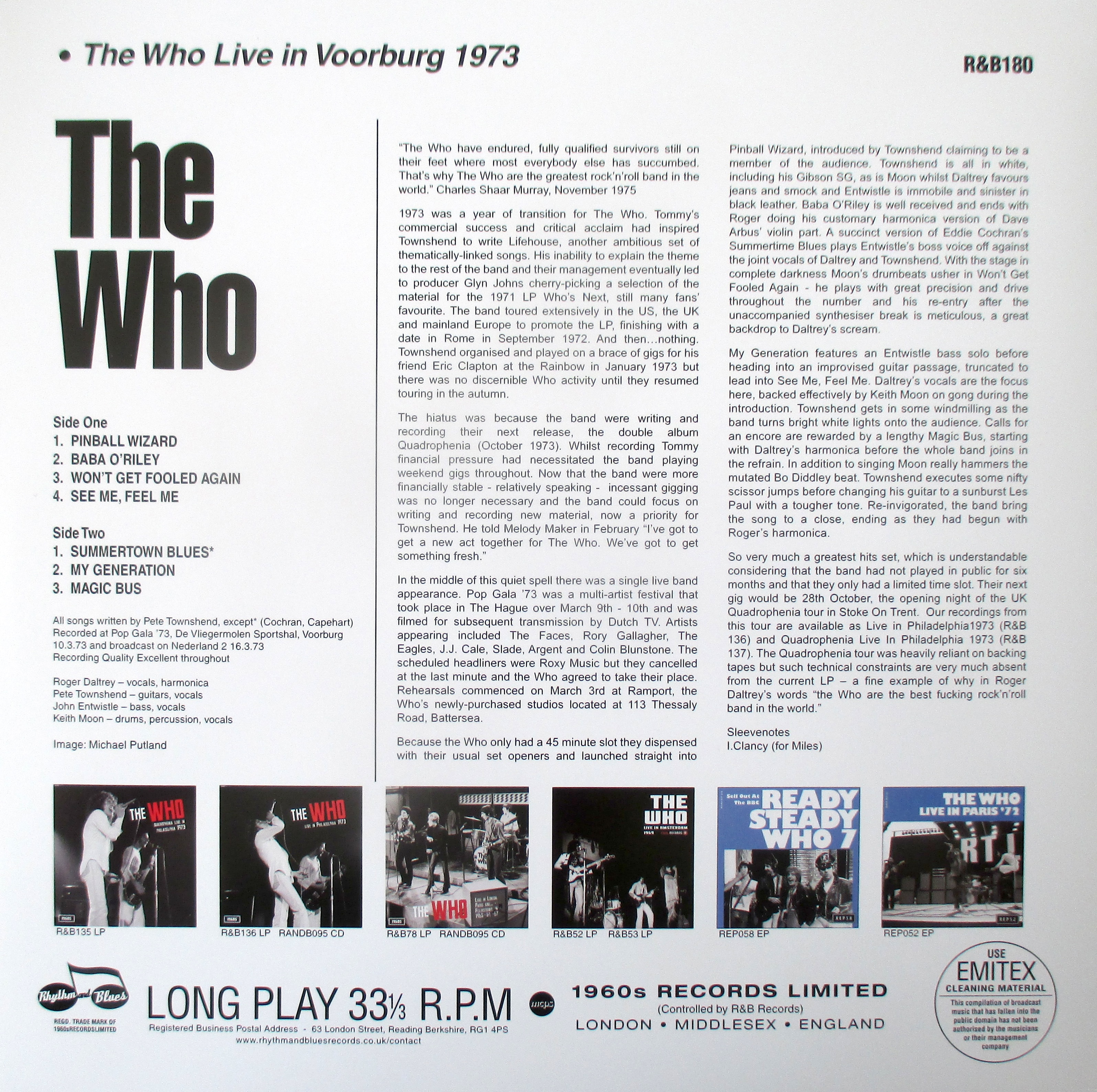
Live In Holland 1973
The Who
Side One
- Pinball Wizard
- Baba O’Riley
- Won’t Get Fooled Again
- See Me, Feel Me
Side Two
- Summertime Blues
- My Generation
- Magic Bus
All songs written by Pete Townshend, except for Side Two, Track 1 (Cochran, Capehart)
Recording Details
All tracks recorded live on Wednesday March 10th at Pop Gala ’73, De Vliegermolen Sportshal, Voorburg and broadcast on Nederland 2 Dutch television on Friday 16th March
Recording Quality
Very Good
Personnel
Roger Daltrey – vocals, harmonica
Pete Townshend – guitars, vocals
John Entwistle – bass, vocals
Keith Moon – drums, percussion, vocals
Sleevenotes
“The Who have endured, fully qualified survivors still on their feet where most everybody else has succumbed. That’s why The Who are the greatest rock’n’roll band in the world.”
Charles Shaar Murray, November 1975
1973 was a year of transition for The Who. Tommy’s commercial success and critical acclaim had inspired Townshend to write Lifehouse, another ambitious set of thematically-linked songs. His inability to explain the theme to the rest of the band and their management eventually led to producer Glyn Johns cherry-picking a selection of the material for the 1971 LP Who’s Next, still many fans’ favourite. The band toured extensively in the US, the UK and mainland Europe to promote the LP, finishing with a date in Rome in September 1972. And then…nothing. Townshend organised and played on a brace of gigs for his friend Eric Clapton at the Rainbow in January 1973 but there was no discernible Who activity until they resumed touring in the autumn.
The hiatus was because the band were writing and recording their next release, the double album Quadrophenia (October 1973). Whilst recording Tommy financial pressure had necessitated the band playing weekend gigs throughout. Now that the band were more financially stable – relatively speaking – incessant gigging was no longer necessary and the band could focus on writing and recording new material, now a priority for Townshend. He told Melody Maker in February “I’ve got to get a new act together for The Who. We’ve got to get something fresh.”
In the middle of this quiet spell there was a single live band appearance. Pop Gala ’73 was a multi-artist festival that took place in The Hague over March 9th – 10th and was filmed for subsequent transmission by Dutch TV. Artists appearing included The Faces, Rory Gallagher, The Eagles, J.J. Cale, Slade, Argent and Colin Bluntstone. The scheduled headliners were Roxy Music but they cancelled at the last minute and the Who agreed to take their place. Rehearsals commenced on March 3rd at Ramport, the Who’s newly-purchased studios located at 113 Thessaly Road, Battersea.
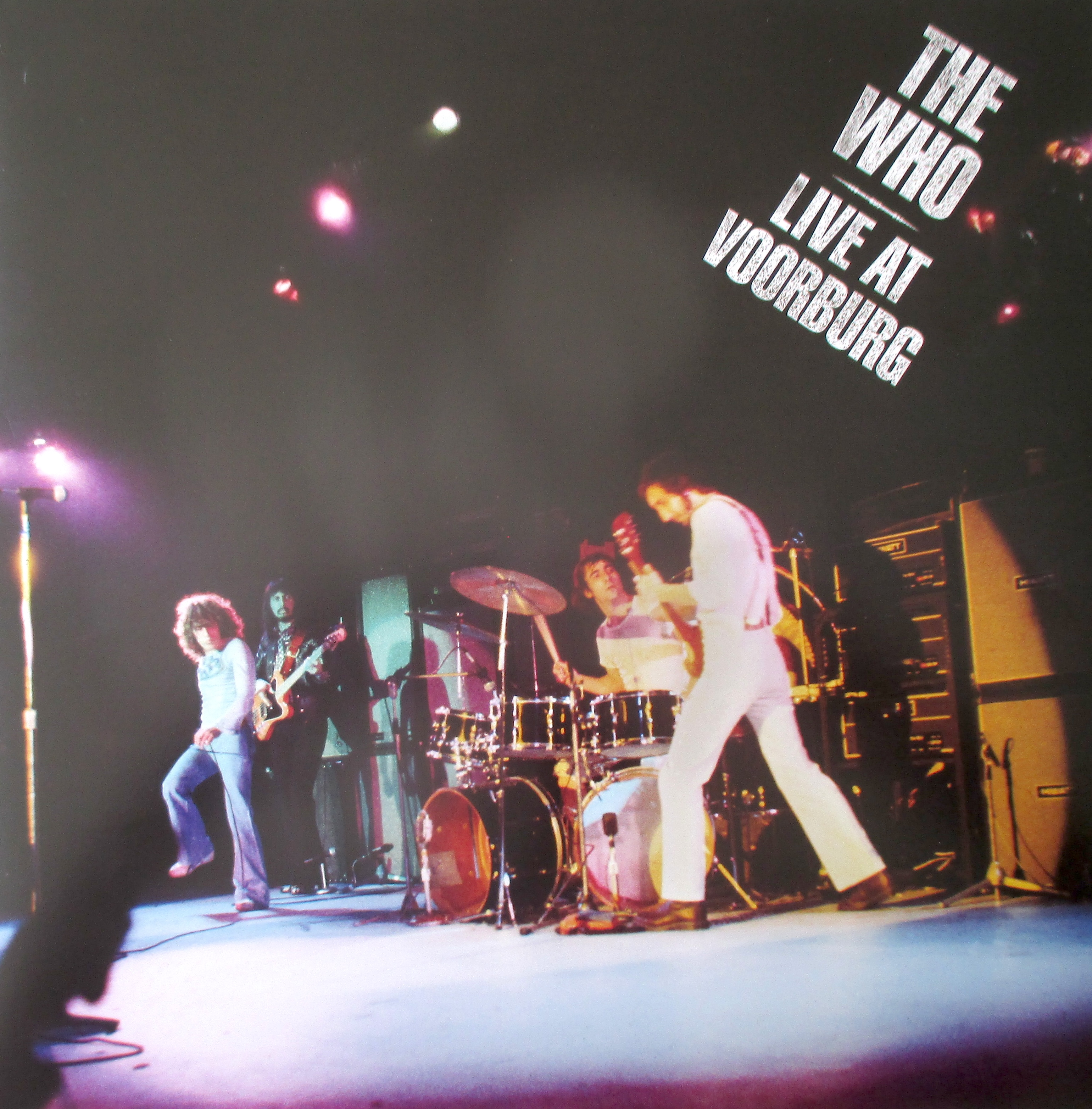
Because the Who only had a 45 minute slot they dispensed with their usual set openers and launched straight into Pinball Wizard, introduced by Townshend claiming to be a member of the audience. Townshend is all in white, including his Gibson SG, as is Moon whilst Daltrey favours jeans and smock and Entwistle is immobile and sinister in black leather. Baba O’Riley is well received and ends with Roger doing his customary harmonica version of Dave Arbus’ violin part. A succinct version of Eddie Cochran’s Summertime Blues plays Entwistle’s boss voice off against the joint vocals of Daltrey and Townshend. With the stage in complete darkness Moon’s drumbeats usher in Won’t Get Fooled Again – he plays with great precision and drive throughout the number and his re-entry after the unaccompanied synthesiser break is meticulous, a great backdrop to Daltrey’s scream.
My Generation features an Entwistle bass solo before heading into an improvised guitar passage, truncated to lead into See Me, Feel Me. Daltrey’s vocals are the focus, here backed effectively by Keith Moon on gong during the introduction. Townshend gets in some windmilling as the band turns bright white lights onto the audience. Calls for an encore are rewarded by a lengthy Magic Bus, starting with Daltrey’s harmonica before the whole band joins in the refrain. In addition to singing Moon really hammers the mutated Bo Diddley beat. Townshend executes some nifty scissor jumps before changing his guitar to a sunburst Les Paul with a tougher tone. Re-invigorated, the band bring the song to a close, ending as they had begun with Roger’s harmonica.
So very much a greatest hits set, which is understandable considering that the band had not played in public for six months and that they only had a limited time slot. Their next gig would be 28th October, the opening night of the UK Quadrophenia tour in Stoke On Trent. Our recordings from this tour are available as Live in Philadelphia1973 (B&B 136) and Quadrophenia Live In Philadelphia 1973 (R&B 137). The Quadrophenia tour was heavily reliant on backing tapes but such technical constraints are very much absent from the current LP – a fine example of why in Roger Daltrey’s words “the Who are the best fucking rock’n’roll band in the world.”
Sleevenotes
I.Clancy (for Miles)
Live 1973
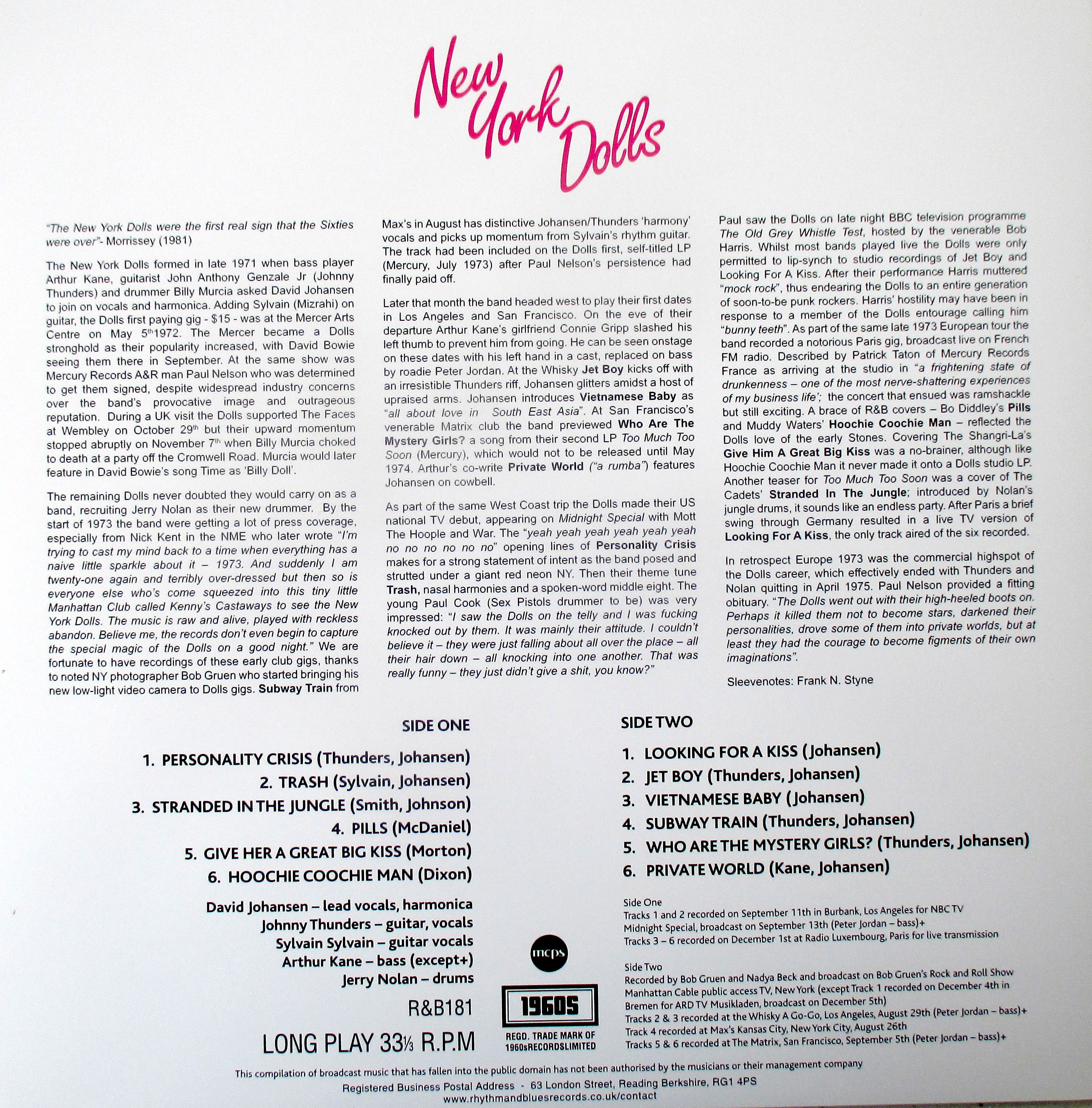
New York Dolls
Tracklisting
Side One
- Personality Crisis (Thunders, Johansen)
- Trash (Sylvain, Johansen)
- Stranded In The Jungle (Smith, Johnson)
- Pills (McDaniel)
- Give Her A Great Big Kiss (Morton)
- Hoochie Coochie Man (Dixon)
Side Two
- Looking For A Kiss (Johansen)
- Jet Boy (Thunders, Johansen)
- Vietnamese Baby (Johansen)
- Subway Train (Thunders, Johansen)
- Who Are The Mystery Girls? (Johansen, Thunders)
- Private World (Kane, Johansen)
Personnel
David Johansen – lead vocals, harmonica
Johnny Thunders – guitar, vocals
Sylvain Sylvain – guitar vocals
Jerry Nolan – drums
Arthur Kane – bass
Peter Jordan – bass (Side One, Tracks 1 & 2 and Side Two tracks 2, 3, 5 & 6)
Recording details
Side One
Tracks 1 and 2 recorded on September 11th in Burbank, Los Angeles for NBC TV
Midnight Special, broadcast on September 13th
Tracks 3 – 6 recorded on December 1st at Radio Luxembourg, Paris for live transmission
Side Two
Track 1 recorded on December 4th in Bremen for ARD TV Musikladen, broadcast on December 5th
Tracks 2 & 3 recorded at the Whisky A Go-Go, Los Angeles, August 29th
Track 4 recorded at Max’s Kansas City, New York City on August 26th
Tracks 5 & 6 recorded at The Matrix, San Francisco, September 5th
Tracks 2 – 6 recorded by Bob Gruen and Nadya Beck and broadcast on Bob Gruen’s Rock and Roll Show Manhattan Cable public access TV, New York
Recording Quality
The tracks from Midnight Special, Musikladen and Paris are all Excellent: the remaining tracks are Very Good
Sleevenotes
The New York Dolls were the first real sign that the Sixties were over
Morrissey (1981)
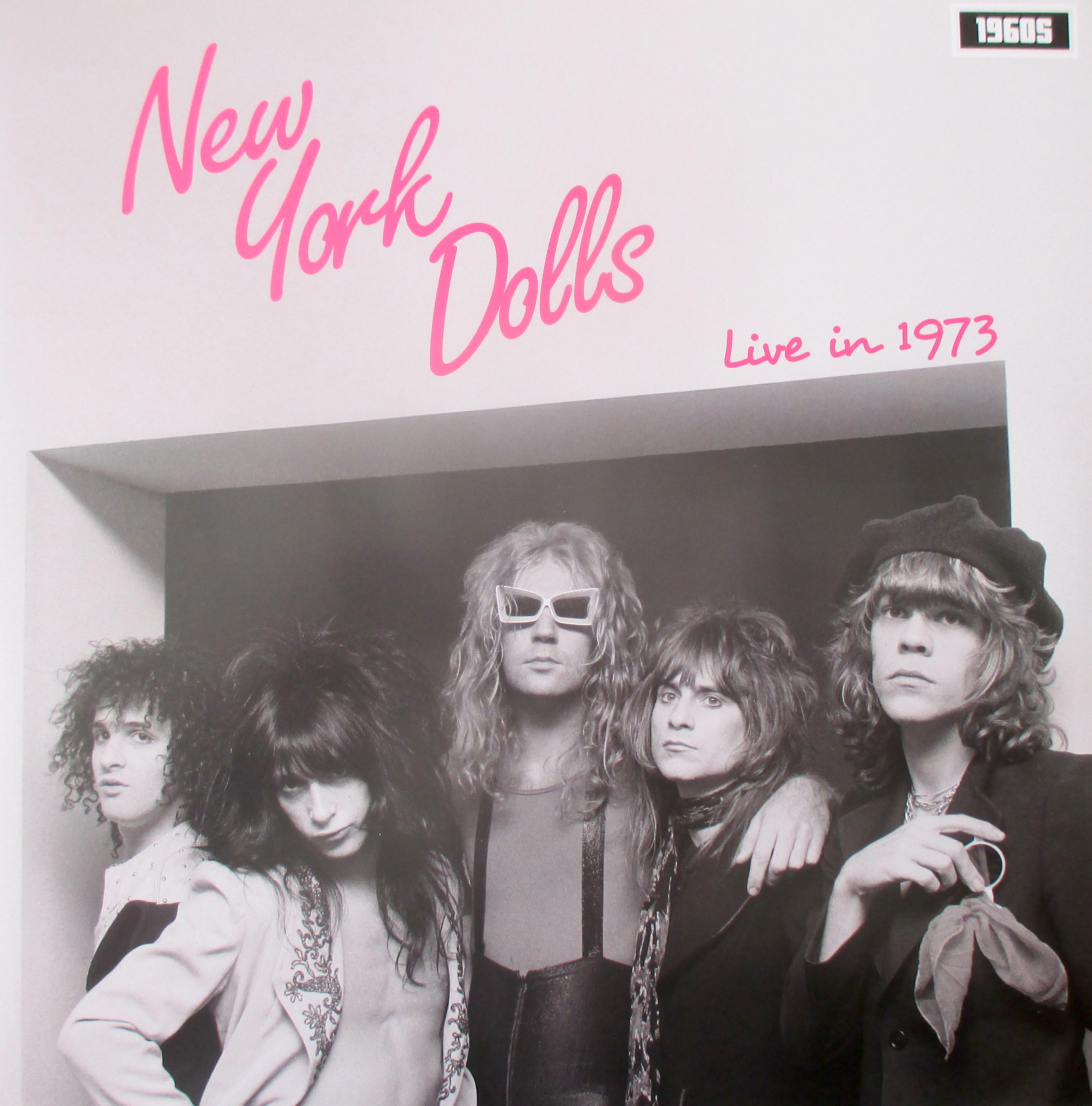
The New York Dolls formed in late 1971 when bass player Arthur Kane, guitarist John Anthony Genzale Jr (Johnny Thunders) and drummer Billy Murcia asked David Johansen to join on vocals and harmonica. Adding Sylvain (Mizrahi) on guitar, the Dolls first paying gig – $15 – was at the Mercer Arts Centre on May 5th1972. The Mercer became a Dolls stronghold as their popularity increased, with David Bowie seeing them there in September. At the same show was Mercury Records A&R man Paul Nelson who was determined to get them signed, despite widespread industry concerns over the band’s provocative image and outrageous reputation. During a UK visit the Dolls supported The Faces at Wembley on October 29th but their upward momentum stopped abruptly on November 7th when Billy Murcia choked to death at a party off the Cromwell Road. Murcia would later feature in David Bowie’s song Time as ‘Billy Dolls’.
The remaining Dolls never doubted they would carry on as a band, recruiting Jerry Nolan as their new drummer. By the start of 1973 the band were getting a lot of press coverage, especially from Nick Kent in the NME who later wrote “I’m trying to cast my mind back to a time when everything has a naive little sparkle about it – 1973. And suddenly I am twenty-one again and terribly over-dressed but then so is everyone else who’s come squeezed into this tiny little Manhattan Club called Kenny’s Castaways to see the New York Dolls. The music is raw and alive, played with reckless abandon. Believe me, the records don’t even begin to capture the special magic of the Dolls on a good night.” We are fortunate to have recordings of these early club gigs, thanks to noted NY photographer Bob Gruen who started bringing his new low-light video camera to Dolls gigs. Subway Train from Max’s in August has distinctive Johansen/Thunders ‘harmony’ vocals and picks up momentum from Sylvain’s rhythm guitar. The track had been included on the Dolls first, self-titled LP (Mercury, July 1973) after Paul Nelson’s persistence had finally paid off.
Later that month the band headed west to play their first dates in Los Angeles and San Francisco. On the eve of their departure Arthur Kane’s girlfriend Connie Gripp slashed his left thumb to prevent him from going. He can be seen onstage on these dates with his left hand in a cast, replaced on bass by roadie Peter Jordan. At the Whisky Jet Boy kicks off with an irresistible Thunders riff, Johansen glitters amidst a host of upraised arms. Johansen introduces Vietnamese Baby as “all about love in South East Asia”. At San Francisco’s venerable Matrix club the band previewed Who Are The Mystery Girls? a song from their second LP Too Much Too Soon (Mercury), which would not to be released until May 1974. Arthur’s co-write Private World (“a rhumba”) features Johansen on cowbell.
As part of the same West Coast trip the Dolls made their US national TV debut, appearing on Midnight Special with Mott The Hoople and War. The “yeah yeah yeah yeah yeah yeah no no no no no no” opening lines of Personality Crisis makes for a strong statement of intent as the band posed and strutted under a giant red neon NY. Then their theme tune Trash, nasal harmonies and a spoken-word middle eight. The young Paul Cook (Sex Pistols drummer to be) was very impressed: “I saw the Dolls on the telly and I was fucking knocked out by them. It was mainly their attitude. I couldn’t believe it – they were just falling about all over the place – all their hair down – all knocking into one another. That was really funny – they just didn’t give a shit, you know?”
Paul saw the Dolls on late night BBC television programme The Old Grey Whistle Test, hosted by the venerable Bob Harris. Whilst most bands played live the Dolls were only permitted to lip-synch to studio recordings of Jet Boy and Looking For A Kiss. After their performance Harris muttered “mock rock”, thus endearing the Dolls to an entire generation of soon-to-be punk rockers. Harris’ hostility may have been in response to a member of the Dolls entourage calling him “bunny teeth”. As part of the same late 1973 European tour the band recorded a notorious Paris gig, broadcast live on French FM radio. Described by Patrick Taton of Mercury Records France as arriving at the studio in “a frightening state of drunkenness – one of the most nerve-shattering experiences of my business life’ the concert that ensued was ramshackle but still exciting. A brace of r’n’b covers – Bo Diddley’s Pills and Muddy Waters’ Hoochie Coochie Man – reflected the Dolls love of the early Stones. Covering The Shangri-La’s Give Him A Great Big Kiss was a no-brainer, although like Hoochie Coochie Man it never made it onto a Dolls studio LP. Another teaser for Too Much Too Soon was their cover of The Cadets’ Stranded In The Jungle, which introduced by Nolan’s jungle drums sounds like an endless party. After Paris a brief swing through Germany resulted in a live TV version of Looking For A Kiss, the only track aired of the six recorded.
In retrospect Europe 1973 was the commercial highspot of the Dolls career, which effectively ended with Thunders and Nolan quitting in April 1975. Paul Nelson provided a fitting obituary. “The Dolls went out with their high-heeled boots on. Perhaps it killed them not to become stars, darkened their personalities, drove some of them into private worlds, but at least they had the courage to become figments of their own imaginations.“
Sleevenotes: Frank N. Styne
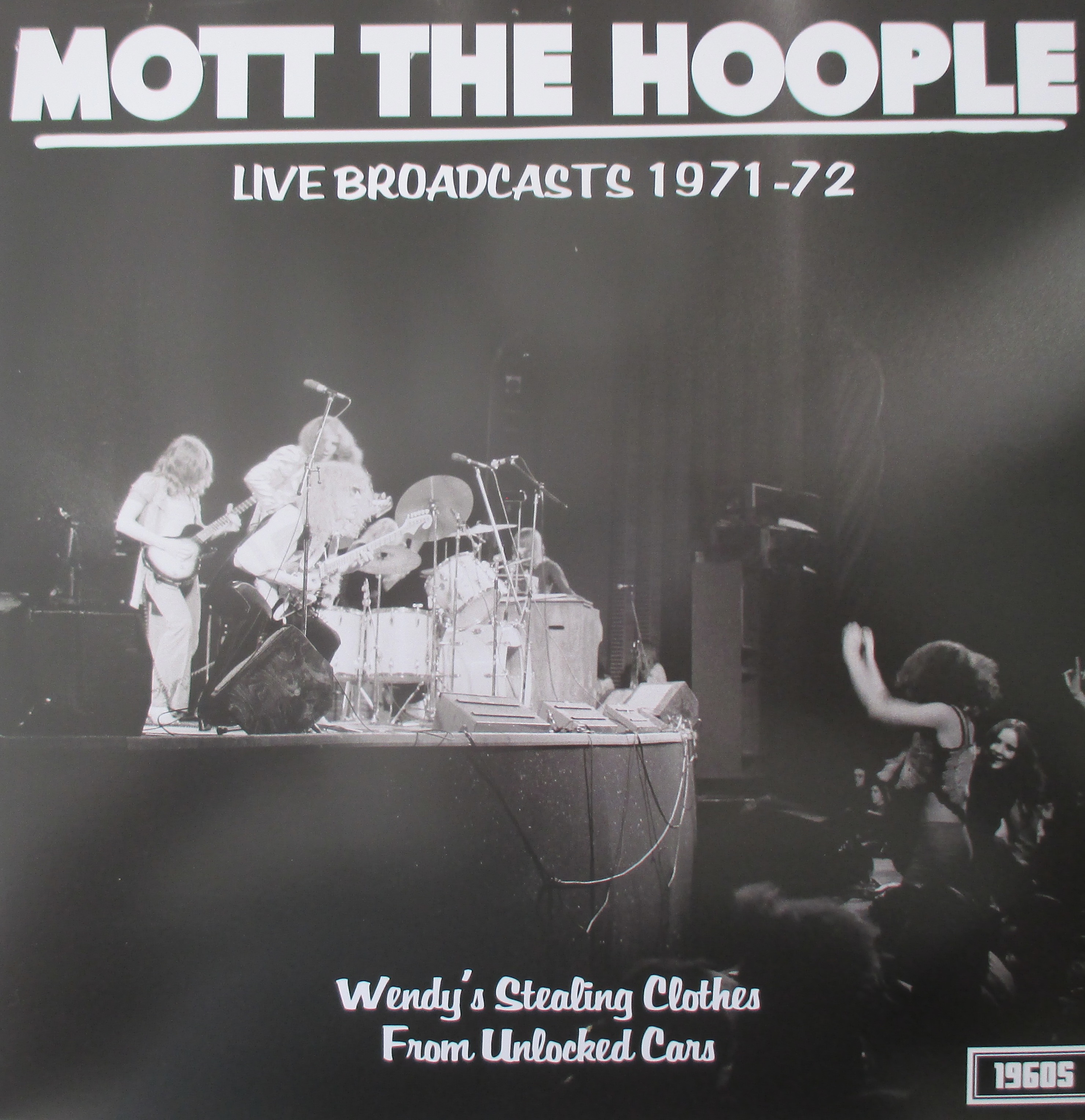
“Wendy’s Stealing Clothes From Unlocked Cars” – Live 1971-72
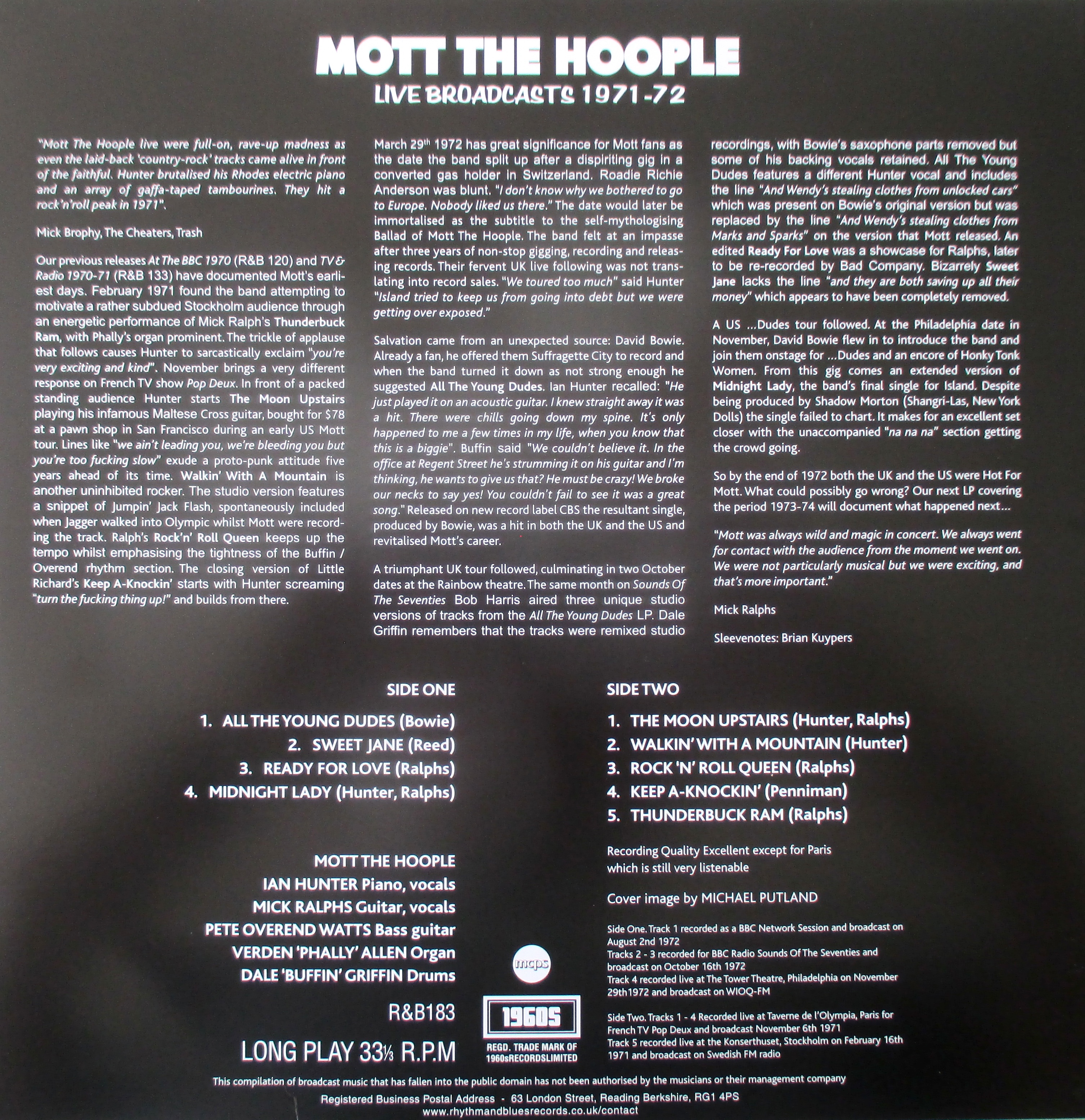
Mott The Hoople
Tracklisting
Side One
- All The Young Dudes (Bowie)
- Sweet Jane (Reed)
- Ready For Love (Ralphs)
- Midnight Lady (Hunter, Ralphs)
Side Two
- The Moon Upstairs (Hunter, Ralphs)
- Walkin’ With A Mountain (Hunter)
- Rock ‘n’ Roll Queen (Ralphs)
- Keep A-Knockin’ (Penniman)
- Thunderbuck Ram (Ralphs)
Recording Details
Side One,
Track 1 recorded for BBC Top Of The Pops and broadcast on August 2nd1972
Tracks 2-3 recorded for BBC Radio Sounds Of The Seventies and broadcast on October 16th 1972
Track 4 recorded live at The Tower Theatre, Philadelphia on November 29th1972 and broadcast on WIOQ-FM
Side Two
Tracks 1- 4 Recorded live at Taverne de l’Olympia, Paris for French TV Pop Deux and broadcast November 6th 1971
Track 5 recorded live at the Konserthuset, Stockholm on February 16th 1971 and broadcast on Swedish FM radio
Recording Quality
Excellent throughout
Personnel
Ian Hunter: vocals, guitar, piano
Mick Ralphs: guitar, vocals
Pete Overend Watts: bass
Dale ‘Buffin’ Griffin: drums
Verden ‘Phally’ Allen: organ
Sleevenotes
“Mott The Hoople live were full-on, rave-up madness as even the laid-back ‘country-rock’ tracks came alive in front of the faithful. Hunter brutalised his Rhodes electric piano and an array of gaffa-taped tambourines. They hit a rock’n’roll peak in 1971”.
Mick Brophy, The Cheaters, Trash
Our previous releases At The BBC 1970 (R&B 120) and TV & Radio 1970-71 (R&B 133) have documented Mott’s earliest days. February 1971 found the band attempting to motivate a rather subdued Stockholm audience through an energetic performance of Mick Ralph’s Thunderbuck Ram,with Phally’s organ prominent. The trickle of applause that follows causes Hunter to sarcastically exclaim “you’re very exciting and kind”. November brings a very different response on French TV show Pop Deux. In front of a packed standing audience Hunter starts The Moon Upstairs playing his infamous Maltese Cross guitar, bought for $78 at a pawn shop in San Francisco during an early US Mott tour. Lines like “we ain’t leading you, we’re bleeding you but you’re too fucking slow” exude a proto-punk attitude five years ahead of its time. Walkin’ With A Mountain is another uninhibited rocker. The studio version features a snippet of Jumpin’ Jack Flash, spontaneously included when Jagger walked into Olympic whilst Mott were recording the track. Ralph’s Rock’n’ Roll Queen keeps up the tempo whilst emphasising the tightness of the Buffin / Overend rhythm section. The closing version of Little Richard’s Keep A-Knockin’ starts with Hunter screaming “turn the fucking thing up!” and builds from there.
March 29th 1972 has great significance for Mott fans as the date the band split up after a dispiriting gig in a converted gas holder in Switzerland. Roadie Richie Anderson was blunt. “I don’t know why we bothered to go to Europe. Nobody liked us there.” The date would later be immortalised as the subtitle to the self-mythologising Ballad of Mott The Hoople. The band felt at an impasse after three years of non-stop gigging, recording and releasing records. Their fervent UK live following was not translating into record sales. “We toured too much” said Hunter “Island tried to keep us from going into debt but we were getting over exposed.”
Salvation came from an unexpected source: David Bowie. Already a fan, he offered them Suffragette City to record and when the band turned it down as not strong enough he suggested All The Young Dudes. Ian Hunter recalled: “He just played it on an acoustic guitar. I knew straight away it was a hit. There were chills going down my spine. It’s only happened to me a few times in my life, when you know that this is a biggie“. Buffin said “We couldn’t believe it. In the office at Regent Street he’s strumming it on his guitar and I’m thinking, he wants to give us that? He must be crazy! We broke our necks to say yes! You couldn’t fail to see it was a great song.” Released on new record label CBS the resultant single, produced by Bowie, was a hit in both the UK and the US and revitalised Mott’s career. The version here was specially recorded for BBC radio. It features an alternate Hunter vocal, replacing Bowie’s original lyric of “And Wendy’s stealing clothes from Marks and Sparks”
with “And Wendy’s stealing clothes from unlocked cars”. Ray Davies had already set a precedent here by re-recording the single Lola, changing “Coca-Cola” to “Cherry Cola” in order to avoid a BBC ban.
A triumphant UK tour followed, culminating in two October dates at the Rainbow theatre. The same month on Sounds Of The Seventies Bob Harris aired unique studio versions of songs from the All The Young Dudes LP. Buffin remembers that the tracks were remixed studio recordings. An edited Ready For Love was a showcase for Ralphs, later to be re-recorded by Bad Company. Bizarrely Sweet Jane lacks the line “and they are both saving up all their money” which appears to have been completely removed.
A US tour followed and at the Philadelphia date in November, David Bowie flew in to introduce the band and join them onstage for All The Young Dudes and an encore of Honky Tonk Women. From this gig comes an extended version of Midnight Lady, the band’s final single for Island. Despite being produced by Shadow Morton (Shangri-Las, New York Dolls) the single failed to chart. It makes for an excellent set closer with the unaccompanied “na na na” section getting the crowd going.
So by the end of 1972 both the UK and the US were Hot For Mott. What could possibly go wrong? Our next LP covering the period 1973-74 will document what happened next…
“Mott was always wild and magic in concert. We always went for contact with the audience from the moment we went on. We were not particularly musical but we were exciting, and that’s more important.”
Mick Ralphs
Sleevenotes: Brian Kuypers