
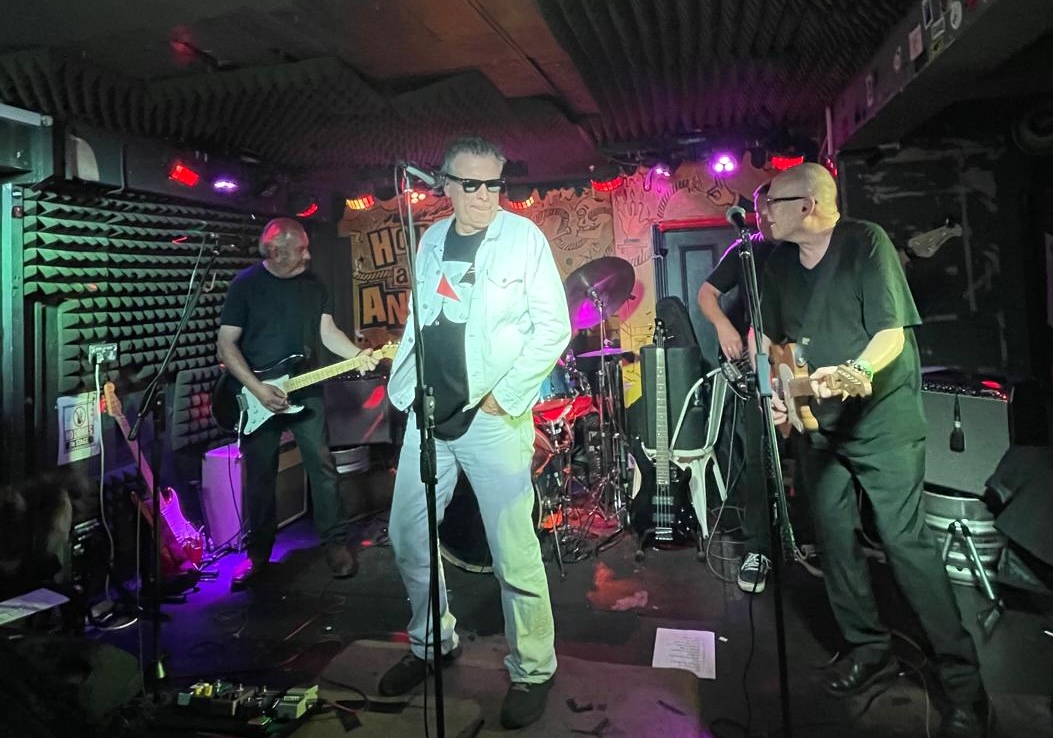
We had a blast!
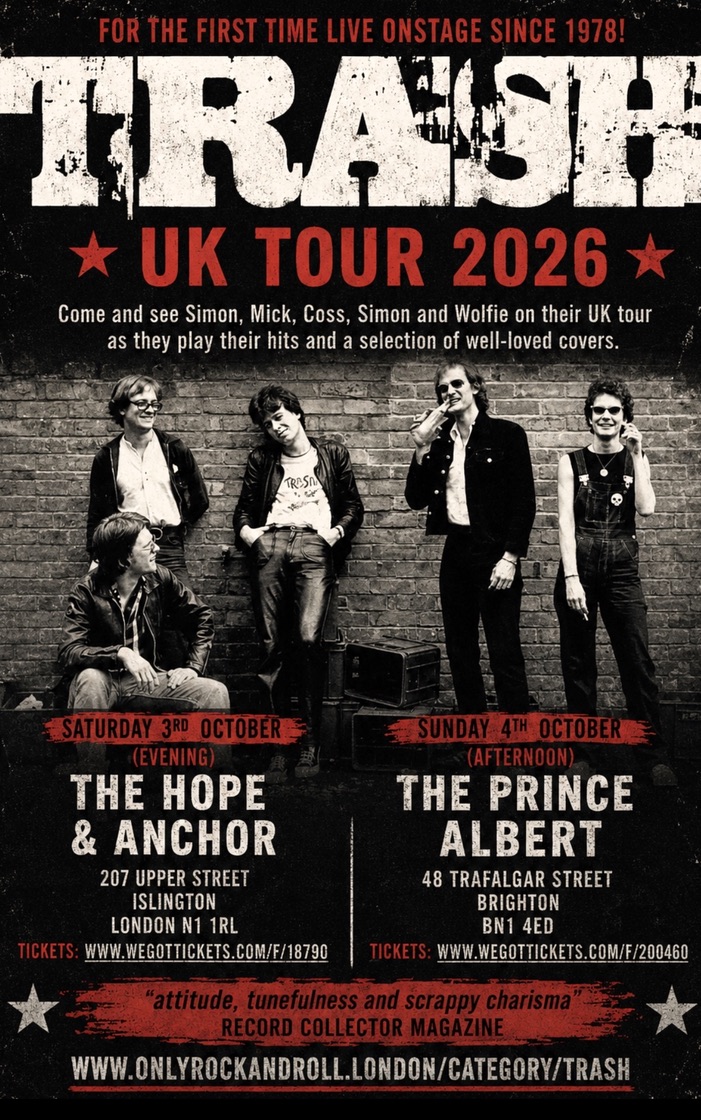
London (Hope & Anchor, October 3rd) and Brighton (Prince Albert, October 4th) were both great fun and we are very grateful to the many people who came to see us, some travelling a very long way.
Mike Kaufman and Dana Trometer kindly put together a video of the London gig which you can find here on the TrashAreBack YouTube channel
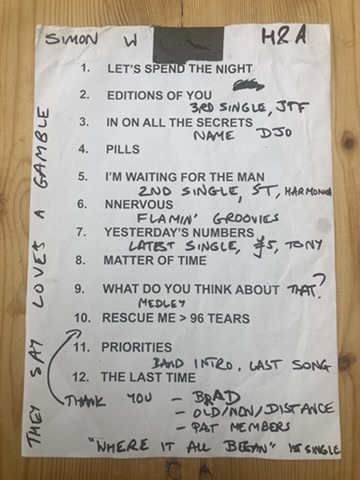
The setlist was the same for both gigs, although we dropped The Last Time in Brighton as Brad the promoter asked us to do a slightly shorter set so he could fit us, Social Security and Stormtrooper into his allotted three hour slot.
Setlist
Trash line-up:
Simon Wright – vocals
Mick Brophy – guitar, harmonica, vocals
Neil Cossar – guitar, vocals
Simon Butler-Smith – drums
Mark “Wolfie” Wolfenden – bass
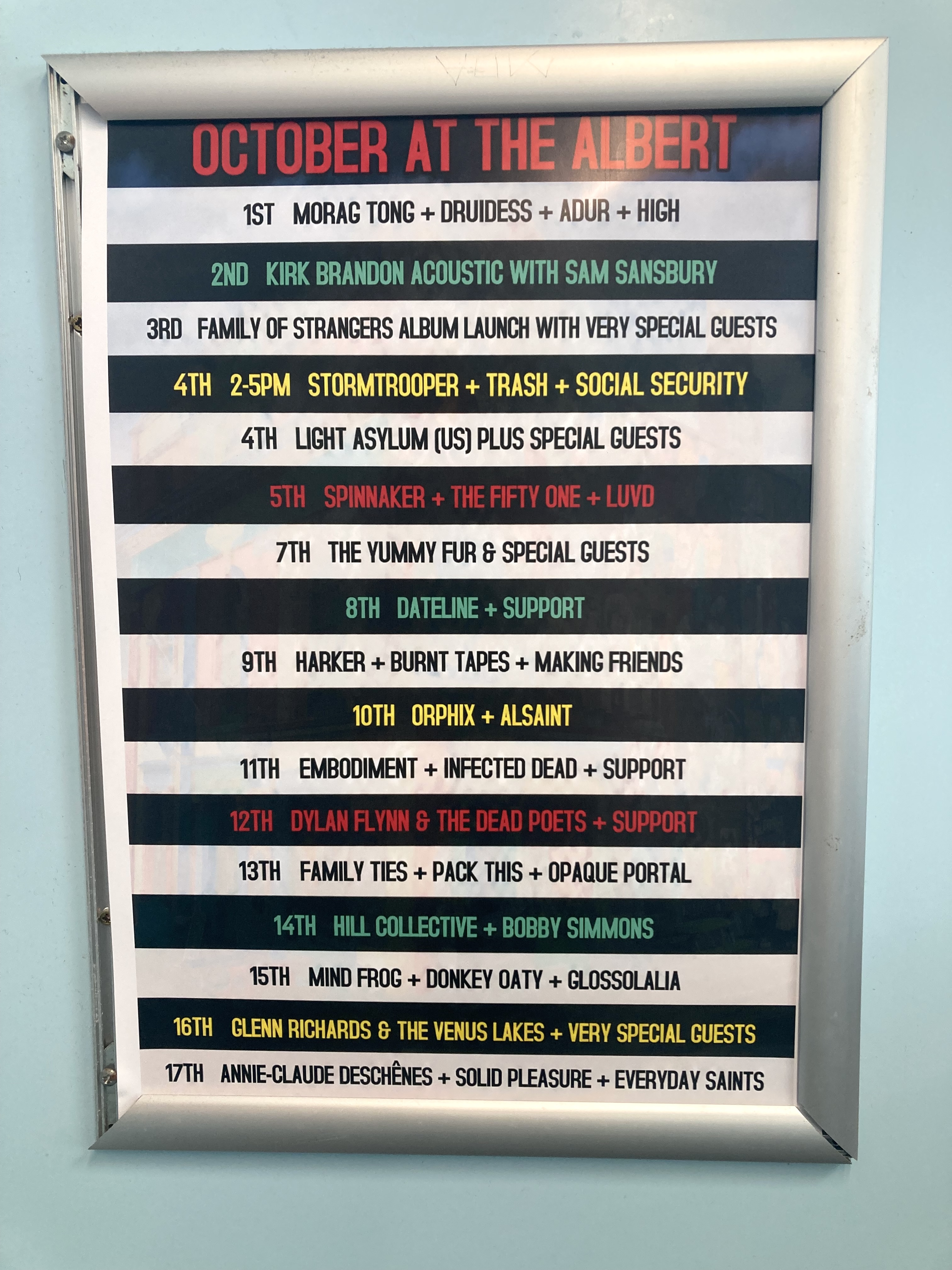
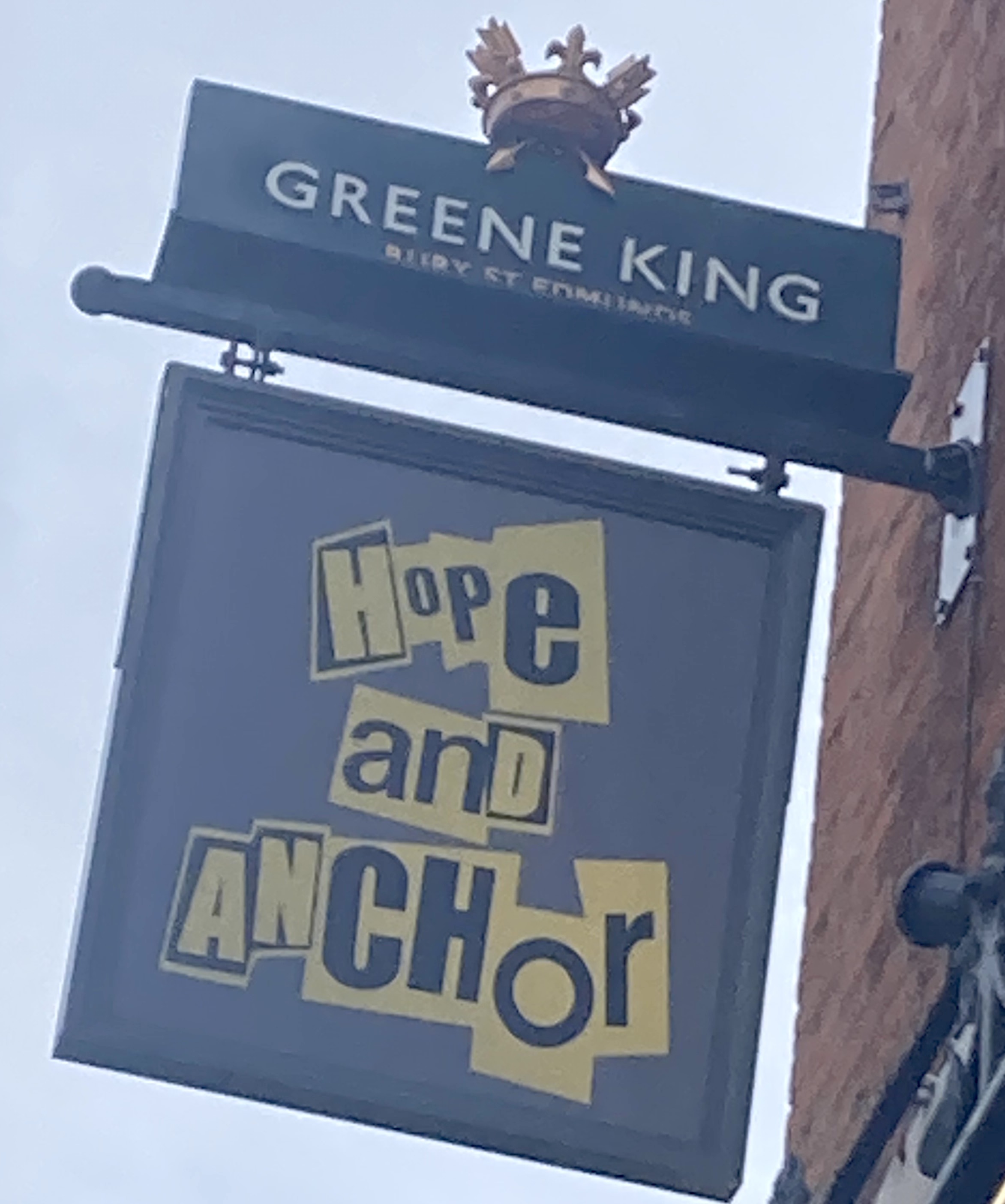
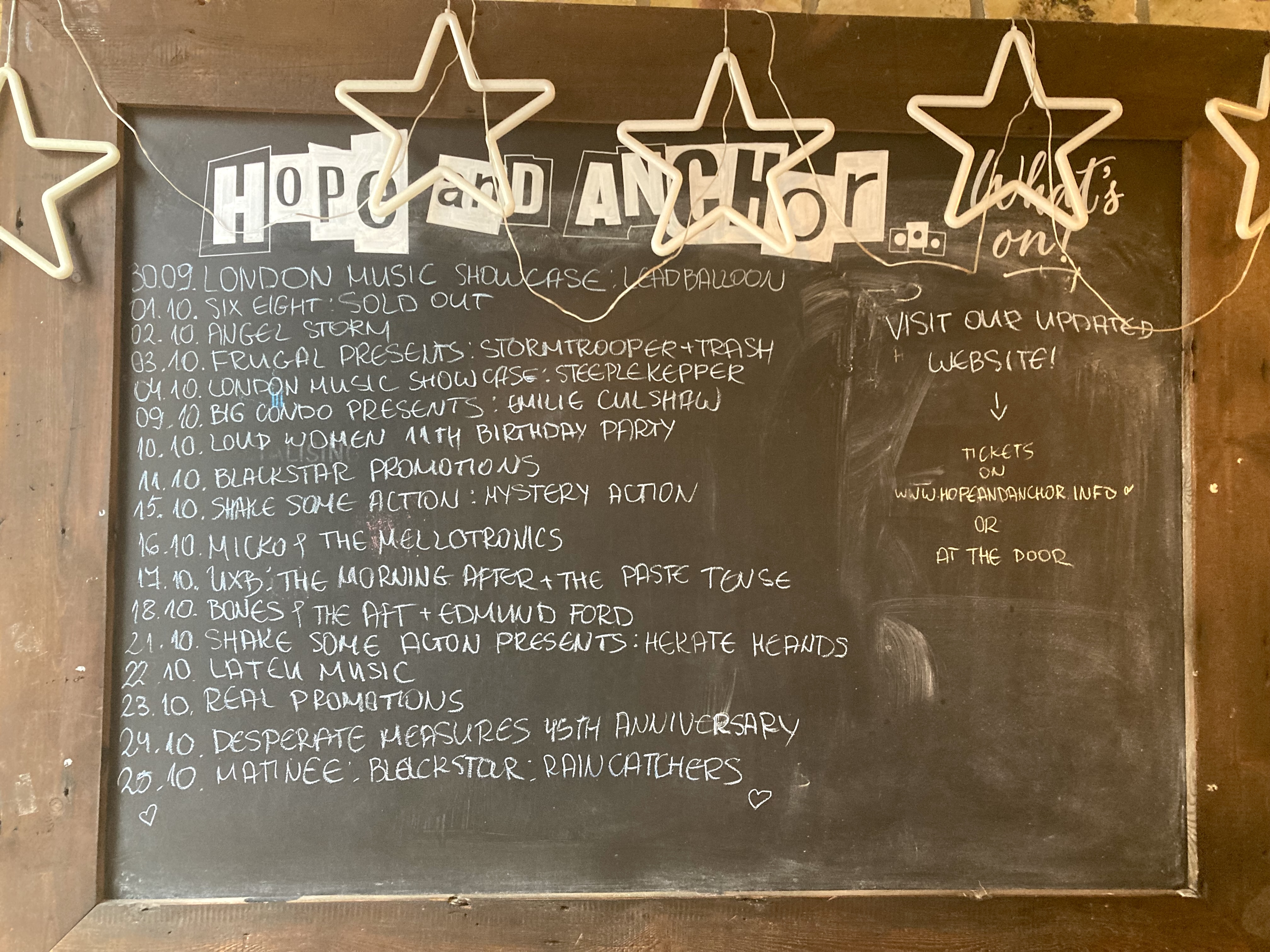
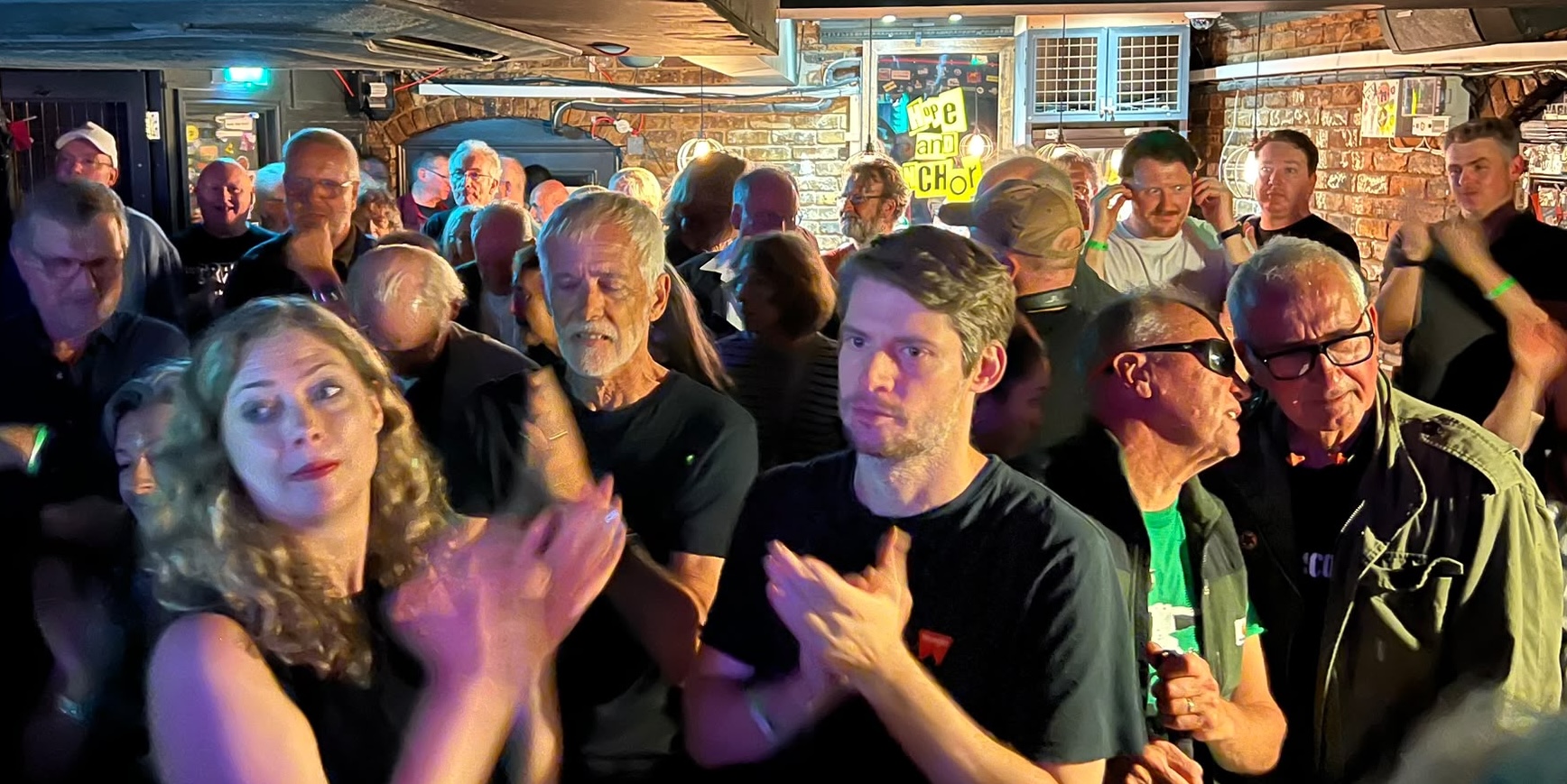
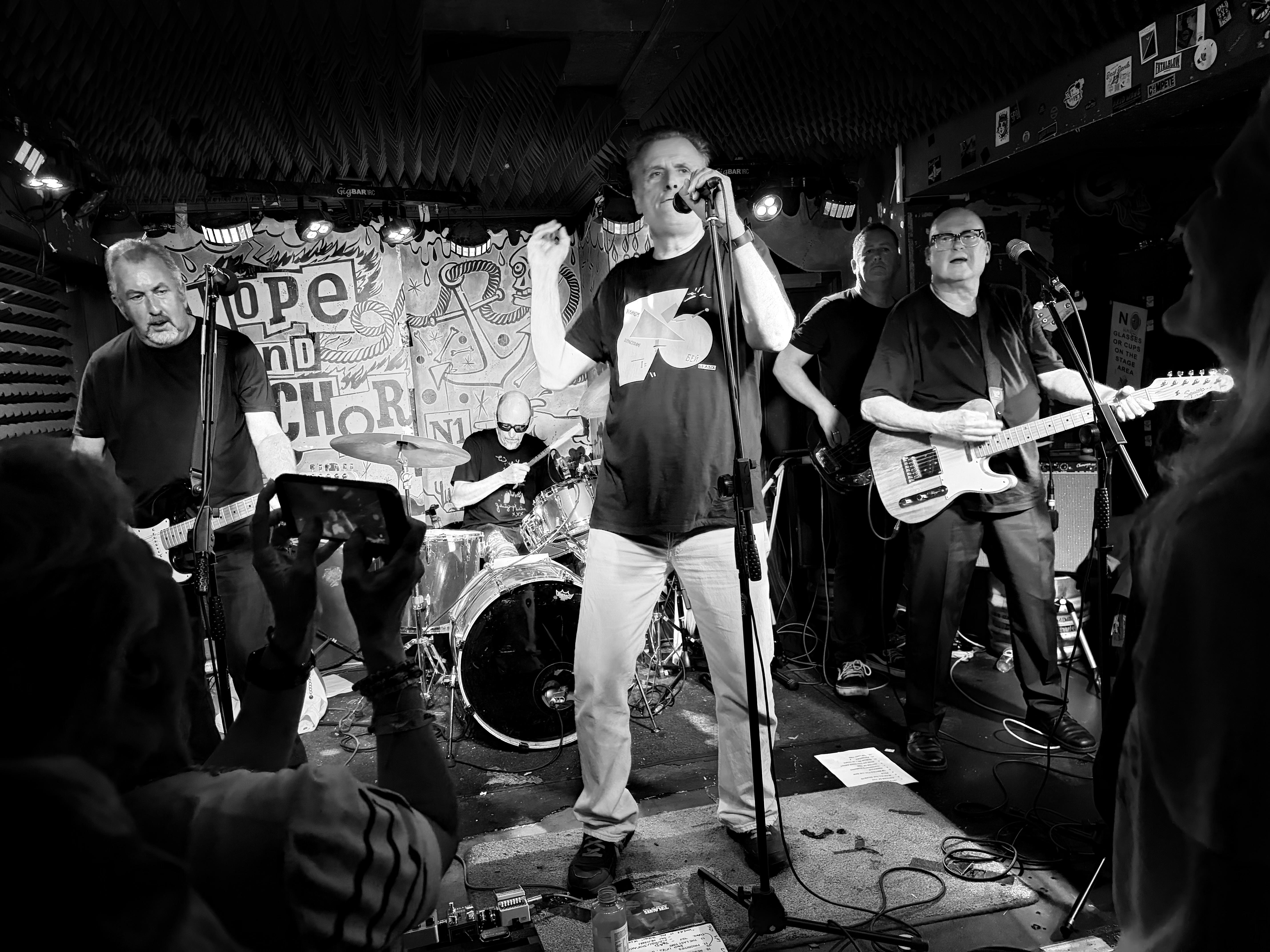
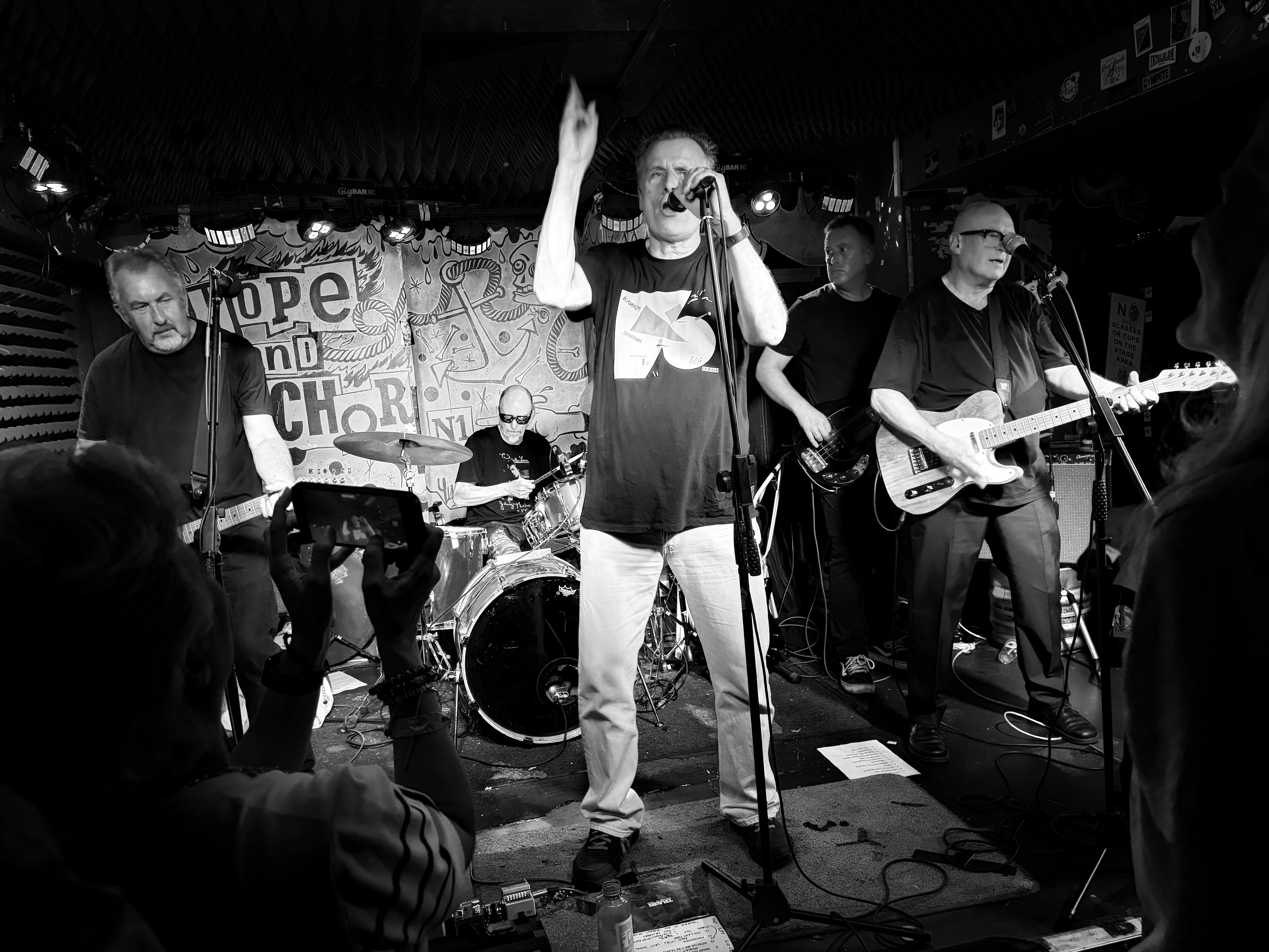
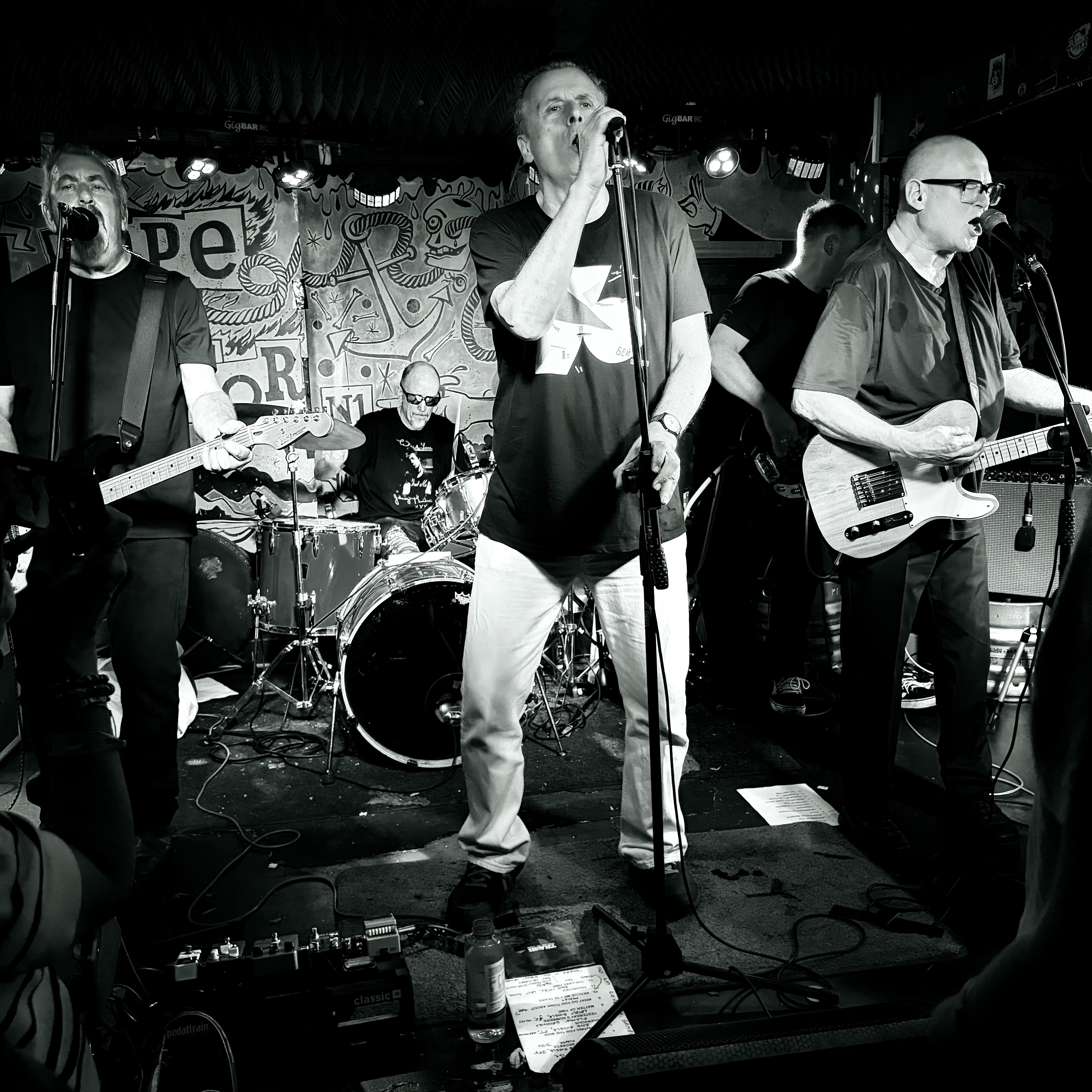
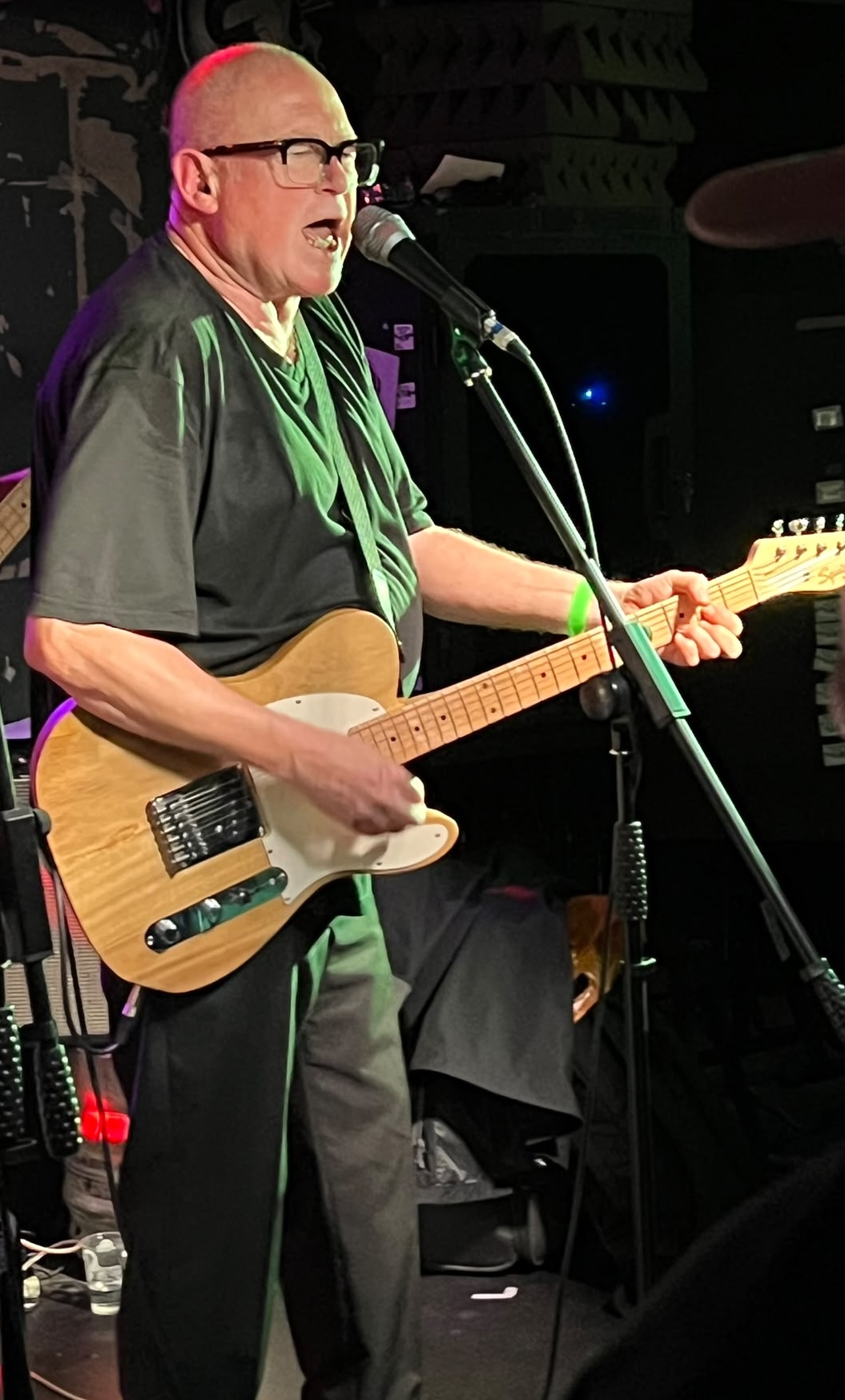
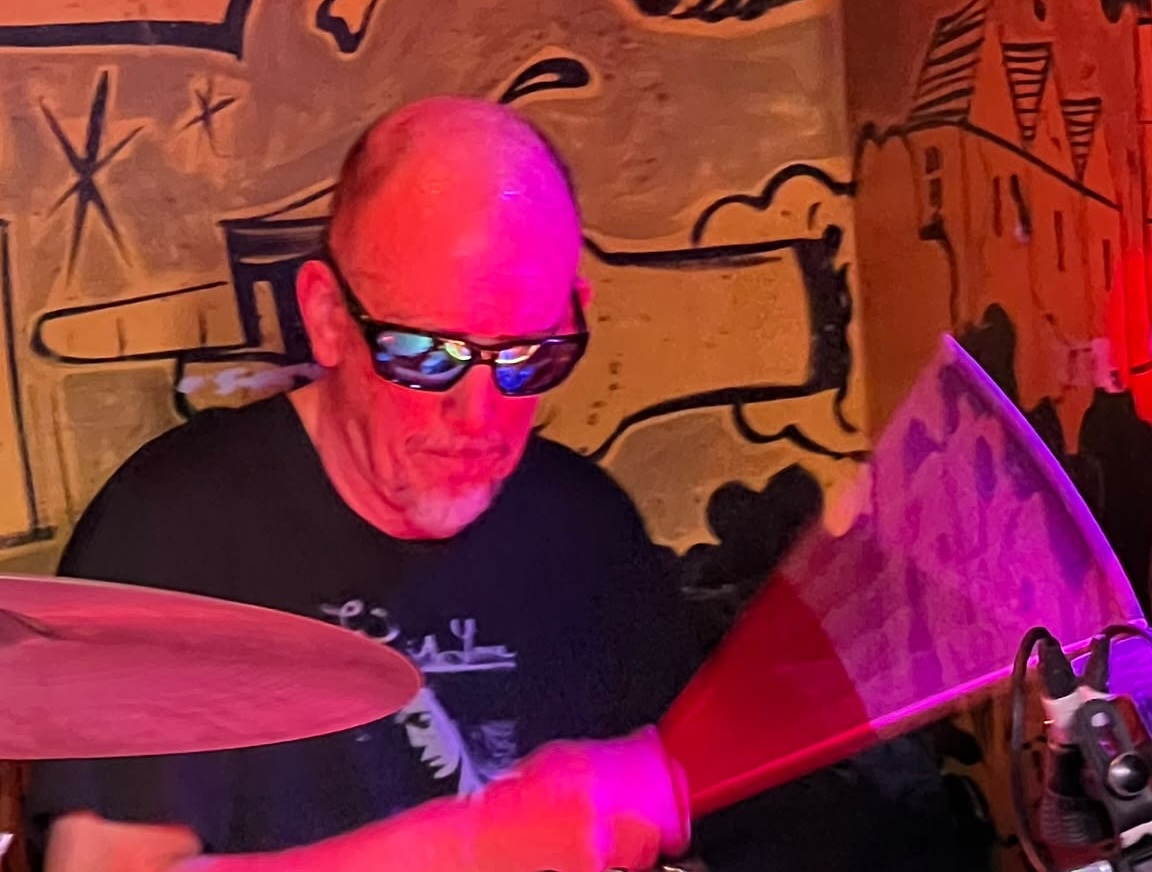
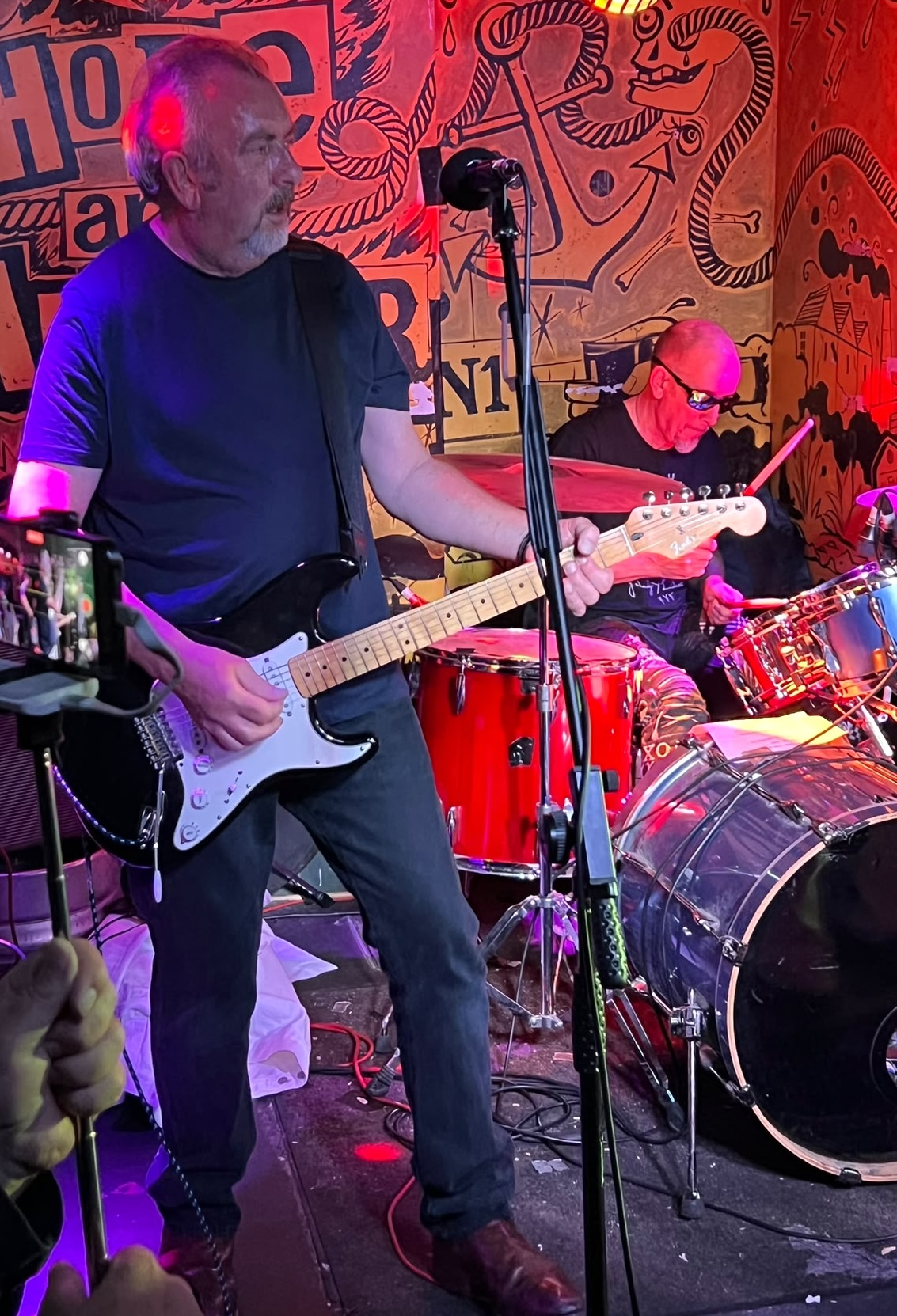
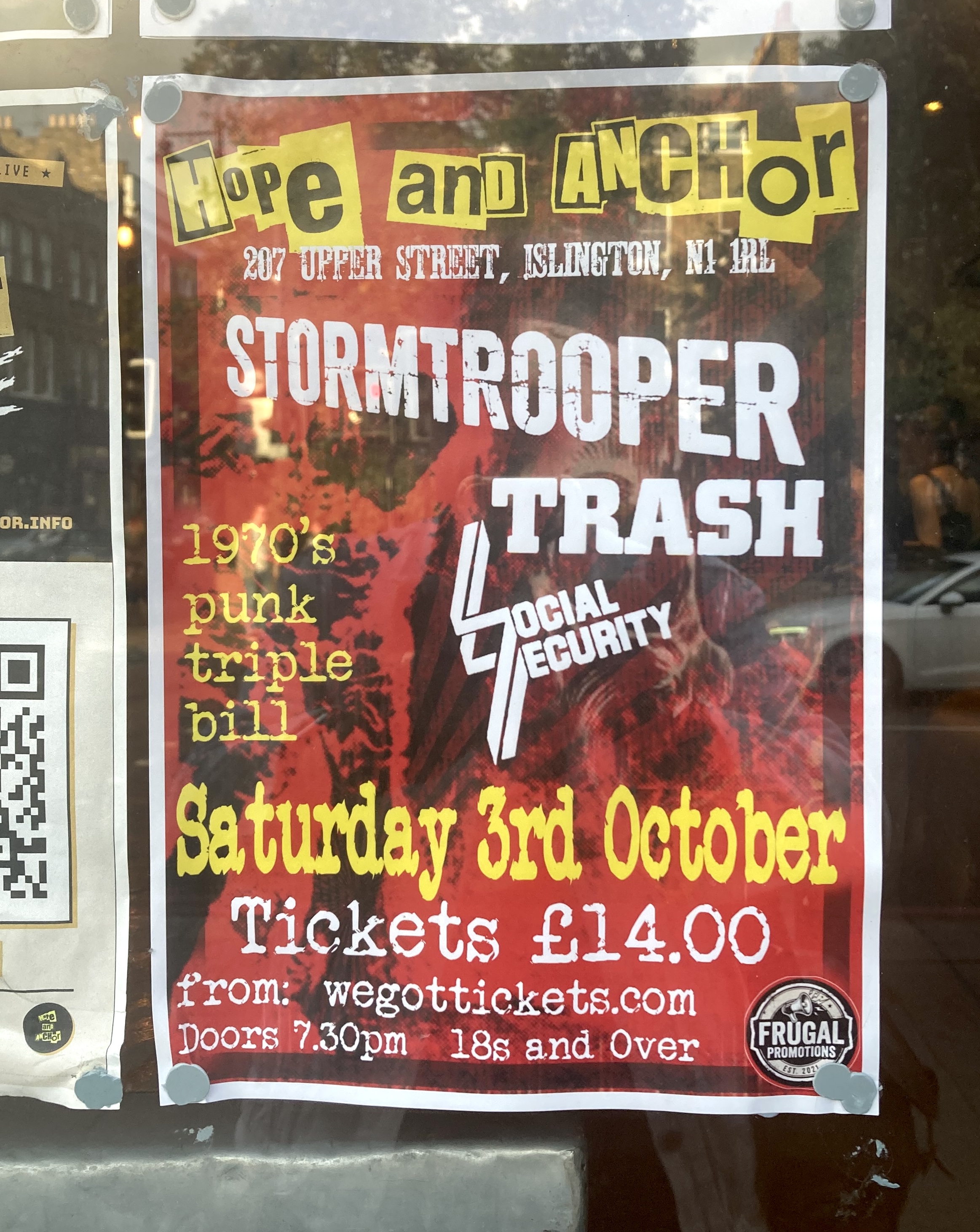
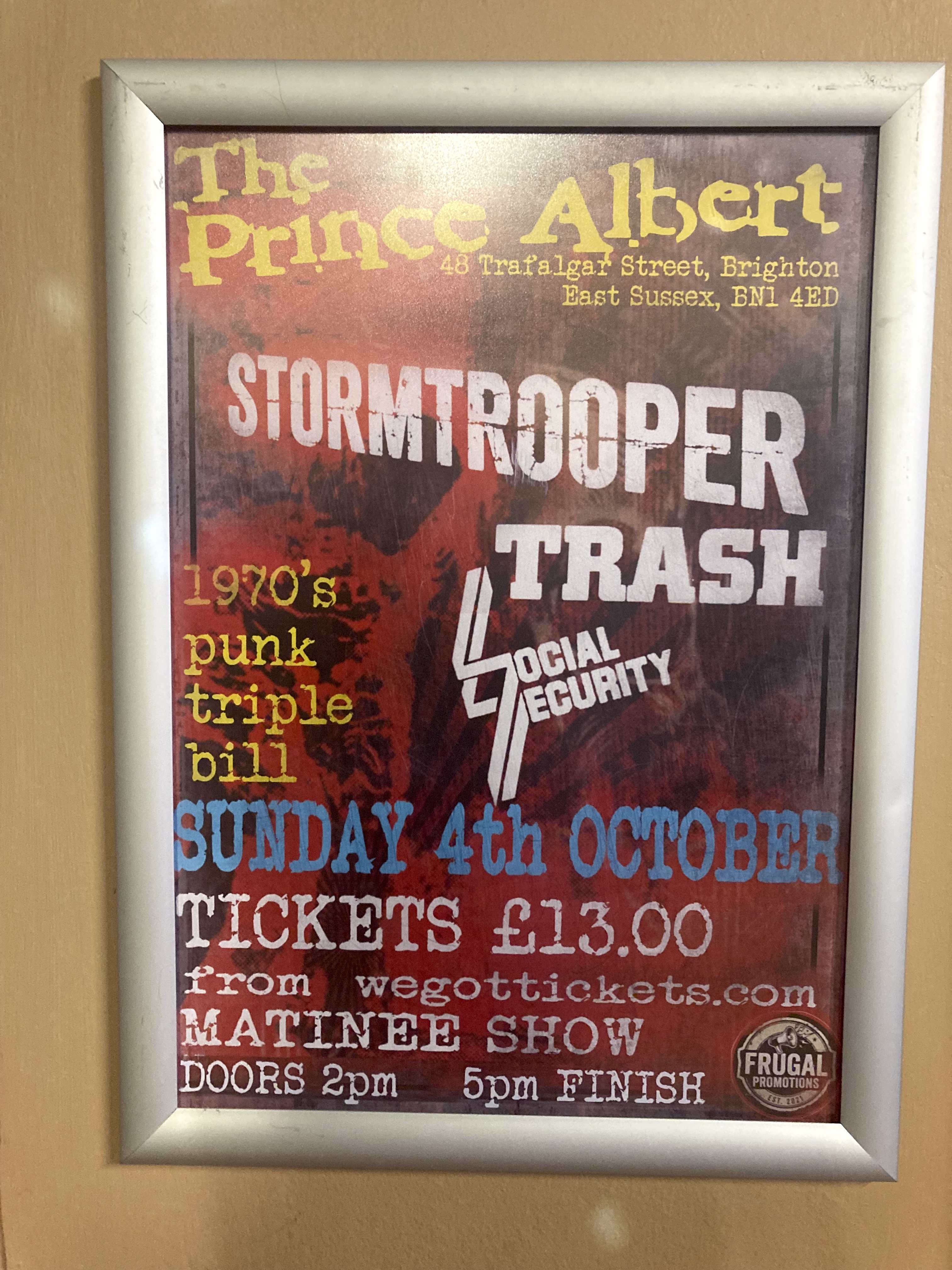
Photo credits: Simon Wright, Rich Linton, Gareth Rhys-Williams, Maja Freiensener
As final rehearsals take place for the 2026 Trash UK tour, video director Mike Kaufman has made a promo for London and Brighton. You can find it on our YouTube Trashareback! channel, together with some short clips from our Stockport rehearsals last weekend
Videos https://www.youtube.com/@simonwright7709/videos
Reels https://www.youtube.com/@simonwright7709/shorts
These Charming Men…
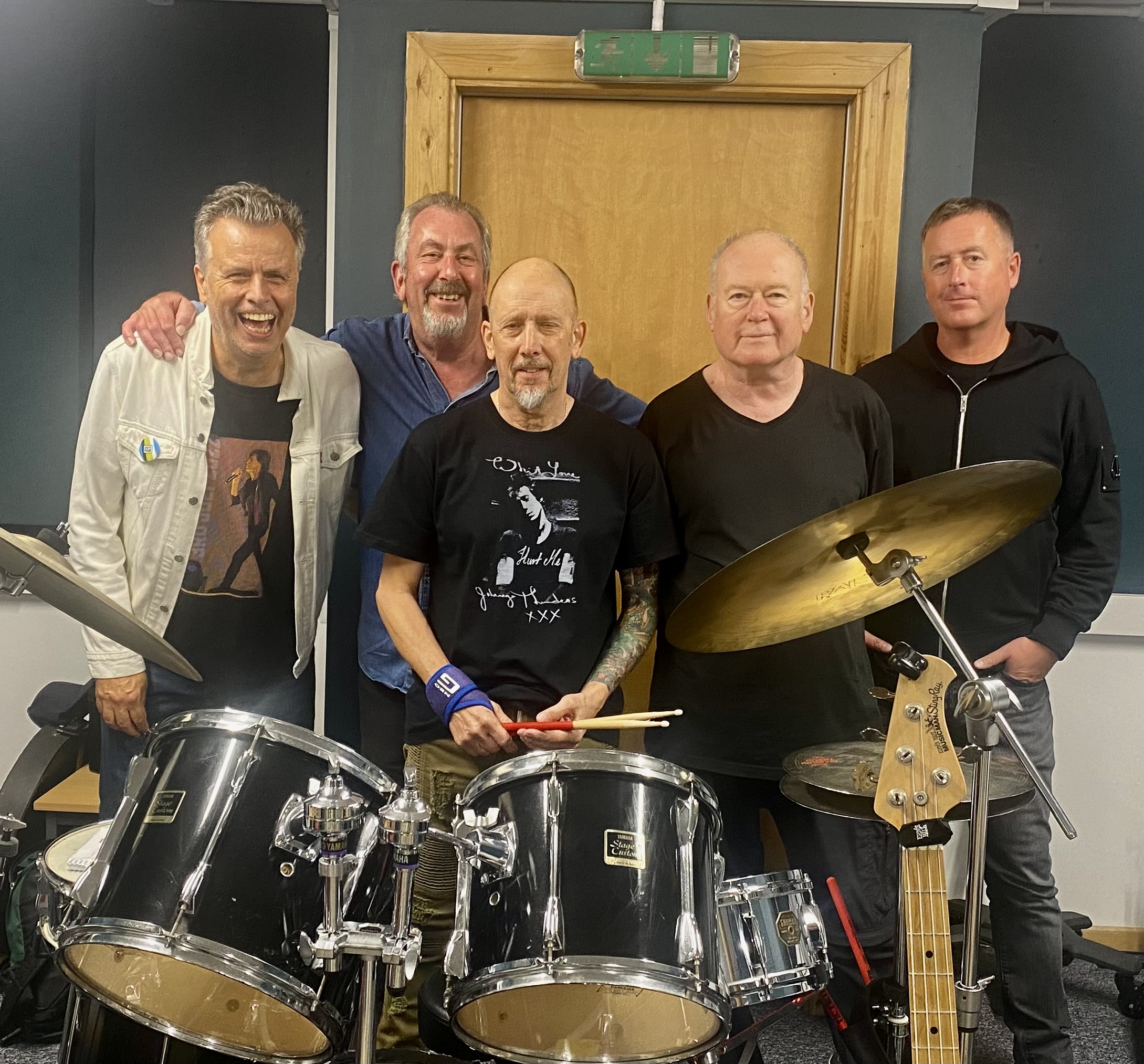
Left to right: Simon W, Neil, Simon B, Mick, Wolfie: High Peak Studios, Stockport
Has there ever been a successful rock’n’roll band containing two members called Simon?
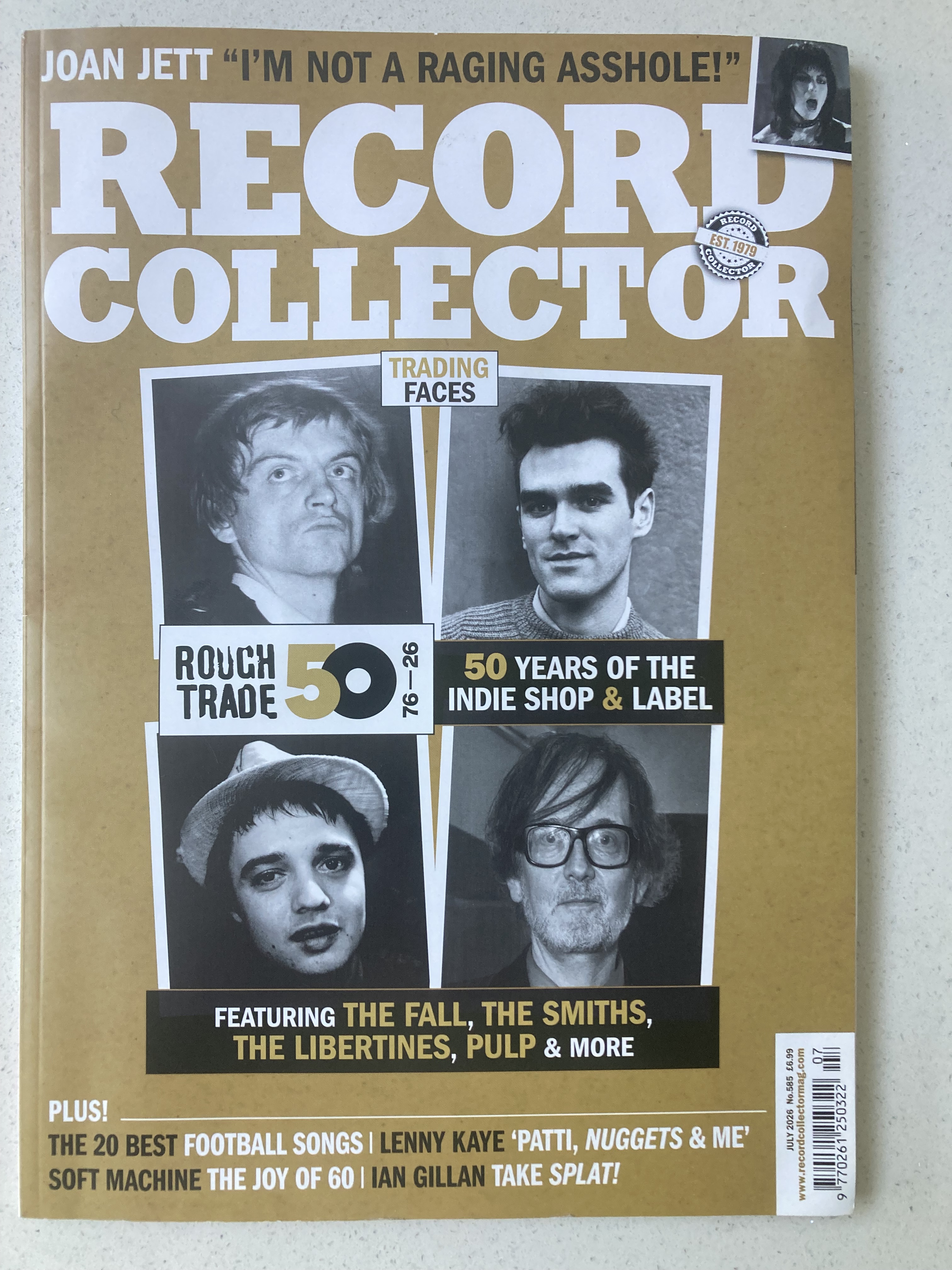
Aricle written for Record Collector magazine 595 (July 2026) – shared now becuase the magazine is no longer on the newstands
January 21st 2026
Finally! I have it in my hands! The single Two By Two by Steve Martin (The Left Banke) was released by Buddah in 1971. Its only other appearance was on the soundtrack to an obscure American movie called Hot Parts. In addition to both being rare and a great song it has one further significant attribute: it is the last single on my wants list. After 50 years of record collecting I have run out of records to buy (apart from the ones I haven’t discovered yet…). So on such a momentous occasion I have written this tribute to the 7” single and the part it has played in my life.
“The vinyl single is simply the greatest art format mankind has developed – more potent than films, literature, painting or sculpture.“ Who said that ? Me. But Johnny Marr described singles as “absolutely powerful, possibly otherworldly objects” and he should know. The 7” single was invented in 1959, but my infatuation began at a 1980’s party in North London when I put my copy of the Rolling Stones Through The Past Darkly singles compilation LP on the record player only for it to sound limp and unconvincing. The words “Mono reprocessed for stereo” on the sleeve was the clincher: I needed to locate the original singles. I didn’t stop there and eventually amassed a collection of 1400 singles, now ruthlessly edited down to about 850. I did this by kicking my completism habit. According to Discogs there are over 7,800 different Beatles’ singles: I own nine (but they are all really good).
Once I started collecting singles I realised that many of the 400 LPs I owned were in my collection because they had one great track. Exhibit A: Ron Wood’s I’ve Got My Own Album To Do. Opening track I Can Feel The Fire is brilliant and even made it into The Faces live repertoire. The rest of the LP is ‘interesting’ but contains a track called Crotch Music. B side of the single is a version of Breathe On Me, the best track on Ron Wood’s subsequent LP Now Look. Why did I have these LPs? Because Wood was a member of two of my favourite bands, The Faces and The Rolling Stones. This desire to have everything released by a given group means that my shelves had filled up with dodgy solo LPs and compilation LP s that I never listened to.
Today I have around 100 LPs, focused on the absolute classics. So for the Stones it’s Beggar’s Banquet to Exile On Main Street. For the Kinks it’s Face To Face to Lola. I have many singles by both groups, both because they tended to be the best tracks on other albums and because at their peak Ray Davies and Jagger/Richards were writing so many good songs that even their B-sides were fantastic, and they never made it onto a contemporary studio LP.
Ten Singles That Shaped My life
- Maggie May – Rod Stewart
- The Pink Fairies – I Saw Her Standing There
- Virginia Plain – Roxy Music
- Nazz – Open My Eyes
- Pretty Vacant – Sex Pistols
- I Am The Cosmos – Chris Bell
- Start Me Up – Rolling Stones
- Another Girl, Another Planet – The Only Ones
- Who Are The Mystery Girls? – New York Dolls
- PPK – Tall Stories
My first musical memory is watching Rod Stewart & The Faces mime to Maggie May on Top Of The Pops. Even at the age of 14 I remember thinking that they did not seem to be taking their performance very seriously. I did not know then that the seated figure miming a very unconvincing mandolin was John Peel. By the time I started going to gigs prog was rife at our school but amongst the Yes double LPs and Deep Purple bootlegs my copy of Slade Alive felt very incongruous. I saw a lot of gigs including Uriah Heap, Hatfield & The North, Roy Harper, Edgar Broughton Band and my favourites The Pink Fairies, whose belligerent attitude towards I Saw Her Standing Here was a sign of things to come. As was seeing Roxy Music on their first tour as Virginia Plain was charting– truly they looked like beings from another planet, onstage and backstage afterwards.
My student years featured a lengthy period of poverty which meant I was shopping for singles in charity shops. I found Open My Eyes by The Nazz, a sideways take on I Can’t Explain which started my enduring enthusiasm for Nuggets-type groups. The Sex Pistols played an unannounced and unasked for support slot at my college in late 1975 and I followed their gigs round London until Glen Matlock left. I bought Anarchy In The UK on the day it came out but was disappointed, thought it sounded like Hawkwind. Much better was Pretty Vacant which absolutely nailed an unruly attitude with a catchy tune (kudos to producer Chris Thomas). Then came my own band Trash who released two singles on Polydor but whose appeal was decidedly selective (see RC 569 for full Trash story)
A year in Stockholm followed. Pre-internet, the main source of information on less well-known music was independent magazines such as Zigzag, Dark Star and (my favourite) Bam Balam. Bam Balam editor Brian Hogg had mentioned a single called I Am The Cosmos by Chris Bell, released on Chris Stamey’s label Car. Bell had been half of Big Star and this was his first (only) release after leaving. A copy made it to Stockholm but I had no record player so I had to stare at the record and imagine how it would sound. When I got back to London I was not disappointed. It has a weird, mysterious sound which we now know was caused by Bell re-recording the track so much that the tape wore out. It remains my favourite single of all time. Tragically my original single cracked for no apparent reason but Stamey helpfully did a re-release in 2018.
I moved into music writing for Bucketfull Of Brains magazine. In over twenty highly enjoyable years I only interviewed one band with whom I clicked socially and that was The Only Ones, when they re-animated themselves in 2007. I used my stash of 7” singles when I DJ’d for the band at their sold-out Shepherds Bush Empire gig: I even introduced the band and made it onto the DVD. When lockdown hit I wrote and self-published a book about their first LP, including a whole chapter on the timeless but never-a-hit single Another Girl, Another Planet (see RC 543 for an extract). My wife Wendy and I do not agree on much music, but we do agree on the Rolling Stones and I managed to get tickets right down the front at Wembley Arena in 2003 so she could experience her favourite song Start Me Up in close proximity.
April 2019 found me DJing for the reformed Mott The Hoople at Shepherd’s Bush Empire: I will always remember looking up from my decks to see Bobby Gillespie and Mick Jones boogieing in the balcony to the New York Dolls’ Who Are The Mystery Girls?.
Having made music and written about music the chance came to release music, when my friend Nick asked me to help with his Rhythm and Blues Music label (www.1960s.london). One of our first singles paired half of the Only Ones with the late Robert Palmer under the name PPK (Palmer, Perry, Kellie). The song Tall Stories was a catchy Free-like groove, recorded at Island Studios in 1978 and previously unreleased.
I will continue to search for new singles – I only discovered Ronnie Spector’s version of Try Some, Buy Some after it appeared on a list of David Bowie’s favourite songs earlier this year. That feeling when you hold a new slab of vinyl, and the milli-second before the needle hits the groove…priceless!
More Lists Based On My Singles Collection
Ten Great Kinks B sides not on an original LP
- Polly
- This Man He Weeps Tonight
- I Need You
- She’s Got Everything
- Big Black Smoke
- This Is Where I Belong
- Berkeley Mews
- Mindless Child Of Motherhood
- Mr Pleasant
- Sitting On My Sofa
Ten Great Stones B sides not on an original LP
- Off The Hook
- Play With Fire
- Under Assistant West Coast Promotional Man
- Child Of The Moon
- The Singer Not The Song
- Who’s Driving Your Plane?
- Dandelion
- Spider And The Fly
- Let It Rock
- Through The Lonely Nights
Ten Brilliant One Hit Wonders
- This Wheel’s On Fire – Brian Auger, Julie Driscoll and the Trinity
- Back Street Luv – Curved Air
- Bohemian Like You – Dandy Warhols
- Friday On My Mind – Easybeats
- Radar Love – Golden Earring
- Silver Machine – Hawkwind
- Sabre Dance – Love Sculpture
- Something In The Air – Thunderclap Newman
- Life’s Been Good – Joe Walsh
- Overnite Sensation – Raspberries
Ten Great Stand Alone Singles (not on an original LP)
- Lady Friend – Byrds
- Maybe I’m Amazed (studio version) – Faces
- Dead End Street – Kinks
- Anyone For Tennis – Cream
- Your Mind And We Belong Together – Love
- We Love You – Rolling Stones
- Tin Soldier – Small Faces
- Happenings Ten Years Time Ago – Yardbirds
- The Seeker – The Who
- Saturday Gigs – Mott The Hoople
First Single, Best Single – Debut recordings never bettered
- Soft Machine – Love Makes Sweet Music
- 101’ers – Keys To Your Heart
- Adverts – One Chord Wonder
- Wreckless Eric – Whole Wide World
- Damned – New Rose
- Nick Lowe – So It Goes
- Mekons – Where Were You?
- Pretenders – Stop Your Sobbing
- Public Image – Public Image
- Blitzkrieg Bop – Ramones
- (I’m) Stranded – Saints
- I Can’t Stand My Baby – Rezillos
- Roxette – Dr Feelgood
Ten Singles it took me many years to find
- Mott The Hoople – Walking With A Mountain
- The Who – Bargain
- Steve Martin – Two By Two
- Amazing Journey – The Who
- Mr Big – Free
- Nobody’s Fool – Cold Turkey
- All Tomorrow’s Parties – Velvet Underground
- Truly – Ian McLagan
- Somebody Got Murdered – Clash
- This Wreckage – J.Geils Band
Ten fine singles only available as a 12”
- Why D’Ya Do It? – Marianne Faithful
- Common People – Pulp
- You Get What You Give – Young Radicals
- Who Shot You Dutch? Mick Farren & Wayne Kramer
- Private Life – Pretenders
- A Spy In The House Of Love – dB’s
- Moving Away From The Pulsebeat – Buzzcocks
- Woke Up This Morning – Alabama 3
- You Don’t Move Me – Keith Richards
- Street Hassle – Lou Reed
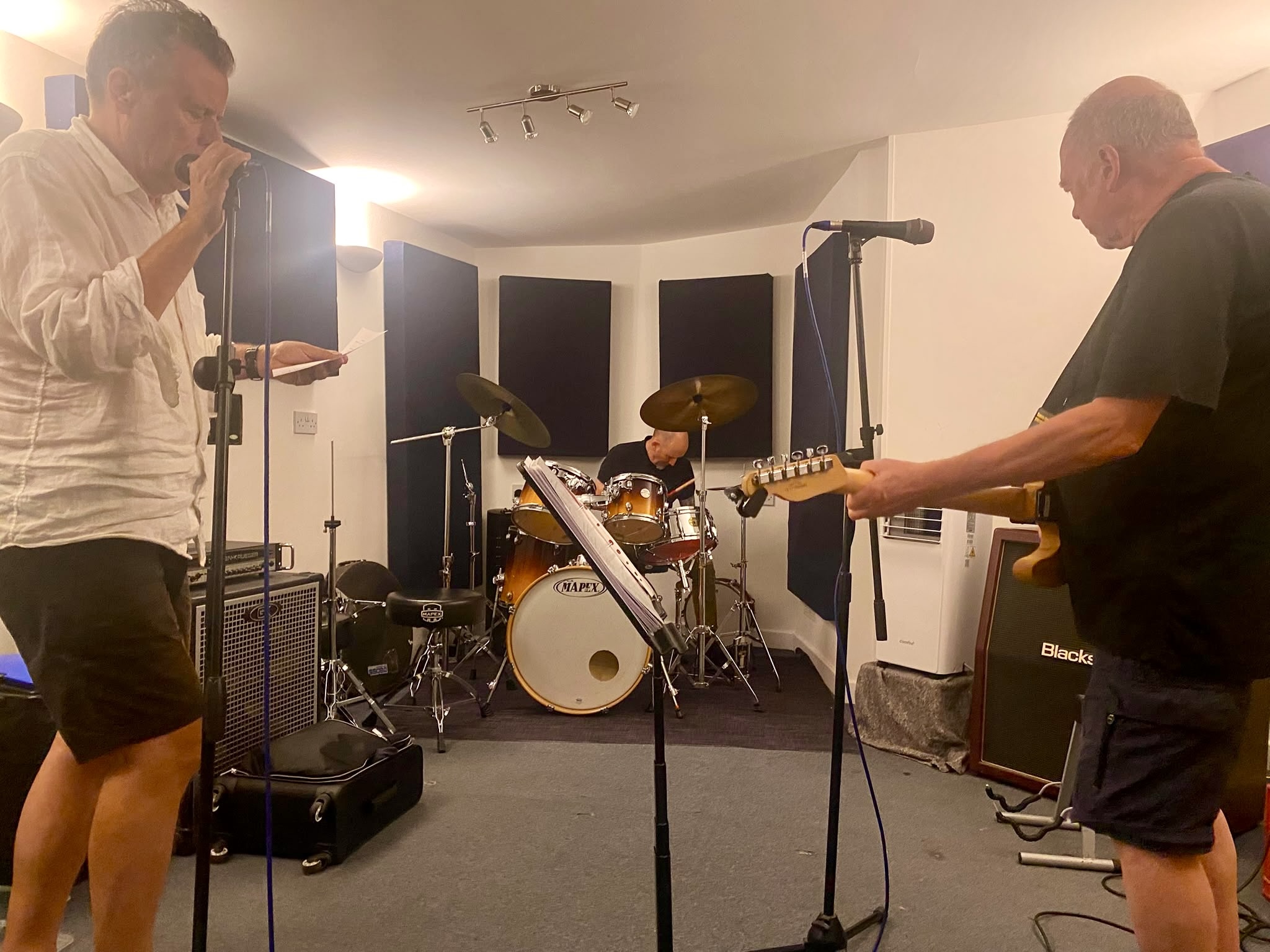
Simon, Simon and Mick – White House Recording Studio, Reading, July 12th
Despite the heat we managed 15 different songs on Sunday – even managing to start and stop together.
Mick says he needs to remember how to play guitar, I need to remember all the words and Simon Butler-Smith is, as always, absolutely on top of everything.
October is looking promising…get your tickets now!
Images: Carole Brophy
- = Jefferson Airplane reference for all you hippies
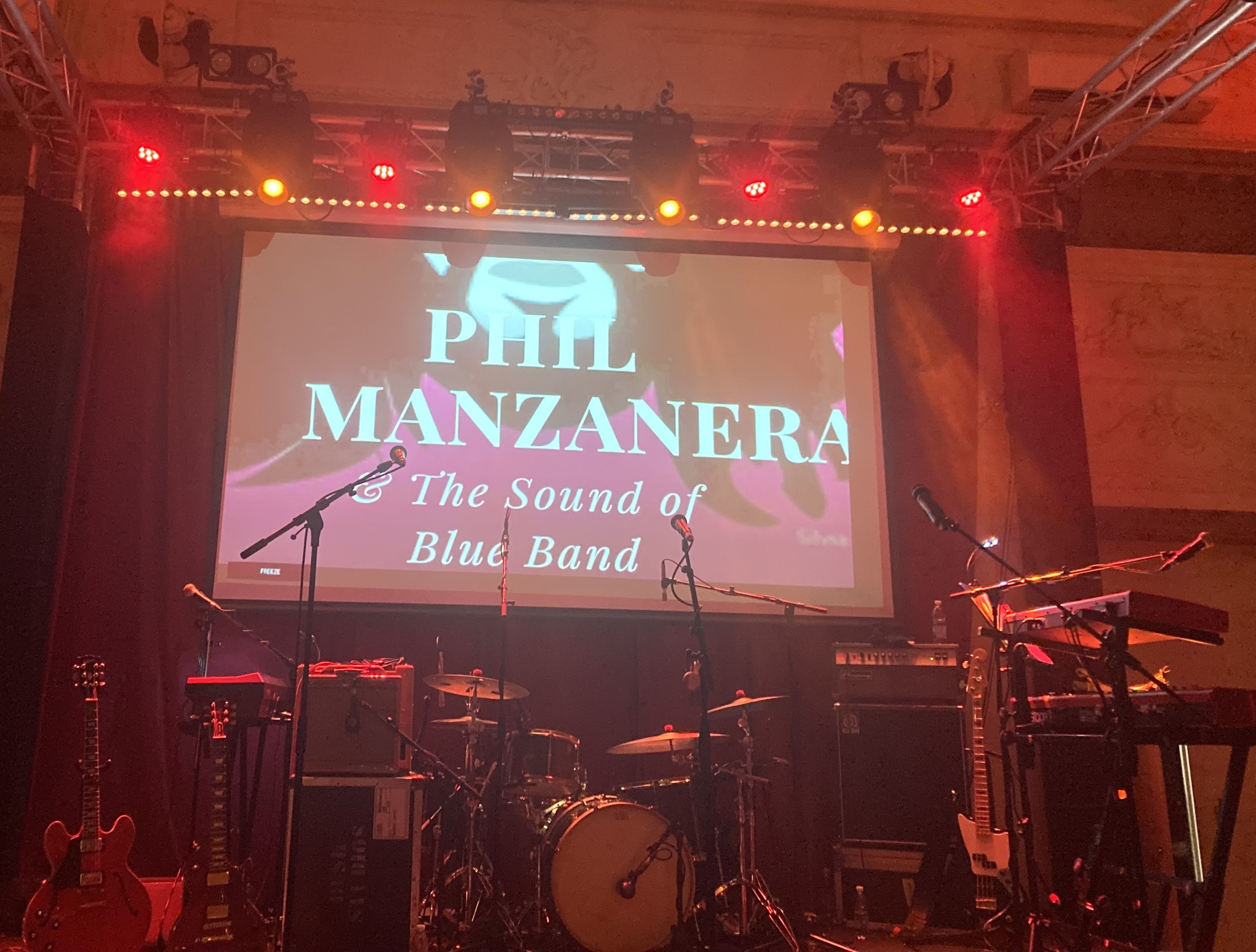
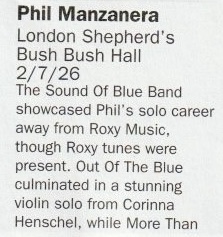
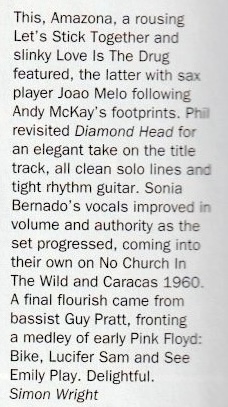
The intimate Bush Hall hosted a rare performance by The Sound Of Blue Band, the vehicle that Phil uses to showcase his solo career away from Roxy Music. Roxy tunes were present – Out Of The Blue culminated in a stunning violin solo from Corinna Henschel whilst More Than This, Amazona, a rousing Let’s Stick Together and a slinky Love Is The Drug also featured, the latter with sax player Joao Melo following in Andy McKay’s footprints. Phil revisited his first solo LP Diamond Head for an elegant take on the title track, all clean solo lines and tight rhythm guitar. Sonia Bernado’s vocals improved in volume and authority as the set progressed, coming into their own on No Church In The Wild and Caracas 1960. A final flourish came from guest bassist Guy Pratt, fronting a medley of early Pink Floyd songs– Bike, Lucifer Sam and See Emily Play. Delightful
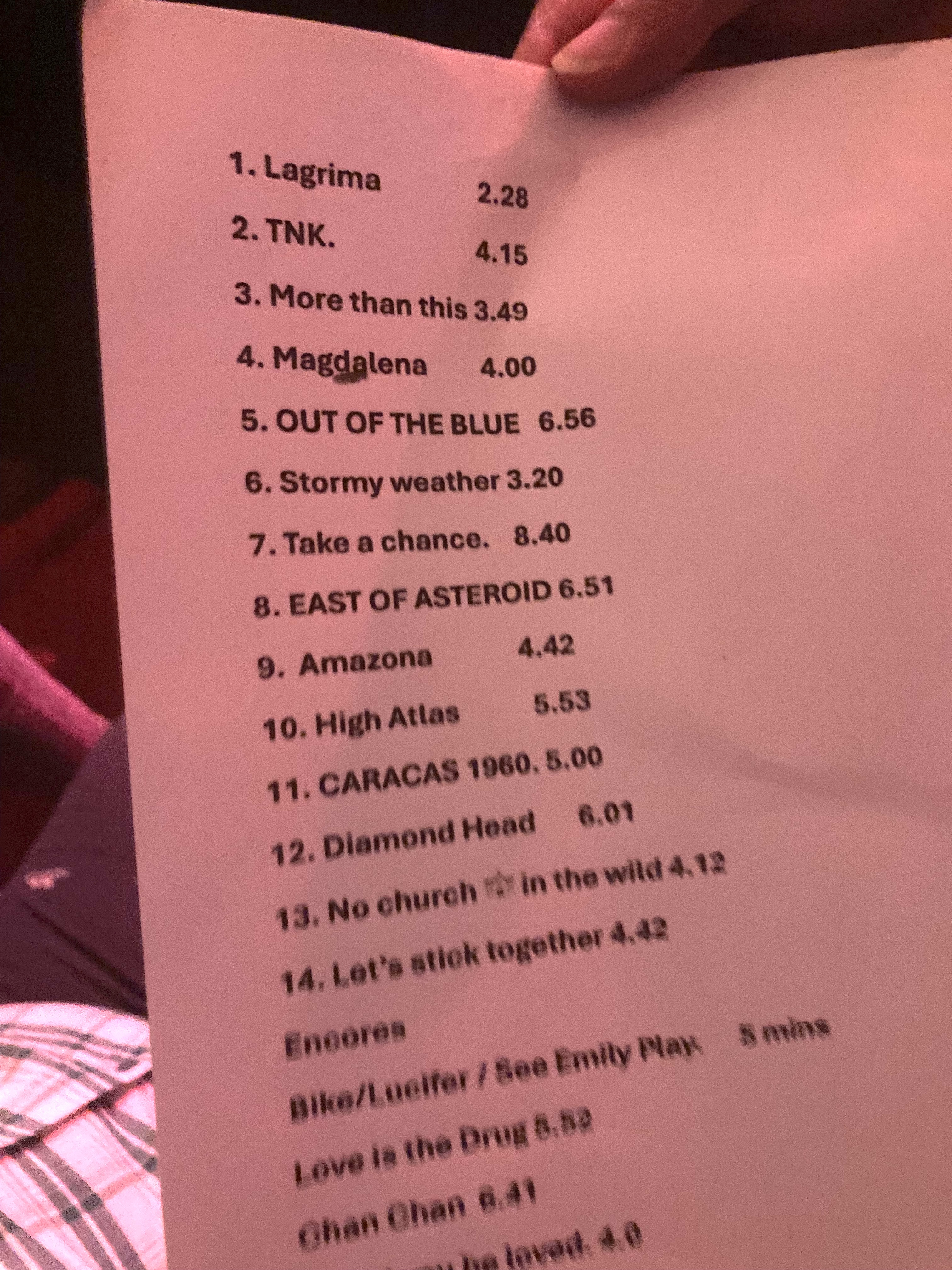
And here is how my review appeared in Record Collector 587 (September 2026)
June 13th 2026 (afternoon gig)
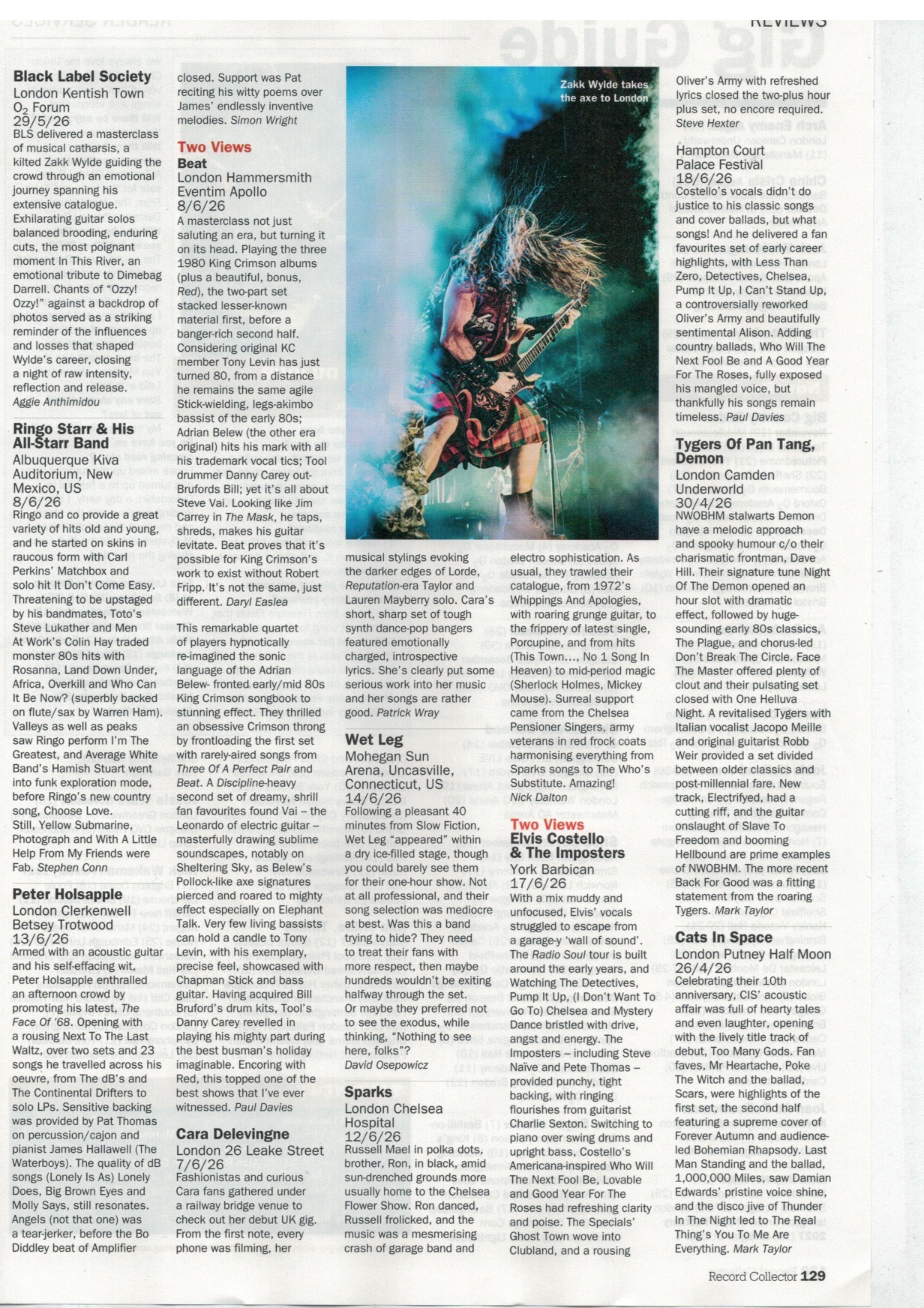
Armed with only an acoustic guitar and his self-effacing wit, Peter Holsapple enthralled a sold-out Betsey Trotwood promoting his latest LP The Face Of ‘68. Opening with a rousing Next To The Last Waltz, over two sets and twenty-three songs Peter travelled across his entire oeuvre from his time with The dB’s and The Continental Drifters through to more recent solo LPs. Sensitive backing was provided by Pat Thomas on percussion / cajon and pianist James Hallawell (The Waterboys). The quality of dB songs Lonely Is (As Lonely Does), Big Brown Eyes and Molly Says still resonates today. Angels (not that one) was a real tear-jerker before the Bo Diddley beat of Amplifier ended the afternoon. Support was provided by Pat reciting his witty poems over James’ endlessly inventive melodies.
Review written for Record Collector magazine
Photographs: Chris Metzler
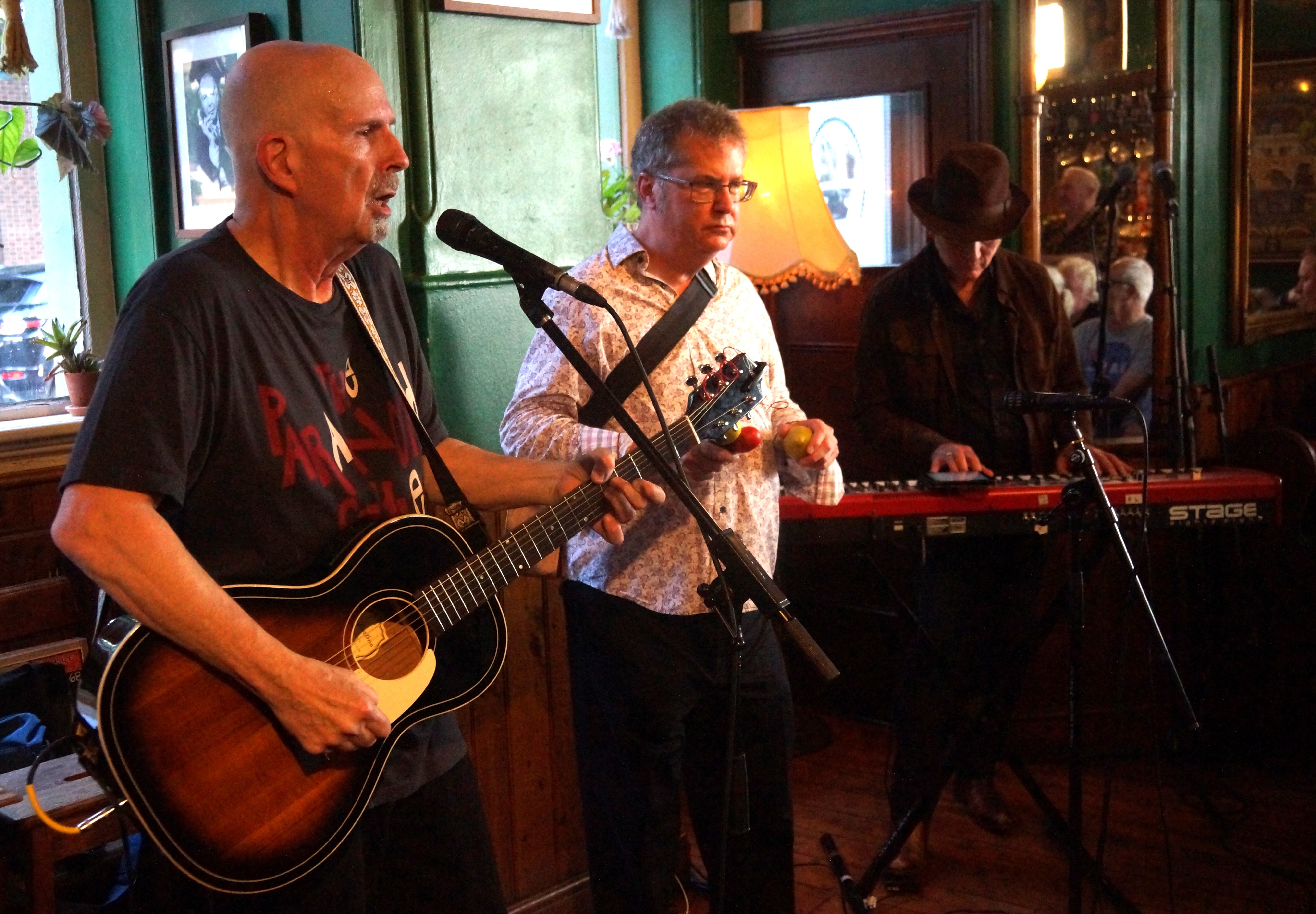
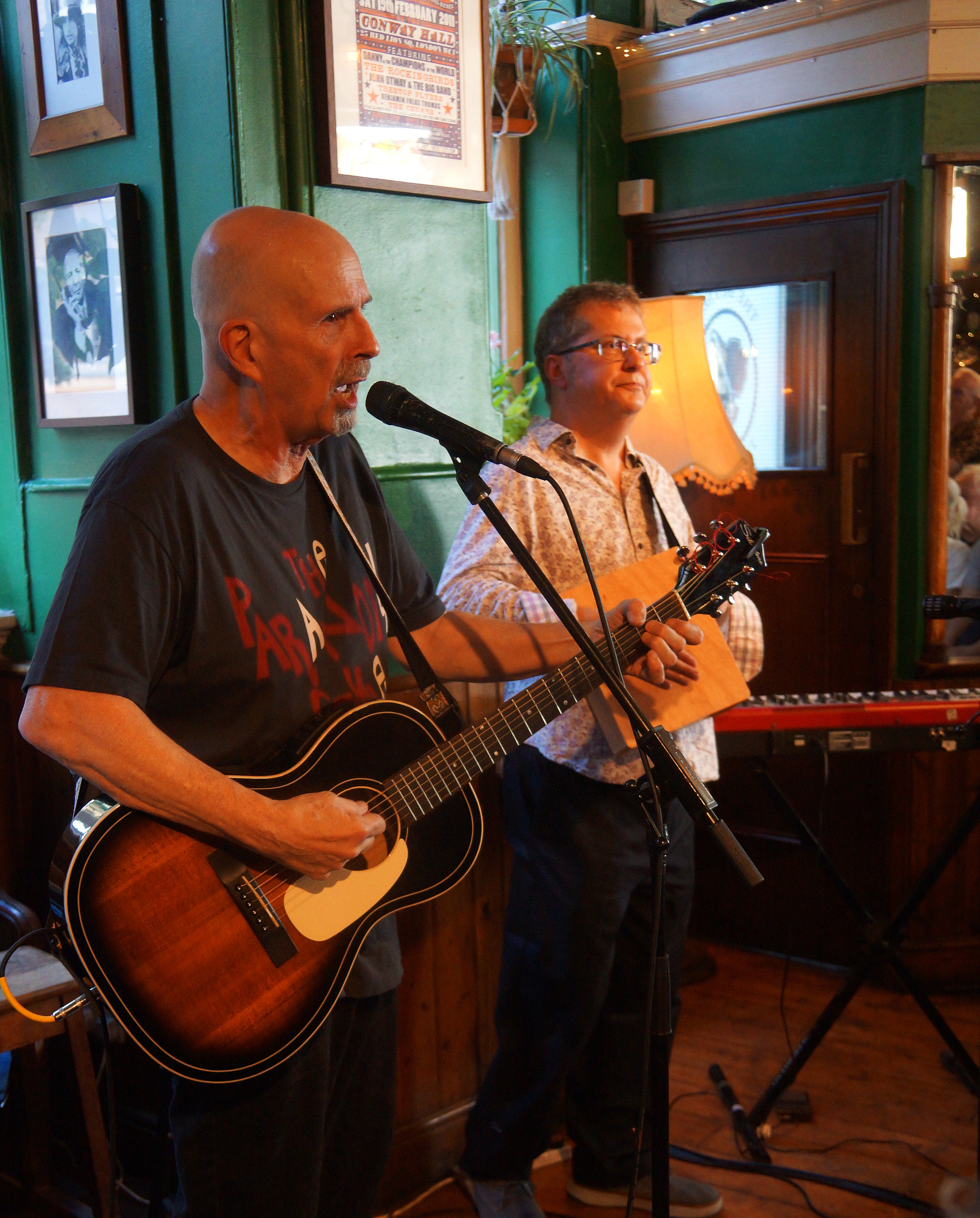
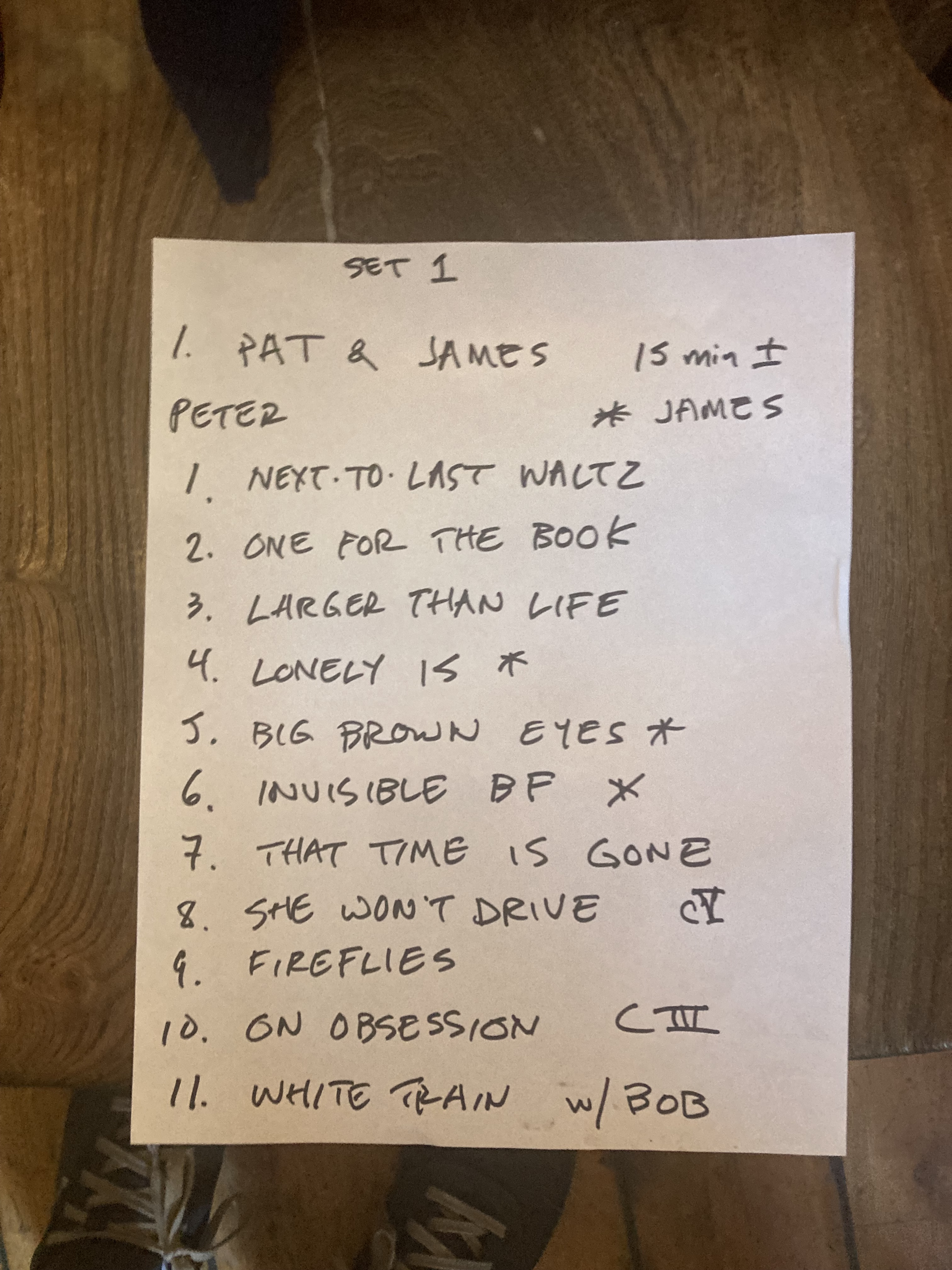
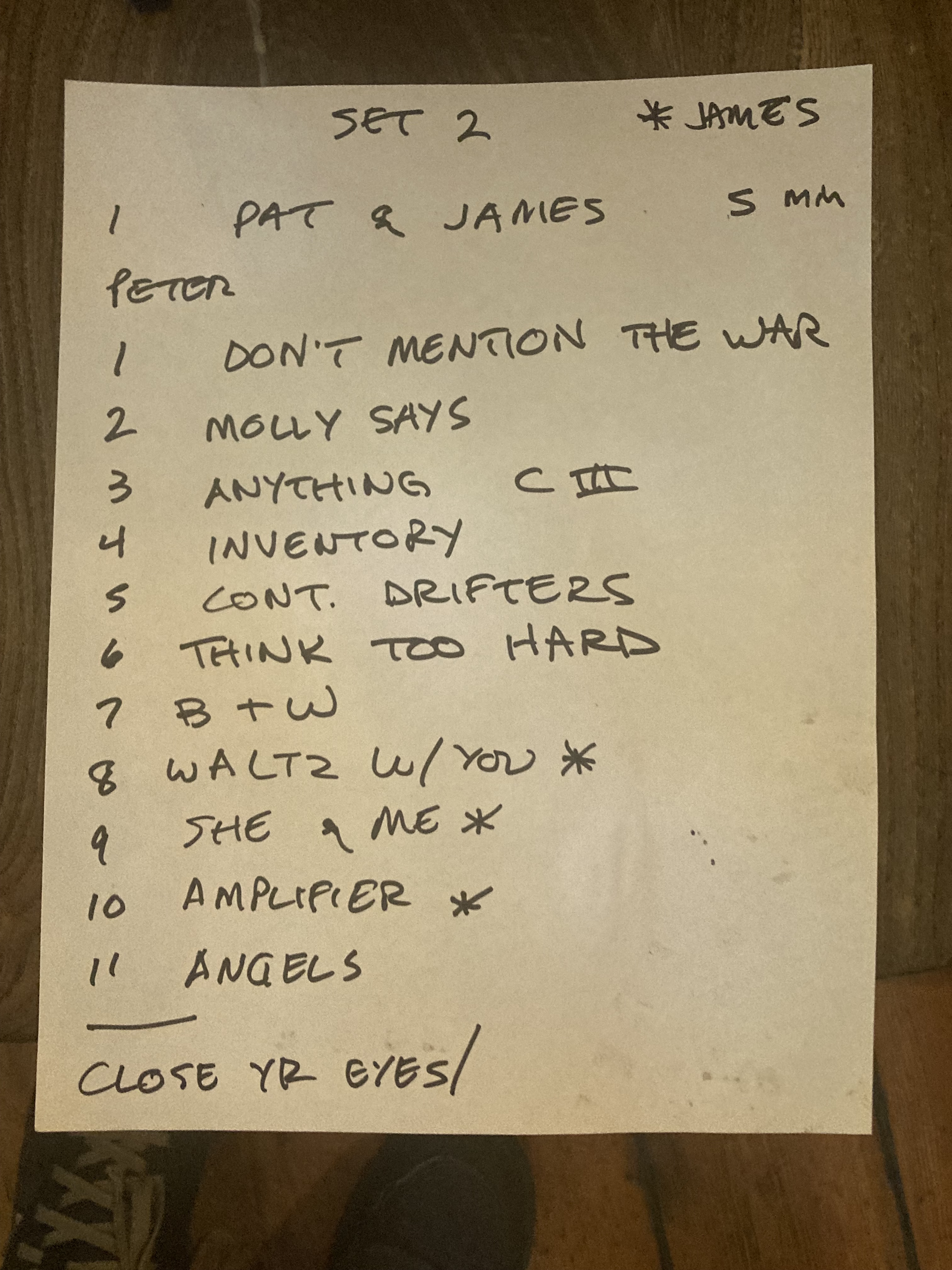
And the review that appeared in Record Collector for August 2026:
Order now from http://www.1960s.london
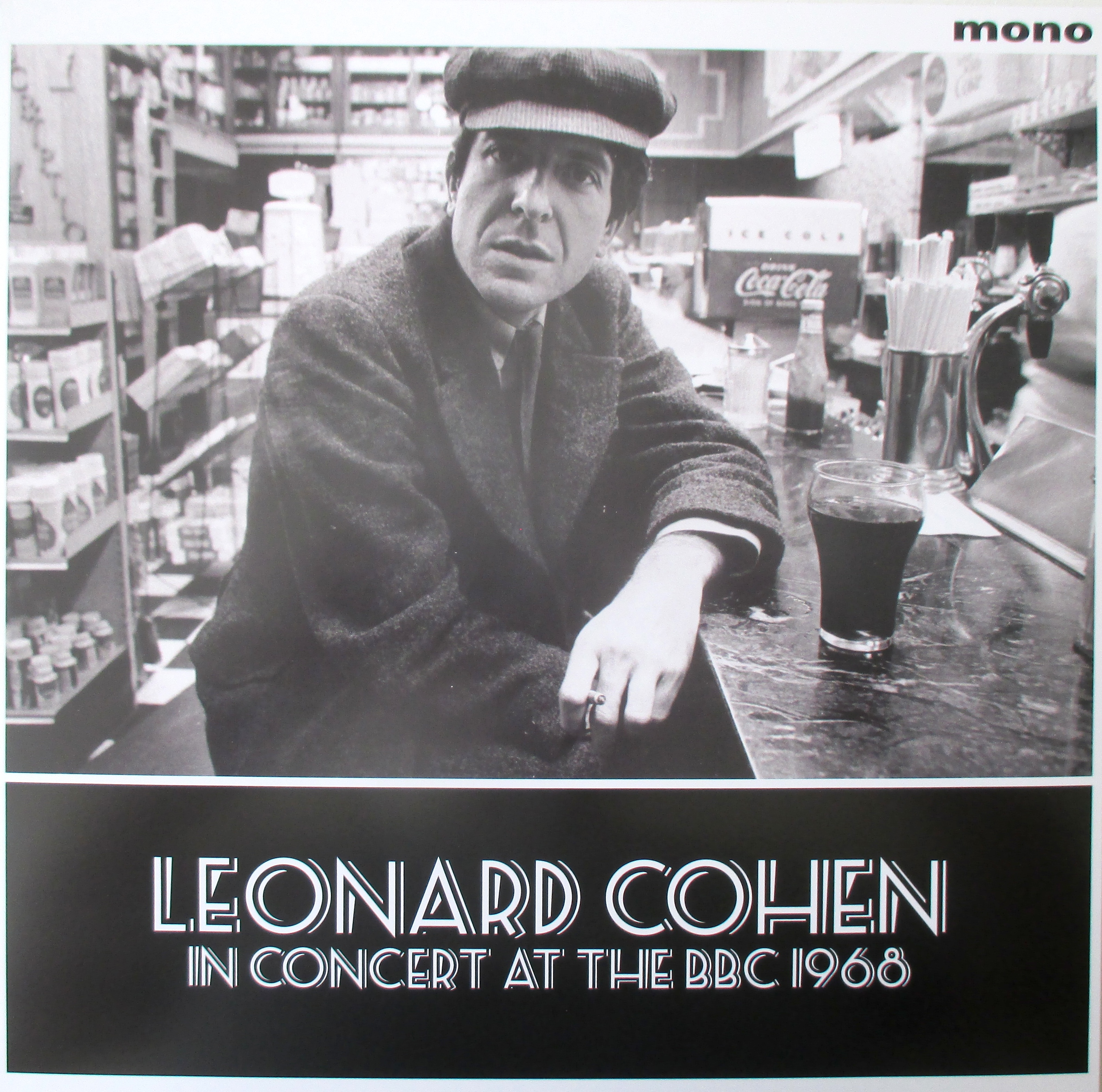
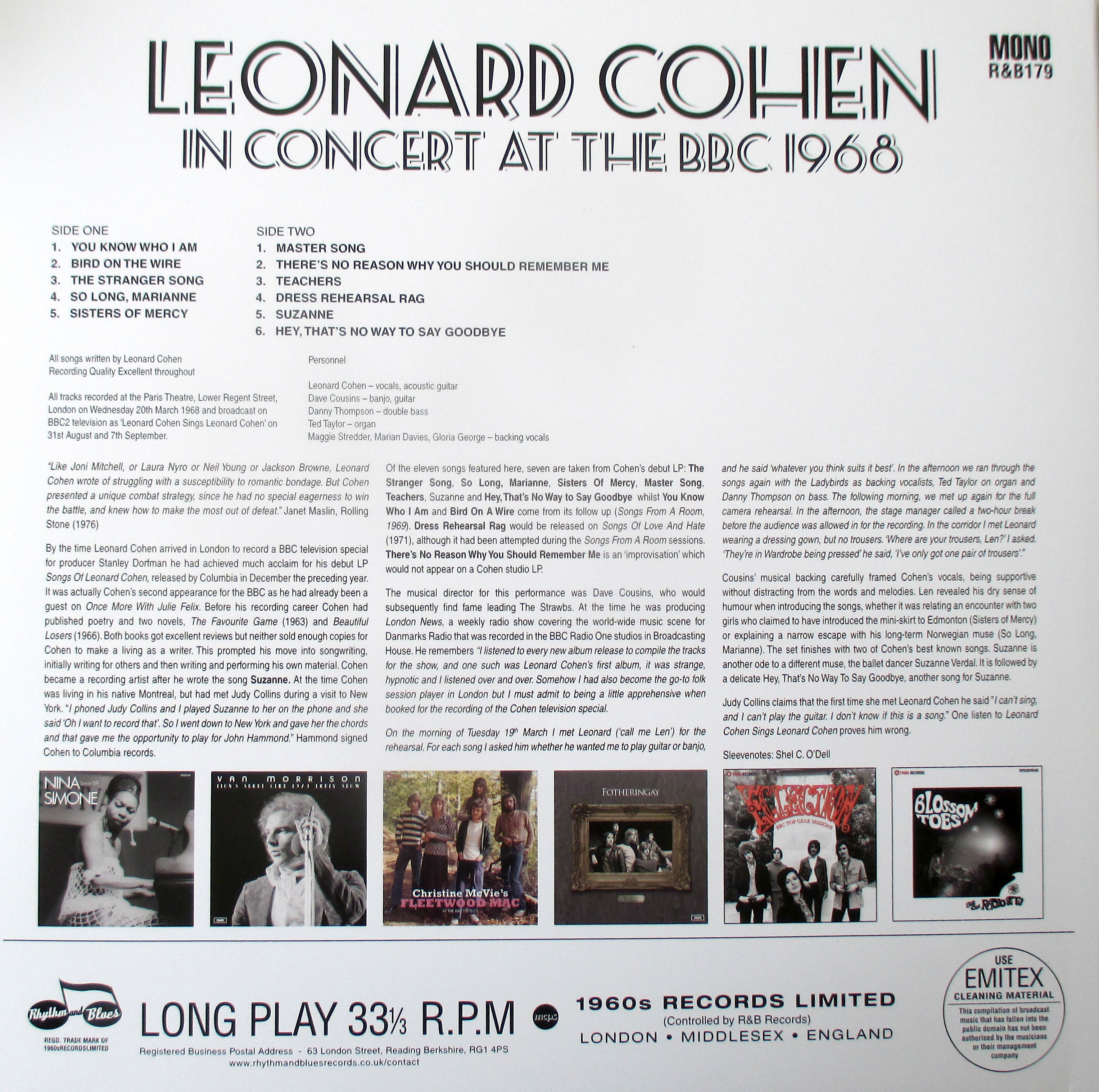
Leonard Cohen – Live On The BBC 1968
Tracklisting
Side One
- You Know Who I am
- Bird On The Wire
- The Stranger Song
- So Long, Marianne
- Sisters Of Mercy
Side Two
- Master Song
- There’s No Reason Why You Should Remember Me
- Teachers
- Dress Rehearsal Rag
- Suzanne
- Hey, That’s No Way To Say Goodbye
All songs written by Leonard Cohen
Recording Details
All tracks recorded at the Paris Theatre, Lower Regent Street, London on Wednesday 20th March and broadcast on BBC2 television as ‘Leonard Cohen Sings Leonard Cohen’ on Saturday 31st August (Side One Tracks 1-4, Side Two Track 2) and Saturday 7th September (Side One, Track 5 and Side Two Tracks 2-6)
Personnnel
Leonard Cohen – vocals, acoustic guitar
Dave Cousins – banjo, guitar
Danny Thompson – double bass
Ted Taylor – organ
Maggie Stredder, Marian Davies, Gloria George – backing vocals
Recording Quality
Excellent throughout
Sleevenotes
“Like Joni Mitchell, or Laura Nyro or Neil Young or Jackson Browne, Leonard Cohen wrote of struggling with a susceptibility to romantic bondage. But Cohen presented a unique combat strategy, since he had no special eagerness to win the battle, and knew how to make the most out of defeat.” Janet Maslin, Rolling Stone (1976)
By the time Leonard Cohen arrived in London to record a BBC television special for producer Stanley Dorfman he had achieved much acclaim for his debut LP Songs Of Leonard Cohen, released by Columbia in December the preceding year. It was actually Cohen’s second appearance for the BBC as he had already been a guest on Once More With Julie Felix. Before his recording career Cohen had published poetry and two novels, The Favourite Game (1963) and Beautiful Losers (1966). Both books got excellent reviews but neither sold enough copies for Cohen to make a living as a writer. This prompted his move into songwriting, initially writing for others and then writing and performing his own material. Cohen became a recording artist after he wrote the song Suzanne. At the time Cohen was living in his native Montreal, but had met Judy Collins during a visit to New York. “I phoned Judy Collins and I played Suzanne to her on the phone and she said ‘Oh I want to record that’ . So I went down to New York and gave her the chords and that gave me the opportunity to play for John Hammond.” Hammond signed Cohen to Columbia records.
Of the eleven songs featured here, seven are taken from Cohen’s debut LP: The Stranger Song, So Long, Marianne, Sisters Of Mercy, Master Song, Teachers, Suzanne and Hey, That’s No Way to Say Goodbye whilst You Know Who I Am and Bird On A Wire come from its follow up (Songs From A Room, 1969). Dress Rehearsal Rag would be released on Songs Of Love And Hate (1971), although it had been attempted during the Songs From A Room sessions. There’s No Reason Why You Should Remember Me is an ‘improvisation’ which would not appear on a Cohen studio LP.
The musical director for this performance was Dave Cousins, who would subsequently find fame leading The Strawbs. At the time he was producing London News, a weekly radio show covering the world-wide music scene for Danmarks Radio that was recorded in the BBC Radio One studios in Broadcasting House. He remembers “I listened to every new album release to compile the tracks for the show, and one such was Leonard Cohen’s first album, it was strange, hypnotic and I listened over and over. Somehow I had also become the go-to folk session player in London but I must admit to being a little apprehensive when booked for the recording of the Cohen television special.
On the morning of Tuesday 19th March I met Leonard (‘call me Len’) for the rehearsal. For each song I asked him whether he wanted me to play guitar or banjo, and he said ‘whatever you think suits it best’. In the afternoon we ran through the songs again with the Ladybirds as backing vocalists, Ted Taylor on organ and Danny Thompson on bass. The following morning, we met up again for the full camera rehearsal. In the afternoon, the stage manager called a two-hour break before the audience was allowed in for the recording. In the corridor I met Leonard wearing a dressing gown, but no trousers. ‘Where are your trousers, Len?’ I asked. ‘They’re in Wardrobe being pressed’ he said, ‘I’ve only got one pair of trousers.’.”
Cousins’ musical backing carefully framed Cohen’s vocals, being supportive without distracting from the words and melodies. Len revealed his dry sense of humour when introducing the songs, whether it was relating an encounter with two girls who claimed to have introduced the mini-skirt to Edmonton (Sisters of Mercy) or explaining a narrow escape with his long-term Norwegian muse (So Long, Marianne). The set finishes with two of Cohen’s best known songs. Suzanne is another ode to a different muse, the ballet dancer Suzanne Verdal. It is followed by a delicate Hey, That’s No Way To Say Goodbye, another song for Suzanne.
Judy Collins claims that the first time she met Leonard Cohen he said ”I can’t sing, and I can’t play the guitar. I don’t know if this is a song.” One listen to Leonard Cohen Sings Leonard Cohen proves him wrong.
Sleevenotes: Shel C. O’Dell
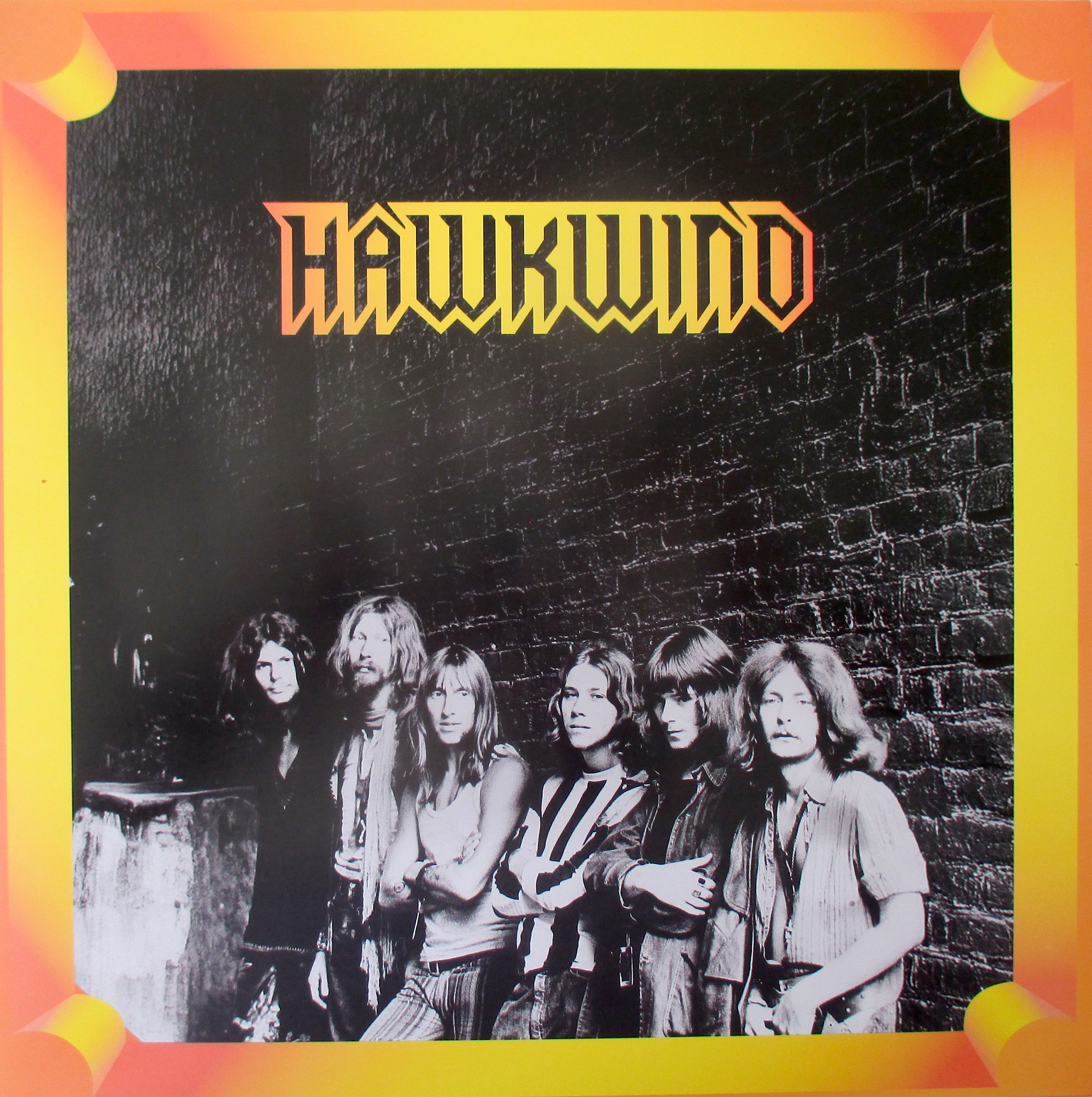
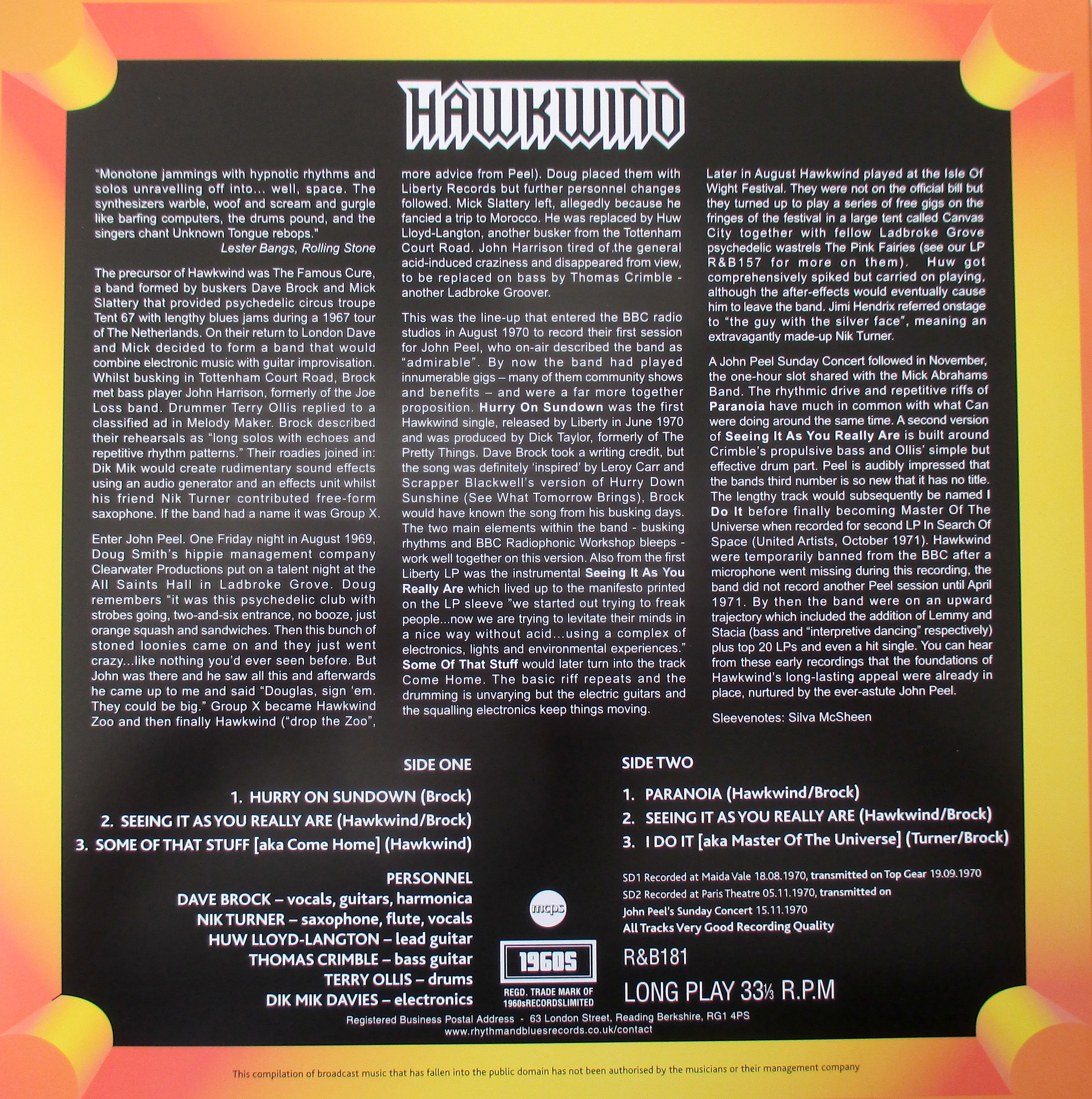
Hawkwind
At the BBC 1970
Tracklisting
Side One
- Hurry On Sundown (Brock)
- Seeing It As You Really Are (Hawkwind/Brock)
- Some Of That Stuff aka Come Home (Hawkwind)
Side Two
- Paranoia (Hawkwind/Brock)
- Seeing It As You Really Are (Hawkwind/Brock)
- I Do It aka Master Of The Universe (Turner / Brock)
Recording Details
Side One recorded for BBC radio Top Gear on August 18th and transmitted on September 19th
Side Two recorded for BBC radio John Peel’s Sunday Concert on November 5th and transmitted on November 15th
Personnel
Dave Brock – vocals, guitars, harmonica
Nik Turner – saxophone, flute, vocals
Huw Lloyd-Langton – lead guitar
Thomas Crimble – bass guitar
Terry Ollis – drums
Dik Mik Davies – electronics
Recording Quality
All tracks are Very Good
Sleevenotes
“Monotone jammings with hypnotic rhythms and solos unravelling off into… well, space. The synthesizers warble, woof and scream and gurgle like barfing computers, the drums pound, and the singers chant Unknown Tongue rebops.”
Lester Bangs, Rolling Stone
The precursor of Hawkwind was The Famous Cure, a band formed by buskers Dave Brock and Mick Slattery that provided psychedelic circus troupe Tent 67 with lengthy blues jams during a 1967 tour of The Netherlands. On their return to London Dave and Mick decided to form a band that would combine electronic music with guitar improvisation. Whilst busking in Tottenham Court Road, Brock met bass player John Harrison, formerly of the Joe Loss band. Drummer Terry Ollis replied to a classified ad in Melody Maker. Brock described their rehearsals as “long solos with echoes and repetitive rhythm patterns.” Their roadies joined in: Dik Mik would create rudimentary sound effects using an audio generator and an effects unit whilst his friend Nik Turner contributed free-form saxophone. If the band had a name it was Group X.
Enter John Peel. One Friday night in August 1969 Doug Smith’s hippie management company Clearwater Productions put on a talent night at the All Saints Hall in Ladbroke Grove. Doug remembers “it was this psychedelic club with strobes going, two-and-six entrance, no booze, just orange squash and sandwiches. Then this bunch of stoned loonies came on and they just went crazy…like nothing you’d ever seen before. But John was there and he saw all this and afterwards he came up to me and said “Douglas, sign ‘em. They could be big.” Group X became Hawkwind Zoo and then finally Hawkwind (“drop the Zoo”, more advice from Peel). Doug placed them with Liberty Records but further personnel changes followed. Mick Slattery left, allegedly because he fancied a trip to Morocco. He was replaced by Huw Lloyd-Langton, another busker from the Tottenham Court Road. John Harrison tired of the general acid-induced craziness and disappeared from view, to be replaced on bass by Thomas Crimble – another Ladbroke Groover.
This was the line-up that entered the BBC radio studios in August 1970 to record their first session for John Peel, who on-air described the band as “admirable”. By now the band had played innumerable gigs – many of them community shows and benefits – and were a far more together proposition. Hurry On Sundown was the first Hawkwind single, released by Liberty in June 1970 and produced by Dick Taylor, formerly of The Pretty Things. Dave Brock took a writing credit, but the song was definitely ‘inspired’ by Leroy Carr and Scrapper Blackwell’s version of Hurry Down Sunshine (See What Tomorrow Brings), Brock would have known the song from his busking days. The two main elements within the band – busking rhythms and BBC Radiophonic Workshop bleeps – work well together on this version. Also from the first Liberty LP was the instrumental Seeing It As You Really Are which lived up to the manifesto printed on the LP sleeve ”we started out trying to freak people…now we are trying to levitate their minds in a nice way without acid…using a complex of electronics, lights and environmental experiences.” Some Of That Stuff would later turn into the track Come Home. The basic riff repeats and the drumming is unvarying but the electric guitars and the squalling electronics keep things moving.
Later in August Hawkwind played at the Isle Of Wight Festival. They were not on the official bill but they turned up to play a series of free gigs on the fringes of the festival in a large tent called Canvas City together with fellow Ladbroke Grove psychedelic wastrels The Pink Fairies (see our LP R&B157 for more on them). Huw got comprehensively spiked but carried on playing, although the after-effects would eventually cause him to leave the band. Jimi Hendrix referred onstage to “the guy with the silver face”, meaning an extravagantly made-up Nik Turner.
A John Peel Sunday Concert followed in November, the one-hour slot shared with the Mick Abrahams Band. The rhythmic drive and repetitive riffs of Paranoia have much in common with what Can were doing around the same time. A second version of Seeing It As You Really Are is built around Crimble’s propulsive bass and Ollis’ simple but effective drum part. Peel is audibly impressed that the bands third number is so new that it has no title. The lengthy track would subsequently be named I Do It before finally becoming Master Of The Universe when recorded for second LP In Search Of Space (United Artists, October 1971). Hawkwind were temporarily banned from the BBC after a microphone went missing during this recording, the band did not record another Peel session until April 1971. By then the band were on an upward trajectory which included the addition of Lemmy and Stacia (bass and “interpretive dancing” respectively) plus top 20 LPs and even a hit single. You can hear from these early recordings that the foundations of Hawkwind’s long-lasting appeal were already in place, nurtured by the ever-astute John Peel.
Sleevenotes: Silva McSheen
Order from http://www.1960s.london
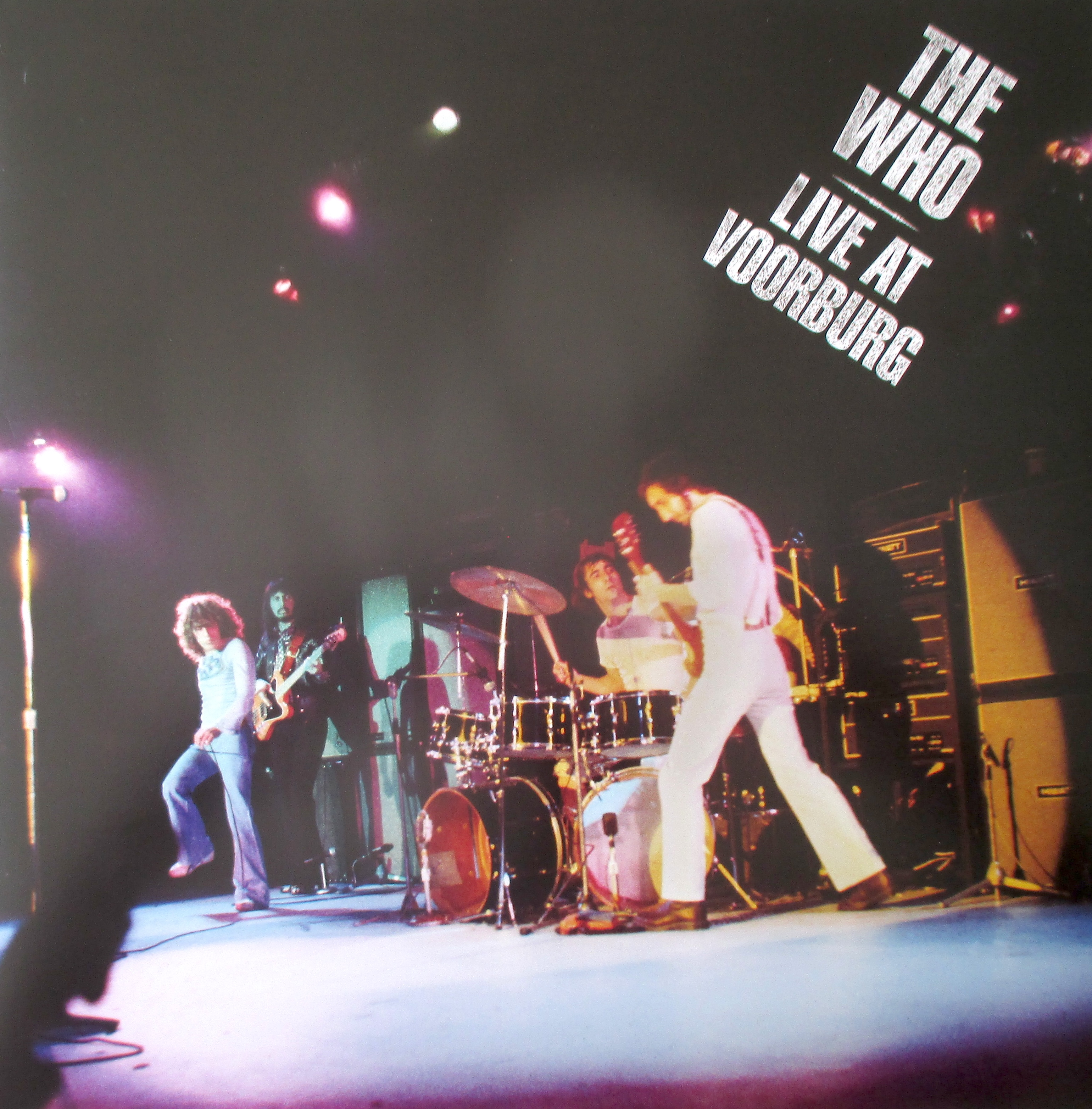
Live In Holland 1973
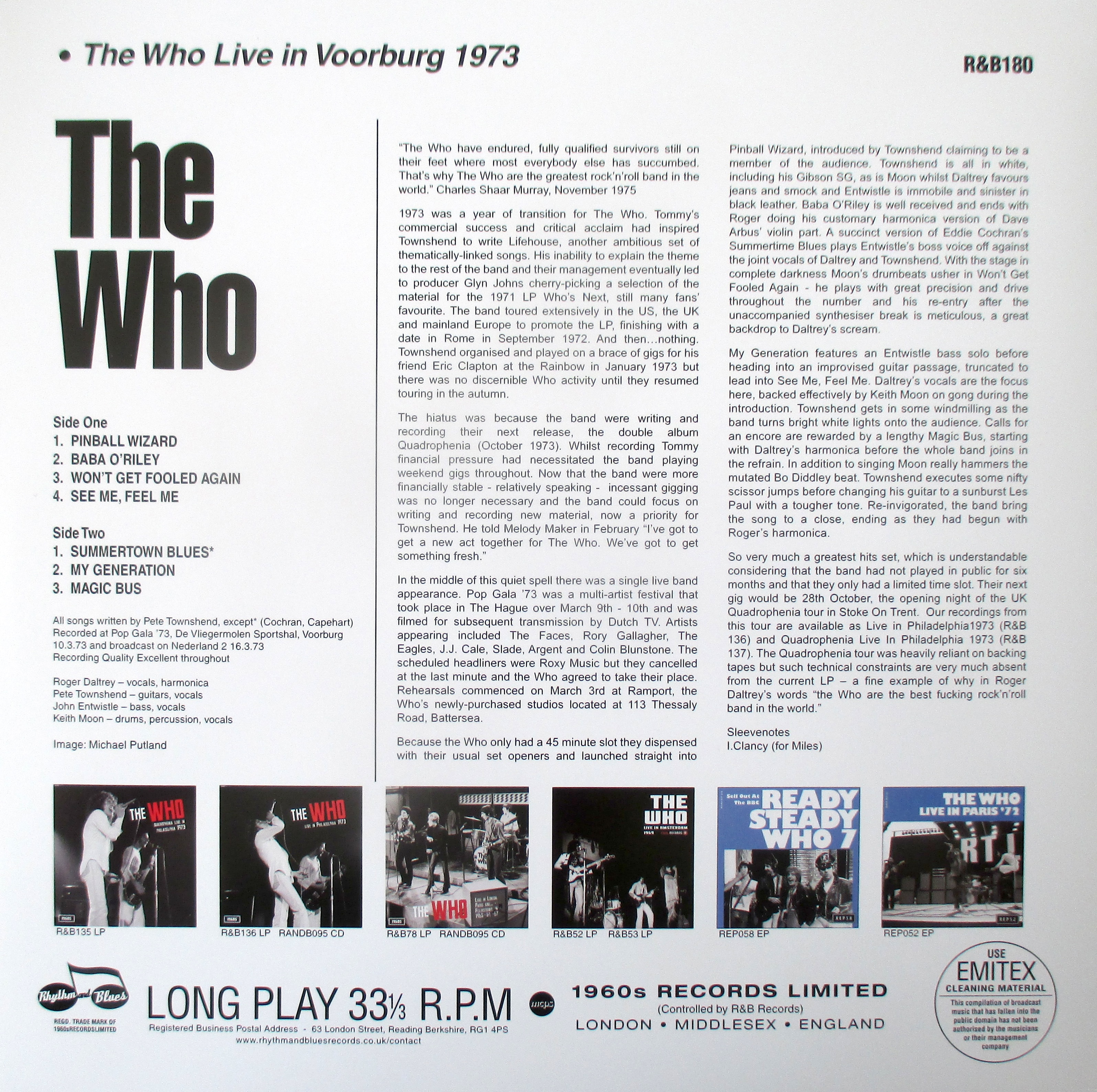
The Who
Side One
- Pinball Wizard
- Baba O’Riley
- Won’t Get Fooled Again
- See Me, Feel Me
Side Two
- Summertime Blues
- My Generation
- Magic Bus
All songs written by Pete Townshend, except for Side Two, Track 1 (Cochran, Capehart)
Recording Details
All tracks recorded live on Wednesday March 10th at Pop Gala ’73, De Vliegermolen Sportshal, Voorburg and broadcast on Nederland 2 Dutch television on Friday 16th March
Recording Quality
Very Good
Personnel
Roger Daltrey – vocals, harmonica
Pete Townshend – guitars, vocals
John Entwistle – bass, vocals
Keith Moon – drums, percussion, vocals
Sleevenotes
“The Who have endured, fully qualified survivors still on their feet where most everybody else has succumbed. That’s why The Who are the greatest rock’n’roll band in the world.”
Charles Shaar Murray, November 1975
1973 was a year of transition for The Who. Tommy’s commercial success and critical acclaim had inspired Townshend to write Lifehouse, another ambitious set of thematically-linked songs. His inability to explain the theme to the rest of the band and their management eventually led to producer Glyn Johns cherry-picking a selection of the material for the 1971 LP Who’s Next, still many fans’ favourite. The band toured extensively in the US, the UK and mainland Europe to promote the LP, finishing with a date in Rome in September 1972. And then…nothing. Townshend organised and played on a brace of gigs for his friend Eric Clapton at the Rainbow in January 1973 but there was no discernible Who activity until they resumed touring in the autumn.
The hiatus was because the band were writing and recording their next release, the double album Quadrophenia (October 1973). Whilst recording Tommy financial pressure had necessitated the band playing weekend gigs throughout. Now that the band were more financially stable – relatively speaking – incessant gigging was no longer necessary and the band could focus on writing and recording new material, now a priority for Townshend. He told Melody Maker in February “I’ve got to get a new act together for The Who. We’ve got to get something fresh.”
In the middle of this quiet spell there was a single live band appearance. Pop Gala ’73 was a multi-artist festival that took place in The Hague over March 9th – 10th and was filmed for subsequent transmission by Dutch TV. Artists appearing included The Faces, Rory Gallagher, The Eagles, J.J. Cale, Slade, Argent and Colin Bluntstone. The scheduled headliners were Roxy Music but they cancelled at the last minute and the Who agreed to take their place. Rehearsals commenced on March 3rd at Ramport, the Who’s newly-purchased studios located at 113 Thessaly Road, Battersea.
Because the Who only had a 45 minute slot they dispensed with their usual set openers and launched straight into Pinball Wizard, introduced by Townshend claiming to be a member of the audience. Townshend is all in white, including his Gibson SG, as is Moon whilst Daltrey favours jeans and smock and Entwistle is immobile and sinister in black leather. Baba O’Riley is well received and ends with Roger doing his customary harmonica version of Dave Arbus’ violin part. A succinct version of Eddie Cochran’s Summertime Blues plays Entwistle’s boss voice off against the joint vocals of Daltrey and Townshend. With the stage in complete darkness Moon’s drumbeats usher in Won’t Get Fooled Again – he plays with great precision and drive throughout the number and his re-entry after the unaccompanied synthesiser break is meticulous, a great backdrop to Daltrey’s scream.
My Generation features an Entwistle bass solo before heading into an improvised guitar passage, truncated to lead into See Me, Feel Me. Daltrey’s vocals are the focus, here backed effectively by Keith Moon on gong during the introduction. Townshend gets in some windmilling as the band turns bright white lights onto the audience. Calls for an encore are rewarded by a lengthy Magic Bus, starting with Daltrey’s harmonica before the whole band joins in the refrain. In addition to singing Moon really hammers the mutated Bo Diddley beat. Townshend executes some nifty scissor jumps before changing his guitar to a sunburst Les Paul with a tougher tone. Re-invigorated, the band bring the song to a close, ending as they had begun with Roger’s harmonica.
So very much a greatest hits set, which is understandable considering that the band had not played in public for six months and that they only had a limited time slot. Their next gig would be 28th October, the opening night of the UK Quadrophenia tour in Stoke On Trent. Our recordings from this tour are available as Live in Philadelphia1973 (B&B 136) and Quadrophenia Live In Philadelphia 1973 (R&B 137). The Quadrophenia tour was heavily reliant on backing tapes but such technical constraints are very much absent from the current LP – a fine example of why in Roger Daltrey’s words “the Who are the best fucking rock’n’roll band in the world.”
Sleevenotes
I.Clancy (for Miles)
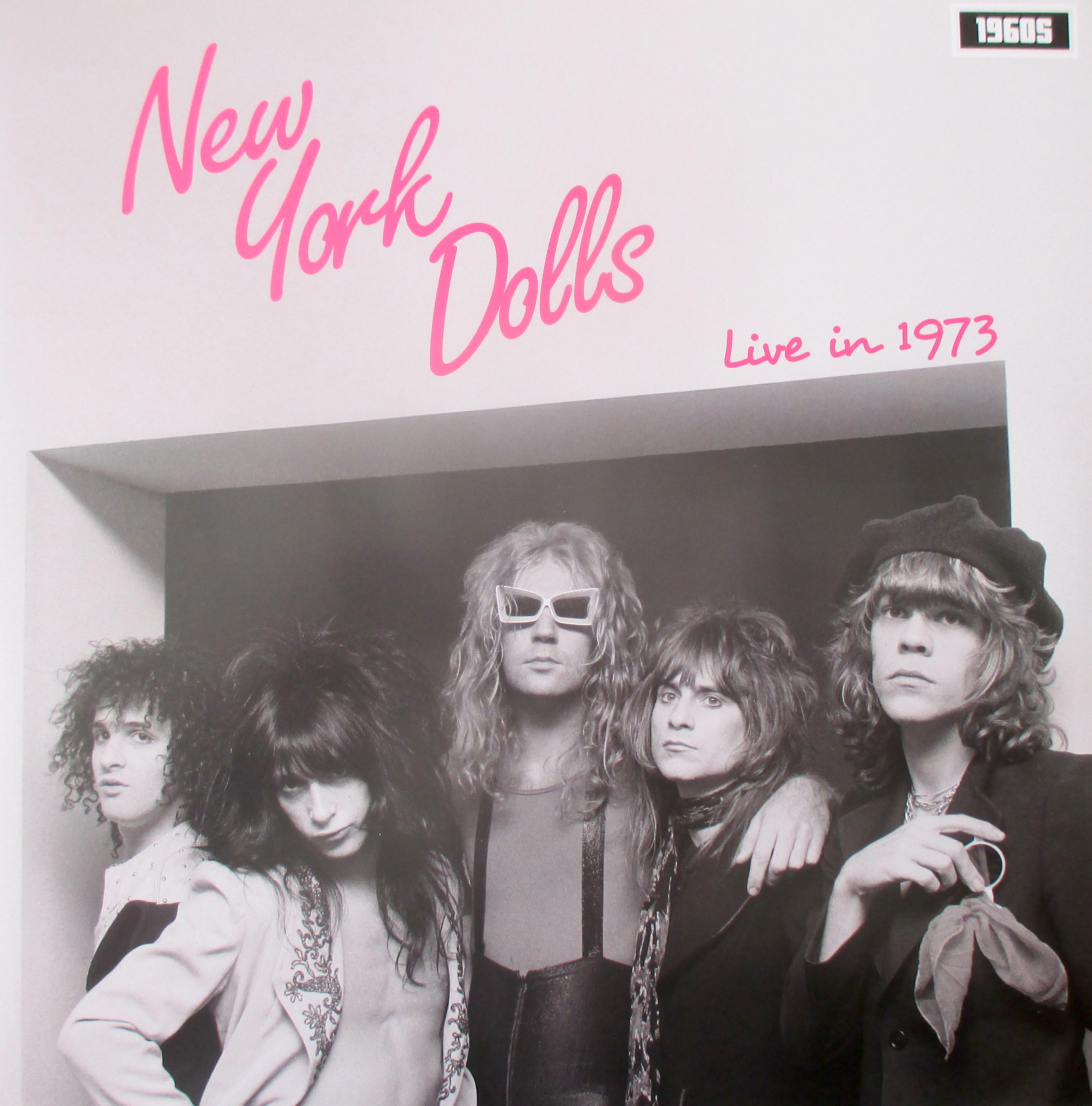
Live 1973
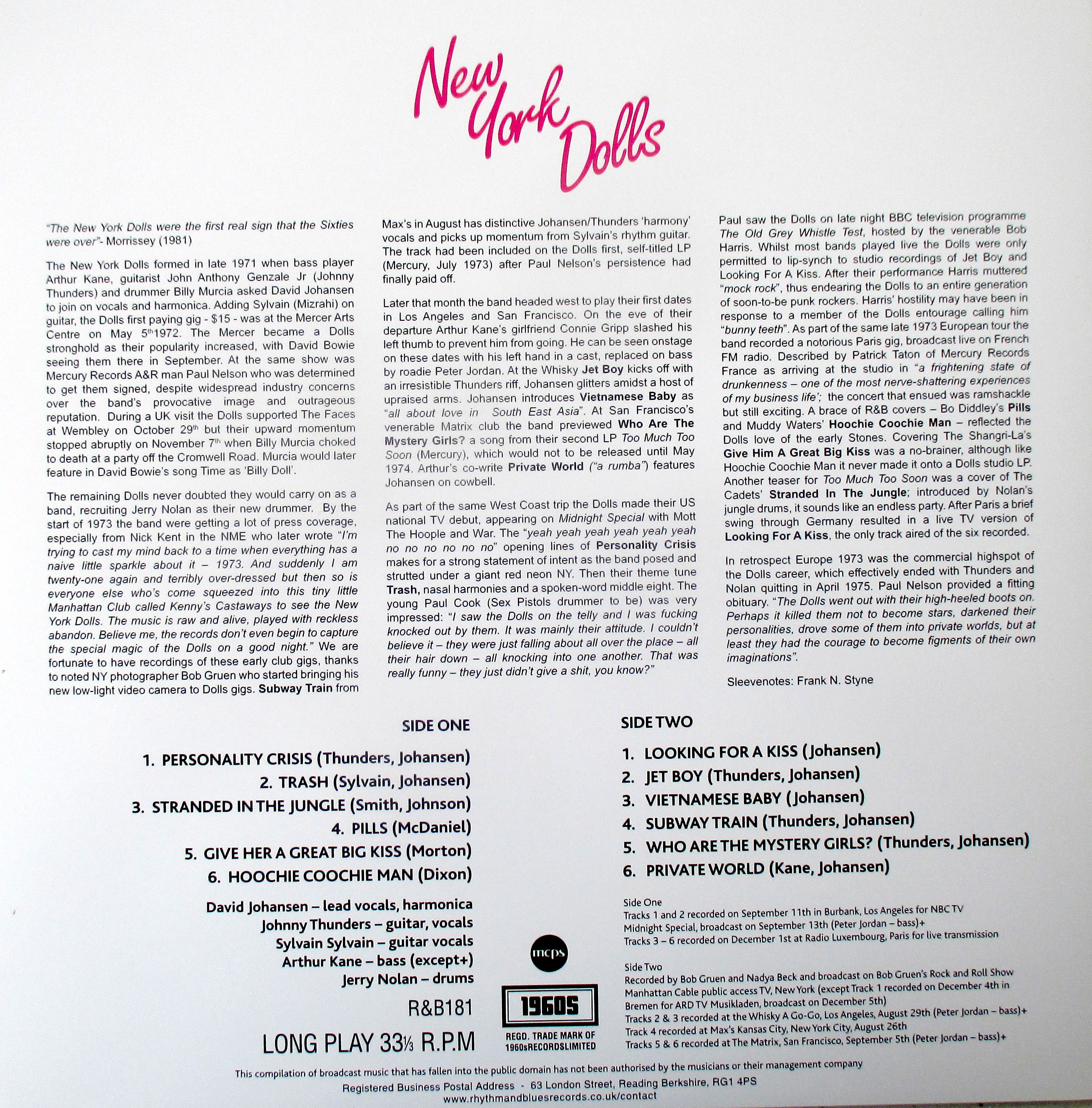
New York Dolls
Tracklisting
Side One
- Personality Crisis (Thunders, Johansen)
- Trash (Sylvain, Johansen)
- Stranded In The Jungle (Smith, Johnson)
- Pills (McDaniel)
- Give Her A Great Big Kiss (Morton)
- Hoochie Coochie Man (Dixon)
Side Two
- Looking For A Kiss (Johansen)
- Jet Boy (Thunders, Johansen)
- Vietnamese Baby (Johansen)
- Subway Train (Thunders, Johansen)
- Who Are The Mystery Girls? (Johansen, Thunders)
- Private World (Kane, Johansen)
Personnel
David Johansen – lead vocals, harmonica
Johnny Thunders – guitar, vocals
Sylvain Sylvain – guitar vocals
Jerry Nolan – drums
Arthur Kane – bass
Peter Jordan – bass (Side One, Tracks 1 & 2 and Side Two tracks 2, 3, 5 & 6)
Recording details
Side One
Tracks 1 and 2 recorded on September 11th in Burbank, Los Angeles for NBC TV
Midnight Special, broadcast on September 13th
Tracks 3 – 6 recorded on December 1st at Radio Luxembourg, Paris for live transmission
Side Two
Track 1 recorded on December 4th in Bremen for ARD TV Musikladen, broadcast on December 5th
Tracks 2 & 3 recorded at the Whisky A Go-Go, Los Angeles, August 29th
Track 4 recorded at Max’s Kansas City, New York City on August 26th
Tracks 5 & 6 recorded at The Matrix, San Francisco, September 5th
Tracks 2 – 6 recorded by Bob Gruen and Nadya Beck and broadcast on Bob Gruen’s Rock and Roll Show Manhattan Cable public access TV, New York
Recording Quality
The tracks from Midnight Special, Musikladen and Paris are all Excellent: the remaining tracks are Very Good
Sleevenotes
The New York Dolls were the first real sign that the Sixties were over
Morrissey (1981)
The New York Dolls formed in late 1971 when bass player Arthur Kane, guitarist John Anthony Genzale Jr (Johnny Thunders) and drummer Billy Murcia asked David Johansen to join on vocals and harmonica. Adding Sylvain (Mizrahi) on guitar, the Dolls first paying gig – $15 – was at the Mercer Arts Centre on May 5th1972. The Mercer became a Dolls stronghold as their popularity increased, with David Bowie seeing them there in September. At the same show was Mercury Records A&R man Paul Nelson who was determined to get them signed, despite widespread industry concerns over the band’s provocative image and outrageous reputation. During a UK visit the Dolls supported The Faces at Wembley on October 29th but their upward momentum stopped abruptly on November 7th when Billy Murcia choked to death at a party off the Cromwell Road. Murcia would later feature in David Bowie’s song Time as ‘Billy Dolls’.
The remaining Dolls never doubted they would carry on as a band, recruiting Jerry Nolan as their new drummer. By the start of 1973 the band were getting a lot of press coverage, especially from Nick Kent in the NME who later wrote “I’m trying to cast my mind back to a time when everything has a naive little sparkle about it – 1973. And suddenly I am twenty-one again and terribly over-dressed but then so is everyone else who’s come squeezed into this tiny little Manhattan Club called Kenny’s Castaways to see the New York Dolls. The music is raw and alive, played with reckless abandon. Believe me, the records don’t even begin to capture the special magic of the Dolls on a good night.” We are fortunate to have recordings of these early club gigs, thanks to noted NY photographer Bob Gruen who started bringing his new low-light video camera to Dolls gigs. Subway Train from Max’s in August has distinctive Johansen/Thunders ‘harmony’ vocals and picks up momentum from Sylvain’s rhythm guitar. The track had been included on the Dolls first, self-titled LP (Mercury, July 1973) after Paul Nelson’s persistence had finally paid off.
Later that month the band headed west to play their first dates in Los Angeles and San Francisco. On the eve of their departure Arthur Kane’s girlfriend Connie Gripp slashed his left thumb to prevent him from going. He can be seen onstage on these dates with his left hand in a cast, replaced on bass by roadie Peter Jordan. At the Whisky Jet Boy kicks off with an irresistible Thunders riff, Johansen glitters amidst a host of upraised arms. Johansen introduces Vietnamese Baby as “all about love in South East Asia”. At San Francisco’s venerable Matrix club the band previewed Who Are The Mystery Girls? a song from their second LP Too Much Too Soon (Mercury), which would not to be released until May 1974. Arthur’s co-write Private World (“a rhumba”) features Johansen on cowbell.
As part of the same West Coast trip the Dolls made their US national TV debut, appearing on Midnight Special with Mott The Hoople and War. The “yeah yeah yeah yeah yeah yeah no no no no no no” opening lines of Personality Crisis makes for a strong statement of intent as the band posed and strutted under a giant red neon NY. Then their theme tune Trash, nasal harmonies and a spoken-word middle eight. The young Paul Cook (Sex Pistols drummer to be) was very impressed: “I saw the Dolls on the telly and I was fucking knocked out by them. It was mainly their attitude. I couldn’t believe it – they were just falling about all over the place – all their hair down – all knocking into one another. That was really funny – they just didn’t give a shit, you know?”
Paul saw the Dolls on late night BBC television programme The Old Grey Whistle Test, hosted by the venerable Bob Harris. Whilst most bands played live the Dolls were only permitted to lip-synch to studio recordings of Jet Boy and Looking For A Kiss. After their performance Harris muttered “mock rock”, thus endearing the Dolls to an entire generation of soon-to-be punk rockers. Harris’ hostility may have been in response to a member of the Dolls entourage calling him “bunny teeth”. As part of the same late 1973 European tour the band recorded a notorious Paris gig, broadcast live on French FM radio. Described by Patrick Taton of Mercury Records France as arriving at the studio in “a frightening state of drunkenness – one of the most nerve-shattering experiences of my business life’ the concert that ensued was ramshackle but still exciting. A brace of r’n’b covers – Bo Diddley’s Pills and Muddy Waters’ Hoochie Coochie Man – reflected the Dolls love of the early Stones. Covering The Shangri-La’s Give Him A Great Big Kiss was a no-brainer, although like Hoochie Coochie Man it never made it onto a Dolls studio LP. Another teaser for Too Much Too Soon was their cover of The Cadets’ Stranded In The Jungle, which introduced by Nolan’s jungle drums sounds like an endless party. After Paris a brief swing through Germany resulted in a live TV version of Looking For A Kiss, the only track aired of the six recorded.
In retrospect Europe 1973 was the commercial highspot of the Dolls career, which effectively ended with Thunders and Nolan quitting in April 1975. Paul Nelson provided a fitting obituary. “The Dolls went out with their high-heeled boots on. Perhaps it killed them not to become stars, darkened their personalities, drove some of them into private worlds, but at least they had the courage to become figments of their own imaginations.“
Sleevenotes: Frank N. Styne
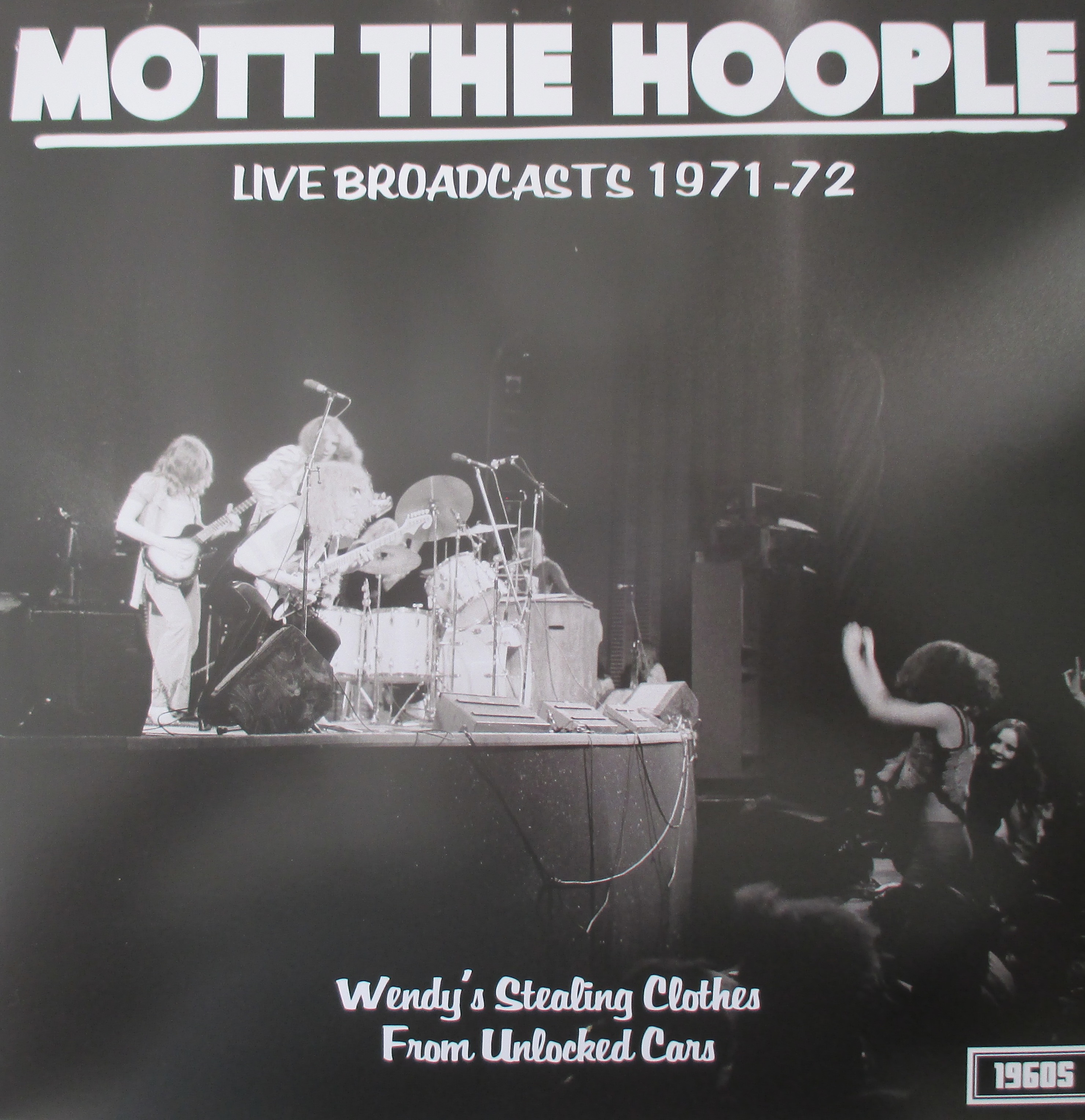
“Wendy’s Stealing Clothes From Unlocked Cars” – Live 1971-72
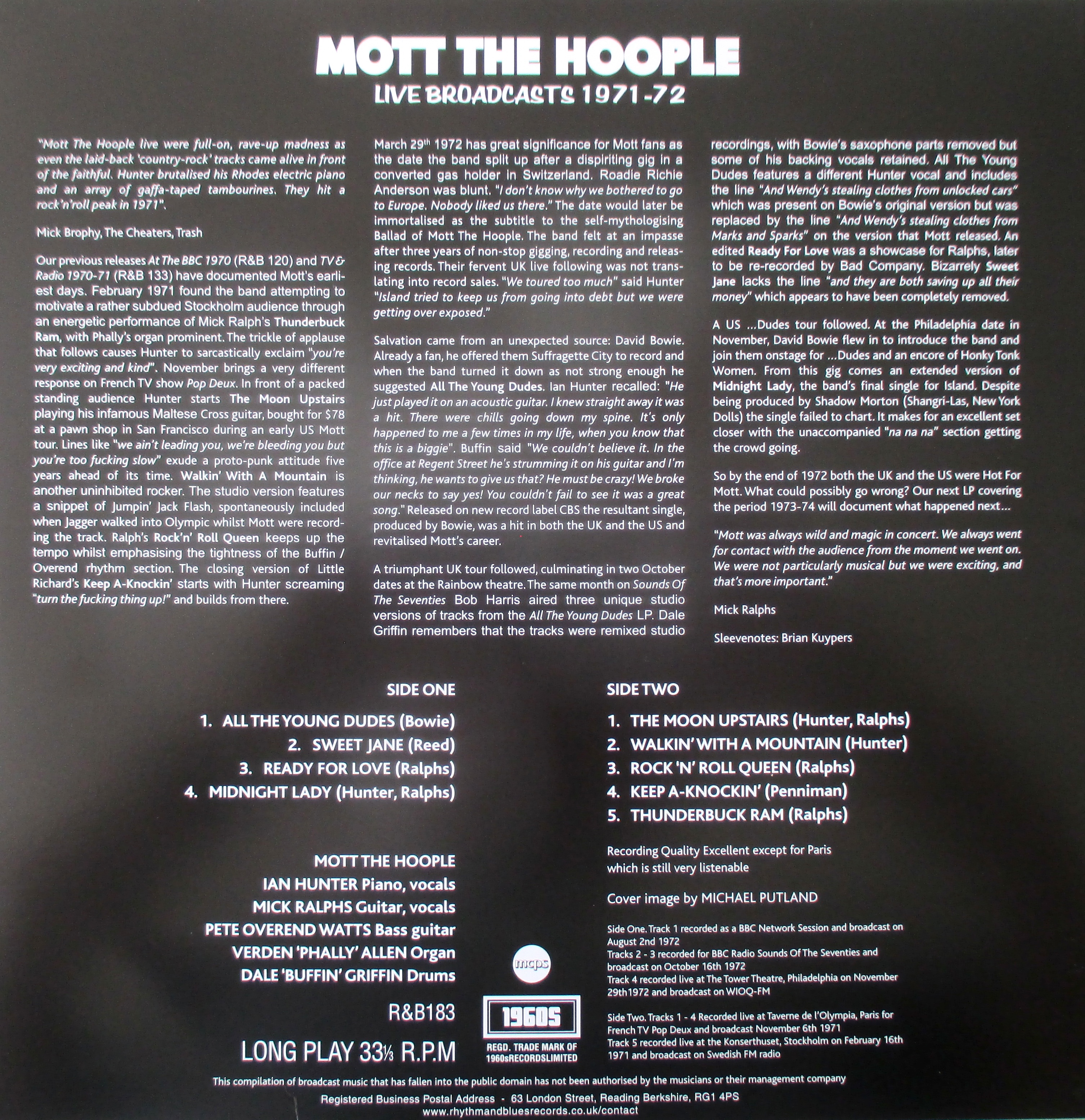
Mott The Hoople
Tracklisting
Side One
- All The Young Dudes (Bowie)
- Sweet Jane (Reed)
- Ready For Love (Ralphs)
- Midnight Lady (Hunter, Ralphs)
Side Two
- The Moon Upstairs (Hunter, Ralphs)
- Walkin’ With A Mountain (Hunter)
- Rock ‘n’ Roll Queen (Ralphs)
- Keep A-Knockin’ (Penniman)
- Thunderbuck Ram (Ralphs)
Recording Details
Side One,
Track 1 recorded for BBC Top Of The Pops and broadcast on August 2nd1972
Tracks 2-3 recorded for BBC Radio Sounds Of The Seventies and broadcast on October 16th 1972
Track 4 recorded live at The Tower Theatre, Philadelphia on November 29th1972 and broadcast on WIOQ-FM
Side Two
Tracks 1- 4 Recorded live at Taverne de l’Olympia, Paris for French TV Pop Deux and broadcast November 6th 1971
Track 5 recorded live at the Konserthuset, Stockholm on February 16th 1971 and broadcast on Swedish FM radio
Recording Quality
Excellent throughout
Personnel
Ian Hunter: vocals, guitar, piano
Mick Ralphs: guitar, vocals
Pete Overend Watts: bass
Dale ‘Buffin’ Griffin: drums
Verden ‘Phally’ Allen: organ
Sleevenotes
“Mott The Hoople live were full-on, rave-up madness as even the laid-back ‘country-rock’ tracks came alive in front of the faithful. Hunter brutalised his Rhodes electric piano and an array of gaffa-taped tambourines. They hit a rock’n’roll peak in 1971”.
Mick Brophy, The Cheaters, Trash
Our previous releases At The BBC 1970 (R&B 120) and TV & Radio 1970-71 (R&B 133) have documented Mott’s earliest days. February 1971 found the band attempting to motivate a rather subdued Stockholm audience through an energetic performance of Mick Ralph’s Thunderbuck Ram,with Phally’s organ prominent. The trickle of applause that follows causes Hunter to sarcastically exclaim “you’re very exciting and kind”. November brings a very different response on French TV show Pop Deux. In front of a packed standing audience Hunter starts The Moon Upstairs playing his infamous Maltese Cross guitar, bought for $78 at a pawn shop in San Francisco during an early US Mott tour. Lines like “we ain’t leading you, we’re bleeding you but you’re too fucking slow” exude a proto-punk attitude five years ahead of its time. Walkin’ With A Mountain is another uninhibited rocker. The studio version features a snippet of Jumpin’ Jack Flash, spontaneously included when Jagger walked into Olympic whilst Mott were recording the track. Ralph’s Rock’n’ Roll Queen keeps up the tempo whilst emphasising the tightness of the Buffin / Overend rhythm section. The closing version of Little Richard’s Keep A-Knockin’ starts with Hunter screaming “turn the fucking thing up!” and builds from there.
March 29th 1972 has great significance for Mott fans as the date the band split up after a dispiriting gig in a converted gas holder in Switzerland. Roadie Richie Anderson was blunt. “I don’t know why we bothered to go to Europe. Nobody liked us there.” The date would later be immortalised as the subtitle to the self-mythologising Ballad of Mott The Hoople. The band felt at an impasse after three years of non-stop gigging, recording and releasing records. Their fervent UK live following was not translating into record sales. “We toured too much” said Hunter “Island tried to keep us from going into debt but we were getting over exposed.”
Salvation came from an unexpected source: David Bowie. Already a fan, he offered them Suffragette City to record and when the band turned it down as not strong enough he suggested All The Young Dudes. Ian Hunter recalled: “He just played it on an acoustic guitar. I knew straight away it was a hit. There were chills going down my spine. It’s only happened to me a few times in my life, when you know that this is a biggie“. Buffin said “We couldn’t believe it. In the office at Regent Street he’s strumming it on his guitar and I’m thinking, he wants to give us that? He must be crazy! We broke our necks to say yes! You couldn’t fail to see it was a great song.” Released on new record label CBS the resultant single, produced by Bowie, was a hit in both the UK and the US and revitalised Mott’s career. The version here was specially recorded for BBC radio. It features an alternate Hunter vocal, replacing Bowie’s original lyric of “And Wendy’s stealing clothes from Marks and Sparks”
with “And Wendy’s stealing clothes from unlocked cars”. Ray Davies had already set a precedent here by re-recording the single Lola, changing “Coca-Cola” to “Cherry Cola” in order to avoid a BBC ban.
A triumphant UK tour followed, culminating in two October dates at the Rainbow theatre. The same month on Sounds Of The Seventies Bob Harris aired unique studio versions of songs from the All The Young Dudes LP. Buffin remembers that the tracks were remixed studio recordings. An edited Ready For Love was a showcase for Ralphs, later to be re-recorded by Bad Company. Bizarrely Sweet Jane lacks the line “and they are both saving up all their money” which appears to have been completely removed.
A US tour followed and at the Philadelphia date in November, David Bowie flew in to introduce the band and join them onstage for All The Young Dudes and an encore of Honky Tonk Women. From this gig comes an extended version of Midnight Lady, the band’s final single for Island. Despite being produced by Shadow Morton (Shangri-Las, New York Dolls) the single failed to chart. It makes for an excellent set closer with the unaccompanied “na na na” section getting the crowd going.
So by the end of 1972 both the UK and the US were Hot For Mott. What could possibly go wrong? Our next LP covering the period 1973-74 will document what happened next…
“Mott was always wild and magic in concert. We always went for contact with the audience from the moment we went on. We were not particularly musical but we were exciting, and that’s more important.”
Mick Ralphs
Sleevenotes: Brian Kuypers
UK tour now complete – Sunday afternoon by the sea in Brighton at the Prince Albert on October 4th
Tickets available here https://wegottickets.com/f/20046

