
Track By Track: It’s Only Rock’n’Roll by the Rolling Stones
Side One
1. If You Can’t Rock Me
On November 13 1973 the Stones entered Musicland Studios in Munich to start work on their new album. They finished on November 24, broke for Christmas then returned on January 14 1974 for another 2 weeks. If You Can’t Rock Me was the second track recorded and it gets It’s Only Rock ‘n’Roll off to an uncertain start, trying a bit too hard to rock out. “The band’s onstage and it’s one of those nights…the drummer thinks he’s dynamite”. Certainly the latter is true of Charlie Watts throughout, despite the slightly muddy mix. Regular producer Jimmy Miller had been sacked: Jagger and Richards produced the LP under The Glimmer Twins soubriquet. They would do better on subsequent records. Keith Richards played bass and treated himself to a rare solo during the breakdown in the middle of the song. In live performance the song segued into Get Off My Cloud, a medley performed at London Earls Court on May 27 1976 and released on the double LP Love You Live.
2. Ain’t Too Proud To Beg
The Stones have always been adept at covers but this version may just be their best. Originally recorded by the Temptations the Stones’ version relied upon Billy Prestons electric piano and clavinet and the taut guitars of Richards and Taylor. The track also featured Elton John’s percussionist Ray Cooper on bongos and Eddie Leach on cowbell. Nick Kent compared it to the first “gangbusting” J.Geils band LP, and when it comes to supercharged rhythm and blues retreads there is no higher praise. The end result was so successful that it was released as a single in Europe and in the US. In August 1974 Michael Lindsay Hogg made a promotional film using the recorded backing track and a live vocal. The abrupt ending of the track creates a dramatic space before the entry of…
3. It’s Only Rock ‘n’ Roll (But I like it)
The title track had a complicated birth, having been started by Ronnie Wood and David Bowie in the former’s home studio. Keith Richards takes over the story. “That’s where I first heard Only Rock’n’Roll, in Ronnie’s studio. It’s Mick’s song and he’d cut it with Bowie as a dub. Mick had gotten this idea and they started to rock on it. It was damn good. Shit, Mick what are you doing it with Bowie for? Come on, we’ve got to steal that motherfucker back. And we did, without too much difficulty. Just the title itself was so beautifully simple. “ Willie Weeks played bass, Kenny Jones played drums and Ronnie Woods acoustic guitar supplied the hook, with Keith subsequently overdubbing Ronnie’s electric guitar parts. On the sleeve Ronnie is merely credited with “inspiration” after he ill-advisedly dropped his claim for songwriting in exchange for a credit on the track Black Limousine, which would not be released until it appeared on the Tattoo You LP in 1981.
When released as a single It’s Only Rock’n’Roll only reached No 16 in the US and No 10 in the UK, making it the lowest charting Stones single since the 60s. This was despite an extensive “’teaser’ campaign that the saw the title spray-painted all over London (the Stones denied responsibility) . Lindsay Hogg produced a memorable promo film of the Stones in sailor suits performing the song in a perspex tent that filled up with foam. This meant that anyone sitting down was likely to be engulfed with foam: exit Charlie stage right looking Not Amused . The film also highlighted the appalling state of Keith’s teeth. Despite Mick Taylor’s description of the song as a pastiche of a Stones classic It’s Only Rock’n’Roll has gone onto become one of the Stones warhorses, trotted out at innumerable gigs.
In a welcome break from tradition the B-side of the single was the previously unreleased Through The Lonely Nights, a leisurely mid-paced ballad with country inflections left over from the Goats Head Soup sessions and rumoured to feature Jimmy Page on guitar.
4. Til The Next Goodbye
Mick Taylor was also becoming increasingly concerned with the Glimmer Twins notorious reluctance to give songwriting credit where it was due. He therefore decided that It’s Only Rock’n’Roll would be his last LP with the band prior to a (disappointing) solo career. Til The Next Goodbye was the final studio track he recorded and his restrained slide guitar effectively reinforced the mood of sadness, a mood reinforced by Nicky Hopkins’ piano which carries the track and ends on a tongue-in-cheek triplet. Jagger delivered a sensitive vocal about starcrossed lovers which convinced until he started going on about “yer Louisiana recipes”. A track that was never attempted onstage.
5. Time Waits For No One
This track has always divided Stones fans. Those who favour Stones Mk 1 (Brian Jones era), or Stones Mk 3 (Ronnie Wood) will find this track elongated to little purpose. The relationship between Richards and Taylor was a more formal rhythm guitar / lead guitar divide than had been the case with Jones and would be the case with Wood. Freeing Taylor up to play lead guitar played dividends here, with the long, fluid solo Taylor takes at the end of this song representing the highspot of his studio work with the Stones. Taylor was also responsible for the admirably restrained synthesiser featured here, and contributed to the writing of the song. Nick Kent writing in the NME: ‘Mick Taylor was involved in the actual composition of Time Wairs For No One, even though the writing credits will go to Jagger and Richards as ever. It also turns out that Taylor has made creative inserts into other tracks such as Til The Next Time We Say Goodbye and If You Really Want To Be My Friend. Still no credit.”
Jagger sings an arch lyric about the temporal nature of beauty with more compassion than might be expected from someone who has increasingly dated much younger women. An out-take exists that is described as an extended version: technically this is true, but the major difference is that you hear Charlie stop his metronome drumming at the end of the track rather than hear him faded out. This stellar track has never been played live, but now that the band have mastered the lengthy coda of Can’t You Hear Me Knocking this should be possible and it would make a lot of Stones Mk 2 fans very happy. The epitaph on Stones Mk 2 was delivered by the telegram that Keith sent Mick Taylor on hearing of his resignation: “really enjoyed playing with you for the last five years. Thanks for all the turn-ons. Best wishes and love”. According to his wife Rose, when he read this Mick Taylor burst into tears.
Side Two
6. Luxury
The opening track on Side Two shifts the instrumental focus from Taylor to Richards. The Stones have recorded some thoroughly dull reggae in their time with Cherry Oh Baby, the original Start Me Up and Too Rude particularly lame examples (although Keith’s solo The Harder They Come was good). Here the Stones respectfully interpreted the rhythm of reggae and transformed it into a neo-classic which would have made a great single. It seems ironic that they could record the entire Goats Head Soup LP in Jamaica with no discernible effect, but they come up with this rhythmic tour-de-force in Munich. Although Jagger’s lyric is about the oppression of the working man he managed a Jamaican patois without sounding too corny. When Virgin released a remastered It’s Only Rock’n’Roll on CD in 1994 Luxury was extended by 30 seconds. Should have been a great live track but in reality only played on the first seven dates on the Tour Of The America’s in August 1975.
7. Dance Little Sister
Dance Little Sister is the second Keith Richards-dominated rocker in a row with his raw guitar tone and prominent backing vocals driving this song. The Stones had been checking out the New York Dolls with a view to signing them to Rolling Stones Records, and this track replicated their appeal as a garage band deluxe. Relegated to the B-side of Ain’t Too Proud To Beg the single would more accurately be described as a Double A side. Ian Stewart provided some grungy piano low in the mix. Jagger sounds totally convincing in this tale of young lust. Rarely played live although an excellent version can be found on an acetate recorded at the El Mocambo Club in March1977 but inexplicably excluded from Love You Live.
8. If You Really Want To Be My Friend
The versatility of the band in general and Jagger in particular was emphasised by this smooth and soulful recording. The sumptuous backing harmonies of Philadelphia soul group Blue Magic provided a backdrop against which Jagger could emote. Throughout this LP the Stones played in a wide variety of styles and it is a testament to their conviction that the tracks cohered to make a credible collection rather than a grab bag of odds and ends. Keith Richards said at the time “ Rock and roll can’t be planned or prepared. Goats Head Soup to me was a marking time album. I like it in many ways but I don’t think it has the freshness this one has.”
9. Short and Curlies
This track was a rejected outtake from the Goats Head Soup sessions and it is hard to see why it was thought worthy for inclusion on It’s Only Rock’n’Roll Ian Stewart’s boogie-woogie piano was great but the song itself was undistinguished (what can you expect from a song that is named after pubic hair?). There were better songs recorded in Munich such as Living In The Heart Of Love or the relaxed groove of Dobie Gray’s Drift Away. However the odd duff track did not reduce the enthusiasm shown by the music press. Allan Jones wrote in Melody Maker “quite simply this album is indispensible” whilst for NME Nick Kent wrote “Boy, do I love this album. I love it because it delivers exactly what all the other biggies we invest so much blind faith in only promise
10. Fingerprint File
The closing track exhibited further stylistic diversity. The longest song on the LP, Jagger’s vocal reeks of paranoia, emphasised by his incisive rhythm guitar. Mick Taylor played bass, Bill Wyman switched to synthesiser, Hopkins and Preston sparred on piano and clavinet and Keith Richards played Superfly-style wah-wah guitar throughout. Charlie Watts was supported by tabla player Jolly Kunjappu. This atmospheric track pointed the way forward for the Stones, who would return to its themes in future songs such as Shattered and Undercover Of The Night. Despite its minimal structure the song featured throughout the Tour Of The Americas. A version recorded at the Maple Leaf Gardens in Toronto on June 17 1975 was included on Love You Live. Jaggers final lyric “good night…sleep tight” provided a succinct sign-off to It’s Only Rock’n’Roll. As veteran Stones watcher Roy Carr opined “more to this album than first meets the ear”.
Track By Track: Goats Head Soup by the Rolling Stones
Side One
1. Dancing With Mr D
Like most of the songs here the recording of Dancing With Mr D started in the sunny climes of Jamaica at Dynamic Sound Studios in Kingston during November and December 1972. This location suited the Stones as they were persona non grata in both the US and Europe at the time, mainly because of various drug offences.
The song’s menacing slow and deliberate guitar riff acted as an effective soundtrack to Jaggers demonic dalliance, although the revelation that Mrs D is worse than her spouse comes across as more Carry On than Crowley. This was compounded in a promo video made for the track by Michael Lindsay Hogg in July 1973 where Jagger’s low-cut gold leather jumpsuit and Mick Taylor’s floppy summer straw hat did little to convey the darker implications of the lyrics.
In America Dancing With Mr D was released on the B-side of the single Heartbreaker. On the tour of Europe that followed the release of Goats Head Soup it was one of the most regularly played songs from the LP and was part of the now-legal live recording Brussells Affair, recorded at the Foret Nationale, Brussells on October 17th 1973.
2. 100 Years Ago
100 Years Ago was written by Mick Jagger in the late 1960s/early 1970s and something of late 60s optimism permeates the finished version. The different sections in the song fit together clumsily but it is partially redeemed by the considerable guitar skills of Mick Taylor over two separate solos. Strangely the song featured on a 4 track promotional EP issued by Atlantic in the US to promote Goats Head Soup. 100 Years ago was played on the first two dates of the European tour in September 1973 and then never again, which might suggest what the rest of the band thought of the song.
Many years later Jagger would say “I sort of remember Exile on Main Street being done in France and in the United States, and after that going on tour and becoming complacent and thinking ‘It’s ’72. Fuck it. We’ve done it.’ We still tried after that but I don’t think the results were ever that wonderful.” This sense of ennui can be heard in the weaker songs on Goats Head Soup. It is hard to imagine 100 Years Ago being considered for inclusion on any of the preceding Stones LPs.
Producer Jimmy Miller augmented the touring Stones with Rebop Kwaku Baah (Traffic) and Nicholas Pascal Raicevic on additional percussion whilst encouraging keyboard player Billy Preston to make greater use of his organ and clavinette to replace the piano favoured by veteran Stones keyboard players Nicky Hopkins and Ian Stewart. The result is a dense, murky sound closely aligned to the funk being produced by Sly and the Family Stones, The Isley Brothers and Stevie Wonder, who had opened for the Stones on their most recent US tour.
3. Coming Down Again
Every Stones LP contains at least one under-rated gem: Coming Down Again is the highlight of Goats Head Soup and one of Keith Richards’ very best songs. The influence of Gram Parsons can be detected in this mournful ballad. The lyrics allude to adultery (“slipped my tongue in someone else’s pie”) although Keith claims the song is not about stealing Anita Pallenberg away from Brian Jones.
A crucial element here is Nicky Hopkins eloquent piano which introduces the song and then runs through it with never a note wasted. The feeling of regret Keith has attributed to his increasing heroin use. The song also features a short saxophone interlude from Bobby Keyes, also at the time wrestling with a monkey on his back. The song has never been performed live either by the Stones or by Keith solo and is overdue for rediscovery.
4. Doo Doo Doo Doo Doo Doo (Heartbreaker)
Back into riff mode with Heartbreaker, this time using Mick Taylor’s wah-wah guitar to great effect whilst Keith Richards plays bass. Jagger angrily describes real or imagined US street scenes of trigger-happy cops and teenage junkies. The song benefits from the entry of a sweeping Jim Price horn arrangement also featuring Chuck Finley on trumpet. The number worked well onstage in Europe during 1973 (see Brussells Affair for evidence) and on the 1975 Tour Of The Americas. It has been played occasionally since then – there is a good version on the Four Flicks DVD, recorded at the Paris Olympia in 2003. In America Heartbreaker was the A side of the second single taken from Goats Head Soup, but it was not released as a single in the UK.
5. Angie
Angie was the first single from Goats Head Soup, released in August 1973 ahead of the release of the LP. It was a huge international hit, reaching number one in the US single charts and number 5 in the UK. The Stones had never released a ballad as a lead single before, and its success rather overshadowed the parent LP, bringing in a new audience who in Keith’s words “wouldn’t normally touch us with a barge pole’”. Long-term supporter Nick Kent of the NME was less than impressed : “This single is a dire mistake on as many levels as you care to mention.”
The subject of the song was rumoured to be Angela Bowie, with whom Jagger had been photographed. However it subsequently emerged that Keith Richards had written the song for Anita. The key musical elements are the gently strummed acoustic guitars of Richards and Taylor, Nicky Hopkins’ “diamond tiaras” piano and a string arrangement from Nicky Harrison. A Lindsay Hogg video showing the Stones sitting on a rose petal-strewn stage was more effective than his Dancing With Mr D attempt. Despite its acoustic nature Angie received a number of effective performances on the 1973 European tour and the 1975 Tour Of The Americas. A live ‘unplugged” version can be found on the Stripped CD from 1995.
Side Two
Silver Train
Side Two of Goats Head Soup got off to a propulsive start with the slide-drenched Silver Train. An earlier version had been recorded in October 1970 and offered to Johnny Winter, whose recording predates Goats Head Soup. Silver Train is a return to the bands r’n’b roots as Ian Stewart honky-tonks on piano and the slide quitars of Richards and Jagger intertwine and Jagger gets in some telling harmonica fills. Featured as the B-side of Angie, it made an effective live number but only featured on a couple of setlists early in the 1973 European tour. It was the third track from Goats Head Soup to feature as a promo video shot by Lindsay Hogg and is well worth a look online, if only to marvel at the shoulder-pads in Jagger’s sequinned blue jumpsuit. It is one of many Stones tracks that has been covered live by the Black Crowes.
Hide Your Love
Another track that pre-dates Exile, Hide Your Love is very much a Jagger solo track that showcases his jaunty piano. Mick Taylor’s solo attempts to redeem the song without success. whilst some further recording at London’s Olympia studios during May 1973 still left the track sounding like a demo that doesn’t so much end as collapse. Another odd choice for the 4 track promotional EP released in the US. Why was Hide Your Love included on Goats Head Soup at the expense of clearly superior out-takes such as Through The Lonely Nights (later the B-side of It’s Only Rock’n’Roll) and Criss Cross Man (still officially unreleased) ? One likely explanation was lack of focus from the producer. Keith Richards: “Jimmy was great, but the more successful he became the more he got like Brian (Jones). Jimmy ended up carving swastikas into the wooden console in the studio. It took him three months to carve a swastika. Meanwhile Mick and I had to finish up Goats Head Soup.”.
Winter
Another delicate ballad, this time built around the guitar of Mick Taylor and the piano of Nicky Hopkins (Keith Richards was MIA on this track). Jimmy Miller was reported to be unhappy with Jagger’s vocal. Having recorded three or four takes Jagger was called away from the studio by his wife Bianca and the magic was lost. Listening to the released version you can hear Jagger’s vocal punctuated by comments in a few places, such as the way his voice breaks on ‘hope it’s gonna be’ and you can hear someone else say ‘yeah’ (possibly Keith in the same room doing harmonies). A lovely and very human touch, and all credit to Miller for not cleaning up the take. There are echoes of Moonlight Mile (Sticky Fingers), especially in the string arrangement by Nicky Harrison. Engineer Andy Johns thought it one of the best songs recorded at these sessions. Never played live, and so another overlooked gem.
Can You Hear The Music?
A positively psychedelic production featuring all manner of instruments including bells, horns and the distinctive flute playing of Jim Horn. Jagger repeatedly sings “Can You Hear The Music?” to which the answer is no, not really. The song was rehearsed in Rotterdam during preparations for the 1973 European tour but thankfully never made it onto stage. The lowspot of Goats Head Soup, and one of the least convincing songs ever recorded by the Stones.
Star Star
By relying on Keith Richards’ unerring ability to rewrite Chick Berry, Goats Head Soup goes out on a high. The song was originally called Starfucker, until Atlantic Records president Ahmet Ertegun had an attack of the vapours and insisted the song be retitled. Atlantic were also unhappy with the lines “bet you keep your pussy queen” and “giving head to Steve McQueen”. The actor was asked to give written confirmation that he would not sue over the lyric, which he did. On US copies a sloppy overdub failed to obscure a reference to John Wayne.
Jagger said at the time ‘I suppose we ask for it if we record things like that. Christ, I don’t do these things intentionally. I just wrote it. If I’d written it with other words that were just as good, I’m sure it could be a hit.’ Traditional Stones Outrage, which generated some very helpful column inches and a BBC ban. Bizarrely Atlantic made the song the lead track on the 4 track US promo EP, recognising that the unstoppable rhythmic drive of the track more than compensated for any lyrical irregularities. The French went further and released Star Star as a single. Richards plays lead, Taylor plays rhythm, Watts and Wyman demonstrate why they made the best drum and bass team in the world. Jagger sings “Do It Again” at the fade, making it sound like a good idea (whatever it is)
Star Star was one of the Goats Head Soups tracks played consistently throughout the 1973 and 1975 tours and was featured in live shows regularly thereafter. In addition to an excellent version on Brussells Affair it was played on the B-stage at Twickenham Stadium in August 2003, as seen on the Four Flicks DVD.
The WordPress.com stats helper monkeys prepared a 2012 annual report for this blog.

Here’s an excerpt:
600 people reached the top of Mt. Everest in 2012. This blog got about 3,700 views in 2012. If every person who reached the top of Mt. Everest viewed this blog, it would have taken 6 years to get that many views.
The guys behind This Day In Music have launched a new Rolling Stones App for iPhone and iPad. I helped write some of the content. You can download it here
https://itunes.apple.com/gb/app/this-day-in-the-rolling-stones/id586990757?mt=8
The Rolling Stones at the O2, Sunday 25th November 2012
Support: Johnny Depp, Iggy Pop,Elton John, Pete Townshend , Nick Cave and…me!
Some if you will know that there was no support act for the Stones on Sunday. Instead director Malachy McAnenny of Stink TV put together a 4 minute movie of fans around the world talking about what the Stones meant to them. Two of my contributions made the cut, at 1.17 and again at 2.21. Malachy hopes to release it as an extra on the (inevitable) DVD that will come from these concerts.
See the video here http://www.youtube.com/watch?v=d1sa811GaEA
I only said that I wanted to sleep with Charlie by mistake. We had been given the questions in advance so we could think about our replies. To the question Who Is Your Favourite Stone? I had intended to answer Charlie. And to the question Which Stone Would You Like To Sleep With? I intended to answer Anita Pallenberg (who has always been a Rolling Stone, at least in spirit ). Somehow I got the answers the wrong way round, and that’s what made it into the film.
“Honour Thy Mistake As A Hidden Intention” (Brian Eno)
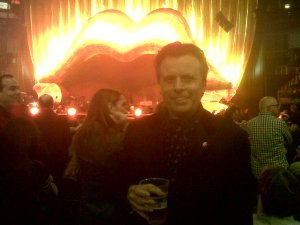
Oh the gig was pretty amazing as well. Just ask BV (http://www.iorr.org/tour12/london1.htm)


The blurb on the inside cover of this 538-page tome shrieks “The Most Eagerly Awaited Music Memoir Of The Century”. Townshend admits it has taken him a long time to write: one imagines the runaway commercial success of Keith Richards’ Life has renewed his enthusiasm for the project. Given Townshend’s legendary self-centredness and pessimistic worldview my expectations were limited and this book has lived down to them. I am a big Who fan: my first gig was Charlton 1976. Enthralled I excavated the bands past, whilst simultaneously following their current activities. I lost faith when Kenny Jones took over on drums but was wooed back by Zak Starkey and I am looking forward to the Townshend / Daltrey Quadrophenia tour. I have enormous respect for Townshend as a performer and songwriter, to the point that Sunrise was played at my wedding.
However at no point have I mistaken Townshend for a ray of sunshine. The best thing about this book is the 462 pages that were edited out and which, according to a Q+A at the Old Truman Brewery last week, will emphatically not be published as Part Two. As a result the narrative skips along and the years fly by.
Even so the second-half of the book is heavy going. Partly this is because everything significant musically has happened by page 250, after which comes the Who’s final disappointing studio albums and Townshend’s subsequent solo career. In addition Townshend becomes even more insular and even more torn, bitter and miserable. Despite his oft publicy-stated desire for self-knowledge he comes over (to use his own words) as “a complete arsehole “. That his key work associates such as Bob Pridden have put up with it for around fifty years suggests he has his good points and pays well. Why his ex-wife Karen put up with Townshend for so long is inexplicable. Her reward is to be ignored in the seven-page section of Acknowledgements, which pointedly thanks everyone else, including his new partners’ seven dogs. What the book needs desparately is some of the self-deprecation and humour shown briefly at the Q+A when Townshend was talking about being snubbed by Bob Dylan (“Where’s Roger?”). For the rest of the time Being Multi-Millionaire Pete Townshend seems rather hard and joyless work.
The most disappointing aspect of the book is that we learn little about Townshend as a musician or a songwriter: books written by Dave Marsh and Ritchie Unterberger both do a better job than this. John Perry’s masterful analysis of Meaty Beaty Big and Bouncy dwarfs Townshends own musical musings. So well known are incidents such as Woodstock that, with little new insight on offer, Who I Am comes across as a routine cut-and-paste job. We learn a lot about Townshend’s toys, chiefly home recording studios and yachts, both of which get bigger as the royalties increase. What we don’t get is any sense of where his golden run of hit singles came from. Keith Richards once told Townshend that he thought too much. Lyrics such as The Seeker support this, but also show a rare pop songwriter unafraid of expressing his spirituality. If only Townshend had worked out a way of integrating his spiritual beliefs and his rock’n’roll-ness, in his life and in this book.
Who I Am is Life-less.
Take One – Simon Wright
The fact that this lengthy (two hours) dissertation on America’s best-known unknown band should premiere at the London Film Festival reinforces both the anglophile nature of the bands music and the fact that for a long time their legacy generated more respect in the UK than in their home country.
The narrative stubbornly refuses to conform to the usual pop-bio trajectory: obscurity followed by recognition followed by commercial success followed by artistic decline. Chief Big Star Alex Chilton had sung on a four-million selling hit single by the age of 16 (The Letter by the Boxtops) and every record he released subsequently was less successful in commercial terms than its predecessor.
The film is hampered by only having 20 minutes footage of Big Star to work with. By necessity much of the narrative is carried through talking-head interviews. Alex, whose response to pretty much anything was “I’d rather not”, was not one of them, and Chris Bell (McCartney to his Lennon) died in a car accident in 1977. Distressingly many of the major figures in this tale such as bassplayer Andy Hummell and producer Jim Dickinson died after recording their interviews, leaving drummer Jody Stephens as the only band member still with us. Friends, family, colleagues and acolytes fill in the story as best they can.
Through it all runs Memphis, birthplace of rock’n’roll and a magnet for strange people exhibiting twisted behaviour. The footage used from legendary home-movie Stranded In Canton bears this out to chilling effect. But then Big Star were never just about popsongs: the lightness of their melodies was always balanced by a darker melancholia, which is why they are still revered today rather than other “power-pop” contemporaries such as Dwight Twilley or the Raspberries.
Intriguing themes emerge. Some feel the band had it too easy – taken under the wing of Ardent Studios from the get-go they never had to do the classic struggling band thing of looking for a record deal through live dates. Top of the range gear and unlimited studio time was also part of the deal. However it was a mixed blessing; part of the Ardent deal was that they signed to Stax where the band suffered from record company cluelessness and truly abominable distribution that left them unable to capitalise on a welter of stunning reviews because no-one could find their records in the shops.
But maybe they got as far as they ever would. Bell was unstable, riven by spiritual and sexual conflicts. Chilton’s disillusion with the record industry seemed total before he even joined the group. Under the circumstances a stable long-term career seems unlikely. And if those first two stellar LPs had achieved the sales they deserved we might be heartily sick of Big Star by now, early promise replaced by later mediocrity. Even the protagonists accept that calling your unknown band Big Star smacked of arrogance, even if it was the name of the supermarket across the road from Ardent. It’s hard to imagine a UK band calling themselves Budgens.
As it is they made three stunning and diverse LPs and stopped. The Lafayette recordings on the Big Star box-set reveal the post-Bell trio up as a competent live act. Their reputation is probably at an all-time high. This excellent documentary will undoubtedly bring in a new generation of fans. It also does a good job of telling longterm followers things we don’t know. Particularly strong is the coverage of legendary 1973 Memphis Rock Writers Convention, which single-handedly reignited the bands career after the commercial failure of Number One Record. And John King (Head of Promotion at Ardent should have his own chat show.
Director Drew DeNicola introduced the screening and then took part in a Q&A together with John Fry, as the man who engineered their key recordings. Exuding Southern courtesy and modesty John underplayed his role but he was crucial. The music he helped create is equal in sonic terms to what was achieved by George Martin at Abbey Road or Jimmy Miller at Olympic. It was gratifying to see him get his dues from a well-attended NFT1.
My only quible is the title. Nothing Can Hurt Me is presumably ironic, as pretty much everyone in and around Big Star suffered for it on some level. Maybe You Get What You Deserve would have been more accurate.
Take Two – John Perry
To the BFI Southbank for the premiere of Drew DeNicola’s film ‘Nothing Can Hurt Me’. Nominally a film about Big Star it’s really about Memphis, about recording, and about the cast of locals who rallied round the label in an attempt to continue the legacy of Sun and Stax into the 70’s. Intelligent film, made just in time as a good half of the principals passed away soon after filming.
I have little trouble in seeing why Big Star didn’t rise above cult status in an era dominated by Zeppelin and Alice Cooper. Bad timing assisted by bad distribution. I’m not sure that their records would be as lovable today if they’d been pounded to death on every radio station for the last 40 years. Ardent studio owner John Fry emerges as a gentleman and the label’s promo man is funny describing attempts to plug their records on US radio where most programmers thought he was flogging Argent — “oh yeah, we love that ‘Hold Your Head Up’ song”. The band are well-served by a director who’s bright enough to avoid a linear rise and fall biography and allow the story to tell itself via characters like Dickinson, Eggleston et al. Well worth seeing.
Leicester Square Odeon – London Film Festival
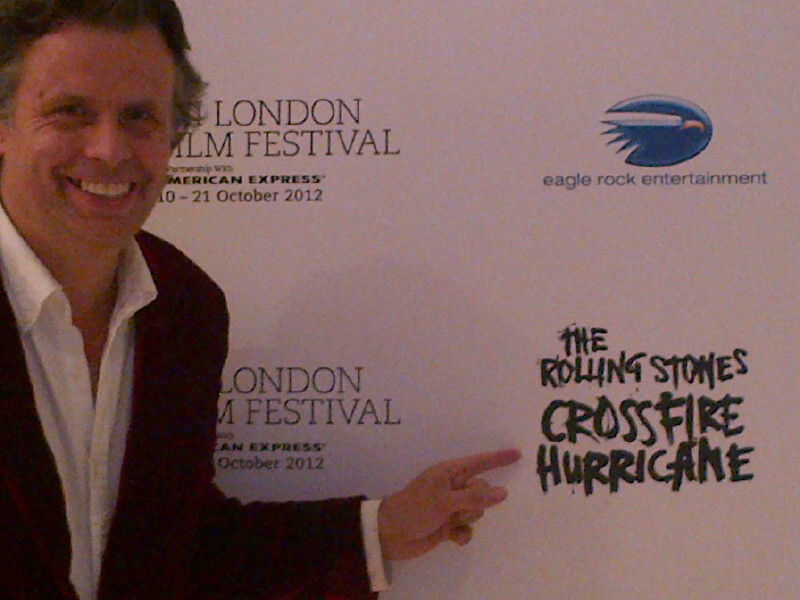
I now understand why celebs turn up at premieres. There is something quite intoxicating about sashaying down the red-carpet, paparazzi trying to work out whether you’re worth a snap, young ladies with clipboards checking to see whether you’re on their list – it’s all great fun. Tonight’s celeb turn-out was strictly Z- list – Anthea Turner and Liam Gallagher. Lauren Laverne was doing the red carpet interviews and a very blonde, fluffy job she made of it.
A pleasant surprise waited us inside, posh water, popcorn and Green & Black’s on our seats plus they were selling booze. And then onstage the stars of the show. First director Brett Morgen and then Jagger, Watts, Wood, Richards and (nice touch) Wyman, although no Mick Taylor who I saw at the end. Jagger and Morgen both made lucid introductions to the film, with Jagger apologising for some of the fashions we were about to see (OK until about 1975 by my estimation, but those lime-green frills were a spectacular fall from grace)
So on with the show. Brett Morgen made it very clear from the outset that the film is his personal statement which makes no attempt at a balanced historical perspective of the bands entire career. Instead the focus is on the crazed amphetamine rush of the Brian Jones and Mick Taylor eras, which by most Stones fans estimation is when they did their best work. This is a brave move, but one that pays off. Already there are complaints that the film ends too abruptly, with only a very cursory canter through the Ronnie Wood / stadium era. I suspect that Morgen feels there is not much to say post ‘74 – got rich, played ever bigger gigs, released a few decent singles. Jagger mentions that Woods presence made the band more fun and less dangerous: for some of us, that is the problem. Ironically when asked about the movie on the red carpet Ronnie said he hoped he would appear before the end. Sorry Ronnie.
Reservations. There is too much Jagger but given he is credited as co-producer and has tended to do the lion share of the Stones media appearances this may have been unavoidable. Ian Stewart only appears assisting young ladies offstage: his lack of credit is unforgiveable. The relentless focus on the main protagonists means that key muses such as Marianne Faithful and Anita Pallenberg plus key musicians such as Bobby Keyes and Nicky Hopkins get no mention. Morgen plays fast and loose with historical accuracy. He needs footage of the band looking glum to accompany a recent interview about the death of Brian Jones. Problem: no-one was filming at Olympic studios the night it happened. Solution: use the Maylses’ footage from Gimme Shelter of Richards, Jagger and Watts. Does it matter? It is Morgen using a lie to tell a greater truth. The contemporary interviews add little. Mick Taylor now claims he left the Stones because of his heroin habit (rather than disputes over songwriting or creative differences). Jagger admits they treated Jones badly and regrets the way they sacked him, albeit with the tone of a politician expressing his disappointment about a policy which hasn’t worked.
Positives. Morgen’s sources are really good. Yes, we have already seen the footage from the TAMI show, Gimme Shelter, The Dick Cavett Show, One Plus One. C*cksuck*r Blues , NME Poll Winners show, Ladies & Gentlemen and Knebworth. However the sound and picture quality here is first rate, plus there are out-takes being used for the first time. On the basis of the teaser footage used here, the re-release of Peter Whitehead’s Charlie Is My Darling will be fabulous. The way the film cuts rapidly between subjects creates a claustrophobic feeling of something out of control, perfectly in keeping with the whirlwind early touring years. However it means there are performance clips I would like to see on their own, all the way through – I hope the DVD release makes this possible. We see most of the voodoo Jumping Jack Flash promo but only tantalising glimpses of Let’s Spend The Night Together (from Sunday Night At The London Palladium? Brian Jones on piano). With 25 x 5 unaccountably unavailable on DVD it is about time all the Stones promo films and TV appearances were brought together, legally and in good quality
Should you see it? If you are even a casual Stones fan, absolutely. If you are Ronnie Wood’s mum or you think they peaked artistically as a stadium band in the 80’s and 90s you’re probably better off waiting ‘til BBC2 shows it next month. I’ll be watching – Crossfire Hurricane is dense movie with lots to see.
Setting The Sails For El Dorado
The Fatal Shore
Moloko+ PLUS 074
“This CD is fondly dedicated to the memory of Bruno Adams” says the booklet, with Bruno and Phil Shoenfelt both contributing guitar and vocals and Chris Hughes providing drums and percussion. The Fatal Shore have released 3 CDs but “Setting The Sails…” predates them all, consisting of covers recorded at the Delta Club in Prague in Spring 1997. With Adams dying recently this CD is his epitaph. The vocal on Wild In The Wind is more convincing than when Bowie crooned it on Station To Station. If You Go Away demonstrates the clarity and precision of the bands under-stated production, and emphasises Phil and Bruno’s contrasting vocals and some vintage ‘50’s clean-cut electric guitar. Fred Neil’s Dolphins gets a respectful treatment but Bird On A Wire suffers from being the fourth song in row taken at the same medium-slow pace. The verses of My Death benefit from a bit more oomph, knocking the overcooked Bowie version into a Belgian waffle. Who’s Bin Talking leads with some vintage Duane Eddy guitar and reminds me of Thunders’ similar Copy Cats (A Very Good Thing). Simple, subtle and never overstaying its welcome, “Setting The Sails…” is both a worthy way to remember Bruno Adams and a good way to greet The Fatal Shore.
I Ate The Knife / Undone
Dim Locator
Cover Recordings
Phil Shoenfelt’s latest venture is Dim Locator, who feature on this vinyl tribute to Rowland S. Howard. It’s a Drum and Bass record: I Ate The Knife is driven by Dave Allen’s slow and intense bass, Undone is a livelier affair featuring Chris Hughes’ cyclical drumming whilst leaving room for Shoenfelt’s vocals, which here have a dark gravity reminiscent of (unsurprisingly) Nick Cave. A promising debut.
Twitter is merely the Smart Ass One Liners from the bottom of the NME letters page circa 1975 , which used to regularly come in at 140 characters or less. ‘Lowell George Knew My Father’ was my favourite.

