
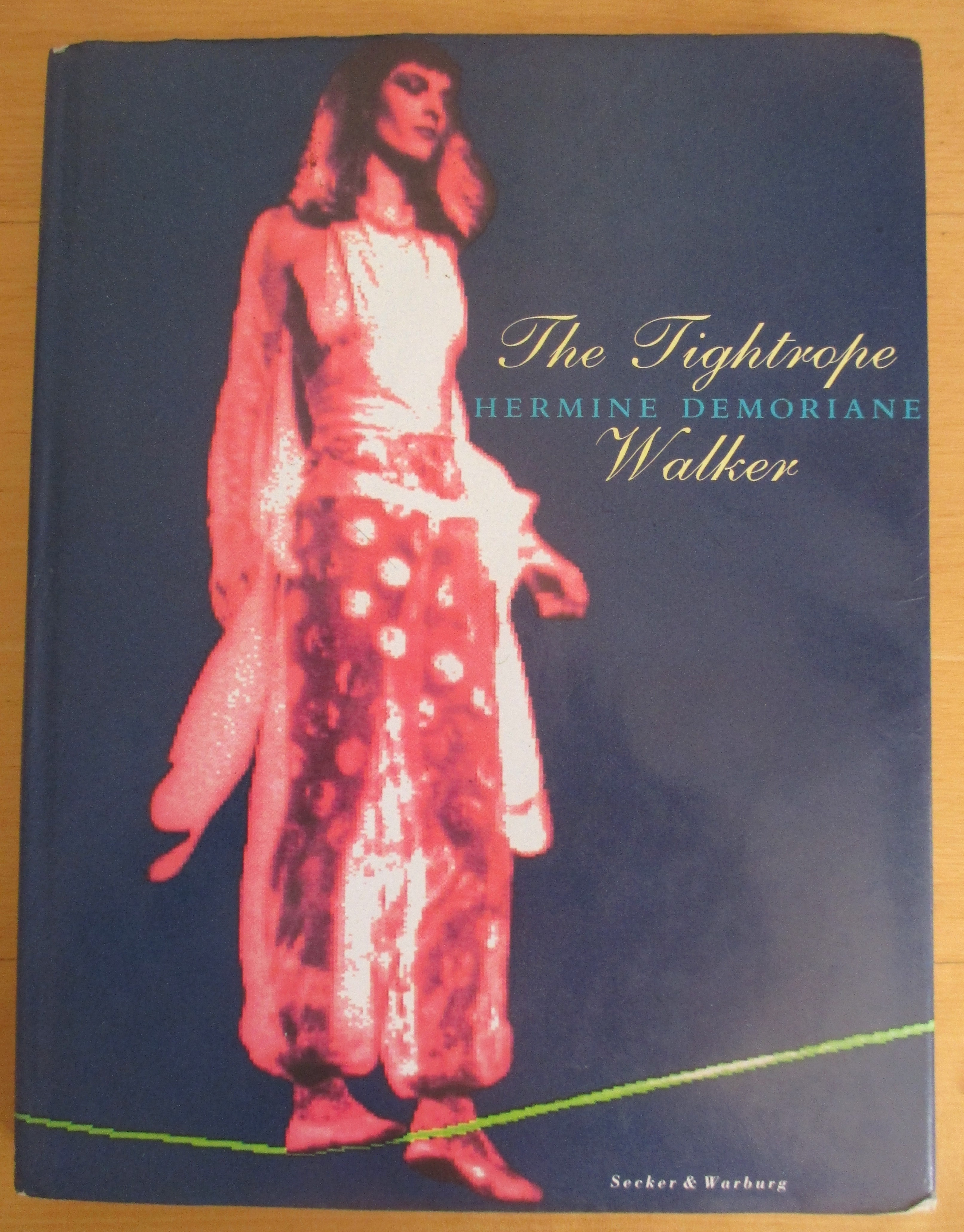
Seeker & Warburg Hardback 1989
This is a slight but beguiling book. Ostensibly about Hermione’s enthusiasm for walking on elevated ropes it actually provides a chronicle of London’s artistic set between April 1971 and March 1975. During this time Hermine was in an open marriage with the poet Hugo Williams and much of the book provides ample evidence of Hermine’s amours. Wandering predictably through the pages are Andrew Logan, Derek Jarman, Brian Eno, COUM, Allen Jones, The Moodies and a whole bunch of other luvvies. Less predictable is Hermine’s enthusiasm for Brinsley Schwarz, Dr Feelgood and Nick Kent – indeed it is her professional and personal relationship with Nick that drew me to the book. Interspersed with Hermine’s musings are a selection of writings and pictures on the history and cultural significance of tightrope walking. Educational but not as interesting as Nick Lowe having to playing two games of patience before he can face the day. If you were around during this period you are probably in the book and you’ll love it – for the rest of us it is a period piece, a snapshot of when being a tightrope walker was enough to get you in The Times (even if you fell off a lot).


I have wanted to own a copy of this 7″ vinyl ever since seeing it featured in Roy Carr and CSM’s 1976 book The Rolling Stones: An Illustrated Record. Thanks to the BBC On Air official release and a plethora of bootlegs we now know what the tracks sound like – speedy and great fun. Fanny Mae provides the tune for The Under Assistant West Coast Promo Man. Memphis Tennessee and Roll Over Beethoven crackle with youthfull energy. Cops And Robbers itself provides the inspiration for the brilliant William Stout cartoon cover, as good as his design for Tales From The Who. Thank you Jo from iorr.org for having a clear out!

Available now from http://www.1960s.london
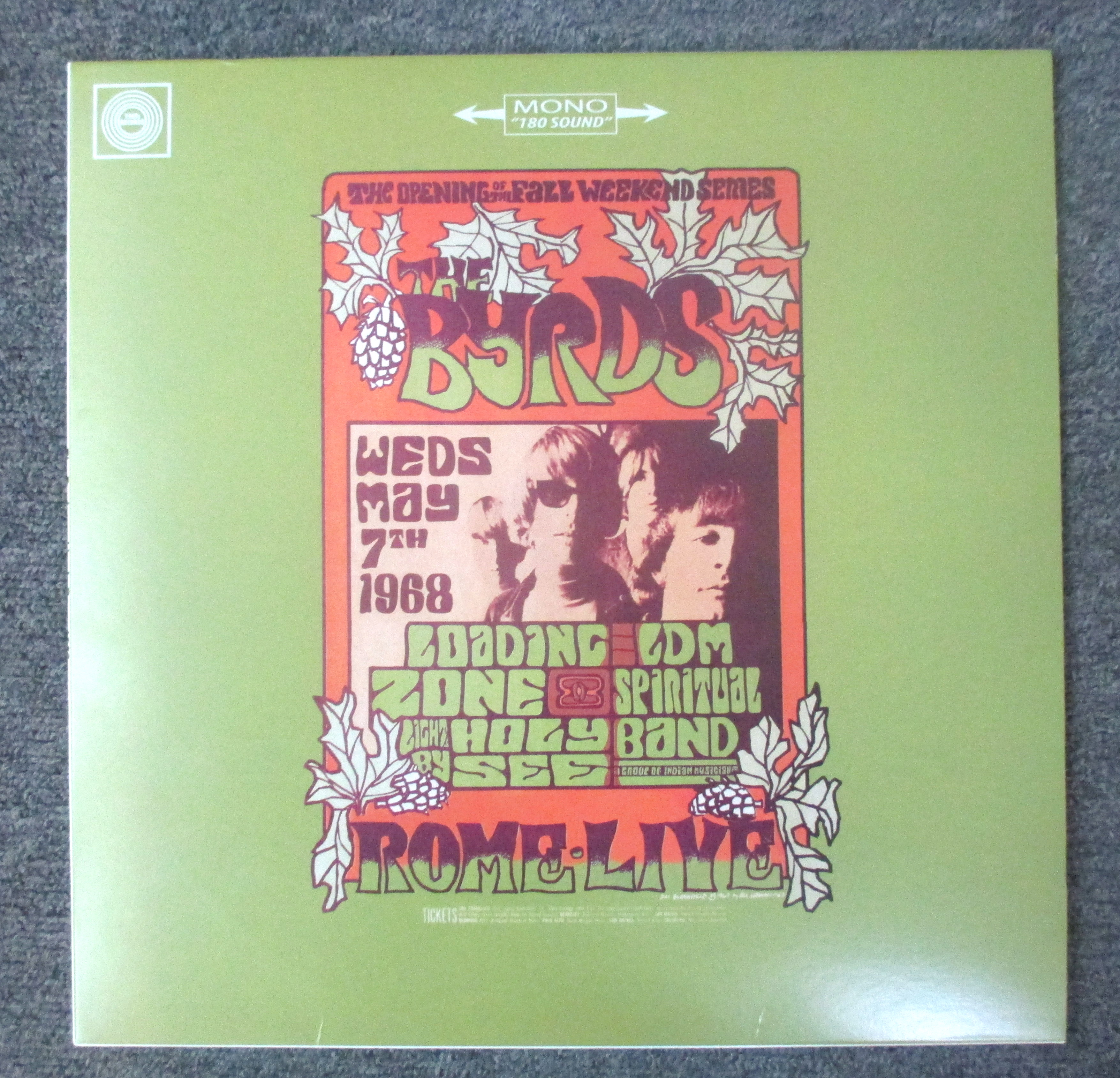
Side One
- You Ain’t Going Nowhere (Bob Dylan)
- Old John Robertson (Chris Hillman)
- You Don’t Miss Your Water (William Bell)
- Hickory Wind (Gram Parsons and Bob Buchanan)
- I’ll Feel A Whole Lot Better (Gene Clark)
- Chimes Of Freedom (Bob Dylan)
Side Two
7. The Christian Life (Charles and Ira Louvin)
8. Turn! Turn! Turn! (Pete Seeger)
9. My Back Pages (Bob Dylan) /
10. Baby What You Want Me To Do? (Jimmy Reed)
11. Mr Spaceman (Roger McGuinn)
12. You Ain’t Going Nowhere (Bob Dylan)
13. This Wheel’s On Fire (Bob Dylan)
Tracks 1-11 recorded at The Piper Club, Rome on May 7th 1968 for VPRO radio (Holland) with assistance from RAI radio (Italy)
Tracks 12 & 13 recorded for Playboy After Dark, September 28th 1968
Personnel
Roger McGuinn – Lead 12 string guitar, lead vocal, harmony vocal
Chris Hillman – Bass, harmony vocal
Gram Parsons – Acoustic guitar, harmony vocal, lead vocal (1-11)
Kevin Kelley – Drums
Doug Dillard – Banjo (1-11)
Clarence White – Guitar, harmony vocal (12 & 13)
John York – Bass (12 & 13)
Gene Parsons – Drums (12 & 13)
Sleevenotes
Posters for The First International European Pop Festival promised The Bee Gees, Big Brother, James Brown, Bo Diddley and Buffalo Springfield (and that’s just the B’s). It soon transpired that these were acts who had been invited to appear rather than acts that had actually confirmed their attendance. Nonetheless the Pink Floyd, Captain Beefheart, Donovan and Traffic were amongst the bands who did play. After the Move had let off some pyrotechnics on the third day the festival was forcibly moved from the 20,000 capacity Palazzo dello Sport to the much smaller venue The Piper Club for the fourth and final day. Apparently the whole event was appallingly organised and sparsely attended. A documentary was made for the BBC but never shown.
The version of the Byrds that took the stage at the Piper Club had recently undergone a change of personnel, hardly a novelty for this most mercurial of groups. The departure of founder members Gene Clark, David Crosby and Michael Clarke had reduced the Byrds to leader McGuinn and Chris Hillman. The drum stool was quickly occupied by Hillman’s cousin Kevin Kelley. A short series of early 1968 college gigs indicated that touring as a three-piece was not viable. Enter Ingram Cecil Connor III aka Gram Parsons. “I thought I hired a piano player.“ said McGuinn “Gram turned out to be a monster in sheep’s clothing. Good God! It’s George Jones in a sequin suit!”. Gram had already been exploring country music with his International Submarine Band but he jumped at the chance of promotion to the Byrds. Although Parsons would be a Byrd for less than six months he took the band in a completely new direction via the Sweetheart Of The Rodeo LP, in the process inventing country rock, Americana and The Eagles. Recording sessions at Columbia Studios in Nashville and Hollywood continued up until May 27th when the band flew to Europe for a short tour. Parsons had tried to persuade McGuinn to add a pedal steel player, compromising on banjoist/guitarist Doug Dillard who had recently been playing with Gene Clark.
Of the eleven songs played at the Piper Club, four were from the forthcoming LP, which was not released until August 30th. One of these was set-opener You Ain’t Going Nowhere, although this provided a link with the past as one of many Bob Dylan songs covered by the band. Hillman’s Old John Robertson had featured some country-picking when it appeared on the Notorious Byrd Brothers LP and it fits right into the new direction here. Parsons heartfelt vocal on You Don’t Miss Your Water supported by Dillard’s banjo provides irrefutable proof of the bands new direction delivering what Parsons would later term “Cosmic American Music” – a hybrid of country, rhythm and blues, soul, folk, and rock. Gram’s Hickory Wind is a haunting requiem for lost youth, written on a lengthy train ride from Chicago to Los Angeles. It’s back to more familiar territory with I’ll Feel A Whole Lot Better, McGuinns’ 12 string and vocal taking us back to June 1965 (albeit with added banjo). From the Byrds second LP Chimes Of Freedom and Turn! Turn Turn! both receive an enthusiastic welcome, harmonies immaculate throughout. In between comes another soulful Parsons vocal on The Christian Life. An upbeat My Back Pages features some interplay between electric guitar and organ (probably played by Parsons) as it evolves into an improbable boogie version of Baby, What You Want Me To Do ? Finally Mr Spaceman – another early Byrds song whose country leanings are emphasised in this arrangement.
When The Byrds played at the Middle Earth Cub in London later that week Mick Jagger and Keith Richards were in the audience. Parsons developed an immediate rapport with Richards based on a mutual love of country music and the sound of the South. When The Byrds returned to London in July en route to a tour of South Africa, Keith Richards was not impressed. ”He was not aware of apartheid or anything. He’d never been out of the United States. So when I explained it to him about apartheid and sanctions and nobody goes there he said “Oh just like Mississippi?” And immediately “Well fuck that”. Gram’s refusal to travel to South Africa got him fired from the Byrds, freeing him up to spend the summer of 1968 in London with his new pal.
Parsons later reflected “Being with The Byrds confused me a little. I couldn’t find my place. I didn’t have enough say-so. I really wasn’t one of The Byrds. I was originally hired because they wanted a keyboard player. But I had experience being a frontman and that came out immediately. And Roger McGuinn being a very perceptive fellow saw that it would help the act, and he started sticking me out front.” Parsons made sure he was the front man in his next band, The Flying Burrito Brothers, formed with Hillman in 1969.
Sweetheart Of The Rodeo became the lowest selling Byrds LP to date, reaching only number 75 in the Billboard charts. It had been a brave experiment which would not bear fruit for many years. The line-up that made the LP played so few gigs that we are lucky to have this well-recorded memento of a band that was over before it began.
Finally two bonus tracks. Recorded for Hugh Hefner’s Playboy After Dark TV series an understandably distracted McGuinn is interviewed about his haircut by Hefner before the Byrds perform excellent live covers of You Ain’t Going Nowhere and This Wheel’s On Fire. Parsons place is taken by Clarence White who gave the group some much-needed stability, notably on the live portion of 1970’s LP Untitled. There is also a new rhythm section in place with John York on bass and Gene Parsons on drums.
Sleevenotes: Captain Soul


Jon Savage has been reeling in the years through a fascinating series of year-by-year singles compilations from Ace, starting with 1966 so as to correspond with his book of the same name.
With All Our Times Have Come he reaches the period 1972-1976 and this is my era. I was delighted to find that of the 44 tracks arranged across 2CDs I have 26 on 7” vinyl. A prominent exception is Eno’s Third Uncle which would appear to have been released only in France and Germany and is now ultra-rare as a result (love that ping-pong bass intro). I do have a ferocious version from 801 Live so that sort of makes 27. The title of the compilation is from Blue Oyster Cult’s Don’t Fear The Reaper, included in truncated form with the guitar solo excised: the most important piece of single editing since Light My Fire! The full tracklisting is here .
Of the tracks I have not heard before I am pleasantly surprised by the muscularity of Neu’s After Eight and I liked the heavenly choirs in Kraftwerk’s Radioactivity. I can’t match Jon’s enthusiasm for Easy To Slip (Little Feat) or Full Circle (Byrds) – both bands made much better singles. Andy Warhol by Dana Gillespie and Max’s Kansas City by Wayne County are interesting but period pieces.
However the good stuff is incendiary. Do Ya by The Move has just the best riff ever and a massively bonkers ending. End Unkind is a welcome reminder of Nils Lofgren’s early songwriting talent. The Groovies Slow Death and Big Star’s When My Baby’s Beside Me are part of my DNA by now. The compilation ends with the casual off-hand lyrical brilliance of Nick Lowe’s Heart Of The City and the otherworldly blues of the Count Bishops Train Train, which for some reason reminds me of the (original) Charlatans.
Jon’s sleevenotes are typically thoughtful, making the case for the punk breakthrough pre-empted by this era being only one possible outcome: other musical directions were available. But I for one am very happy that music took heart from the ingenuity and passion shown here and got spiky and snarly (for a bit)
I love that Jon praises Brian Hogg’s Bam Balam magazine. In a pre-internet age Bam Balam educated Jon (and me) about the best of the 1960s bands, raving about the Yardbirds, the Move, the Small Faces, the Byrds, the Springfield. Brian also loved the Groovies, Big Star, the Stooges and the Dolls so his magazine bridged the gap between hard pop and nascent punk. I still cherish my battered and over-read copies of Bam Balam.
By a total coincidence the CD cover features Rod Melvin of the Moodies, a high concept / low output setup who feature in my current bedtime reading, The Tightrope Walker by Hermine Demoriane. More on this anon.

Nobody’s Fool by Cold Turkey (Pye 7N45142, 1972)
This article appeared in Record Collector magazine No.522 (September 2021)
During the early Seventies pop singer Adam Faith re-emerged as an actor, playing the lead in ITV’s Budgie. The theme tune for the second series was Nobody’s Fool, written by Raymond Douglas Davies and produced by Jimmy Horowitz. Pye released Nobody’s Fool as a single, credited to Cold Turkey. The B side was the theme to another TV series Sesame Street, performed by The Street Kids and devoid of any Kinks Konnection.
Kinks fans have speculated that Cold Turkey were actually the Kinks under another name. The vocals and guitar parts are very Kinky, plus the introduction to the song is cribbed from Animal Farm (Village Green) and the Kinks were also on Pye. However talking to the Swedish Rock’n’Roll magazine in 2014 Ray Davies denied any involvement. “It’s not us. But this group Cold Turkey tried to sound like the Kinks so I can understand the suspicion. Their recording of Nobody’s Fool was released by Pye, a record company we were happy to finally have been released from, and I definitely didn’t want anything to do with it.”
The session took place at IBC on 21st February 1972. Producer Jimmy Horowitz can’t remember who was in Cold Turkey but has speculated the session included Andy Bown (bass), Barry De Sousa (drums), Bob Cohen (guitar) and Chris Spedding (guitar) with Horowitz himself playing the piano. Pye were more interested in having Sesame Street as the A side, and only flipped the tracks when Nobody’s Fool turned out so well.
Georgia Mckinley from the Kinks Facebook group has suggested the singer was Roger Moon from the group Storyteller. Subsequent to Cold Turkey Roger would record a solo LP Nobody Knows My Name (Capitol 1974), backed by Frampton’s Camel. Sadly he died earlier this year.
An earlier version of Nobody’s Fool was recorded by Mike Vickers, Manfred Mann multi-instrumentalist and soundtrack composer. Recorded at Intersound Studio, Wembley in July 1971 Vickers’ recording sounds more like Ray Davies’ original piano and vocal demo. The latter is available on the expanded 2CD re-release of Muswell Hillbillies. Other versions are by Glenda Collins and a duet sung by Paul Weller and Suggs for BBC Radio 4, both from 2019.
Cold Turkey’s take on Nobody’s Fool has been compiled repeatedly. It was included on the 1999 Castle / Sequel 2CD set The Persuaders! & Other Top Seventies TV Themes. To find Nobody’s Fool in more sympathetic company head for Kinked! Kinks Songs And Sessions 1964-1971, a comprehensive CD put together for Ace in by Alec Palao in 2016 which also includes other Davies compositions never released officially by the Kinks including This Strange Effect and I Go To Sleep. The last time the Nobody’s Fool single sold on eBay it went for £81 so a CD version might be more cost effective. The Kinks never recorded the song themselves, but Cold Turkey’s version can easily be found on YouTube.
With thanks to Doug Hinman, Jay Rathbone, Dave Emlen, Pedro Mercedes and Russell Smith
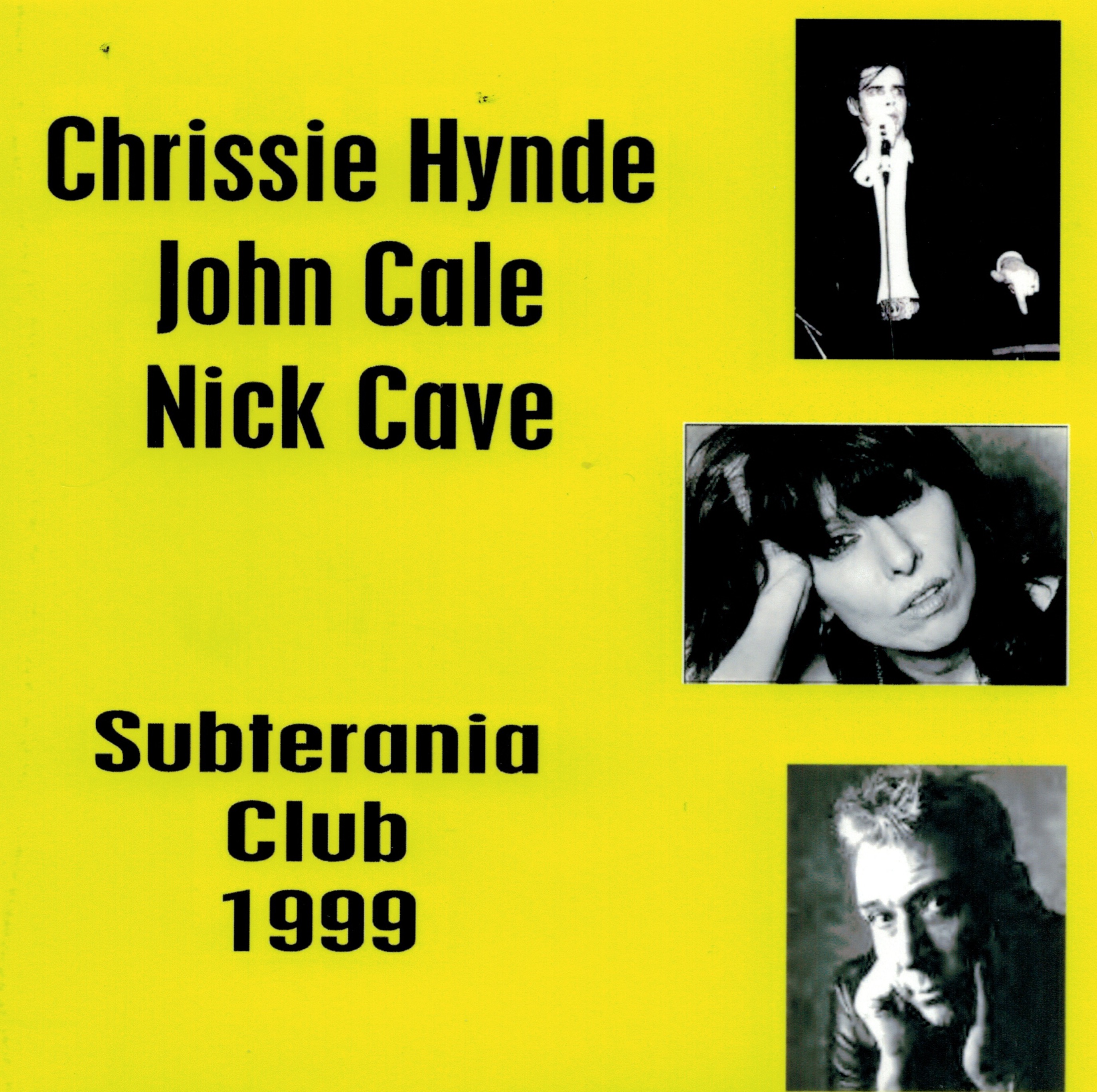
Does anyone remember a BBC2 late night series called Songwriters Circle ?
“Singer-songwriters get together to perform their own classics, chat and collaborate”
It used to be recorded at Subterania in my old stomping ground of Ladbroke Grove and the episode I saw filmed featured John Cale, Chrissie Hynde and Nick Cave (in the words of Meatloaf, two out of three ain’t bad…). All three were in fine voice and happy to explain how the muse had struck.
Last week I saw that Organ Grinder Records Inc of Spain (yeah, right) had put the show out on CD. My copy arrived yesterday and it turns out my memories are not rose-tinted – it was a great afternoon. Cale comes out ahead thanks to Dying On The Vine, Fear and Thoughtless Kind but Chrissie is not far behind with Talk Of The Town, Kid the best version of Back In The Chain Gang I have heard. To be fair to Cave his Into My Arms is performed decently. As the session progresses solo performances become duets culminating in a three-way I’m Waiting For The Man which is absent from the CD but you can find it here
I was shocked when I checked the recording date July 9th 1999 – just the 22 years ago then.
Back in the days when spending a few hours drinking in a packed nightclub and listening to live music seemed a completely ordinary thing to do…
Tracklisting
- Ship Of Fools (Soundcheck) – Chrissie, John, Nick
- Dying on The Vine (Cale)
- Talk Of The Town (Hynde)
- West Country Girl (Cave)
- Thoughtless Kind (Cale)
- Kid (Hynde)
- Henry Lee (Cave)
- Fear (Cale)
- I’ll Stand By You (Hynde)
- Into My Arms (Cave)
- Ship Of Fools (Cale)
- Back On The Chain Gang (Hynde)
- The Ship Song (Cave)
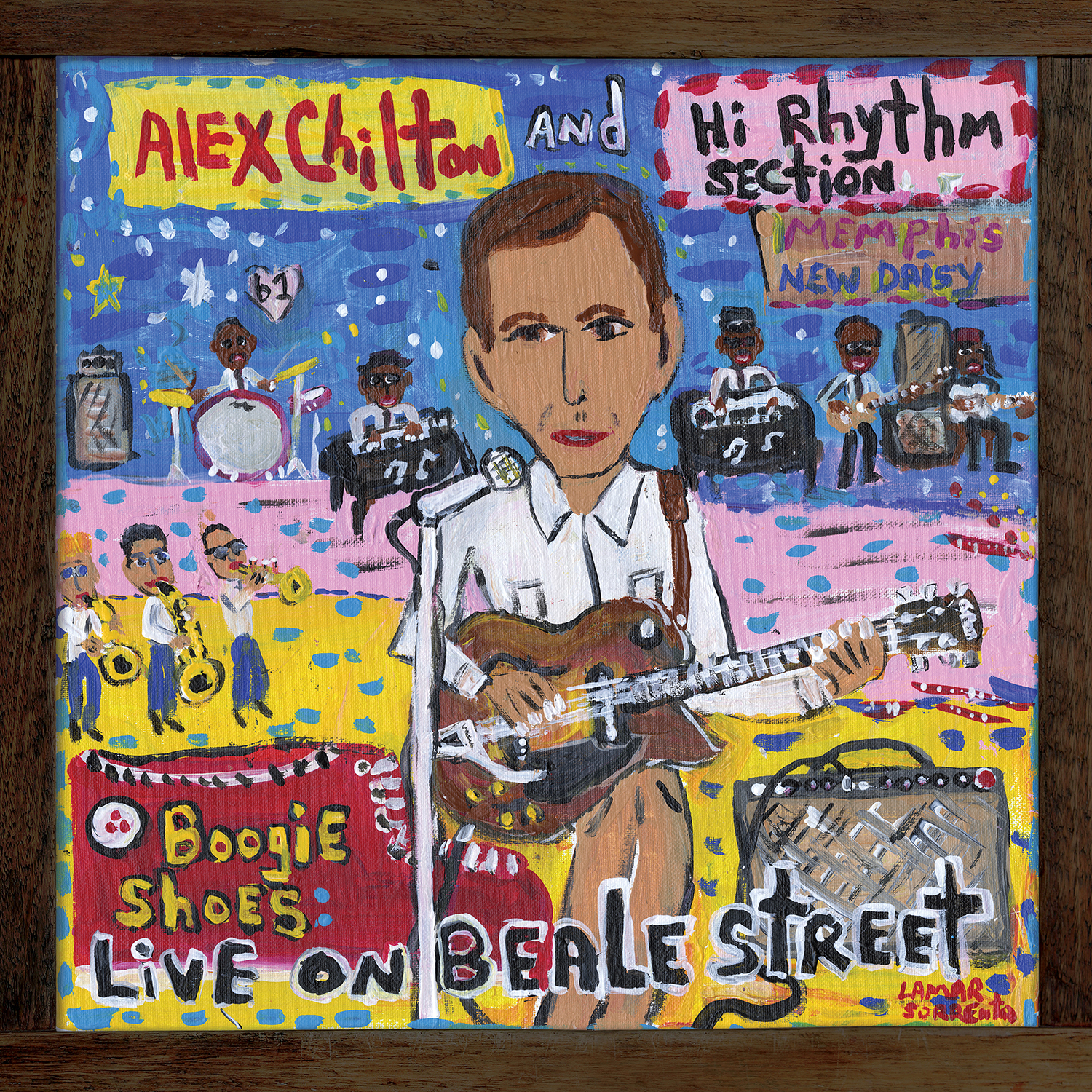
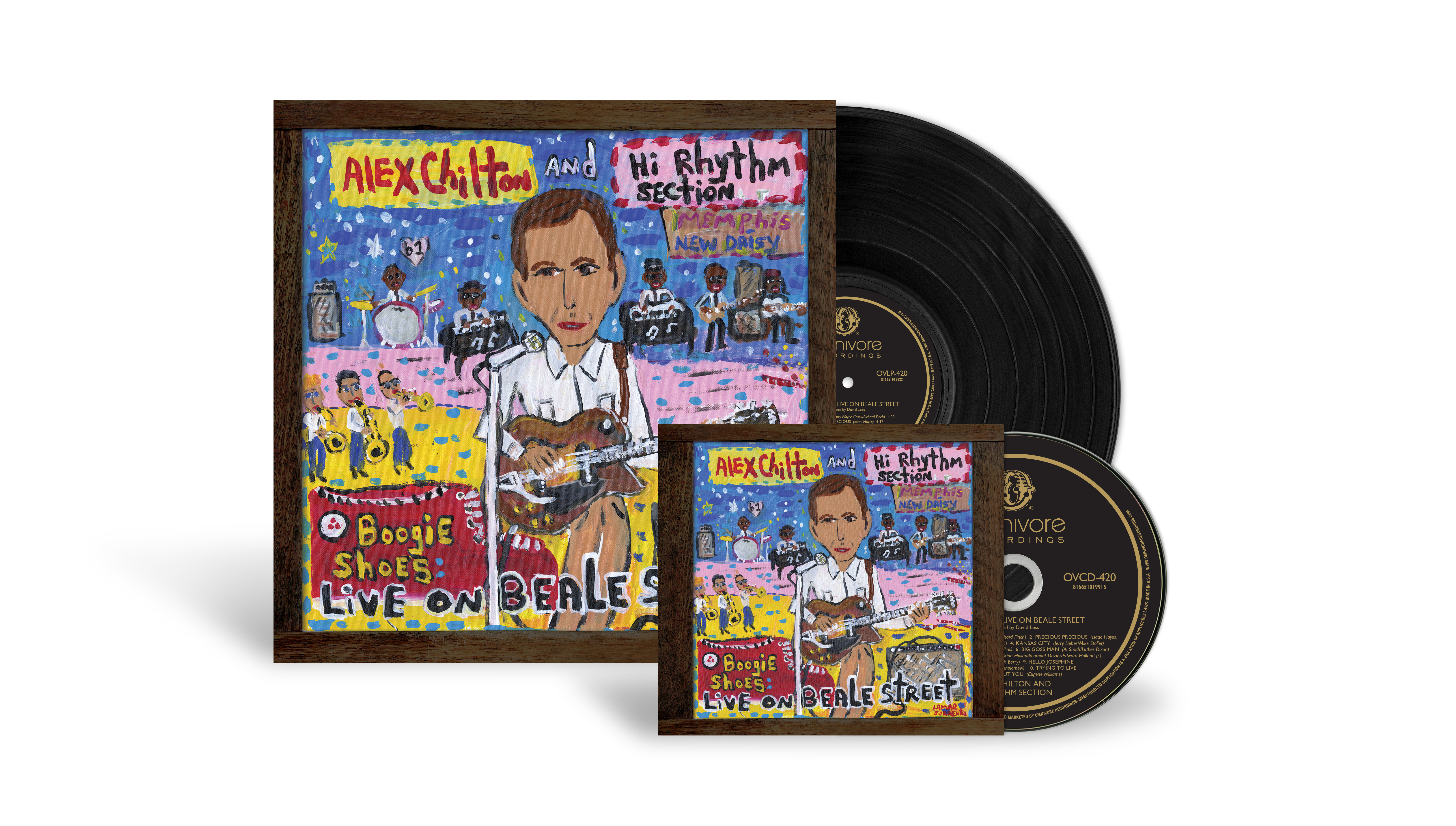
Alex Chilton and Hi Rhythm Section
Omnivore Records CD / LP
When the reformed Big Star played London in 2001 they encored with Get Down Tonight, the KC and the Sunshine Band number. Earlier on the set they had performed Chris Bells wracked psycho-ballad I Am The Cosmos. You can guess which song went down better with the rather earnest crowd Big Star had attracted. I thought they were both great, and illustrated Chilton’s commitment to a good song, wherever he might find it.
The Get Down Tonight faction is definitely in the ascendent on this new release by Alex Chilton and the Hi Rhythm Section. The gig was a benefit performed at the New Daisy Theatre in Memphis on October 7th 1999. Alex agreed to play the gig without having a backing band lined up. Organiser David Less offered the services of the Hi Rhythm Section, famous from backing Ike & Tina Turner, Ann Peebles and Al Green. Alex replied “That will work”. And it does. As Less notes in the liner notes “I never saw Alex have so much fun on stage. Without rehearsal, Alex called songs and the band locked in. The horn section consists of top Memphis session guys who huddled together when each song was called creating parts on the fly. The pure joy of playing this music so freely with such legendary musicians comes across in every groove of the record.”
All the songs are covers, everything has a groove. Maybelline, Josephine, Lucille – all the best (baddest) girls are here. My favourite track is the opening Boogie Shoes, played here in a less elliptical arrangement than we heard closing 1979’s Like Flies On Sherbert LP. Plus a slinky sway through Where Did Our Love Go?, a version only trounced by the sheer raunch of the J.Geils single (produced by Ahmet Ertegun hisself). Everyone sounds like they are having a blast and so will you. Just don’t expect anything remotely like #1 Record
Track Listing:
- Boogie Shoes
2. Precious, Precious
3. 634-5789
4. Kansas City
5. Lucille
6. Big Boss Man
7. Where Did Our Love Go
8. Maybelline
9. Hello Josephine
10. Trying to Live My Life Without You
Three from 1970, available now from http://www.1960s.london !
Let The Airwaves Flow Volume 5
The Rolling Stones Live in Paris 1970
- Jumpin’ Jack Flash (Mick Jagger & Keith Richards)
- Roll Over Beethoven (Chuck Berry)
- Sympathy For The Devil (Mick Jagger & Keith Richards)
- Stray Cat Blues (Mick Jagger & Keith Richards)
- Love In Vain (Robert Johnson)
- Dead Flowers (Mick Jagger & Keith Richards)
- Midnight Rambler (Mick Jagger & Keith Richards)
- Live With Me (Mick Jagger & Keith Richards)
- Little Queenie (Chuck Berry)
- Let It Rock (Chuck Berry)
- Brown Sugar (Mick Jagger & Keith Richards)
Recording details
All tracks recorded live at Palais de Sports, Paris on September 22nd 1970 and broadcast on French Radio Europe 1
Personnel
Mick Jagger – lead vocals, harmonica
Keith Richards- guitar, vocals
Mick Taylor – guitar
Bill Wyman – bass guitar
Charlie Watts – drums
Bobby Keys – saxophone
Jon Price – trumpet
The European tour that the Stones undertook in the autumn of 1970 represented their first live dates since their US tour of late 1969.. The Stones had spent the intervening months at Olympic Studios in Barnes, recording the tracks that would make up the LP Sticky Fingers. However the LP that the European tour was designed to promote was Get Yer Ya Ya’s Out, released on September 4th and a document of the ‘69 US tour. Comparing the songs played in the US and in Europe shows a few key differences. Out was Carol, replaced by an unprecedented three further Chuck Berry covers. Brown Sugar and Dead Flowers also featured, even though they would not be released on Sticky Fingers for a further six months.
The other major change from the US tour was the addition of a brass section, Bobby Keys on sax and Jim Price on trumpet. The Stones had first met Keys in San Antonio in 1964 when he was backing Bobby Vee. Keys and Keith Richards bonded when they discovered they shared the same birthday. Keys’ first appearance on a Stones record is his fierce solo on Live With Me from 1969’s Let It Bleed. Together with his partner in crime Jim Price they made a fine addition to the Stones live sound where they were used with restraint to fill out the sound and add a new dimension to some familiar songs.
Jumpin’ Jack Flash makes for a perfect opening number, hard and fast. Roll Over Beethoven hadn’t been played live since 1964 and would not be played again after this tour, a shame as this version includes both the rock and the roll (c. Keith Richards). The Paris dates came midway through the tour and a lengthy Sympathy For The Devil illustrates just how well the band were playing off each other. There is a change of pace with Stray Cat Blues and Love In Vain, both with sparing contributions from Price and Keys and the latter featuring a characteristically restrained solo from Mick Taylor. The new Dead Flowers is charming whilst Midnight Rambler is another longer track. The Stones have never been a jamming band in concert but the guitar interplay between Richards and Taylor reaches a peak here with some savage slashing chords. The thumping opening of Live With Me showcases the peerless rhythm section of Watts and Wyman before Bobby Keys recreates his incendiary solo. Staying uptempo Richards leads the band through a brace of Chuck Berry songs in Little Queenie and Let It Rock. The former is transformed from its Ya-Ya’s version through the addition of horns whilst the latter is perfect for the Stones but would be played all too rarely. That Brown Sugar is still fresh is clear from the succinct and enthusiastic version played here with Jagger at his most commanding.
The European 1970 tour is the blueprint for The Stones ascent to mega-stardom. All the elements are now in place save for the addition of Nicky Hopkins, who would supplement Ian Stewart’s boogie-woogieing. No official recording from Europe 1970 has ever been released, but you can hear from the highly vocal reaction of the Parisienne crowd that the band were in peak form. They saunter, they swagger, they swing. The golden age of live Stones performances has begun.
Sleevenotes: Alain de Monte
Neil Young and Crazy Horse
Santa Monica Civic 1970
- On The Way Home (Neil Young)
- I Am A Child (Neil Young)
- Everybody’s Alone (Neil Young)
- I Believe In You (Neil Young)
- Birds (Neil Young)
- Nowadays Clancy Can’t Even Sing (Neil Young)
- Everybody Knows This Is Nowhere (Neil Young)
- Winterlong (Neil Young)
- Down By The River (Neil Young)
- Wonderin’ (Neil Young)
- Come On Baby Let’s Go Downtown (Danny Whitten , Neil Young)
- Cinnamon Girl (Neil Young)
Personnel
Neil Young – acoustic guitar, electric guitar, piano, vocals
Danny Whitten – rhythm guitar, vocals (tracks 7-12)
Billy Talbot – bass (tracks 7-12)
Ralph Molina – drums, backing vocals (tracks 7-12)
Jack Nitzsche – electric piano (tracks 7-12)
Recording details
All tracks recorded live at the Santa Monica Civic Auditorium, March 28th 1970 and broadcast on Radio KUSC FM
Sleevenotes
Here we are in the years.
Early 1970 found Neil Young simultaneously facing in two directions. Crosby, Stills, Nash & Young – the conglomerate whose live performances he had been brought in to shore up– were the toast of Woodstock and globally massive. Young referred to them as his Beatles, whereas his Stones side came out when he was backed by tough roots rockers Crazy Horse. Young had first seen Crazy Horse when they were still The Rockets and “borrowed” Danny Whitten, Billy Talbot and Ralph Molina for his backing band. The story is depicted in Running Dry – Requiem For The Rockets , a song on Young’s highly successful Everybody Knows This Is Nowhere LP (May 1969), co-credited to Crazy Horse. Whitten made a brilliant counterpoint to Young. Their voices fitted together seamlessly and their interweaving guitars were particularly effective when they hit a live groove, supported by the funky 4/4 rhythm section of Talbot and Molina and underpinned by the haphazard keyboard expertise of wayward genius Jack Nitzsche (Phil Spector, the Rolling Stones, Performance).
The 1970 US tour let Young express both his sensitive singer-songwriter side and his enthusiasm for raunchy proto-grunge : an acoustic set of solo and Buffalo Springfield songs was followed by a very lively electric set with Crazy Horse. Santa Monica was the final night of a ten date tour which long-term Young afficionado Nick Kent describes as featuring some of Young’s best ever performances.
For many years Neil Young’s extensive fan base could only hear the 1970 tour through bootlegs of varying quality. In 2006 Reprise teased with a six track release Live At The Fillmore East, to which a common response was “where’s the rest of the gig?”. With this LP we are delighted to bring you the entire acoustic set that Reprise completely overlooked as well as some complementary electric performances.
Of the six acoustic songs, three are from Young’s days with Buffalo Springfield. Particularly welcome are On The Way Home and Nowadays Clancy Can’t Even Sing as Young did not sing lead on the Springfield studio versions: they are warmly received. I Am A Child fits in seamlessly with solo performances of I Believe In You and Birds, both from Neil’s upcoming September 1970 release After The Goldrush.. Everybody’s Alone was recorded with Crazy Horse about this time but would not see an official release until The Archives Volume 1 in 2009.
Cinnamon Girl was omitted from the Reprise release over concerns with tuning so we are delighted to include it here: it rocks hard with a fabulous one-note guitar solo. The twin lead vocals of Neil and Danny are a highlight of Everybody Knows This Is Nowhere.. Come On Baby Let’s Go Downtown is an upbeat song about scoring smack, the obverse of I’m Waiting For My Man. Sung mainly by Danny it would also appear on the first Crazy Horse LP (1971) and as a spectacularly unsuccessful single by Mott The Hoople the same year. Winterlong and Wonderin’ would not receive official releases until 1977 (Decade) and 1983 (Everybody’s Rockin’) respectively, the latter with doo wop backing vocals that are mercifully absent here. And finally there is Down By The River where Whitten’s rhythm guitar provides the perfect foil for Young’s “intense sustain and blistering attack” (Barney Hoskins) over a relatively restrained eight minutes.
Sadly the 1970 tour was the last time that Young and Whitten played together live. Whitten’s heroin habit caused his performance to deteriorate to the point where Young sacked him just before the Time Fades Away tour. Whitten died later that day, from an overdose of prescription painkillers and alcohol. Young felt personally responsible for Whitten’s death and wrote the 1975 LP Tonight’s The Night as an extended tribute to Danny,: including a fiery Downtown from the Fillmore East dates.
Neil would carry on with Talbot and Molina under the name Crazy Horse but there is something magical about the first Crazy Horse line up. We are fortunate that Radio KUSC recorded and broadcast this gig so that today we can hear Neil Young and the original Crazy Horse at their most spectacular.
Sleevenotes: Bernard Shakey
With many thanks to Neil Parison for his invaluable assistance with this release
The Byrds
Live In Amsterdam 1970
Side One
- Baby What You Want Me To Do (Jimmy Reed)
- Willin’ (Lowell George)
- Black Mountain Rag (Soldier’s Joy) (Leslie Keith)
- Buckaroo (Bob Morris) /
- Nashville West (Gene Parsons & Clarence White)
- You Don’t Miss Your Water (William Bell)
- Chestnut Mare (Roger McGuinn and Jacques Levy)
- Chimes Of Freedom (Bob Dylan)
Side Two
- Turn! Turn! Turn! (Pete Seeger & Book of Ecclesiastes) /
- Mr Tambourine Man (Bob Dylan) /
- Eight Miles High (Gene Clark, Roger McGuinn, David Crosby) /
- Hold It (Byrds)
Recording details
All tracks recorded live at the Concertgebouw, Amsterdam on July 7th 1970 and broadcast on VPRO radio, The Netherlands.
Personnel
Roger McGuinn – Guitar, vocals
Clarence White – Guitar, mandolin, vocals
Skip Battin – Bass, vocals
Gene Parsons – Drums, vocals
Sleevenotes
Early line-ups of the Byrds had a reputation for erratic live performances. Extensive touring throughout 1969 and 1970 resulted in a highly professional road-hardened band that was the most stable and longest-lived of any Byrds configuration. Talking to Uncut in 2019 Roger McGuinn was fulsome in his praise for Clarence White. ” Clarence White was a brilliant guitarist, he could play anything with a great sense of syncopation. He never played the same lick twice, it was never predictable. I clearly remember the difference between the Byrds onstage before Clarence and after him and it was a tremendous contrast for the better.”
To build on the strength of the Byrds onstage, producer Terry Melcher suggested that the 1970 LP Untitled should be a double LP containing one studio record and one live record. The studio part of Untitled contained songs that McGuinn had written with ex-psychologist Jaques Levy for a country-rock stage production of Henrik Ibsen’s Peer Gynt. The musical was to be titled Gene Tryp, transposing Ibsen’s work from Norway to America. Gene Tryp would not be performed until 1992, but six of the twenty-six songs were recorded in the studio by The Byrds and appeared on Untitled and its successor Byrdmaniax (1971). The live portion of Untitled featured songs recorded live in New York at Queens College (28th February 1970) and the Felt Forum (March 1st 1970). The original LP released in September 1970 contained seven live tracks: a 2000 CD re-issue added a further eight live tracks. This LP has been programmed to avoid any overlap with these 15 tracks.
First up is a sturdy version of Jimmy Reed’s Baby What You Want Me To Do which showcases the tightness of the Battin / Parsons rhythm section. McGuinn was an early champion of Willin’, the evocative ballad written by Lowell George prior to his forming Little Feat and here sung by Parsons. Prior to joining the Byrds Gene Parsons and Clarence White had played together extensively, both on sessions and as part of a short-lived band called Nashville West. Their instrumental prowess is exhibited in Black Mountain Rag, Buckaroo and their theme tune Nashville West. You Don’t Miss Your Water is a return to the more country direction instigated by Gram Parsons during his time in the band. Chestnut Mare is the only Gene Tryp song performed here – an edited version would be the Byrds last UK top 20. In contrast Chimes of Freedom was released on the very first Byrds album in 1965 where it was one of four Bob Dylan covers. Three further early singles are revisited during the closing medley. Turn! Turn! Turn! and Mr Tambourine Man from 1965 and Eight Miles High from the following year. Unlike the single version of Mr Tambourine Man McGuinn sings a fuller lyric here. Whilst Mr Tambourine Man and Turn! Turn! Turn! are played concisely Eight Miles High features an extended arrangement allowing for lengthy improvisation, including a drum and bass passage that McGuinn claims was inserted to give him and White a cigarette break. The medley concludes with Hold It, the Byrds live going-out theme first heard on the Dr. Byrds and Mr.Hyde LP from 1969.
Clarence White would remain a Byrd until February 1973 when McGuinn reformed the original five-piece band in order to record the deeply underwhelming studio LP Byrds. He was killed by a drunk driver whilst loading his car after a gig in July 1973, prompting Gram Parsons to write In My Hour Of Darkness. Listening to this fine performance shows just how important Clarence White was in helping McGuinn establish the credibility of the Byrds as a live performing outfit.
Sleevenotes: John Robertson (retired)
 Edited by Niall McGuirk and Michael Murphy
Hope Publications 2020 www.hopecollectiveireland.com
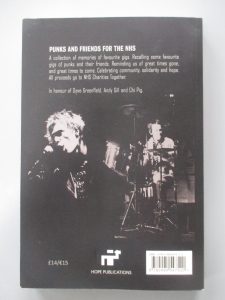
This thoroughly entertaining and worthwhile book is recommended on a number of levels. Firstly it is a great read, easy to dip into and select an appetising short review: kudos to the editors for keeping everything brief. Secondly it is in good cause with all proceeds going to NHS Charities Together. And thirdly in this gig-barren time it reminds us just what fun it is to go to a gig. Not to a socially-distanced, tested-on-the-door, everyone-in-a-bubble, sanitised-to-hell concert but an old-school sweaty, smelly, adrenalin-drenched gig.
As the Hope Collective are based in Dublin there is a bias towards Irish bands and venues but the opinions expressed are universal. It’s the details I love – Martin Stephenson’s concern that a pint will fall off an amp during an Only Ones gig, John Perry’s description of Bert Jansch looking for a pick, Robert Smith’s extraordinary kindness to support band Zerra One, Tom Crossley confusing Stratford with Stafford.
Promoter Elvera Butler points out that a bad live performance can puncture your enthusiasm for an act whilst a good one can cement your relationship with them for all eternity. Some people talk about gigs they attended, others talk about gigs they played, some do both. A common theme running through the book is how you find your community, your tribe through live music: so true. Unsurprisingly the most frequently cited band here are The Ramones, clearly the patron saints of short, sharp musical statements.
Half the fun of reading a book like this is seeing whether you agree with the reviews of those gigs you attended and deciding what gig(s) you would nominate ( for me: Trash @ The Garage, Roxy Music @ Guildford Civic, Ron Wood + Mick Taylor @ Troubadour, Clash @ Music Machine, Replacements @ Roundhouse, Only Ones @ Portobello Green, Todd Rundgren @ Hammersmith and so many more…) A final word of praise for Russ Bestley’s cover design, paying homage to the classic mid-70s NME masthead.
Well done Niall and Michael for spreading the joy of live music even when there is none to be found.
Barbaraville ( https://daintees.bandcamp.com/album/angels-in-sandshoes )
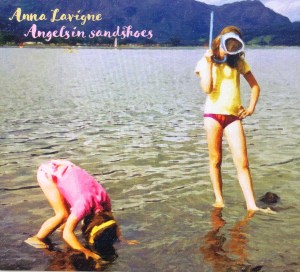
I first encountered Anna in September 2019, a time so long ago that it was still possible to walk over to the Half Moon in Putney and witness live music. John Perry had invited me to a Martin Stephenson gig where Anna provided some very effective vocals to a couple of songs. Just before Christmas Anna sent me her new CD and it is well worth a listen. Martin has provided a sympathetic production and simple but effective arrangements which play to the strengths of Anna’s words and melodies. It is stylistically diverse: several tracks are jazz-infused with the saxophone of Al Thomson lifting Seashore Roses and Every Kind Of Heaven. Martin’s clean-cut 50’s guitar gives a Shakin’ All Over feel to the start of Dare To Dream, and his joint vocals with Anna on I Love The Way You Move bring both the rock and the roll. Dance The Last Goodbye has an almost girl-group intro and features Anna duetting with herself to great effect. The closing A Life Of Her Own updates She’s Leaving Home, albeit with the subject running away rather than running off. Bonus points for focussing on positivity throughout and no mention of lockdown, viruses or Brexit. These songs would work well in a live setting so I hope that Anna makes it back to the Half Moon sometime soon.

