Out now from http://www.1960s.london

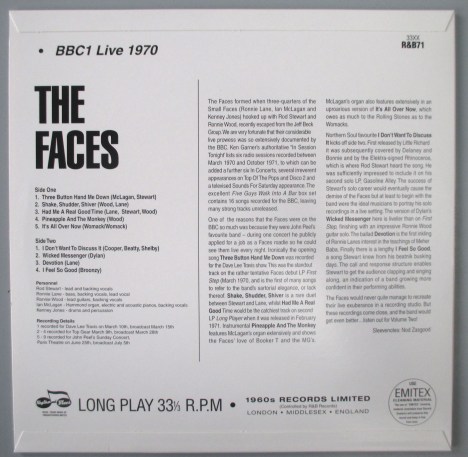
The Faces Live 1970 Volume One
- Three Button Hand Me Down (McLagan, Stewart)
- Shake, Shudder, Shiver (Ronnie Wood, Ronnie Lane)
- Had Me A Real Good Time (Ronnie Lane, Rod Stewart, Ronnie Wood)
- Pineapple And The Monkey (Ronnie Wood)
- It’s All Over Now (Bobby Womack, Shirley Jean Womack)
- I Don’t Want To Discuss It (Dick Cooper, Beth Beatty, Ernie Shelby)
- Wicked Messenger (Bob Dylan)
- Devotion (Ronnie Lane)
- I Feel So Good (Big Bill Broonzy)
Personnel
Rod Stewart – lead and backing vocals
Ronnie Lane – bass, backing vocals, lead vocal
Ronnie Wood – lead guitars, backing vocals
Ian McLagan – Hammond organ, electric and acoustic pianos, backing vocals
Kenney Jones – drums and percussion
Recording Details
1 recorded for Dave Lee Travis on March 10th, broadcast March 15th
2 & 4 recorded for Top Gear March 9th, broadcast March 28th
3 recorded for Top Gear on September 15th , broadcast on September 19th
5 – 9 recorded for John Peel’s Sunday Concert, Paris Theatre on June 25th, broadcast July 5th
Sleeve notes
The Faces formed when three-quarters of the Small Faces (Ronnie Lane, Ian McLagan and Kenney Jones) hooked up with Rod Stewart and Ronnie Wood, recently escaped from the Jeff Beck Group. We are very fortunate that their considerable live prowess was so extensively documented by the BBC. Ken Garner’s authoritative “In Session Tonight’ lists six radio sessions recorded between March 1970 and October 1971, to which can be added a further six In Concerts, several irreverent appearances on Top Of The Pops and Disco 2 and a televised Sounds For Saturday appearance. The excellent Five Guys Walk Into A Bar box set contains 16 songs recorded for the BBC, leaving many strong tracks unreleased.
One of the reasons that the Faces were on the BBC so much was because they were John Peel’s favourite band – during one concert he publicly applied for a job as a Faces roadie so he could see them live every night. Ironically the opening song Three Button Hand Me Down was recorded for the Dave Lee Travis show. This was the standout track on the rather tentative Faces debut LP First Step (March 1970, and is the first of many songs to refer to the band’s sartorial elegance, or lack thereof. Shake, Shudder, Shiver is a rare duet between Stewart and Lane, whilst Had Me A Real Good Time would be the catchiest track on second LP Long Player when it was released in February 1971. Instrumental Pineapple And The Monkey features McLagan’s organ extensively and shows the Faces’ love of Booker T and the MG’s. McLagan’s organ also features extensively in an uproarious version of It’s All Over Now, which owes as much to the Rolling Stones as to the Womacks.
Northern Soul favourite I Don’t Want To Discuss It kicks off side two. First released by Little Richard it was subsequently covered by Delaney and Bonnie and by the Elektra-signed Rhinoceros, which is where Rod Stewart heard the song. He was sufficiently impressed to include it on his second solo LP, Gasoline Alley. The success of Stewart’s solo career would eventually cause the demise of the Faces but at least to begin with the band were the ideal musicians to portray his solo recordings in a live setting. The version of Dylan’s Wicked Messenger here is livelier than on First Step, finishing with an impressive Ronnie Wood guitar solo. The ballad Devotion is the first inkling of Ronnie Lanes interest in the teachings of Meher Baba. Finally there is a lengthy I Feel So Good, a song Stewart knew from his beatnik busking days. The call and response structure enables Stewart to get the audience clapping and singing along, an indication of a band growing more confident in their performing abilities.
The Faces would never quite manage to recreate their live exuberance in a recording studio. But these recordings come close, and the band would get even better…listen out for Volume Two!
Sleevenotes: Nod Zasgood
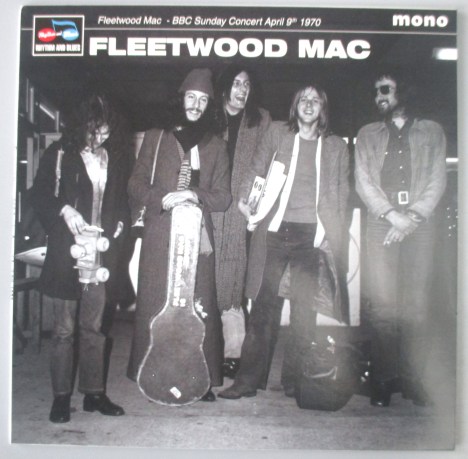

Fleetwood Mac BBC Sunday Concert 1970
- Rattlesnake Shake (Peter Green)
- Underway (Peter Green)
- Stranger Blues (Clarence L Lewis, Morris Levy and Elmore James)
- World In Harmony (Danny Kirwan and Peter Green)
- Tiger (Ollie Jones)
- The Green Manalishi (With The Two Prong Crown) (Peter Green)
- Coming Your Way (Danny Kirwan)
- Great Balls Of Fire (Otis Blackwell and Jack Hammer)
- Twist and Shout (Phil Medley and Bert Berns)
All tracks recorded live at the Paris Theatre, Lower Regent Street, London on April 9th 1970 and broadcast on April 19th 1970 as part of the BBC Sunday Concert series, this performance hosted by David Symonds.
Personnel
Peter Green – guitar, vocals
Jeremy Spencer – guitar, maracas, piano, vocals
John McVie – bass
Mick Fleetwood – drums
Danny Kirwan – guitar, vocals
Sleevenotes
This stunning recording by Fleetwood Mac was one of a series of Sunday Concert specials which ran every week in 1970 and 1971 and less often thereafter. Usually introduced by John Peel the series included artists such as David Bowie and The Faces.
By the time this concert was recorded Fleetwood Mac had travelled a long way from their blues-boom roots. Jamming with the Grateful Dead at the Fillmore East had left its mark and some songs now incorporated sections for improvisation. Songs from the bands most recent LP then Play One (released the previous September) proved particularly suitable for this, whilst the rock’n’roll standards fronted by Jeremy Spencer provided some light relief. Combining these two strands made for an exhilarating performance.
Rattlesnake Shake makes for a propulsive set-opener, Jeremy Spencer’s maracas combining with Mick Fleetwood’s pulsebeat whilst the duelling guitars of Green and Kirwan underpin Green’s powerful lead vocal. The band step up the pace to fast shuffle around the four-minute mark before easing into the instrumental Underway, showcasing the more lyrical playing styles of Green and Kirwan. “Play the blues” says nobody but they do anyway, a strong version of Elmore James’ Stranger Blues featuring Spencer on slide and lead vocals. Then a thoughtful version of the under-rated instrumental World In Harmony, starting with more of Green and Kirwan’s guitar gliding a la Albatross before a raunchier mid-section and a harmonic conclusion.
Jeremy Spencer plays homage to Fabian through a raucous cover of his 1959 US hit Tiger. The mood shifts again with the ominous opening chords and vocal of Green Manalishi. Fleetwood is the star here as his unrelenting drumming carries the song through its many changes. The sinister lyrics foretell of the inner demons that Green would confront in his final days with Fleetwood Mac, leading him to quit the band he had formed. Danny Kirwan’s Coming Your Way lightens the mood with twin unison guitars and an unstoppable Fleetwood – there is even a mini drum-and-bass interlude with John McVie. Finally Spencer takes the helm for a brace of rocking covers – a piano-driven Great Balls Of Fire and a Twist And Shout that is taken more slowly than the Beatles version but is no less effective for that.
Peter Green would make his final appearance with Fleetwood Mac at the Camden Roundhouse on May 20th 1970. He would never again reach the creative heights shown by the Fleetwood Mac singles of the late 1960s. In February 2020 Mick Fleetwood organised an all-star tribute concert at the London Palladium, which included a rare and very welcome appearance by Jeremy Spencer. After being becalmed for a few years Fleetwood Mac would re-invent themselves as a massively successful Californian pop-rock band, albeit one with a sturdy rhythm section.
But Tardis back to 1970 and you can hear Peter Green sing “Baby if you got the rock…” as the band crash in gloriously around him, providing both the rock and the roll. Do the shake!
Sleevenotes: Doctor Brown
All available now from http://www.1960s.london
New Musical Express Poll Winners Concert
- Everybody Needs Somebody To Love (Russell, Burke, Wexler)
- Pain In My Heart (Neville)
- Around And Around (Berry)
- The Last Time (Jagger, Richards)
All tracks recorded live at Wembley Empire Pool, London on 11th April 1965 and broadcast on April 18th as “The Big Beat ’65” (ABC and ITV).
Personnel
Mick Jagger – Vocals
Keith Richard – Guitar, vocals
Brian Jones – Guitar
Bill Wyman – Bass
Charlie Watts – Drums
“On 11th April we played our first UK show in three weeks at the Empire Pool, Wembley. It was ‘The NME Poll Winners concert’ in front of a capacity audience of 10,000. Other acts included the Moody Blues, Georgie Fame, the Seekers, Donovan, Them, the Animals and the Beatles. We closed the first half and the Beatles closed the show.” Bill Wyman.
Everybody Needs Somebody To Love is performed at a slower pace than usual and forms a medley with Pain In My Heart . Around and Around features a pair of densely interwoven guitars whilst the start of The Last Time is greeted with female screams and benefits from distinctive Keith Richards backing vocals. At the concert the Stones picked up awards for Best New Group, Best British R’n’B Group and Mick Jagger won Best New Disc Or TV Singer.
Shane E Walk

Fleetwood Mac Live 1969 / Oslo and The Hague
Side One
- One Sided Love (Danny Kirwan)
- Stop Messin’ Around (Peter Green and C.G. Adams)
- San Ho-Zay (Freddie King and Sonny Thompson)
- Albatross (Peter Green)
- Tallahassie Lassie (Bob Crewe, Frank Slay and Frederick Picariello)
- Blue Suede Shoes (Carl Perkins)
Side Two
- Twist and Shout (Phil Medley and Bert Berns)
- I’m Worried (Clarence Lewis, Elmore James and Morris Levy)
- Like It This Way (Danny Kirwan)
- The World Keep On Turning (Peter Green)
- Rattlesnake Shake (Peter Green)
Recording Details
Tracks 1 – 7 recorded at Congresgebouw, The Hague on 28.02.69 for Dutch TV
Tracks 8 – 11 recorded at Njardhallet, Oslo on 3.11.69 for Norwegian TV
Personnel
Peter Green – guitar, vocals
Jeremy Spencer – guitar, maracas, vocals
John McVie – bass
Mick Fleetwood – drums
Danny Kirwan – guitar, vocals, lead vocals
The first part of this record is devoted to Fleetwood Mac in concert at The Hague on the evening of February 28th 1969. By starting at the unusually early time of 7.15 the band were also able to fit in a second performance at midnight in Amsterdam, 66 km away. Opener One Sided Love is a cautiously paced Danny Kirwan original that was not recorded in the studio. Stop Messin’ Around is a cowrite between Peter Green and manager Clifford Davis, here using his C.G Adams pseudonym. Taken at a fast shuffle the song showcases some wildly exciting guitar interplay between Green and Kirwan. San Ho-Zay is a Freddie King instrumental from 1961 which never appeared on a Fleetwood Mac LP. Albatross is enthusiastically received: released as a single the previous November it reached Number Two in the Norwegian singles chart. The pounding cover of Freddy Cannon’s Tallahassie Lassie gives the Flamin’ Groovies 1972 version some serious competition. A raucous Blue Suede Shoes puts Jeremy Spencer in the spotlight: some very authentic backing vocals fail to completely mask some dodgy Spencer vocal improvisation. The broadcast ends with a snippet of Twist and Shout that sounds more like the Clash than the Beatles.
The final four songs on Side Two were recorded in front of an all-seated and somewhat sedate audience for Norwegian TV during November 1969. I’m Worried is an Elmore James number, otherwise unrecorded by the band. Like It This Way never featured on a Fleetwood Mac studio LP but here showcases the ability of Danny Kirwan and Peter Green to trade call-and-response guitar riffs in a way that would be copied (badly) by many other bands. When Kirwan breaks a string Green plays a solo electric version of The World Keep On Turning originally recorded on the bands self-titled debut LP. Rattlesnake Shake was the first single released from third album Then Play On but it did badly on both sides of the Atlantic, causing Oh Well to be released as a much more successful follow up. Rattlesnake Shake proved to be a very popular live number with a powerful riff, an undulating rhythm and risqué lyrics. Whilst this is a relatively compact version, the song could be open-ended as Mick Fleetwood explained. “It incorporated the freedom to go off on a tangent, to jam. We learned that as players. You hear that alive and well in the double-time structure that I put in at the end, which on stage could last half an hour. It was our way of being in The Grateful Dead”.
Of the eleven tracks featured here, seven were never released on a Fleetwood Mac studio LP. The breadth of material – both covers and originals – is truly remarkable. We are delighted to finally bring some of these more obscure tracks to public attention: they are every bit as enjoyable as the band’s better known siblings.
Milton Schlitz

The Yardbirds Live ‘65
- I’m A Man (Ellas McDaniel)
- Heart Full Of Soul (Graham Gouldman)
- My Girl Sloopy (Bert Russell & Wes Farrell)
- I’m Not Talking (Mose Allison)
- I Ain’t Done Wrong (Keith Relf)
- Train Kept A Rollin’ (Myron Bradshaw, Howie Kay & Lois Mann)
- I’m A Man (Ellas McDaniel)
- I’m A Man (Ellas McDaniel)
- My Girl Sloopy (Bert Russell & Wes Farrell)
- For Your Love (Graham Gouldman)
- Evil Hearted You (Graham Gouldman)
- I Wish You Would (William ‘Billy Boy’ Arnold)
- Heart Full Of Soul (Graham Gouldman)
- For Your Love (Graham Gouldman)
- I’m A Man (Ellas McDaniel)
Personnel
Keith Relf – vocals, harmonica
Jeff Beck – lead guitar
Chris Dreja – rhythm guitar
Paul Samwell-Smith – bass
Jim McCarty – drums
Recording details
Tracks 1 – 7 recorded for Ready Steady Go UK TV
Tracks 8 – 10, 12-14 recorded for Shindig US TV
Track 11 recorded for German TV
Track 15 recorded for Shivaree US TV
The Beatles, Stones, Who and Kinks may have constituted the first division of UK pop groups in the mid-60’s but the Small Faces and especially the Yardbirds were ripe for promotion. By the time the Yardbirds recorded the tracks on this LP they were no longer simply “most blueswailing” but were also recording catchy pop songs such as For Your Love, prompting blues purist Eric Clapton to quit the band in disgust (Wonderful Tonight was still some way off). Clapton recommended as his replacement Jimmy Page who in turn recommended Jeff Beck, then lead guitarist in The Tridents. Although Beck would only play on one studio Yardbirds LP – the eponymous 1966 release aka Roger The Engineer – his live appearances with the band are included on Live At The BBC Revisited and Live & Rare (both Repertoire). The performances on this LP have been carefully selected to complement the tracks on these compilations.
Beck joined a tight band that had been playing together since October 1963. Chris Dreja, Paul Samwell-Smith and Jim McCarty were an inventive and assured rhythm section, whilst Keith Relf was a charismatic frontman and a fine harmonica player. Within this framework Beck shone. Freed from the straight blues and r’n’b covers that Clapton had demanded the Yardbirds were able to create a run of successful and innovative singles. For Your Love is here twice, both times from US programme Shindig. The first was recorded at the National Jazz and Blues Festival in Richmond, Surrey on August 6th 1965 whilst the second was recorded in the Shindig studios and broadcast on September 23rd 1965. Both are fine versions of Graham Gouldman’s thoughtful pop classic, although Brian Auger’s harpsichord is understandably missing. Further hits from Gouldman followed with Heart Full Of Soul and Evil Hearted You. Heart Full of Soul is here in two versions, from Ready Steady Go (broadcast on October 1st 1965) and Shindig (September 23rd 1965). Evil Hearted You comes from German TV and features an exceptionally fluid Beck solo. Performances of The Vibrations My Girl Sloopy come from Ready Steady Go (July 30th 1965) and Shindig, another track recorded at Richmond on August 8th 1965.
Two further tracks recorded for Ready Steady go are more rarely performed – I’m Not Talking and I Ain’t Done Wrong. I’m Not Talking was written by US jazz/blues artist Mose Allison, whose Young Man Blues would later be adopted and adapted by the Who. I Ain’t Done Wrong is easily it’s equal and comes from the pen of Keith Relf. I Wish You Would was the Yardbirds debut single released in May 1964 and still in their repertoire for their Shindig broadcast of September 23rd. Train Kept A Rollin’ is another Ready Steady Go recording, written by Tiny Bradshaw but here in a version owing much to Johnny Burnette and the Rock & Roll Trio. Finally there’s I’m A Man of which we have four differing arrangements. In Bo Diddley’s original the lyric ” All you pretty women, stand in line, I can make love to you baby, in an hour’s time” carries a braggadocio that cannot be replicated convincingly by someone who is white, twenty-two and lives in Surrey. The Yardbirds compensate through instrumental improvisation, building up then slowing down the song to create a “rave up” first heard during their early performances as house-band for the legendary Crawdaddy club. These four takes illustrate the different ways in which Relf could improvise and have the band stay with him.
We leave the Yardbirds as 1965 ends, our final version of I’m A Man being broadcast by Shivaree on New Year’s Day 1966. Beck would stay with the band until he was sacked in November of that year. Before he left he created more fabulous music such as the none-more-psyche Happenings Ten Years Time Ago (specimen lyric “Was it real?, Was it in my dreams?, I need to know what it all means…”). By now Jimmy Page was on dual lead guitar, this line-up appearing in Antonioni’s 1967 movie Blowup performing Stroll On (actually Train Kept A Rollin’ with new lyrics).
After leaving the Yardbirds Beck would enjoy a successful solo career in a variety of different musical settings but never again would he play with the drive and economy shown here. Writing about the band in NME Charles Shaar Murray praised “the sheer punk energy of the music and the yobbo joy that the band must have had in playing it.” These fifteen tracks positively resonate with energy and joy: as an introduction to The Yardbirds particular brand of dirtyassrockandroll they are hard to beat.
Si Coe, Daisy and Marylou
Clearly somewhere English speaking (‘Steward’ labels) but when and where ?

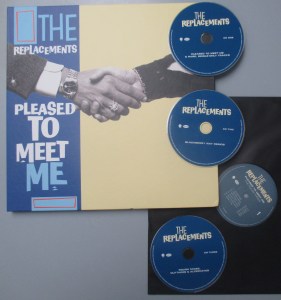
Sire / Rhino 3CD + LP
Following the successful transformation of Don’t Tell A Soul into Dead Man’s Pop, the same team have turned their attention to Pleased To Meet Me. Unlike Don’t Tell A Soul, Pleased To Meet Me got a very positive reaction when originally released so why re-do it now? Although originally sceptical about this re-release I have been won over.
In chronological order CD Two contains the demo sessions from Blackberry Way studios in Minneapolis from August 1986. These were the last sessions to feature wayward but brilliant guitarist Bob Stinson: by the time the album sessions proper started in November of that year Bob had been sacked from the band he started. There is little difference between these demos and the tracks the band would go onto cut without him. Bob Mehr’s excellent liner notes suggest he contributed little to the Blackberry Way sessions and Paul Westerberg was a sufficiently skilled guitarist to take up the slack. So PTMM was recorded by a three piece band, who only returned to a four piece when live dates loomed. The strongest of the demos not to make the finished LP were those written and sung by bass player Tommy Stinson, especially Hey Shadow. His Trouble On The Way is equally strong.
The LP was recorded over two months at the end of 1986 at Ardent Studios in Memphis with maverick producer Jim Dickinson. CD One gives us a 2020 remaster of the 11 tracks that were released as Pleased To Meet Me in 1987 and it sounds great, like it always has. What is intriguing is to compare these tracks with those on CD Three, described as Rough Mixes. The Rough Mixes were what the band took back to Minneapolis with them at the end of the Ardent sessions. Dickinson then spent three weeks remixing and tinkering with the tracks using the studios newly acquired Fairlight sampler. It is these remodelled tracks that would be released as Pleased To Meet Me. There are some obvious differences, for example the Rough Demos feature organ on Valentine and rockabilly piano on IOU, and Can’t Hardly Wait ends rather than fades. There are also a lot of subtle differences between the two versions. The Rough Mix version of Alex Chilton is Rock, the Pleased To Meet Me version is Pop. The material on the Rough Mix version is not as strong – Birthday Gal and Kick It In are not adequate substitutes for the absent I Don’t Know. The thirteen Rough Mixes are also pressed on a vinyl LP, which sounds terrific.
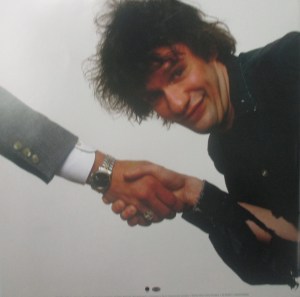
The remaining tracks are out-takes and cover versions cut in studio downtime, engaging but mostly inessential. Lift Your Skirt is the most blatant Chuck Berry rip Westerberg has ever managed. Most of the out-takes that have circulated amongst fans are here, with the exception of I Tried To Make This Your Home and the “Going Out Of My Head” version of I Don’t Know.
Tommy Stinson describes this LP as their first grown-up record, but you would never describe it as mature. Whether Dickinson should have been allowed to digitally remodel the Pleased To Meet Me tracks is academic at this late stage. Certainly the Rough Mixes were less radio-friendly and might have resulted in Sire not picking up their option. And as Mehr’s Trouble Boys depicts in excruciating detail, the commercial failure of the Mats had many causes, mostly down to the band’s behaviour rather than their music.
“One foot in the door, the other one in the gutter
The sweet smell that they adore, I think I’d rather smother. “
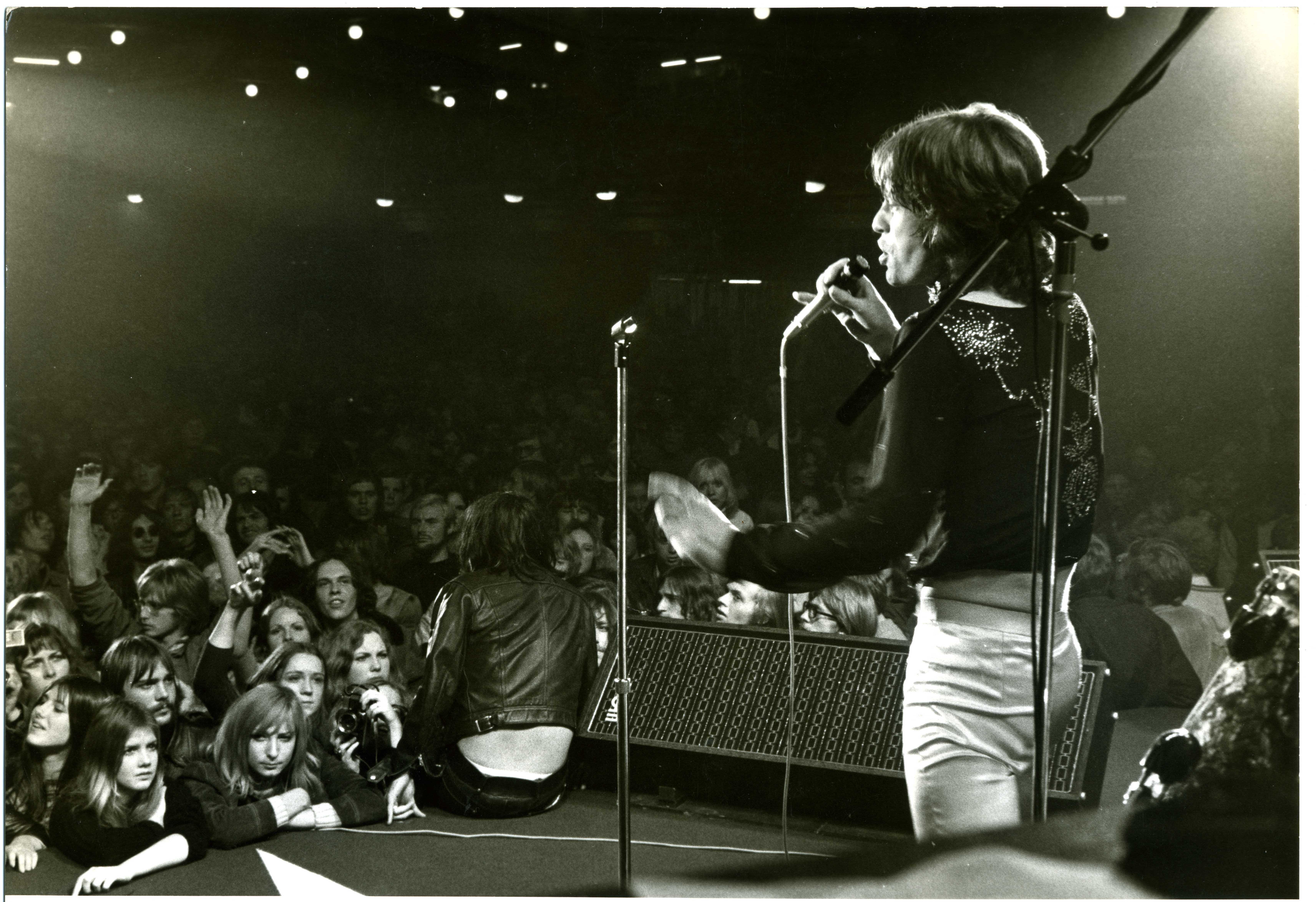
Mick Jagger onstage with the Stones – circa 1970 ? Can anyone identify the gig and the date ? Answers please to simon@onlyrockandroll.london
The new edition of RC (November 2020) includes Tim Jones’ pick of 16 writers to cover the 16 years of the Live Reviews pages. I just scrape in at number 16:

My full review of the gig is here
Jungle FREUDLP079

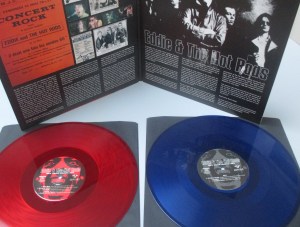
I was delighted to be asked by Alan Hauser at Jungle Records to write the sleeve notes for this double LP, just released in time for Record Store Day 2 (you can also get it via the usual digital services).
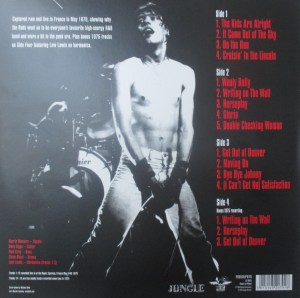
The Hot Rods were such a breath of fresh air when they hit London in 1975. They weren’t punks but nor were they Tales From Topographic Oceans. We saw them a lot and I was lucky enough to attend one of their sweatbox Marquee dates where their thrilling live EP was recorded. If you enjoyed that EP then this LP is very much more of the same. Recorded in France in May 1976 with Marc Zermati (RIP) in attendance this set is just like being there. An added bonus on side 4 of the vinyl is three studio recordings featuring Lew Lewis on harp (also available to view on the Skydog YouTube channel. And the discs themselves are a fetching shade of red and blue. Great pics from Michael Beal and a spiffy gatefold sleeve. Highly recommended.
Side 1
- The Kids Are Alright (Pete Townsend) Fabulous Music
- IT Came Out of The Sky (JOHN FOGERTY)
- On the Run (Higgs) Universal/Island Music
- Cruisin’ In the Lincoln (Higgs/Hollis) Universal/Island Music
Side 2
- WoolLy Bully (Domingo Samudio) Carlin Music Corps
- Writing on The Wall (Higgs/Hollis) Universal/Island Music Limited
- Horseplay (Higgs/Hollis) Universal/Island Music
- Gloria (Van Morrison) Carlin Music Corps
- Double Checking Woman (Higgs) Universal/Island Music
Side 3
- Get Out of Denver (BOB SEGER)
- Moving On (Higgs/Hollis) Copyright Control
- Bye Bye Johnny (Chuck Berry) Jewel Music Pub. Co. Ltd
- (I Can’t Get No) Satisfaction (Jagger/Richards) Abkco Music Ltd/Onward/Westminster Music
Side 4
- Writing on The Wall (Higgs/Hollis) Universal/Island Music Limited
- Horseplay (Higgs/Hollis) Universal/Island Music
- Get Out of Denver (BOB SEGER)
Tracks 1-13 recorded live in at the Royer, Epernay, France May 14th 1976
Tracks 14 -15 are studio tracks recorded some time in 1975
Personnel
Barrie Masters – Vocals
Dave Higgs – Guitar
Paul Gray – Bass
Steve Nicol – Drums
Lew Lewis – Harmonica (tracks 14-16)
Sleevenotes
By late 1975 something new was definitely going on in London. Dr Feelgood started it – roaring out of Canvey Island all narrow lapels and short, sharp songs. Their influence would prove to be massive, not least in New York where Blondie drummer and anglophile Clem Burke returned from a UK holiday with a copy of the first Feelgoods album that influenced the nascent NY club scene both in terms of sound and vision. The success of the Feelgoods spurred on another local band, who had just changed their name from Buckshee to Eddie And The Hot Rods, in homage to the popular Cruisin’ re-release series of LPs. Singer Barrie Masters, guitarist and songwriter Dave Higgs and drummer Steve Nicol were joined first by 15-year old bass player Paul Gray and then by harmonica player Lew Lewis. Another crucial recruit was ex-DJ and madcap record collector Ed Hollis who was assigned the job of manager.
Ed Hollis exposed the band to a wide variety of music, so that in addition to the predictable Who and the Stones cover-versions the bands repertoire expanded to include songs from Creedence Clearwater Revival, the J.Geils Band, Bob Seeger and garage bands such as ? and the Mysterions, Sam The Sham & The Pharoahs and Them. A big fan of Detroit’s proto-punks MC5, Ed also encouraged a more aggressive stage act with songs performed at a fearsome pace.
Eddie and the Hot Rods made their London debut at the Kensington on May 17 1975 as Barrie remembered to Devorah Ostrov. “This Irish fellow named Matt Farley used to run the Kensington. He said, ‘I’ll take a chance.’ The first week there were like ten people there. And Matt said, ‘You can come next week if you want to.’ We were only getting £10 or £15 for playing. Anyway… the next week twenty people turned up. By the third week it was full and the fourth week it was heaving. Then suddenly the phones started ringing. And we didn’t stop after that! We just got loads and loads of gigs!”. The band signed to Island under the guidance of sympatico A&R Howard Thompson and released their first single Writing On The Wall / Cruisin’ In The Lincoln in February 1976, both songs being Higgs/Hollis compositions. Soon afterwards the band parted company with Lew Lewis (“he drove us mad after a few months”).
Which brings us to May 1976, the Hot Rods speeding through France together with Skydog Records supremo Marc Zermati and arriving at a small club in Epernay. The town is famous as the epicentre of the Champagne district and the band’s performance positively fizzes with energy. This recording is crucial as it documents the band at a pivotal stage in their development. There were still plenty of cover versions but some cracking originals were beginning to appear such as Double Checking Woman, Horseplay and the extended On The Run where Paul Gray’s Hawkwind influences became apparent. When I saw the band later that summer in July during their sweatbox residency at London’s Marquee Barrie Masters used the lengthy instrumental break during On The Run to disappear from the stage, only to reappear shrouded in loo roll like a mummy. A manic Get Out Of Denver ended the set “at a speed so close to the velocity of sound itself that the song seems to end several minutes before it began” (Charles Shaar Murray, New Musical Express). Three encores were demanded and delivered, including a Higgs/Hollis original called Moving On which was never released officially.
As a special bonus Side 4 contains live in the studio versions of three Hot Rods favourites recorded with Lew Lewis on harmonica doing his best Magic Dick. The addition of mouth harp adds real texture and drive to the sound, making Lewis’ early exit from the band a real disappointment
Listening back to these tracks today I marvel at the verve and economy the Rods showed at a time when both were in short supply. The Nicol and Gray rhythm section were simple and powerful, always driving the songs forward. Dave Higgs was an excellent rhythm guitarist who could do the Wilko Johnson/Mick Green trick of combining lead and rhythm when needed. And Barrie Masters was a commanding front man and a powerful vocalist.
Things began to come together for the band when the Live At The Marquee EP recorded at the aforementioned London residency reached #43 in the UK singles chart. Ed Hollis then indulged his MC5 fantasies further by bringing in Southend’s Graeme Douglas (ex-Kursaal Flyers) on second guitar. Graeme’s songwriting skills resulted in the anthemic “Do Anything You Wanna Do” – “the best pop single of 1977’ according to Back Door Man magazine. The Rods had made it.
But it’s a mighty long way down rock’n’roll and the class of 1977 was more image-conscious and politically outspoken than the Hot Rods. The success of the Clash, Pistols, Buzzcocks et al eclipsed that of the Hot Rods and the band started to look a little old-fashioned. Different incarnations of the Hot Rods recorded and toured until Barrie was the last remaining original member. Dave Higgs died in 2013, Barrie in 2019. Paul Gray records and tours with the Damned and Steve Nicol still drums on occasion. Ed Hollis died in 1988 after struggling with drug addiction for many years.
This record is a fine tribute to the first and finest line up of the Hot Rods, the band who blew away the remnants of pub rock and cleared the way for punk. On a good night they were the most thrilling band in the land. Now the excitement of a full live set has been captured on vinyl. You gotta go!
Sleevenotes: Simon Wright
For more on Ed Hollis and the story of Speedball Records check out https://onlyrockanroll.wordpress.com/2017/03/15/too-much-too-soon-ed-hollis-and-speedball-records/
The Joy Of Less
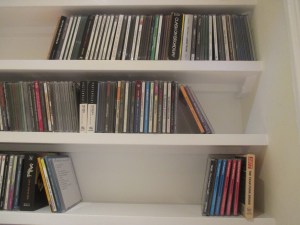
A house revamp necessitated me putting all my records, books, CDs and DVDs into storage. A year later and they are back and I am delighted to be reunited with my old friends.
However before they went back on the shelves I did some thinning and ejected around 80 items, a combination of books I don’t read, DVDs I don’t watch and music I don’t listen to. Some went to charity shops and some went onto eBay where I am about halfway through the selling process and have made over £500 thus far.
The real joy of editing my collection in this way is realising how much I love what is left. If I like a band my tendency is to buy everything they have done. Very few bands can justify this type of investment. I can count the bands whose entire output I own on the fingers of one hand – the Only Ones, the Replacements, the MC5. For everyone else being selective is crucial. Be honest: just because you love The Who Sell Out do you ever want to hear It’s Hard again?
The other thing I ditched is innumerable recordings of gigs I attended. I have kept the professionally recorded versions such as the Stones in Hyde Park but endless audience CDRs of the Stones at Wembley? Life is too short. I advertised the CDRs on fan forums – you can have them if you pay my postage and make a donation to Oxfam. I have made some Stones, Tom Petty, Clash and Who fans very happy and raised some cash for a good cause.
And I have been really tough on box sets. I don’t need to sit through multiple versions of the same song to realise that the band released the right one. Yes, I am looking at you Stooges Fun House Complete Sessions. When I will I find the time to listen to 28 takes of Loose? Does “never”” sound good to you? Honourable exceptions of box sets that survived the cull: Roxy Music First LP, Tom Petty Live Anthology, Clash On Broadway, Big Star Third Demo, Replacements Dead Man’s Pop and Pleased To Meet Me. Memo to compilers of 35CD box sets: please don’t.
Give it a go. Less is more. Keep the stuff you really love. Get rid of the compilations / Greatest Hits / solo albums / imports with a different cover photo.
Then you will have the space to buy more stuff.
(written for Record Collector magazine)
Available now at http://www.1960s.london
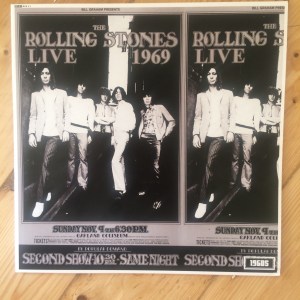
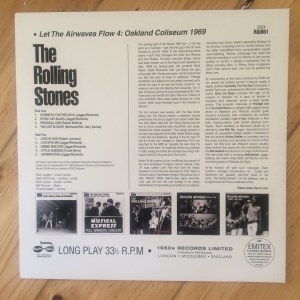
The Rolling Stones – Live At The Oakland Coliseum 1969
Let The Airwaves Flow Volume 4
Tracklisting
- Sympathy For The Devil (Mick Jagger and Keith Richards)
- Stray Cat Blues (Mick Jagger and Keith Richards)
- Prodigal Son (Robert Wilkins)
- You Gotta Move (Fred McDowell and the Rev. Gary Davies)
- Love In Vain (Robert Johnson)
- Live With Me (Mick Jagger and Keith Richards)
- Gimme Shelter (Mick Jagger and Keith Richards)
- Little Queenie (Chuck Berry)
- Satisfaction (Mick Jagger and Keith Richards)
All tracks recorded live at the Oakland-Almeda County Coliseum, California on November 9th 1969 (Second Show) and broadcast on Radio KSAN at the behest of Bill Graham
Personnel
Mick Jagger – Lead vocals
Keith Richards – Guitars, vocals
Mick Taylor – Guitar, vocals
Bill Wyman – Bass
Charlie Watts – Drums
Sleeve Notes: Dan D. Lion
The opening night of the Stones 1969 tour – a low key warm up in Colorado – was their first gig in the US since Honolulu on July 28th 1966. In the intervening three years much had changed for both the Stones and the States. Founder member Brian Jones had been eased out of the band and replaced in May 1969 by twenty-year old guitarist Mick Taylor. Keith Richards had “got heavily into open tuning guitar riffs – the big new sound – and this was the first tour they had been let loose on audiences”. Onstage amplification and lighting had also greatly improved which allowed the band to be seen and heard, crucial for an audience now more into listening than screaming. The 17 date, 23 day tour sold out in hours and grossed $1,907,180. Ticket prices ran from $4.50 to $8 in New York. Criticism of such “exorbitant” ticket prices fuelled demand for a free concert, which would eventually result in the darkness of Altamont.
The tour received rave reviews, with The New Yorker stating that “the Stones present a theatrical musical performance that has no equal in our culture” whilst New York Daily News noted that “the Rolling Stones took the fans by storm, preaching male chauvinism, sex, drugs, freedom and violent revolution”. The onstage prowess of the band was captured by the Wally Heider Mobile at gigs in New York and Baltimore, resulting in the ten track LP Get Yer Ya-Ya’s Out! released in September 1970 and described by the NME as “arguably the best thing the band has ever done”. An expanded version was released in 2009, adding five further live numbers plus songs from support acts B.B. King and Ike & Tina Turner.
Before Ya-Ya’s came out an unofficial document of the tour emerged in hipper record stores. This LP was called Live’r Than You’ll Ever Be, initially released on Lurch Records. Recorded by “Dub” Taylor at Oakland using a Sennheiser shotgun microphone and a Uher Report 4000 reel-to-reel tape recorder Live’r was the first live rock bootleg to be widely distributed and of remarkably good quality for an audience recording: read Clinton Heylin’s fascinating Bootleg! for the full story. Comparing Live’r to Ya-Ya’s shows that the latter benefitted from considerable studio over-dubbing. Richie Unterberger has noted that whilst the recording of Live’r is inferior to the sound quality of Ya-Ya’s, it displays a spontaneity that the official recording lacks. In Rolling Stone magazine John Peel opined that Live’r was the greatest live album, ever.
By concentrating on the tracks broadcast by KSAN we can present the Oakland concert in best-yet quality. A slightly tentative Sympathy For The Devil showcases a lengthy Taylor solo, underpinned by Richards’ unrelenting rhythm. Stray Cat Blues reduces the age of its subject to thirteen for a spot of épater le bourgeois and features some x-rated guitar action. The acoustic interlude of Prodigal Son and You Gotta Move is a delight with Jagger’s vocals devoid of affectation and Richards’ acoustic guitar sounding surprisingly clear considering the primitive amplification available. Love In Vain features a fine train impersonation and lyrical playing from Taylor. Such subtlety is elbowed aside by a stomping Live With Me, Jagger improvising lyrics to address an unspecified onstage problem. Compared to later live versions Gimme Shelter is compact and to the point, ending a bit abruptly for some of the band. On this tour Ian Stewart would usually slide behind the piano for the irresistible chug of Little Queenie but there is no sign of him here. The set ends with a rousing Satisfaction, Jagger testifying over rhythm kings Watts and Wyman and the interlocking guitars of Richards and Taylor.
Ya-Ya’s kicked off with tour manager Sam Cutler’s onstage introduction of “Ladies and Gentlemen…the greatest rock’n’roll band in the world…The Rolling Stones!” . On this evidence, less an arrogant boast and more a statement of fact.
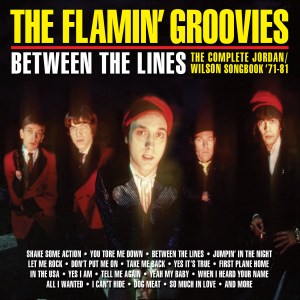
Between The Lines – The Complete Jordan/Wilson Songbook ’71-81
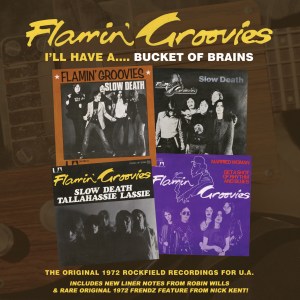
I’ll Have A…Bucket Of Brains
The Flamin’ Groovies
Grown Up Wrong! CDs
Now that Big Star are virtually mainstream the Groovies have inherited their mantle of “The Best Band You Never Heard Of (Unless You Are Jack White)”. The LPs Flamingo (1970) and Teenage Head (1971) showcased the initial songwriting partnership of guitarist Cyril Jordan and singer Roy Loney. These two Grown Up Wrong! CDs highlight the very different second phase from 1971 onwards when Roy Loney was replaced by singer/guitarist Chris Wilson. The Wilson/Jordan songwriting partnership lasted ten years and every song they wrote is contained on Between The Lines in chronological order.
First up is the lo-fi but totally committed Let Me Rock, later to be re-recorded in higher-fi in 2016. Dog Meat is in a similar vein, these tracks coming from San Francisco 1971. The third track from this session is a more thoughtful original entitled Blues From Phyllis: inspired guitar from Cyril underpinned a lyric about a guy in the terminal stages of VD. It would be remade in 1977 as Don’t Put Me On with lyrics changed to attack a music journalist, including a rare useage of the word poltroon.
Enter Dave Edmunds and Rockfield studios and a brace of total 100% classics in You Tore Me Down and the immortal Shake Some Action. Whilst they would appear sounding box-fresh on debut Sire LP in 1976, the tracks were actually recorded in 1972. What do they sound like ? A heady cocktail made from the Stones, Beatles and Byrds in variable proportions, coincidentally the ingredients from which the afore-mentioned Big Star created their magic. Good as these tracks were the next two songs were even better – a demo of Shake Some Action and When I Heard Your Name. Cut for Capitol in July 1973 they have a harder edge than the Edmunds tracks, with a Who-like dynamic on Shake Some Action and some cool mellotron over a Bo Diddley beat for When I Heard Your Name
The next five tracks come from the Shake Some Action LP, the highlight being tear-jerker Teenage Confidential. Follow up LP Now (1977) contributes six tracks, including the propulsive Between The Lines and a Brian Wilson homage in Take Me Back. Third and final Sire LP Jumpin’ In The Night (1979) was made without Edmunds, but Jordan’s production toughened up the sound on the title track and the closing In The U.S.A to deliver the hard, churning rhythm that Jimmy Miller achieved with prime-period Stones – the rock and the roll. Finally So Much In Love – the last Jordan / Wilson song recorded by the Groovies at their abortive Gold Star session in 1981. A bit flimsy compared to previous triumphs but good to have here.
Compiler David Laing has done a sterling job in focussing attention on the bands originals and eliminated the cover versions that cluttered the bands three Sire LPs Whilst at the time Jordan justified the number of cover versions as an homage to early Beatles and Stones LPs a more likely explanation is that he and Chris Wilson were just too slow at writing. Although an occasional gem is missed – I am particularly fond of the harpsichord-drenched I Saw Her, originally by the Charlatans – losing the covers lends more focus to what’s left. It could be renamed the Groovies Greatest Hits, if only they’d had one.
In addition to Jordan and Wilson much credit must be given to long-term bass-player George Alexander, guitarists James Farrell and Mike Wilhelm and drummer David Wright. The standard of musicianship is high throughout – not in the sense of “oh wow what a cosmic 18 minute guitar solo” but more in the sense of a band playing with economy, using lean arrangements to optimise their songs. A 28 page booklet contains Laing’s comprehensive history of the band and includes some mouth-watering Groovies ephemera. Clearly a labour of love.
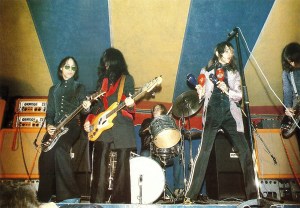
As is its companion release I’ll Have… A Bucket Of Brains. This is a straight recreation of a CD put together in 1995 by veteran Groovies fan Jon Storey and contains the ground-breaking tracks the band recorded at Rockfield in 1972 . There is some duplication with Between The Lines but also essential tracks. Exhibit one: Little Queenie with Edmunds contributing some boogie-woogie piano a la Ian Stewart. Exhibit two: Slow Death, for me the finest and fiercest song in the Groovies canon. Although recorded by the Jordan/Wilson band it was actually written by Cyril Jordan and Roy Loney and thus was not eligible for inclusion on Between The Lines. Slow Death features a killer slide guitar from Farrell, and a passionate anti-drugs lyric that earnt it a ban from the BBC (doh). Also of note is an extended and different mix of Married Woman and Edmunds’ Shake Some Action at its correct (slower) speed. Once again the booklet is top notch with a note from Jon Storey, a reprint of Nick Kent’s article on the band from Friends in June 1972 – a total hoot – and Robin Wills fascinating speculation as to what tracks could have gone on a 1972 Groovies LP.
A band calling itself the Flamin’ Groovies continues to tour, although with George Alexander and Chris Wilson no longer in the line-up the current band is virtually a tribute to itself. Sadly Roy Loney and Mike Wilhelm have died in recent years leaving Cyril Jordan to fly the flag for Grooviedom on his own. There has been a movie about the Groovies in preparation for years with much footage shot: whether it will ever be released is uncertain. So for now these two CDs – together with Flamingo and Teenage Head – represent all that is best about a wonderful band that continually managed to pull defeat from the jaws of victory.
Is 2020 going to be the Year of the Groovies?
No.
But there is some serious fun to be had with the music on these two fine CDs.