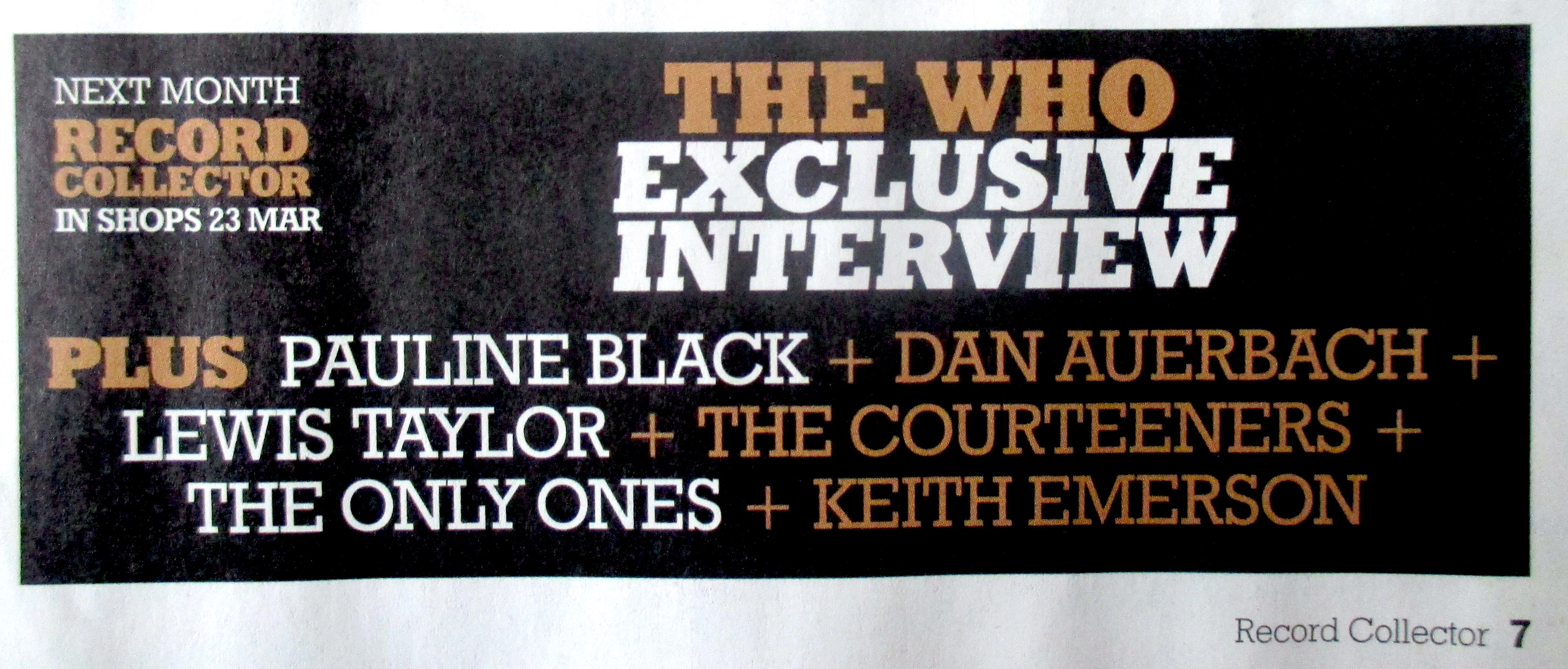
April 2023 issue (on sale 23rd March) – #543 (probably The Who on the front cover)
The Only Ones
“Ahead of the publication of Simon Wright’s It’s The Truth: Making The Only Ones, we zero in on the writing and recording of the punk/new wave band’s unutterably great Another Girl, Another Planet single.”
The four-page article is extracted and modified from the chapter in It’s The Truth on the writing and recording of Another Girl, Another Planet.
The magazine costs £6.25 and is widely available in the UK with stockists including WH Smith. In the US I believe Barnes & Noble stock the title
My thanks to Paul, Johnny and Bruno at Record Collector for helping make this happen.
Release date is April 1st but you can pre-order now from:
Paperback and eBook versions are both available
.
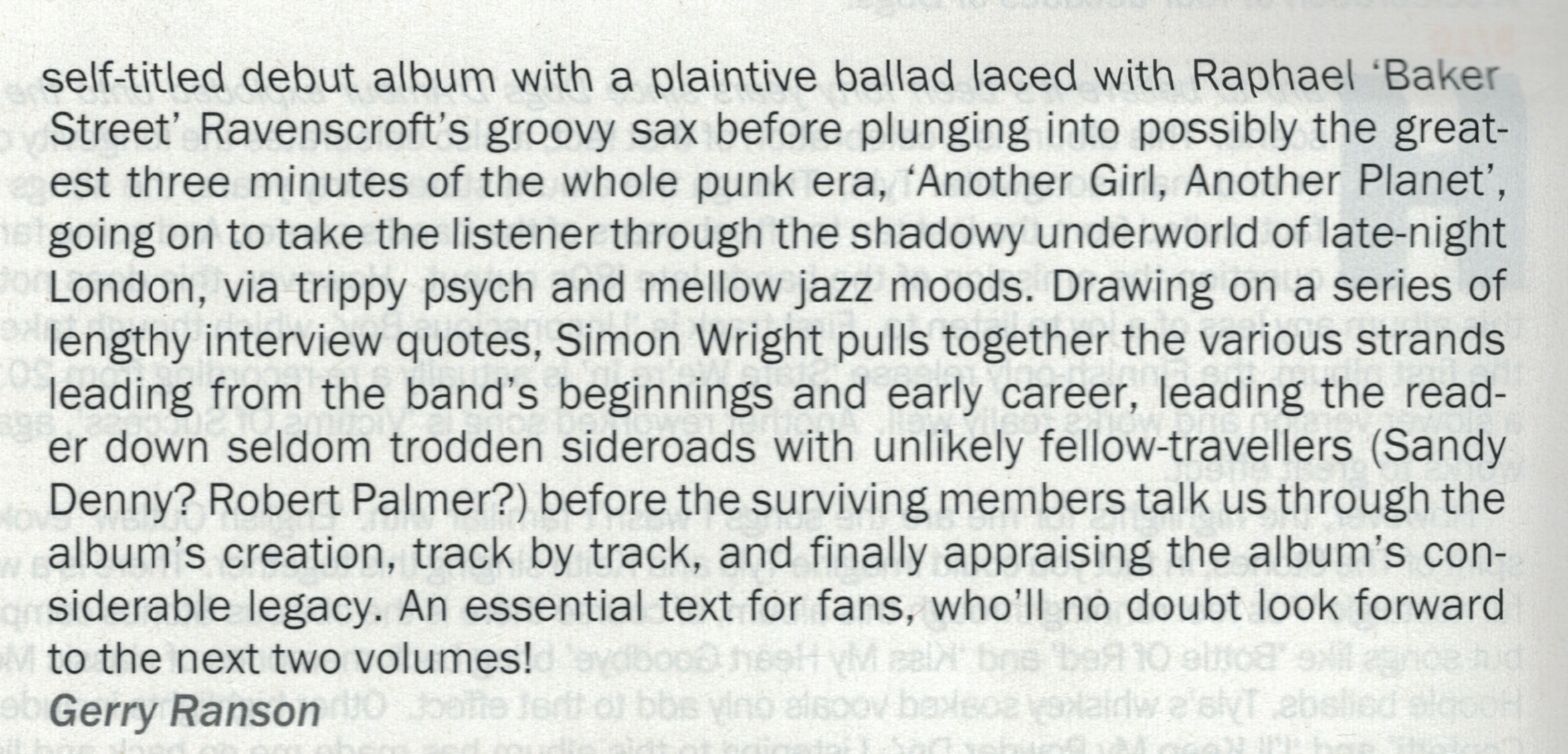
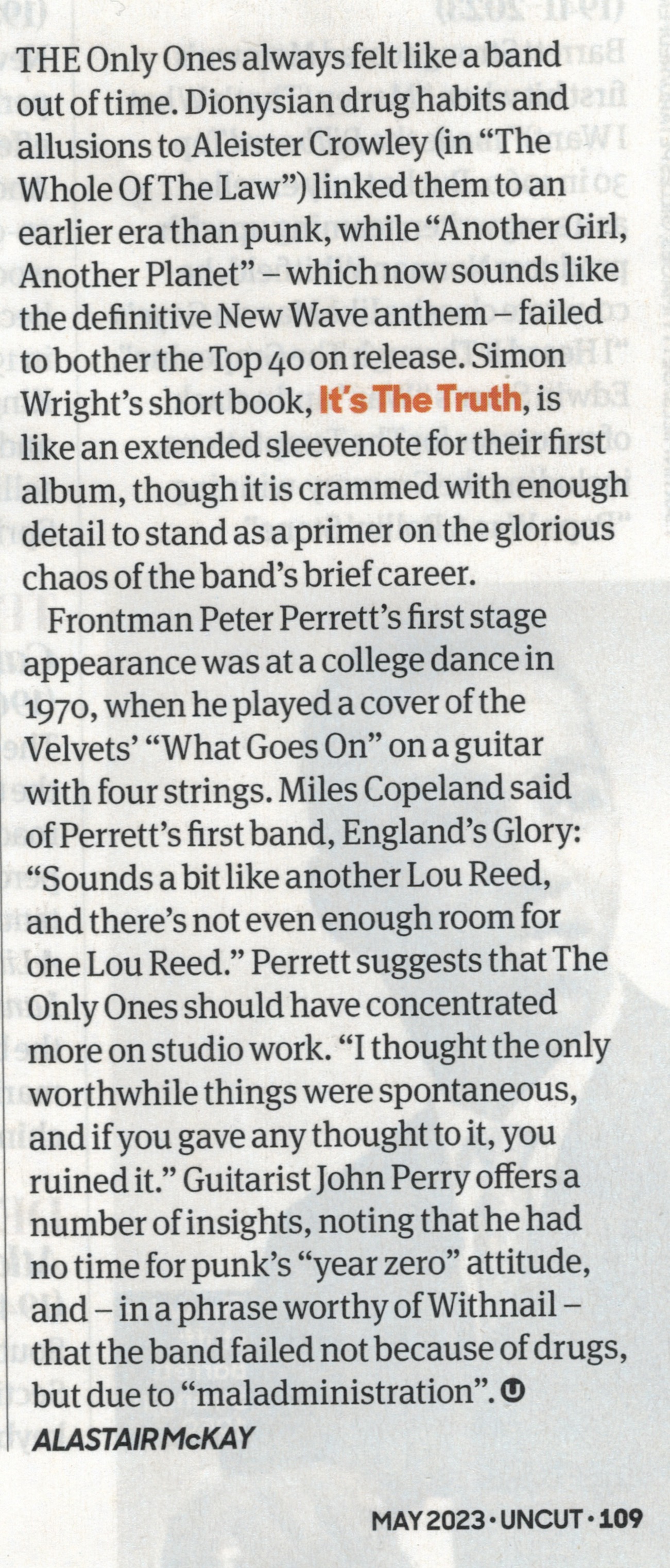
Thank you Gerry Ranson and Vive Le Rock!
See it here
https://vivelerock.net/blogs/news-1/the-only-ones-celebrated-in-new-book

Reekus Records RKCD 148 (also available on limited edition black and blue vinyl)
Order from info@reekus.com
This release is a labour of love from Elvera Butler, who with her husband Andy ran The Downtown Kampus in Cork from 1977-1981. Formerly The Arcadia Ballroom on Cork’s Lower Road, the Kampus was the music venue of University College Cork. Over four years the Kampus showcased many major English bands such as The Cure, The Specials, UB40, The Beat, the Albertos, John Otway, XTC and The Only Ones (twice). What made the Kampus special was the support it gave to Irish bands, big and small. U2 and Rory Gallagher both played there but so did Nun Attax, Mean Features, Micro Disney and Urban Blitz. These last four bands featured on an EP, recorded live at the Kampus on August 30th 1980 with the express purpose of getting these bands more exposure – sort of a live demo tape.
Micro Disney disliked the choice of ‘National Anthem’ but it was the only song they played that night which had recorded properly: Reekus redress the balance by adding to this CD re-release four additional Micro Disney songs, specially recorded at Dublin’s Windmill Studios in 1981. The other less well-known bands are equally worthy of your attention, especially the legendary Nun Attax. Three of the bands went on to have careers in the UK. Mick Lynch, the vocalist with Mean Features, went on to form Stump, Nun Attax were signed to a couple of labels including Creation and Micro Disney signed to Rough Trade and then Virgin, before Sean and Cathal parted to form The High Llamas and Fatima Mansions respectively.
Accompanying the CD is a 16 page fanzine packed with evocative pictures and fascinating stories from musicians and fans reminiscing about the four ‘golden years’ that the Kampus brought to the Cork music scene. An exemplary document of a fascinating time.
@ Rough Trade West, London W11 early evening on April 6th, book signing and Q&A with band members
More here https://link.dice.fm/W44946c1e532

January 18th 2023
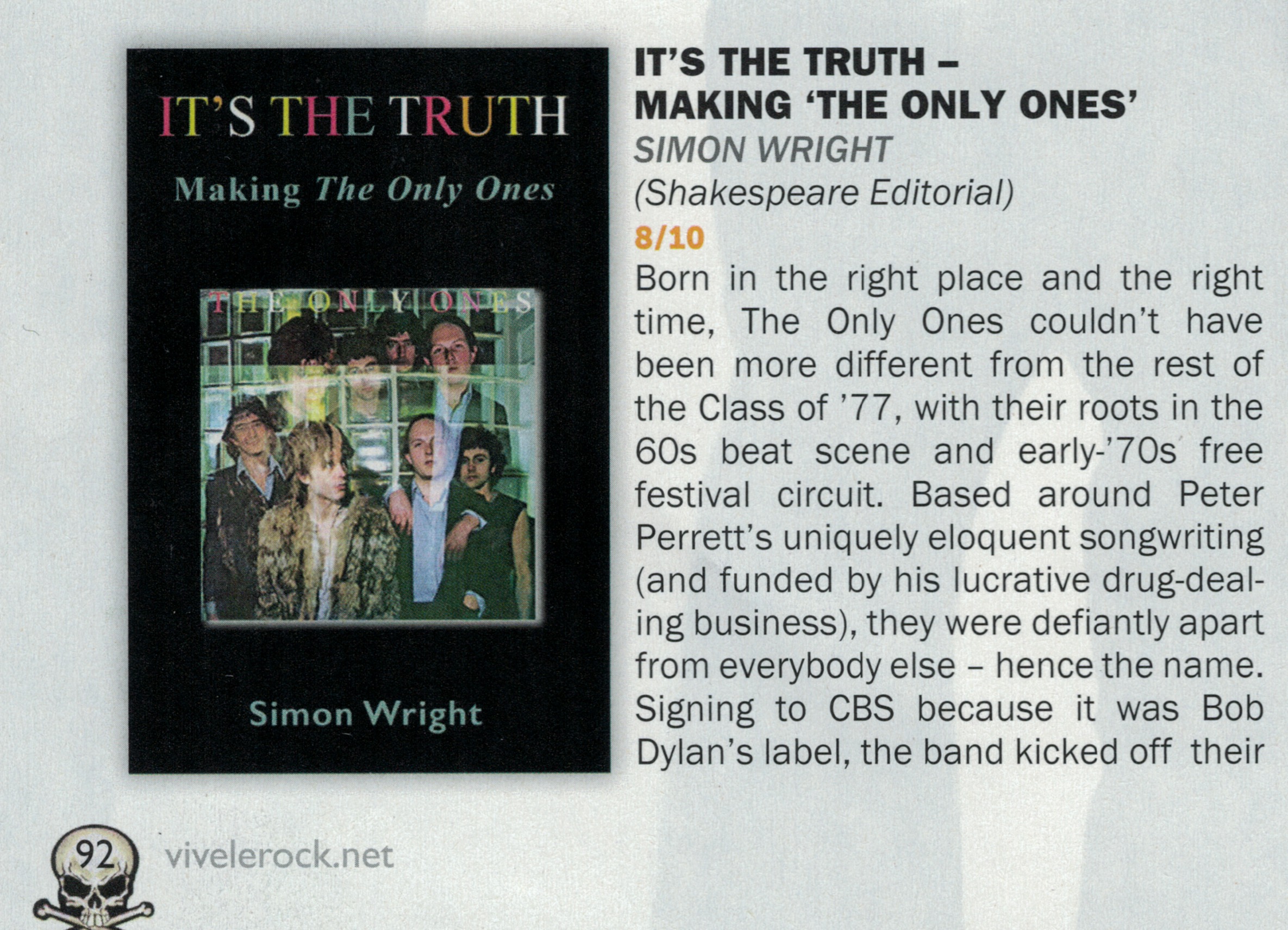
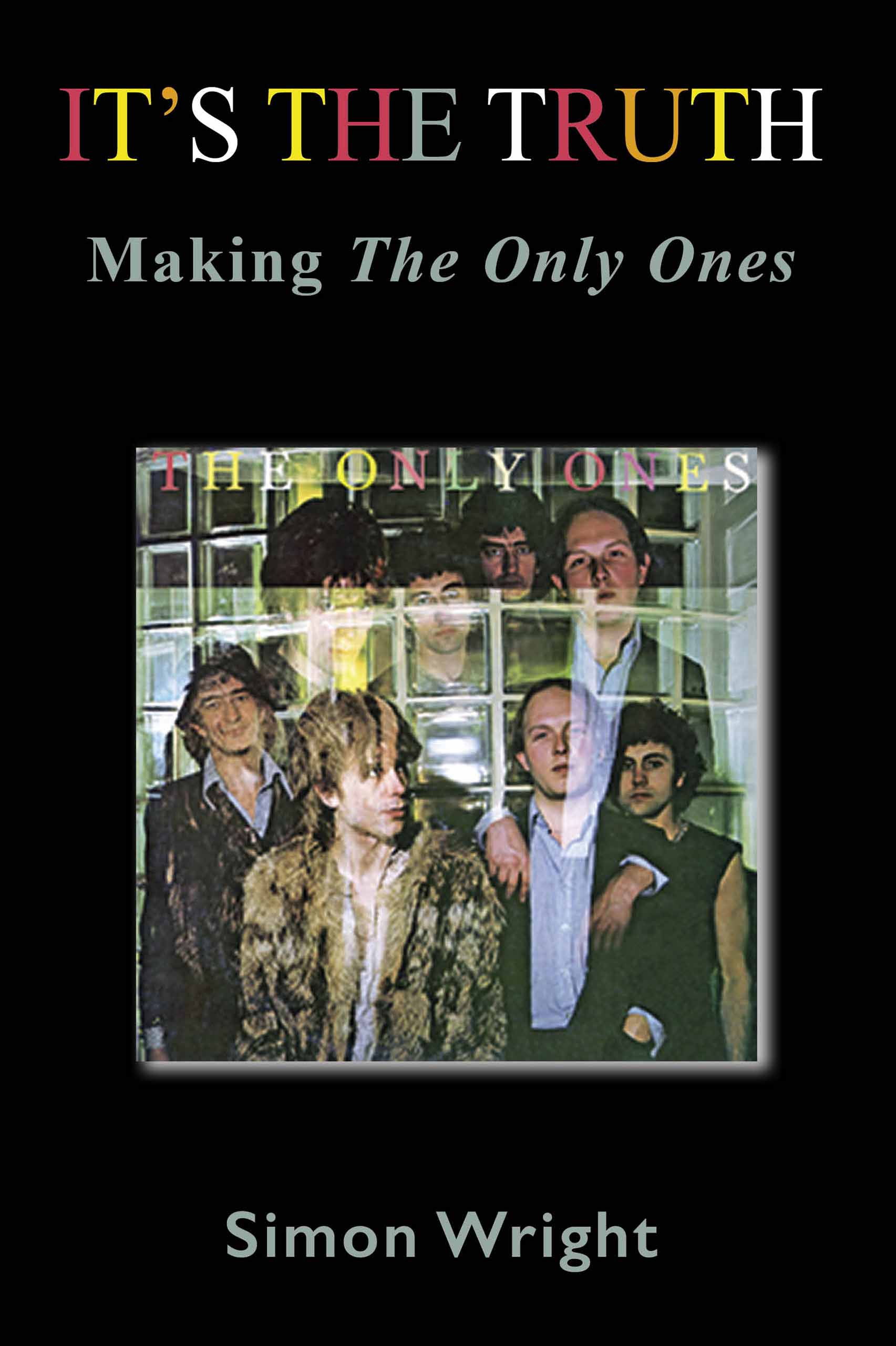
New Book: “It’s The Truth – Making The Only Ones” by Simon Wright
The Only Ones were the most important band to emerge in 1977, artistically if not commercially. Their eponymous first LP presents a wonderful sense of possibilities and excitement, of a band standing on the verge of something fantastic. And the presence of Another Girl, Another Planet – ‘arguably the best rock single ever recorded’ according to Allmusic.com – illustrates how not being a hit can extend the shelf life of a song.
Working from new interviews with the band members, Simon Wright documents the formation and early days of this enigmatic group and explains why they never achieved the massive success they deserved. Illustrated with previously unseen photographs, it’s an account of how four musicians from very different backgrounds made an exhilarating LP which grafted punk attitude onto rock ‘n’ roll rootstock. Odds-on that your favourite musician has this LP in their collection: read this book to find out why.
Publication Date: April 1st 2023
Rsp: £12.99
Format: Paperback, 152 pages, 42 illustrations
ISBN 978-1-7392549-0-2
Publisher: Shakspeare Editorial
Quotes from the band about It’s The Truth
‘The long summer of 1976 and the drearier winter of 1977 went past in a flash as we rehearsed the songs and organised the band. Within seven days of meeting Alan Mair we were in the studio, putting down tracks that still sound good today. Simon’s book is a tour d’horizon of a fascinating time in London and the Only Ones place in it.’ John Perry
‘A fascinating look at how The Only Ones got together and in-depth account of recording our first album. Exciting times!’ Alan Mair
‘The best (only?) account of how we formed The Only Ones and recorded our debut LP. Highly recommended.’ Peter Perrett
Biography of Simon Wright
Simon Wright has been a secret punk rocker since 1975 when he was knocked sideways by an early Sex Pistols gig. By day a successful consultant working with sustainable food and drink (and chocolate), by night he is a prolific blogger and vinyl fiend. His previous two books were academic textbooks on the manufacturing and marketing of organic and Fairtrade food and drink. He lives in Wandsworth, where he is part of an urban cider collective.
ENDS

Three new LPs available now from http://www.1960s.london

Side One
- (I Can’t Get No) Satisfaction (Jagger, Richard)
- As Tears Go By (Jagger, Richard)
- 19th Nervous Breakdown (Jagger, Richard)
- I Am Waiting (Jagger, Richard)
- Under My Thumb (Jagger, Richard)
- Paint It, Black (Jagger, Richard)
- 19th Nervous Breakdown (Jagger, Richard)
- Mercy, Mercy (Covay, Miller)
Side Two
- Paint It, Black (Jagger, Richard)
- Lady Jane (Jagger, Richard)
- Have You Seen You Mother, Baby, Standing In The Shadow? (Jagger, Richard)
- The Last Time (Jagger, Richard)
- She Said Yeah (Jackson, Christy)
- Play With Fire (Jagger, Richard)
- Time Is On My Side (Meade)
- I’m Alright (McDaniel)
- Have You Seen Your Mother, Baby, Standing In The Shadow? (Jagger, Richard)
Recording Details
Side One, Tracks 1-3 recorded for The Ed Sullivan Show, New York City, February 13th
Side One Tracks 4-6 recorded for UK TV Ready Steady Go, Studio One, Wembley, May 27th
Side One, Track 7 recorded for the UK TV ABC The Eamonn Andrews Show, February 6th
Side One Track 8 and Side Two Tracks 4 – 8 recorded at L’Olympia, Paris for RTL Radio on March 29th (First Show) and broadcast live on French radio Musicorama (Europe 1)
Side Two Tracks 1-3 recorded for The Ed Sullivan Show, New York City, September 11th
Side Two Track 9 recorded for BBC TV Top Of The Pops 5th on December 17th and broadcast on December 22nd
Sound Quality
The songs recorded for The Ed Sullivan Show and Ready Steady Go! are all Very Good. The tracks recorded for Musicorama, The Eamon Andrews Show and Top Of The Pops are listenable but not of the same high quality as the other material.
Personnel
Mick Jagger – lead vocals
Brian Jones – guitar, sitar, dulcimer, marimba
Keith Richard – guitar, piano, vocals
Bill Wyman – bass
Charlie Watts – drums, percussion
Sleevenotes
“1966: Unholy Rollers On The Road” Roy Carr
By 1966 the songwriting partnership of Jagger / Richard – honed through writing pop songs for other acts – was now producing razor-sharp singles on a regular basis. Bringing these into the live act meant diching most of the cover versions that the band had previously relied upon. The tracks selected for this LP combine the best of the Stones new material with a few older classics.
For television programmes in 1966 the band performed with a pre-recorded backing track. In the UK Top Of The Pops initially required bands to mime to their records. In the summer of 1966, after discussion with the Musicians Union, miming was banned. After some weeks of bands attempting to play their records live with variable results a compromise was introduced where a specially recorded backing track was produced over which live vocals could be sung. It was not unknown for the original studio backing track to replace the specially-recorded version. In the US the reason for playback – bands performing with a live vocal over to a pre-recorded backing track – was more about delivering a better quality sound and ensuring shows ran to time. But even the use of a pre-recorded backing track could not prevent The Who’s September 1967 appearance on the Smothers Brothers TV show from descending into total anarchy. The honourable exception to playback was Ready Steady Go where by the time of the Stones appearance in May 1966 it was common practice for bands to perform completely live. Radio broadcasts such as the one here from L’Olympia were also performed live, which means the atmosphere provided by a rabid audience adds a lot.
Ed Sullivan introduces the opening performance of (I Can’t Get No) Satisfaction as for “all the youngsters in the country and Canada” and certainly the youngsters in the audience are entranced, even if Charlie Watts is not. Just Mick and Keith appear for a rare acoustic version of As Tears Go By which can just about be heard over the screams. The full band are back in imperious form for 19th Nervous Breakdown, Bill Wymans’ dive-bombing bass runs to the fore. Appearing on Ready Steady Go in May the choice of LP-track I Am Waiting was unexpected: it received a sensitive interpretation with Keith on acoustic guitar and Brian on dulcimer, and even a brief glimpse of Sixth Stone Ian Stewart. Under My Thumb returned us to more familiar up-tempo territory with Brian emphasising his versatility by playing the marimba, moving to sitar for Paint It, Black. Talking to Andy Neill director Michael Lindsay-Hoog cites the latter as his favourite Stones RSG appearance. “I’d had this idea that after every verse we’d take out a bank of lights in the studio and by the end, it would just be a light on Mick alone and the rest of the place in darkness. What also makes it great is that you can’t hear Mick singing at the fade, his mike lead had gotten kicked out, but you can hear the music going on and this kind of raga beat. The whole thing is really mysterious…” . A second version of 19th Nervous Breakdown was preceded on The Eamon Andrews Show by an excruciating discussion with Jagger as to lyrical meaning and social comment.
The Stones second 1966 appearance on Ed Sullivan produces even more screams. Paint It, Black again features Brian Jones playing a sitar cross-legged, and despite a truly appalling haircut Jagger is in fine form vocally. Lady Jane provides an acoustic interlude, Brian on dulcimer and chalk-stripe suit. Charlie stands up to play vibes, or possibly tries to hide an ill-advised moustache. Have You Seen Your Mother, Baby, Hiding In The Shadow? restores the Stones raunch. Keith pretends to play piano and provides his characteristic backup vocals. Paris was always a Stones stronghold as shown by the four tracks from a March appearance at L’Olympia. Mercy, Mercy is a mid-paced stroll through the Don Covay classic that allows Jagger to deploy his falsetto. The Last Time is greeted by extensive screams, whilst She Said Yeah is brief but effective with call and response vocals. The more reflective Play With Fire is a brave choice under the circumstances, Jagger’s testifying on Time Is On My Side fares better with a by-now totally bonkers crowd really letting loose on Crawdaddy-era rabble rouser I’m Alright. Finally a further rendition of Have You Seen Your Mother, Baby, Hiding In The Shadow? taken from BBC TV brings the year to a close.
1966 was a highly productive year for the Stones who released four brilliant singles and the chart-topping LP Aftermath, with every song credited to Jagger/Richards. Live concerts were rapturously received over several continents. And Mick bought Keith a large motor lawn mower from Selfridges. Only England’s soccer team could claim to have had a better 1966…but the Stones had better songs than World Cup Willie!
Sleevenotes: Chyna Lyte


Side One
1.Top Of The Pops
2.You’re Looking Fine
3. Muswell Hillbilly
4. Acute Schizophrenia Paranoia Blues
5. Holiday (Take 2)
6. Alcohol (Take 1)
7. Brainwashed
Side Two
1.Lola (with false start)
2. Mr Wonderful
3. Skin And Bone (Take 4)
4.You Really Got Me /
5. All Day And All Of The Night
6. Alcohol (Take 2)
7. Skin And Bone (Take 1)
8. Holiday (Take 1)
All sings written by Raymond Douglas Davies except Side Two, Track Two written by Jerry Bock, George David Weiss and Larry Holofcener
Recording details
Recorded live on April 12th 1972 for German TV ARD-1 Beat Club, Bremenandbroadcast on May 27th
Personnel
Ray Davies – lead vocals, guitar
Dave Davies – lead guitar, vocals
Mick Avory – drums
John Dalton – bass, vocals
John Gosling – keyboards
Mike Cotton – trumpet
John Beecham – trombone
Alan Holmes – saxophone, clarinet
Sleevenotes
After their amazing run of mid-sixties hit singles the Kinks became becalmed commercially, if not artistically. The June 1970 release of the single Lola put the Kinks firmly back in the international spotlight, reaching number 2 in the UK and number 9 in the US. The Lola album contained our opening number, the tribute/satire Top Of The Pops. Visually the band may have changed – satin jackets, beards, long hair, garish flares) – but Ray Davies had retained his acerbic wit. Here was a band that had been shafted repeatedly by the music industry and was prepared to make a concept album about it. The fine rocker You’re Looking Fine first appeared on the Face To Face LP in 1966 where it was sung by “Dave (Death Of A Clown) Davies”, as he is introduced here by his brother. The source of the next four songs is Muswell Hillbillies (August 1971), the first LP recorded for RCA. Muswell Hillbilly itself demonstrates Ray’s affinity for country music in general and Johnny Cash in particular. Acute Schizophrenia Paranoia Blues features the Mike Cotton Sound, three brass-playing musicians who became an increasingly significant part of the Kinks live sound, more Acker Bilk than Memphis Horns. A delicate piano introduction from John “The Baptist” Goslingintroduces Holiday. Onstage Alcohol would develop into a protracted sermon on the dangers of booze, delivered by a frequently-inebriated Ray Davies: this version is relatively compact and accompanied by the band necking bottles of German lager. Brainwashed is an engaging diatribe from the Arthur LP (1969). Here the brass section really works, reinforcing Dave’s guitar riff and driving the song along.
The first hit single to explicitly mention a transgender encounter, Lola starts gently with Ray singing softly, omitting the crashing opening chords of the recorded version. The band enters for the first verse, lead by the piano of John Gosling with Ray and Dave harmonising throughout. The fragment of Mr.Wonderful that follows is a taste of what was to come, particularly in the US, where Ray and his live audience would engage in lengthy mutual adoration. Skin And Bone is the last track from Muswell Hillbilly, here in a cool rockabilly arrangement driven by Gosling’s piano and Dave’s guitar. A rousing medley of You Really Got Me and All Day Of The Night highlights the band’s way with a guitar riff, ably supported by Gosling’s organ and strong backing vocals from Dave Davies and John Dalton. Recording without an audience gives this session a loose nature allowing us to present multiple takes of Holiday, Alcohol and Skin And Bone so that you can pick your favourite. Ray opines that the first take of Alcohol was the best – do you agree?
What happened next was that Ray turned his attention towards America. A ban by the American Federation of Musicians for “unprofessional conduct” meant that Kinks were unable to tour the US after 1965. When the ban was lifted in 1970 the band were keen to make up for lost time. Their next LP Everybody’s In Show-Biz…would besteeped in American references. Eventually Ray would move to the US and achieve the commercial success he had always craved. But in 1972 the Kinks still retained much of the approach that made them the most distinctive and uncompromising British pop group to emerge from the slipstream of the Beatles. It would not last much longer, so treasure what we have here.
“The Kinks stood aside, watching with sardonic amusement, the pop world chasing its own tail – and they turned out some of the most quirky, intelligent, grown-up and totally personal records in the history of British pop. Their trouble (or perhaps their strength would be more accurate) was their non-conformism, their refusal to join the club. They were, and are, hugely underrated in consequence. “ George Melly, Revolt Into Style (1970)
Sleevenotes: Mr. Pleasant


Side One
- Yellow Brick Road (Bermann, Van Vliet)
- Abba Zabba (Van Vliet)
- Sure ‘Nuff ‘N Yes I Do (Bermann, Van Vliet)
- Electricity (Bermann, Van Vliet)
- Beatle Bones ‘n’ Smokin’ Stones (Van Vliet)
- Safe As Milk (Van Vliet)
- Kandy Korn (Van Vliet)
Side Two
- Trust Us (Van Vliet)
- Steal Softly Thru Snow (Van Vliet)
- Click Clack (Van Vliet)
- Golden Birdies (Van Vliet)
- I’m Gonna Booglarize You Baby (Van Vliet)
Recording Details
Side One, Tracks 1-4 recorded for BBC Top Gear on 24th January 1968 , broadcast February 4th
Side One, Tracks 5-7 and Side Two Track 1 recorded for BBC Top Gear on 6th May 1968 , broadcast May 12th
Side Two, Tracks 2-5 recorded for Beat Club, Radio Bremen on May 12th 1972, broadcast on German television channel ARD
Sound Quality
On Side Two Tracks 2-5 are of very good sound quality. The remaining tracks are recorded off air but are still thoroughly listenable.
Personnel
Captain Beefheart – vocals, harmonica, saxophone
Side One Tracks 1 – 7, Side Two Track 1
John French – drums
Alex St.Clair – lead guitar
Jerry Handley – bass
Jeff Cotton – guitar
Side Two, Tracks 2 – 5
Bill Harkleroad (Zoot Horn Rollo) – guitar
Mark Boston (Rockette Morton) – guitar
Eliiot Ingber (Winged Eel Fingerling) – guitar
Roy Estrada (Orejon) – bass
Arthur Tripp III (Ed Marimba) – drums and percussion
Sleevenotes
Born Don Glen Vliet, Captain Beefheart was one of the key performers to emerge from the late 1960s underground scene. He was cited as a key influence by artists as varied as Paul McCartney, John Lennon, John Lydon, Howard Devoto, Joe Strummer, Devo and Pere Ubu. Particular praise has been heaped on the 1969 double LP Trout Mask Replica, described by his friend the writer Lester Bangs as “four sides of discordant yet juicy swampbrine jambalaya roogalator.” Writing for The Village Voice in 1980, Bangs offered this description of Beefheart’s importance. “There are some of us who think he is one of the giants of 20th-century music, certainly of the postwar era. He sings in seven and a half octaves, and his style has been compared to Howlin’ Wolf and several species of primordial beasts. His music, which he composes for ensemble and then literally teaches his bands how to play, is often atonal but always swings in a way that little rock ever has. I hear Delta blues, free jazz, field hollers, rock’n’roll and lately something new that I can’t put my finger on but relates somehow to what they call ‘serious’ music.”
One of Captain Beefheart’s earliest supporters was John Peel. Peel had first heard the band whilst working as a DJ for Radio KMEN in California in 1966. Beefheart’s record company subsequently invited him to see The Magic Band supporting Them at The Whisky A Go Go on Sunset Strip. Back in the UK Peel was keen to feature them on his BBC radio show, which he did – twice – in 1968. In his book In Session Tonight, Ken Garner relates that “Captain Beefheart and his Magic Band were in the UK on tour and Peel was keen to get them in. Unfortunately, as Americans, they fell foul of the then Ministry of Labour rules on work permits. In support of the Musicians Union, the Ministry stipulated that only musicians offered reciprocal bookings for British acts could play at the BBC. As American radio didn’t do live sessions, no American bands could be recorded in the UK. Solo artists could be booked, if backed by British musicians. But Beefheart had an all-American band. Peel producer Bernie Andrews persuaded the Ministry that, as the name suggests, this was a touring band of magicians. They got permission, as a ‘Variety’ act.”
Four selections from Safe As Milk still sound extraordinary today. Yellow Brick Road is relatively melodic, built around the refrain “keep on walking and don’t look back” with the Captain on harmonica. A slow and deliberate Bo Diddley beat underpins Abba Zabba which also includes a bass solo. DuringSure ‘Nuff ‘n’ Yes I DoDave Tate, the engineer, remembers having to suspend a mike over Beefheart, who insisted on singing lying on his back. Bernie Andrews remembers Beefheart being entranced by the sound made by the control cubicle light switch. ‘Oh isn’t that great’, he said, switching the fluorescents on and off for three or four minutes.” Fittingly the final track from the session isElectricity.
The second Peel session was to promote the Strictly Personal LP. Beatle Bones ‘n’ Smoking Stones features an idiosyncratic Beefheart vocal, apparently critical of the Beatles “Strawberry Feels Forever”. Safe As Milk was not included on the LP of the same name but has a more orthodox melody and rhythm. Beefheart’s hymn to Kandy Korn concludes with some intricate guitar interplay. Finally Trust Us is built around a hypnotic riff which the band and Beefheart keep returning to over its considerable length.
It was a very different Magic Band that recorded four tracks for the Beat Club TV programme four years later. An all new line-up was rendered anonymous by the extravagant stage names that Beefheart had bestowed. Steal Softly Thru Snow is an instrumental that emphasises the dexterity of the rhythm section and some frantic Beefheart blowing. The Captain switches to harmonica on Click Clack, sounding like something Ry Cooder might have contributed to Performance.A brief Golden Birdies features a Beefheart spoken word vocal. Finally I’m Gonna Booglarize You allows the three guitarists to stretch out, providing a suitably angular backdrop for some Beefheart vocal improvisation. NME journalist Nick Kent witnessed this line up play Brighton Dome in March 1972 and was suitably gobsmacked. “As soon as the first notes were struck, time stood still. Music like this had never been heard before – or since. There was a genuinely superhuman power coming out of the PA system. None of us could believe we were hearing music this visceral and dementedly alive. You could practically see the electricity coursing through their instruments and taste the phlegm bubbling in Beefheart’s larynx. He wasn’t kidding when he called them the Magic Band.”
Sleevenotes: Debra Kadabra

Our latest LP arrived back from the pressing plant the day after the sad news of Jeff Beck’s death was announced. We had actually finished work on this release in August 2022 . We present it now as a tribute to a great and well-loved musician: as always we will be paying full songwriting royalties and licensing our photography. Available now from www. 1960s.london

Side One
- Ice Cream Cakes (Beck)
- Morning Dew (Dobson) /
- Going Down (Nix)
- New Ways / Train Train (Beck)
Side Two
- Definitely Maybe (Beck)
- Ain’t No Sunshine (Withers)
- Got The Feeling (Beck)
- Let Me Love You (Beck, Stewart)
Recording Details
All tracks recorded live for BBC radio In Concert at the Paris Theatre, London on June 29th 1972
Sound Quality
Excellent throughout
Personnel
Jeff Beck – guitar
Cozy Powell – drums
Max Middleton – keyboards
Clive Chaman – bass
Bob Tench – vocals, guitar
Sleevenotes
Having documented Jeff Beck’s activities in 1967 (R&B28) and 1968 (R&B86) we now turn our attention to 1972 and the second incarnation of The Jeff Beck Group. Following an enforced period of inactivity caused by a car accident – immortalised in the Faces’ song Rear Wheel Skid – Beck put together an entirely new group. Max Middleton on keyboards brought a more jazzy feel to the band, whilst the addition of drummer Cozy Powell ensured a powerful beat. Replacing Rod Stewart on vocals proved more of a challenge. After a false start with Alex Ligertwood, Beck settled on the relatively unknown Bob Tench. This line up would record two LPs, Rough And Ready (released October 1971) and Jeff Beck Group (May 1972). There was also an LP of cover versions recorded at the Motown studios in Detroit which was never released due to Beck’s unhappiness with the results.
Rolling Stone magazine gave this version of The Jeff Beck Group a mixed reception. Rough And Ready was described by Stephen Davies as “a surprisingly fine piece of work from a man who wasn’t really expected to come back.” John Mendelsohn was a lot less impressed with Jeff Beck Group. Although he describes Beck as a “peerless rock and roll guitarist” he criticises the record by saying that Beck “showcases his brilliantly idiosyncratic instrumental style in the context of a band upon which he himself has imposed severe stylistic restrictions.”
Opening number Ice Cream Cakes performed the same function on Jeff Beck Groupand features a lyrical solo from Beck, the song ending with a call-and-response session between Beck and Middleton. Morning Dew provides a comparison with the first Jeff Beck Group who recorded a cover of this Bonnie Dobson song on their Truth LP (1968). Vocally Tench is less prominent than Rod Stewart but Middleton’s acoustic piano underpins the song effectively. Eventually the band drop away to leave Middleton playing unaccompanied which provides the bridge into Going Down.This song was written by Memphis musician Don Nix for his band Moloch: after Beck recorded it for Jeff Beck Group it would be covered by many other groups including Deep Purple, Led Zeppelin, the Who and the Rolling Stones. Don Nix later admitted that the song was autobiographical, detailing how he fell out of a two-storey window and landed in a rubbish bin. The lengthy New Ways / Train Train medley features a short solo from Powell, followed by a duet with Beck and Tench singing a snatch of the venerable Plynth.
Side two starts with an extended Definitely Maybe, an elegant instrumental before it was an Oasis LP. Ain’t No Sunshine was never released on a Jeff Beck Group LP, a missed opportunity since this Bill Withers song is well suited to Tench’s vocal style. Middleton switches to electric piano for a more soulful feel. Got The Feeling gives Chaman the chance to solo and showcases Beck’s dexterity on wah wah. Finally an up-tempo Let Me Love You again harks back to Truth. Beck echoes Tench’s vocal line whilst the audience sing and clap along before a stinging Beck solo brings the song and the concert to a rousing conclusion.
Soon after this concert Beck’s management announced that the second Jeff Beck Group was no more. Apparently “the fusion of the musical styles of the various members has been successful within the terms of individual musicians, but they didn’t feel it had led to the creation of a new musical style with the strength they had originally sought.” What had actually happened was that the rhythm section of Vanilla Fudge had become available allowing the ever-restless Beck to form a power trio with Tim Bogert on bass and drummer Carmin Appice. Many other collaborations with other musicians followed and even today Beck seeks out new sounds and new musical partnerships, of which Johnny Depp is the most recent. But there never was another Jeff Beck Group.
Sleevenotes: Raine Parc-Biloux