


First Published November 2010
Following on from the release of the Portobello Shuffle CD key members of the Deviants / Pink Fairy diaspora gathered in Ladbroke Grove to stage a gig that would promote the CD whilst raising funds to help the poorly Dave ‘Boss’ Goodman. In the days before the gig drummer Russell Hunter, bass player Duncan ‘Sandy’ Sanderson and vocalist extraordinaire Mick Farren were all persuaded to review their legacy.
Fairies/Deviants ingénues begin here. Farren founded the (Social) Deviants in 1967, gradually being joined by Hunter, Sandy and guitarist Paul Rudolph. A disastrous Canadian tour saw Farren parting company from the rest of the band who on returning to the UK re-named themselves the Pink Fairies. The punky single The Snake / Do It was followed by LPs Never Never Land (1971) and What A Bunch of Sweeties (1972). The Fairies built a reputation for fierce urban improvised rock’n’roll only otherwise available from Detroit. The replacement of Rudolph by (briefly) Mick Wayne and then permanently by Larry Wallis added melodic songwriting to the mix in time for career highspot Kings Of Oblivion (1973), a prophetic title which ended the first phase of Fairydom. Since then there have been sporadic reunions and collaborations which you can read about in Rich Deakin’s book ‘Keep It Together!’ and Mick Farrens autobiography ‘Give The Anarchist A Cigarette’. Rich is also the driving force behind the Portobello Shuffle CD and all-round good egg.
Running through all this sex, drugs and rock’n’roll like the letters in a stick of rock is Boss Goodman. Mick Farren explains “Boss Goodman arrived in my life just when the Deviants needed someone else to carry their gear and drive them around. He thought I was the worst singer he’d ever seen but we lured him in. He is the one continuous figure through the Deviants, Pink Fairies and all the projects that followed. He’s been the mainstay through the whole thing, he’s been a tower of strength. I turned to him often when I took too much acid and he was always there. A lot of people owe Boss Goodman a vast debt of gratitude” . Russell agrees “Boss was the rock on which we foundered. He was always there, learning his trade as a road manager as we were learning ours.”
Sandy has a theory as to why the Deviants and the Fairies still sound relevant today. “It was an after-effect of the Deviants going to Vancouver and then proceeding down the West Coast of the States, that had a real influence on me. Even the covers bands were musically very talented and were very competent musicians. During our last month in the US we stayed in a house in San Francisco that had a music room so you got up, had something to eat and then made music as opposed to here where it was ‘let’s book a rehearsal room for next Tuesday’. And of course Paul was from Vancouver and when he joined the Fairies we morphed into a different entity from the tail end of the beat boom”. Russell takes up the story “When we got back to London we tried to recreate that vibe and approach playing music in the way that other musicians played jazz. Not the complexity of jazz but we’d have a verse structure, and a bridge structure and an idea of how it was going to end and then nightly we’d launch into whatever and sometimes when that works it is absolutely magic.”
Russell: “When Larry came along we got much more structured, and we needed it. Larry is the master of the hook and the bridge and the little chorus so from Kings of Oblivions onwards we had songs. We learnt from Larry this idea of structure, and from us he learnt this idea of improvisation. Although the songs on Kings of Oblivion are quite tight, when we interpreted them on stage they were much looser.“ Sandy agrees that Larry Wallis joining the band made a huge difference. “We used to waste incredible amounts of money going in the studio without any songs. We would sit in Command Studios in Piccadilly for twenty-four hours @ £45 an hour – a fair whack in 1971 – and get terribly out of it and come out with nothing. We were trying to put things together the way we did on stage – we hadn’t really learned about demos. With Larry a lot of those songs came to us from his past when he was playing with bands like UFO and The Entire Sioux Nation. City Kids was originally called 52 Card Pickup until me and Larry had some time on our hands one day and it changed into City Kids. “
Even today there is little film footage of these guys in their prime. Sandy explains: “The motherlode for serious Fairies freaks is the promo shot on the set of ‘Oliver’ at Pinewood in the snow where we mimed to Do It and The Snake with dancing girls. Jeff Dexter has done some research but no-one knows who’s got the film. Plus there’s footage from Phun City – a lot of people said there wasn’t even film in the cameras but Jeff Dexter has contacted the director and he has confirmed we were filmed.” The Fairies reputation as the peoples band who would play anywhere, anytime could have a downside. “We used to shoot ourselves in the foot with live work. One night we’d be charging the promoter of the Cambridge Corn Exchange £500 for our services then after the gig we’d get in the truck and go to some field and play for the same people all over again for free! There were a lot of phone calls to our agents about that.
All three Fairies LPs came out on Polydor, although as Sandy says “we didn’t actually sign to Polydor – we were signed to Deutsche Grammophon, the biggest classical label in the world! It was some kind of tax thing. We never had a lot to do with Polydor. We did some recording in their funny little studio in Stratford Place. We were stretched to finish Kings of Oblivion. They stuck us in there with their eccentric German engineer Carlos and we did most of Raceway then we had to rush off to get a plane to Scotland at 6 o’clock in the morning. The last thing Larry said was “we’ll be back tomorrow to put the vocals on”. As soon as we’d gone they pressed the record and that’s why Raceway is an instrumental, although we used to play it live with words. Larry really got screwed on Kings of Oblivion because Polydor took the attitude that Mick Wayne was on the contract so Larry was just a session musician. They never paid him a penny. After Kings of Oblivion we pretty much fell apart – drug problems, we had some personal issues.” What happened next, Russell? “Larry was getting pretty involved with Stiff producing the Adverts, I was falling apart – I spent those years trying to act out the lyrics to Sister Morphine”
Meanwhile Mick Farren had established himself as journalist at IT, Oz and the NME, followed by a series of novels and a move to the US. But now he’s back living in Brighton – how come? “ I was burnt out on LA and there’s no print media in California. Plus storm clouds on the horizon – it could get really unpleasant, the makings of fascism are all there. It’s great being back in a civilised country. I moved to Brighton because I can’t afford to live in London. All my mates are a twenty dollar cab ride from each other. Brighton is much more civilised – I’m a few blocks from the station and it’s where I grew up, it’s where I saw Gene Vincent, Johnny Kidd and the Yardbirds. I went to West Sussex art school. I’ve come home, I guess..” On the writing front? “A book called Speed Speed Speedfreak just came out – a beautiful little book shaped like a Black Bomber, a cultural and political history of amphetamines from 1890 to the present day. There’s also a few confessions from my youth, which is why I don’t have any teeth left.”
Mick still performs what he calls ‘lounge-dementia’. “Getting back on stage with these guys feels really great. In the US I was doing quite a bit with Andy Colquhoun, doing like a William Burroughs and Jimi Hendrix double act, poetry reading against some Jeff Beck type guitar. I’m 67 man, I don’t want to be singing bad rock’n’roll”. He is impressed with the Boss tribute CD “I love it, there’s a lot of my songs on it! I really like Wreckless Erics cover of I Wish I Was A Girl plus I didn’t realise Captain Sensible could sing so well. Wilko’s Wilko and I’m really happy with my track. Where else do you find Felix Dennis, Phil Taylor from Motorhead and Wreckless Eric all on the same record?”
The Inn On The Green is a short lurch from the traditional Deviants/Fairies stomping ground of the Portobello Road. The club boasted a Sold Out notice and an audience composed of Ladbrook Groovers past and present – Carol Price, John Perry, Maria McCormack, a dapper Jeff Dexter and Craig Sams plus the BoB massive – Nick West, Nigel Cross and Gerry Ranson. The first band onstage were unimpressive, as limited rehearsal time left Brian James backed by Russell and Sandy plodding through I’m Waiting For My Man and Route 66. However the musical highlight of the night followed in the unlikely form of Pink Fairies tribute band, Pink FA. The opening trio of City Kids, Street Urchin and I Wish I Was A Girl brought the spirit of Larry Wallis into the room, Larry himself being too ill to attend. Portobello Shuffle was accompanied by a bunch of sweeties thrown from the stage and not even the addition of Nik Turner could scupper them.
Guitarist Tim Rundall did a couple of songs alone (including an unexpected cover of Alex Chilton’s Underclass) before he was gradually joined by a seated Mick Farren, Russell, Sandy plus Jaki Windmill on tabla, Gregg McKella on oboe and Steve Mann on backing vocals aka The Portobello Allstars. Farren has definite stage presence and the set worked well during his lyrical pieces, less so when the musicians started Hawkwinding amongst themselves. Half-Price Drinks and a singalong version of the Deviants Let’s Loot The Supermarket provided a rousing finish, with Boss making an onstage cameo.
Finally veteran Detroit beatnik John Sinclair performed some spoken word packed by the Dirty Strangers, all the way from Shepherds Bush (as they mentioned incessantly). Their backing of Sinclair was impressively sympathetic, although the songs they performed without him were pubrock at it’s stodgiest. Welcome visual distraction was provided by Angel, a true Pink Fairy in matching pink wings and bob who did her best to summon the spirit of Stacia. A splendid time was guaranteed for all, the CD was well and truly launched, Boss made a few bob and we all did the Portobello Shuffle.
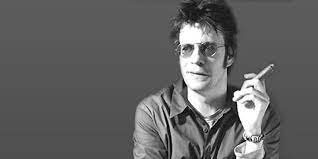

First published April 2007
Of all the reformations seen in 2007 surely the most unexpected and the most welcome has been the return of The Only Ones, namely Peter Perrett (lead vocals, rhythm guitar), John Perry (lead guitar), Alan Mair (bass) and Mike Kellie (drums). Newcomers should start with the bands first two LPs (‘The Only Ones’ from 1978 and ‘Even Serpents Shine’ from 1979, both CBS/Sony), selectively sample Album Three (1980’s ‘Baby’s Got a Gun’) and read cover-to-cover Nina Antonias highly entertaining and reasonably accurate account of the band. Sitting comfortably ? Now we’ll begin…
On a crisp spring evening John Perry is in fine form over a vegetable biryani out towards the Western extremity of the Piccadilly Line as I ask him the all-important question: Why Now? “Well, Easter is generally a good time for a resurrection…” Was it the increased visibility that came from Vodaphone using the Only Ones greatest miss ‘Another Girl, Another Planet’ in their current TV ad ? “For the band, not at all. As late as February this year there was no intention of reforming but then Alan felt like playing All Tomorrow’s Parties in Minehead and he and I talked and it was clear that we could have talked forever with Peter so we went down to the Perrett house with an attractive gig and an attractive sum of money attached and we put that on the table and that did the trick. Peter was willing to play festivals but I suspect his experience with The One (Peter’s band after the Only Ones) may have scared him about playing to half-filled rooms, but then Peter wouldn’t appreciate that The One and The Only Ones are a different proposition – as far as he’s concerned its just Peter Perrett and some musicians. Playing wasn’t a matter of indifference to me, but I didn’t much care if we reformed or not – its been in the air so long and hasn’t happened so many times. After that the whole thing happened in about seven days. No management – good agency, good accountant, good lawyer and Alan and I do logistics. “
A very frail and seemingly drug-ravaged Peter Perrett was last seen onstage at 93 Feet East in Brick Lane when he guested with Love Minus Zero, the band fronted by his two sons Jamie and Peter Junior. Perry paints a different picture. “Our rehearsals are going great. There was all this stuff after the 93 Feet East gig that Peter had to sit down after three numbers… At our very first rehearsal Peter sang thirty songs straight off, some of them twice, and was standing for five-and-half hours, no trouble at all. “ Of more concern is the health of drummer Mike Kellie. “Kellie went into hospital in December 2005 and they fucked it up – I remember speaking to him on the phone and he sounded like Death but now he seems fine.”
“ The first rehearsal was just the three of us – Peter, Alan and me – because I wanted to feel time between the three musicians which once you’ve got the drummer in you can’t do in the same way. The thing that became apparent is what a fabulous rhythm guitar player Peter is – playing absolutely steady in time, even when he’s singing in counter-rhythm. Kellie too has a lovely steady time. You take your time from the drummer but phrase around the singer. And Alan plays far from traditional bass lines. I’d never realised ‘til now quite how those components slotted together – you don’t analyse things while they’re happening, especially when they’re working well. We don’t sound any different. As soon as Kellie arrived it sounded like we’d had 25 days off, not 25 years. But if you took away any one member it wouldn’t work.”
So what songs can we expect to hear on their short UK tour in June?. “The material we’re going to play chooses itself, same as it always did. Songs have lives. There would be songs that we would love playing and then we’d get bored of them and they’d vanish for nine months and then re-appear, revived. The majority of stuff that we play we’ll play at All Tomorrow’s Parties will be well-known Only Ones songs but there’s plenty more gigs coming along. And the situation is changing from day to day. Literally. I wouldn’t like to guess where we’ll be by June.It’s a democracy of sorts. If anyone has any really strong objection to a particular song then that acts as a veto. “
“Robyn Hitchcock has a maxim that revivals should come with built in expiry dates. Whether this is a revival, I don’t know – maybe we are just picking up where we left off. We won’t go on forever just doing old songs – that definitely has a built in expiry date, we won’t let it get tired. The first time round everyone all left the band at the same time. If we had been with Island – one of Chris Blackwell personal signings – instead of at CBS there might have been someone there with the wisdom to say ‘just take two years off’. Warners wanted us but the money they were offering wouldn’t have paid the CBS debt. And everyone was fed up with everyone else anyway. “
John served his musical apprenticeship in the West Country. “I was 15 when I did my first professional gigs in Bristol in 1967, playing with much older blokes who’d been influenced by the likes of Buddy Holly and Eddie Cochran. I first saw Cream in 1966 when they still liked each other. This was at the Bristol Locarno – one week it would be the Who, next week it would be the Small Faces, next it would be Hendrix. By 1968 my band had the regular support slot at Bath Pavilion. Promoter Fred Bannister phoned at lunchtime and said “Want to do a support tonight?” but wouldn’t say who it was, so we think OK its the Who doing a secret tryout gig, but when we get there there’s a poster saying The New Yardbirds and then in tiny writing underneath Led Zeppelin – their third gig and they were rubbish.”
So who influenced your playing ? “At the time of the Only Ones I was hugely into lead guitar – Mick Taylor, Hendrix, Jeff Beck – whereas now I am far more fascinated by Brian Jones era Rolling Stones where its two guitars locking. Jeff Beck takes such chances – you can count on him to be odd. I’ve seen him deliberately start a solo in an impossibly awkward place just to see how he would get out of it. The Cream comeback gig was great – good to watch Clapton sweat, the other two really made him work. Baker with his bad back gone had to sit up very straight and play more simply – he seemed an even more fantastic drummer without all the triplets twiddly-dum twiddly-dum. Jack’s singing was marvellous. Actually at rehearsals this week Kellie has been playing on a stripped down kit– just bass drum, snare and hi-hat becuase that’s all we could find – and the difference is really interesting. Changes the whole dynamic.”
After the initial demise of the Only Ones in March 1980 John formed his own band, Decline and Fall. “When a big thing like the Only Ones finishes you think ‘fuck that’ and put a band together with people from your home town – Nick who was my drummer in my Bristol band The Ratbites From Hell, our bass player had been in a band called Carmen. It was a three piece, I was looking for a singer or singer/guitarist, I was looking for a manager – I was having to write the songs, manage, do the singing – none of which I particularly wanted to do. The fact that it lasted a year was very good going, we did a couple of dozen gigs including Glastonbury but I was losing interest in it.”
In addition to his guitar prowess John has a growing reputation as an author who can put ‘classic’ albums into some sort of historical perspective. “The three books I’ve done – on the Stones (‘Exiles on Main Street’), the Who (‘Meaty, Beaty, Big and Bouncy’) and Hendrix (‘Electric Ladyland’) – have all done very nicely financially. I’m speaking to people in Spain and Italy at the moment about editions there and I must make a trip to New York. It was luck writing about three albums that have stayed current. My publisher, Schirmer, were really leaning on me to do Who’s Next which the Americans view as THE classic Who album whereas the only bit of the Who I’m interested in is the singles pre-Tommy. After Tommy they became a great band of a completely different sort. “
“The Only Ones supported the Who at their lowest period (America, June 1979). It was a backward move for us because by then we could fill 1500 seaters on our own – it was a disaster from start to finish. Peter was indifferent but the other three of us were all huge Who fans. Members of the Who got the impression we were being stand-offish whereas we were probably just being respectful. This was the Kenny Jones era and nobody can play drums for the Who except Keith Moon, it’s just not possible – although Kellie thinks that current Who drummer Zak Starkey is doing a good job.” How about another book ? “There is a collection of Only Ones road stories – scurrilous and very funny and at some point I might get that together. We were in Manchester for my birthday in 1978 or ‘79 and BP Fallon (legendary on-road procurer and vibemeister) was on the road with us. I got back to my hotel after the gig and opened the door turned on the light and BANG! …there were twenty women in there. I thought ‘good’ but just the same I went into the bathroom just for a second to gather myself – and there were four more in the shower! After Decline and Fall I went off to Greece and took a typewriter to write some of this down and I’ve still got the typescript so at some point I shall assemble it. Disasters are always much funnier than successes.”
Have you ever thought about becoming a producer ? “I don’t have the patience or diplomacy for production. I like paying live, although The Only Ones were absolutely deafening on stage – we started with all the amps on full. When I look back now on the Only Ones stuff it was Alan that did the production. I would go in and just jam down three or four lead guitar parts and say ‘they’re all great’. It was Alan who was sufficiently mature to say ‘if we layer that bit on top of that…” and he was doing this from the first LP onwards but he was only credited with the second album. We made sure when we signed the contract with CBS that they only owned the masters we delivered ie the twelve songs that went onto each album. Even if they were paying for the studio time all the other songs were never their property so there isn’t a great deal left in the CBS vaults. ‘My Way Of Giving’ and ‘Momma You’ve Been On My Mind’ are in there (from the never-completed Only Ones covers album). Alan saw the masters from the third album the other day and there is another song of his (in addition to ‘My Way Out of Here’), and one of mine too. I do remember very distinctly that the situation was deteriorating, Peter wasn’t coming up with enough great new songs but he still wanted the credits to be Perrett, Perrett, Perrett. I mounted a campaign to get other material onto the album, I probably thought that it was diplomatically more sensible to push for the inclusion of Alan’s song so I couldn’t be accused of self-interest. That album is the sound of Peter losing interest in writing. but with one or two good tracks – ‘Lucinda’ (but as arranged on the Peel Sessions LP), ‘Why Don’t You Kill Yourself ?’, ‘The Big Sleep’.”
How about a visual record of the Only Ones in all their 70’s pomp and glory ? “ There is a live tape from the Minneapolis Longhorn gigs shot on Super 8 that has just shown up via Peter Jesperson (ex-Replacements manager) and it’s stunning – the most exciting Only Ones footage I’ve ever seen. Second US tour, November 1979. I’ve had the soundboards for ages. We are currently looking into getting the whole thing converted properly and released on DVD. And the video ‘Faster Than Lightning’ should be out on DVD soon.” What won’t be getting an official release is a much bootlegged video of a gig at Dingwalls from December 1980 where John is expressionless throughout. “Apparently Rachmaninov was the same, sitting at the piano, and he was the most passionate of composers…but Dingwalls was different, that’s active loathing. We’d already split up, that gig was to pay some debt. It was a wretched night.
Relationships with the record company are much improved. “Sony are being most co-operative now, even though we’re not currently signed to them. Alan sailed into there with such commitment, so buzzing and on the ball that they were phoning the Big Boys upstairs and saying ‘I think you’d better come down’. The poster for the tour has a small ad for the latest Sony Only Ones compilation and they’ve given us a useful chunk of tour support. Maybe we can sell Vodaphone the other corner! I think I’m right in saying that Sony have just agreed to the three original Only Ones albums being remastered. I’d chose Ted Jensen at Sterling Sound in New York, the same guy who as a 19 year old whiz-kid mastered ‘Even Serpents Shine’. I worked with Ted last year and he is just SO accomplished – but apparently there are practical reasons for working in the UK. Alan says the first two LPs are mastered low (quiet) but they still sound great to me “
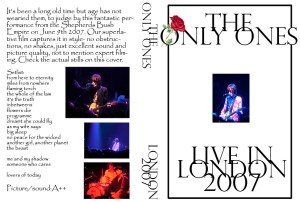
So how does it feel to be working again with Peter ? “We last played together onstage in 1990 – I’d done some recording for the Sisters of Mercy and the Sisters management were very keen to manage Peter and me – some band they knew were doing a gig in a club in Oxford Street and this band knew ‘Planet’ so Peter and I got up with them. I then stopped playing with Peter and resumed being friends with him.” How about the narcotic reputation that dogged the Only Ones first time around ?” I knew Peter before he took any drugs of a serious nature and he wasn’t much different, its not like he’s been transformed by them.”.
“People say it’s impossible to put our music in a pigeon hole and that seems bizarre to me because listening to it now it just sounds like timeless rock’n’roll. Could have been 1966, could have been 1996. Alan and I both had the thing when we first started the Only Ones where our friends said to us “Great band, great songs but can’t you get rid of that fucking singer?” But I listen to our stuff now and even the voice doesn’t sound unusual.”
POSTSCRIPT – UNPUBLICISED WARM UP GIG, SUNDAY 15Th APRIL
The Inn On The Green off Portobello Road resembles a trustafarian youth club, a suitably incongruous setting for the first live performance by the Only Ones since 1981. Taking to the stage characteristically late – due apparently to difficulties rousting Perrett – the quartet delivered sturdy versions of From Here To Eternity, Miles From Nowhere, The Whole of The Law and (of course) Another Girl, Another Planet to an enthusiastic crowd of well-wishers and regulars. A broken bass string gave Perrett the chance for a solo version of a new song that might have been called Is That How Much You Care ?, to the seeming bemusement of the rest of the band. Teasingly Alan launched into the opening riff of The Beast, but closing time intervened. The rhythm section rocked and rolled, Perretts guitar and vocals were highly effective and Perry played liquid lead guitar whilst apparently thinking about the cricket scores. By the time they get to the Shepherds Bush Empire in June spontaneous combustion must be a real possibility.

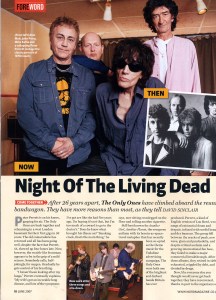
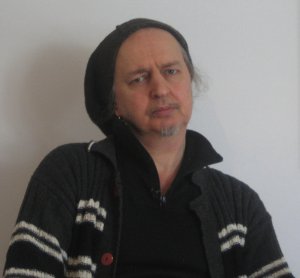
It’s exactly 15 years since we last talked to Nick. Then he was celebrating the publication of his first book ‘The Dark Stuff’, collected writings about rock’n’roll drawn from the NME and other music magazines. Today in the august Bloomsbury offices of Faber & Faber Nick is promoting his new book – an autobiography from the 70’s entitled ‘Apathy For The Devil’, the title derived from a criticism of the Stones made by Bob Dylan to Ian Hunter (I preferred the working title of ‘Dead Fop Walking’). Nick is fresh off the Eurostar from Paris where he has lived since quitting drugs and London in 1988. He looks every centimetre the French bohemian as he strokes his goatee and explains why he wrote his book.
“What I wanted was a book on the 70’s and a book that was autobiographical so I blended them together. The 70’s to me started with Marc Bolan or the creation of Ziggy Stardust and ended with the death of the Sex Pistols. My past seemed to break down into three distinct stages when I was three very different people. In my early life I was just a nice-enough kid. Then around 1973 when the fame happened and the success and the drugs started kicking in I became someone very different, someone I found hard to recognise when I moved out of that stage. The third phase started in May 1988 when I moved to Paris.”
“I remembered everything. It wasn’t that unpleasant to get it all down on paper. It was as close to enjoyable as work gets. I set myself a target of 750 words a day. I’d helped Keith Richards a little bit with his autobiography. James Fox got in touch with me and said that Keith doesn’t remember the 70’s, in much the same way that I don’t remember the 80’s. I think the 70’s were a very gloomy period for him. He remembers his childhood well, he remembers the 60’s very well but the 70’s wasn’t a good period for him – ‘Exile’ got made but apart from that pretty bleak times – he had a big problem with Anita Pallenberg, a big problem with people around him, his relationship with Jagger broke down. James said I’ve got this deadline so I’ve got to write 750 words every day. So that’s what I did, five or six days a week. It was almost pleasurable to write the first few years but less so from 1978 when I didn’t like the music.“
“I read a bunch of autobiographies and the only one that really made sense to me was the Dylan Chronicles where he chronicles the presence and absence of his muse. If anyone could have written a book that said ‘I invented the 60’s’ Dylan was that man, and he could have done that but it wouldn’t have been a great piece of literature. So he went the opposite way which really impressed me. What he was writing about was his talent. I felt the same. I felt I had built up to 1975, there was an advance in my writing and then it just…went. So for half the period I was writing about I was in a bad way.”
“I’ve not been tempted by heroin or cocaine since 1988.When I stopped taking drugs I became healthy – I was walking a lot, then in the early 90’s I started lifting weights to prevent a bad back so I’ve looked after myself. I just was so glad not to feel ill any more.” A recent blood test suggests that Nick had unknowingly contracted Hepatitis C and then lost it again. “According to James Fox the same thing happened to Keith Richards – he had it and then lost it of his own accord. Apparently only 10% of people who get this ailment ever lose it. So that’s how lucky I’ve been.”
“I do have a faith in something bigger. I very much believe in karma. In the last 22 years I’ve never had any real health problems but my wife Laurence developed a very bad case of alcoholism that went on for about 7 years. I’ve never been a drinker. Alcohol can bring the complete Jekyll and Hyde transformation, complete screaming insanity whereas heroin addiction is a slow diminution of human potential. On heroin people become pathetic, but they don’t become dangerous. For the last four years she’s been fine, she doesn’t drink but at the time the only way I could deal with it was to say ‘this is my karma – for 14 years I was a junkie’. My parents were deeply offended by it, there were people who cared about me who were deeply upset and hurt by it and this is the payback. I have to stay and do this – I can’t just walk away. I have to protect this woman however unpleasant it is.”
“For the last 22 years I’ve been very family-orientated, I’m not someone who goes out to nightclubs, I don’t have an interest in that any more. I don’t respect men who sleep around when they’ve got a wife and kids at home, never did. The happiest period of my life was when my son was little. You get the joy. I got a certain amount of joy from listening to the Beatles on the radio when I was a kid, but you don’t know real joy until you’ve had a child and you’ve had good relationship with that child. Some people give birth to kids who are just a pain in the arse. I was lucky in that my son James is a really good kid. He thinks I’m cool. Until he was eleven I was the one who picked him up from school, made his food – I was the parent in our family. When he was twelve I stepped back – his mother was coming out of her long period with her problems so she stepped in more. Between the ages of thirteen and eighteen you want to separate yourself from your parents and that’s what he’s been doing. He’s just turned seventeen and he’s a really good guitarist, mainly into extreme metal. I’d rather he went his own way rather than blindly following me.”
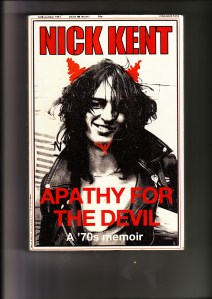
There is very little Nick Kent on the internet, apart from an interesting interview with Karl Whitney at http://www.3ammagazine.com. No NickKent.com, no MySpace page and definitely no Twitter-ing. “I’m more interested in morality than technology. The internet just doesn’t interest me – I’m not someone who’s drawn to technology. The last ten years has been a time when technology has dominated and I just don’t feel excited about the whole thing. With the internet now everyone is a journalist but they’re not very good.“
“In the 70’s rock had no concept of morality or dealing with the consequences. ‘Fuck the consequences, just snort the drug and then whatever happens is right.’ That is partly what my new book is about. I see the 70’s as a dispirited, bankrupt period. The late 60’s was all utopianism, the idea that the audience and the musicians were on an equal footing, In the 70’s that all changed, people started paying far too much attention to what Andy Warhol was saying, and I don’t think even Andy Warhol took what he was saying as seriously as did the people around him. In the 70’s you didn’t talk about morality or even question anything. Snort the cocaine, stand around and babble for a while…there was a lot of flaky behaviour and I was as much to blame as anyone. “
Trust the art not the artist: discuss. “Miles Davies was not a nice man. I wouldn’t describe myself as a nice person. I wasn’t someone you could trust or who you could have confidence in. That’s what happens when you take Iggy Pop as your role-model. But in order to do the job I’d been sent to do by the NME I had to throw caution to the winds. I got to know Iggy pretty well and one thing I noticed that his every day alter-ego Jim Osterbeg was a very cautious human being. My father was cautious, I’m cautious, my son is cautious. I realised that in order to really go for this rock thing that was happening I had to cast caution to the winds, which is what happened when Iggy went on stage. He hurt himself badly lots of times but this is what he had to do. His artistic lesson was if you’re going to have an adventure then you go all the way. You don’t think ‘maybe I’ll hurt this persons feelings or maybe I’ll hurt myself physically’. You’re causing a lot of problems for yourself and other people if you behave like that. It’s a two-edged sword – you can get hurt by it.”
The articles that made up ‘The Dark Stuff’ were considerably rewritten from how they had appeared originally. How come ? “I feel that the articles are now better considered and more to the point about those people than anything I wrote at the time. Plus there were libel laws. I pushed it as far as I could go at the time but even so there was no way I could write about what really happened with the Rolling Stones or Led Zeppelin – there was a lot of drug taking and a lot of crazy days. Twenty or thirty years down the line is the time to write properly about it. “
Since writing The Dark Stuff Nick has been busy. ”Up until 2007 I had a column for the French newspaper Liberation. Until 1997 I was also working for French TV. I started working for Rapido, which showed me how TV programmes are put together and I knew I could do all aspects except maybe the presenting. Then I was asked me to do a fortnightly show called Rock Express where I could go with a camera to virtually any gig that was happening in Paris and film the best part with a bit of an interview added. The 90’s was a good period to do that – Cobain, acid-house, Blur, Oasis, Radiohead, Jeff Buckley. Then I directed a couple of documentaries for Canal, one on Oasis. But I don’t like my face to be included. I’ve been interviewed a couple of times on TV – once about the NME and once about Hawkwind. Hawkwind were the housegroup of Friendz, the first magazine I worked for. They were (mostly) nice guys – Lemmy is very funny, but Dave Brock is like the Bill Wyman of the group which is to say he was someone from a different era.”
Nick writes movingly in ‘Apathy…” of his relationship with his mother and father. “My parents didn’t like any hint of decadence – my father in particular felt that the Germans had fallen into decadence which ultimately lead to the Second World War. I think I frightened my parents. They never disowned me but I’d only see them once a year at Christmas, staying two or three days. We were just so different. My father read ‘The Dark Stuff’ and liked it. He could see I’d become a good writer although he didn’t know any of the people I was writing about. My grandfather and father ware both loners, it’s a Kent family trait on the male side – not a bad thing if you want to be a writer.”
“In the early 50’s the coming of television changed everything. Rock’n’roll was starting to come into the picture – going from Light Classical music to ‘Heartbreak Hotel’ or particularly in my case ‘My Generation’ – instantly you hated it or loved it. That’s what rock did. At first the people from my parents generation who were controlling the media in the 60’s said ‘this is just short attention span bullshit – it’s for young people, they don’t have a war to fight, they are not cannon fodder any more so we’ll allow it but let’s not kid ourselves that this stuff has got any lasting value’. I felt otherwise – it just completely grabbed me. I knew that much of this stuff would stand the march of time. I always felt the Stooges, MC5, Velvets and the Groovies would have their day. It was incredibly depressing at the time when Jethro Tull were selling 35 million records in America and the Stooges couldn’t get a record deal. But at the same time the Dolls and the Stooges created their own fate. The Dolls could have been Aerosmith but they fucked up, they were too erratic.”
“I don’t mind the Stones still being on the road – I think they are playing really well and that Jagger is performing a lot better now than in the ‘70s. I don’t go to the gigs any more, I wait until they put out a DVD and watch that. They invited me to the Paris Olympia club gig – pretty good, but now I think now they work better in big places. The Stones used to be very erratic, if you saw the Stones in rehearsal and Keith Richards wasn’t in the mood you saw a really bad pub-rock band. The Stooges were the same. They used to be either sub-human or super-human, usually depending on the state of the singer.”
“The Feelgoods were important. I was the first person to see them live and write about them, even before they got their ‘look’ together. Wilko told me their image changed after they played the Wembley 1972 Rock’n’Roll Festival. The MC5 came on and got booed off stage but Wilko saw them. Wayne Kramer had on this weird face paint and he was wearing a black suit to set it off. Wilko just stole the suit. One number I really loved was ’I’m A Hog For You Baby’ where Wilko’s one-note guitar solo captured their very essence.”
“Apathy…’ contains much about the Stones and Led Zeppelin but little about the Who – how come? “I never met Townsend. I spent an evening with John Entwistle and there’s a bit in the new book about an experience I had with Keith Moon but Townsend was the main guy. In recent years I’ve become very fond of them and I see them as very important band. They changed rock’n’roll to Rock through their volume and feedback. It was unfortunate that when I started writing they were in their concept album stage and Townsend became very pretentious.”
Alex Chilton told me that he likes writers until he reads what they have written about them. Has Nick had a similar experience? “A lot of people I have written about are no longer favourably disposed towards me. To me a friend is someone you turn to in times of strife. Iggy was a friend – we’d phone each other up, have long talks. I wouldn’t call Radiohead friends but I get on well with them. I’ve spent time together with Jimmy Page in the last five years. Bobby Gillespie, Evan Dando have turned up on my doorstep but they are not guys I would write about – better if I don’t. When I first meet people there is a honeymoon period like with the Smiths – Johnny Marr and Morrissey were all over me ‘tell us about the New York Dolls’. Someone like Morrissey has his own self-image of a righteous person at war with the rest of the world who just don’t understand ‘I am unloved, I am unloveable, it’s very hard being me’. He doesn’t get that there are some aspects of his character which if you’re an onlooker…there’s so much vanity. As much as the drugs in the 70’s the level of vanity tainted the musicians of that time. “
In ‘Apathy…’ Nick talks about his ambitions as a musician. Does he miss playing live? “I haven’t been on stage as a musician since the end of my band the Subterraneans in the early 80’s. Recently Chrissie Hynde asked me to play guitar with her on ‘Dark Globe’ at a Syd Barrett tribute gig, I said ‘no fucking way”. I’ve been doing book tours where 200 people turn up, it starts off with me doing a reading and then someone asks me questions. That to me is performing. When I stopped the drugs I wanted to focus purely on writing so I stopped playing the guitar which up until then I’d been playing about 8 hours a day and really enjoying it. My birthday is December 24th so one year my wife bought me a Christmas/Birthday present of a nice acoustic guitar. Shortly after that she fell into this alcoholic state. Just to deal with the stress I started playing again and very quickly songs started coming to me – complete songs with lyrics. They were beautiful songs. I recorded them on a tape recorder – several French musicians with home studios said come down and cut them but I never wanted to do that because they were so personal. I just wish it had happened to me earlier when I was serious about becoming a professional musician.”
What’s next ? A novel, the same half-finished novel Nick mentioned in our first interview. “Vince Taylor’s story has an influence on it. Vince Taylor was big in France and I met the president of his fan-club, who lived in Switzerland. Vince Taylor just turned up on this guys doorstep, in a bad way, he had no money, was completely insane and just lived with him. Bad things happened to this poor guy who was putting him up – his dog ran away, his wife left him. You take the idea of what would happen if your biggest hero turned up out of the blue, knocked at the door and said ‘help – let me in’. For example if Syd Barrett just turned up, what will happen? Is it the answer to your dreams or the start of a nightmare? The book has taken so long to write because I wanted to finish the story before I sold it, which is not a good idea with me because it means there is no deadline.”
“I want to be writing to the very end but for the last ten years music hasn’t been interesting enough to make me want to write about it. Most of the music magazines now write mainly about the past and I am not interested in doing that. However I was thinking about doing an article on The Move, the original five piece who were so great.”
Nick Kent, still passionate about the music that matters to him. Long may he run.

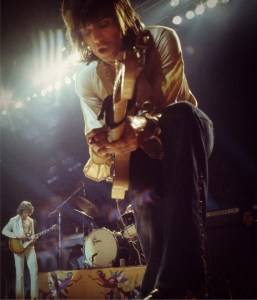 Even the extras are worth a look. Rehearsal versions of Shake Your Hips, Tumbling Dice and a dull Bluesberry Jam recorded at the Rialto in Montreux for German TV are here in best-ever quality, but sadly the promo of Loving Cup filmed at the same session is omitted. Richard Williams fails to get anything interesting out of Jagger in March 1972, but Paul Sexton does better with an interview done earlier this year which introduced cinema showings of “Ladies & Gentlemen”.
I am disappointed that Eagle have not included the highly entertaining footage from the Dick Cavett TV special, instead restricting it to the inevitable 3DVD Special Limited Edition Box Set. Additional tracks such as Rocks Off, Sweet Black Angel and Don’t Lie To Me were filmed in Texas but remain unseen. Another great extra would have been the tour encore filmed for complementary STP documentary “Cocksucker Blues” where the Stones were joined by tour support Stevie Wonder for a medley of Uptight and Satisfaction.
Even if you are a hardcore Stones fan with a recent bootleg such as the 4Reel remaster you still need this – the improvement in picture and sound quality is significant. The best live depiction of The Greatest Rock ‘n’ Roll Band In The World, this release is an essential purchase.
Even the extras are worth a look. Rehearsal versions of Shake Your Hips, Tumbling Dice and a dull Bluesberry Jam recorded at the Rialto in Montreux for German TV are here in best-ever quality, but sadly the promo of Loving Cup filmed at the same session is omitted. Richard Williams fails to get anything interesting out of Jagger in March 1972, but Paul Sexton does better with an interview done earlier this year which introduced cinema showings of “Ladies & Gentlemen”.
I am disappointed that Eagle have not included the highly entertaining footage from the Dick Cavett TV special, instead restricting it to the inevitable 3DVD Special Limited Edition Box Set. Additional tracks such as Rocks Off, Sweet Black Angel and Don’t Lie To Me were filmed in Texas but remain unseen. Another great extra would have been the tour encore filmed for complementary STP documentary “Cocksucker Blues” where the Stones were joined by tour support Stevie Wonder for a medley of Uptight and Satisfaction.
Even if you are a hardcore Stones fan with a recent bootleg such as the 4Reel remaster you still need this – the improvement in picture and sound quality is significant. The best live depiction of The Greatest Rock ‘n’ Roll Band In The World, this release is an essential purchase. 
Keep An Eye On The Sky 4CD Box Set (Rhino)

A Short Chat with Alex Chilton
In July Big Star played a rare London gig, supporting Tindersticks at the ‘Serpentine Sessions’ three-night event held in Hyde Park. With only 55 minutes onstage the band were forced to play to their strengths with the result that the set-pacing problems exhibited at the August 2008 Shepherds Bush gig were absent and the band were in fine form. After the gig we chatted to John Fry about the box set and about the plans for Rhino Handmade to issue an expanded version of Chris Bell’s I Am The Cosmos CD. The ever-amenable Jody Stephens came over to say hello but then headed off for an early night since he had to be up at 430am for the plane back to Memphis. Part-time Big Stars Jon Auer and Ken Stringfellow were nowhere to be seen but lo and behold Alex was hanging out in the outdoor bar, complete with Diet Coke and a cigarette holder – dry, wry, urbane – the James Stewart of Rock’n’Roll. Alex belied his reputation by being excellent company. He has no plans to write or record new material, feeling with the record industry in the state it‘s in at present there’s not much point, plus he only really writes songs to a deadline. A discussion on royalties revealed that Alex does now get money from sales of the three Big Star records, but that this is dwarfed by royalties earnt by the use of ”In The Street” and other tracks in That Seventies Show on US television. Alex confessed that what he is really into at present is baroque and that he would like to do some composing, possibly for a film soundtrack. Only when conversation turned to Bruce Eton’s new book on Radio City did Alex get narked on the basis that Bruce had included personal stuff in the book that they had agreed was off-limits.Q&A with John Fry and Jody Stephens
If Stax had got its act together and No 1 Record had been a huge hit how would the band have reacted? John: Stax had its act together far more than Columbia, their new distributor, did. If they had noticed the music and the band more, it could have been a different story. We got critical acclaim and FM airplay. Availability of the albums was spotty, at best. We never got the AM airplay that you needed to have for a single song to connect with a large audience. Also, the booking and touring component just was not there on the level need to combat some of the other deficiencies. Most folks are elated by success, as far as success can be defined. One might readily assume that the band would have been delighted by immediate commercial success. However, Alex had already had a good deal of experience with success, and it seemed to me that he was unimpressed by it. Jody: Looking at the name of our band, Big Star, and album title #1 Record, a reference to an album chart position, I would say we were pretty optimistic and we would have been elated if #1 Record really would have been a #1 record. Big Star has been successful in many different ways, just no “hit” records. One of the successes for me is that it did lead to a great career in music here at Ardent Studios and some wonderful relationships. What do you remember about the Lafayette gig on Disc 4? Jody: The audience wasn’t there to see Big Star. They were there to see Archie Bell and The Drells. A little uncomfortable…one or two people might clap after we’d finish a song, but as a result of that I think we all played with a heightened sense of determination. How does it feel seeing gigs full of people singing along after all these years? John: It feels great to me. At the Hyde Park show, there were two young guys behind me who were just singing along with every song, going off on the music, and having a great time. That’s the outcome you want anytime you work on a record, even if you have to wait for it for a while. Jody: Those people that come to our shows and sing along define our success. They always put a smile on my face. That energy from the audience is what drives me to keep practicing and playing live. Alex says he wasn’t involved in putting together the box set at all. Is that right? John: I informed him of the plans and sent him copies of all of the content, but he never commented on it, either positively or negatively. If he were around today would Chris Bell be part of the Big Star line up? John: I like to think he would have continued with his music, but he might well have chosen another direction professionally. That’s what happened with Andy, although he continues to play for his own enjoyment. Jody: If Chris were around, I would love to think he would be a part of the Big Star line-up. Although, just as it was his decision to leave the band in 1973, it would have been up to him to decide whether or not to be a part of what we are doing now. What was your favourite Big Star line-up? John: The original 4-piece line up, and I’m not necessarily talking about the songs or the sound. I’m talking about the climate. We were all together, happy, and optimistic. I prefer to think about those days than some of the harder times. Jody: Chris, Alex, Andy and me. There was always some sort of electricity in the air as we made that first record…first times are usually fraught with the most emotions. But there were many cool things about being in a three-piece band making our second record, Radio City. What are your feelings about In Space, the 4th studio record released in 2005? John: I had no role in it other than the fact that it was recorded at Ardent. I think has some very good material and performances. It probably missed some of the attention it deserved, as by the time it was being released, Ryko was in the process of being sold and many of the staff were leaving. The guys need a break from imploding record labels. Jody: I am pretty proud of that record and would say that it is a great snapshot of where we were as a band in 2004. Ryko allowed us the opportunity to make a record the way we wanted to, which was pretty much just to walk into Ardent Studios and see what happens. There were no demos. We wrote and recorded a song a day and the outcome is a record that, while a challenge to make, is a pretty fun record to listen to. Does anyone have a tape of the gig you played at the Rock Writers Convention in May 1973? Can you remember anything about the gig? John: I am not aware of any recording. Richard Rosebrough and I were running the live sound, and we did not make one. It was quite a night – free booze and 100+ stoked rock writers. Jody: The whole rock writers convention was a good time. I was 20…there were parties and free food and drink. I think it was the first time we played to an audience that actually knew our songs and were fans of the band. Everyone seemed to abandon themselves to drink, the music and the moment. How about a DVD? Is there any video material in the vaults? Maybe the re-union show that made the ‘Columbia’ CD? John: There is some professionally shot video from Columbia, some of which was edited into song clips by Marius Penczner, who worked in our video department at the time. There is also about 22 minutes of 16mm film, shot by Andy and Chris, probably in 1972. There will be a short clip from this footage, edited to 13 minutes on disc 4 of the box. The Oxford American magazine on their film issue DVD used another short clip from this footage recently. We’ll try to make as much of this material available as possible in some form, given rights and licensing issues to the Columbia audio. I doubt there is enough video to justify a commercial DVD, but we’ll see. What tracks didn’t make the box set? John: #1 Record and Radio City are not there in their entirety, as alternate mixes or versions have been substituted for certain songs. If it turns out that there is a sufficient body of worthy material remaining, we will come up with a way to issue it at a later date. And finally…where did the title for the box set come from? Jody: We were all trying to think of a title and John Fry suggested I look through song titles and lyrics. I got to ‘Stroke It Noel’ and what I initially thought was the line “Keep an eye on the sky.” I submitted it as a suggested title and everyone liked it and it stuck. Well, the line actually turned out to be “Keepin’ an eye on the sky.” Seems I wasn’t listening close enough. We all decided to stay with “Keep an eye on the sky.” The line just seems to work.First Published January 2006
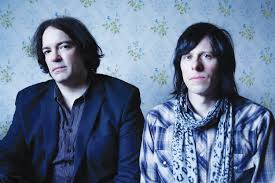
Ken Stringfellow and Jon Auer are remarkably polite and good-humoured considering that they have got up at dawn to drive from Belgium to Islington where their band the Posies is playing a one-off London gig at The Garage. Over a pre-gig tandoori Ken and Jon were happy to talk about the part they play in the latest incarnation of Big Star, where John plays guitar and Ken handles bass and keyboards in support of original band members Alex Chilton (guitar, lead vocals) and Jody Stephens (drums).
Jon and Ken first made their admiration for Big Star public in 1992, when they released a single on Pop Llama featuring a faithful recreation of “Feel’ from the first Big Star LP ‘Number One Record’. The other side was a cover of the then-obscure “I Am The Cosmos”, written by Big Star co-founder Chris Bell prior to his tragically early death in 1978. Even the singles sleeve is a recreation of the ‘Radio City’ back-cover, with the Pop Llama label logo redone to resemble that of Ardent Records. Why the homage ? Ken: “ We did it to see how they did it – sort of reverse engineering. We got a great response to it.” Jon suggests a more market-orientated strategy “We knew that certain people in the business or who love a certain type of music would respond to it because they’d be in the know. It led to us getting together with Pop Llama and then pretty much everything else.” The Posies went on to a career that peaked commercially with the Geffen LP “Frosting On The Beater’ which included power-pop classic ‘Flavor Of The Month’. Tonight the Posies are promoting their new Ryko record “Every Kind Of Light”, their first studio release after a nine-year hiatus.
In 1993 Jody, impressed by ‘Feel’, suggested Jon and Ken as the missing links that would allow him and Alex to play live gigs under the Big Star brand. One of their first gigs together was recorded and released as Columbia and they have been touring the same set pretty much ever since. Seeing Alex, Jody, Ken and John recreate live the stunning songs from the first three Big Star LPs was an unforgettable experience for me, and I suspect for many others who saw them at Reading Festival and the Clapham Grand (both 1993) and more recently at the London Mean Fiddler (2001). However there is a law of diminishing returns here as Alex refuses to vary the set. Jon: “We’ve tried to introduce other songs into the set but Alex seems to feel that all the songs we do from the Big Star records are the only ones worth doing. Alex knew ‘I Am The Cosmos’ straight away and it’s not on a Big Star record so he’s paid attention to it at some point.” Ken elaborates “When we started working with Alex it was like a process of elimination. He tells you what he doesn’t like. There were songs that we wanted to do that he didn’t want to sing so we ended up singing them. He didn’t sing ‘Feel’ originally – he didn’t want to do ‘Back Of A Car’, which is bizarre to me. Or ‘O My Soul’ -‘If you guys want to sing it I’ll just stand back here and play’. It’s weird how he steers things.”
But wait…there’s more – last years ‘In Space’, a new Big Star studio record and their first in 30 years. Was it recorded to allow the live set to incorporate some new songs ? Ken: “I’ll debate that. That would be a fringe benefit but I don’t know how we’re going to play these new songs live. You’d think it would be easy to do. But its like the new Posies record – when it was time to play the songs live I didn’t have a clue what I’d played on the record. I haven’t thought about how to play the new Big Star songs at all so I suppose in a couple of weeks we’ll need to do a round of emails and say ‘hey what are we going to do? “Jon: “I was talking to Jody and we’re going to meet up and do these Big Star shows pretty soon and we haven’t rehearsed. I think we’re going to show up and be prepared to have anything happen on the spot. I don’t think we’re going to get too many instructions on that. I reckon if we play anything off the new record it’s going to be the cover (‘Mine Exclusively’, originally by The Olympics), we have done that live.”
So in a mere three weeks the Big Star will be playing live gigs in Sweden, Holland and Belgium to promote ‘In Space’. But no UK gigs ? Jon: “For whatever reason Mr Chilton has deemed Great Britain off-limits. Which is unfortunate for many reasons. One – it would be fun to play here. Two – we’ve had some incredibly good offers to play, including All Tomorrow’s Parties to play one of the first two Big Star records all the way through – prestige, lucrative. But that would require us to play Songs That We Don’t Play. Alex doesn’t really explain stuff. One year we had an offer to do the New Orleans Jazz Festival but Alex didn’t want to play in New Orleans that year, even though he lives there. Who knows ? Mystical criteria are involved. Alex also does shows with the Boxtops, and gets more money than he does doing Big Star shows. He really gets down and has a real good time, dancing and singing – the chameleon aspect of him.”
In the studio Alex and Jody were very different. Ken “Jody is very patient and he had a really strong idea about what would be the way to go. When Alex never really went in that particular direction I saw Jody biting his tongue quite a bit. Jody is a very peaceful guy, doesn’t seem to worry about much, happy to meet everybody, treats everybody pretty much the same. Jon ”Alex has done more for himself by saying nothing. We do talk to him…but he doesn’t talk to us.” Jon was surprised by the recording process. “I didn’t know what to expect but to be honest I would have thought there would have been more leading coming from Alex. It was amazing to see how much they looked to us to fill in the blanks. It was a fairly democratic process, which surprised me. After doing it my sense is probably that most of the Big Star records in the past were actually very collaborative affairs. Alex always gets the lions share of the credits but Chris Bell has as much to do with it as anybody, he just wasn’t around to carry it on. More of a tragic figure than Alex.” Ken takes up the theme “I think they could have each gone that way. Alex pulled out of his nose-dive, I think he was just one bad decision away from ODing. Maybe Chris was more of a depressive and Alex was more of a ‘I’ll take it out on anyone around me’ type thing. I am really glad I didn’t know Alex Chilton in 1978.”
But today a reformed Alex calls the shots in the studio, according to Jon: “An unspoken executive veto – if Alex doesn’t like something it’s just not going to get by him. It was funny to see the sort of things he really did zero in on, like the classical piece on the record (‘Aria, Largo’), its one of three similar pieces we did. Alex came prepared with full charts for the bass, my guitar parts, there was even parts for the drums “. Ken points out that ‘Turn My Back On The Sun’ is not the obvious Beach Boys tribute that could be expected. “Alex has a love of all things Beach Boys. I thought the lyrics would be good to do a kind of anti-statement, very Alex ‘I’ll turn my back on the sun”. Of course as soon as a Beach-Boys like piece of music appeared Alex’s eyes lit up.”
Were they worried about the responsibility for The Fourth Big Star Record resting on their shoulders? Ken “There were many, many people who would have liked a carbon copy, a remake of the first two records but that was just not going to happen.“ Jon amplifies: “There are elements that Big Star had which we have tried to include but we didn’t try to copy it. You’re gonna want some harmonies on a Big Star record. It doesn’t sound the same but it has some of the same components. The song I had the most to do with (‘Lady Sweet’) I was trying to write my idea of what a Big Star song would be, specifically in terms of the more melancholy ‘Radio City’ material like ‘Daisy Glaze’ or ‘My Life Is White’. It’s a cool experiment to try and create something through the filter of what you think it should be and I think it works.” In contrast to the year-long recording process for ‘Number One Record’, John explains that ‘In Space’ was recorded live and quickly. “Two ten day recording sessions but we weren’t around for the mixing unfortunately. Alex and (producer) Jeff Powell pretty much did the mixing themselves, we got a couple of calls ’Is it OK if we take out all of your stuff?’. There was one thing that got taken off that I definitely would have raised a stink about, we did these call and response vocals at the end of ‘Dony’ and it was a very hooky part in what was already a pretty hooky song.”
Have they read Rob Jovanovic’s book about Big Star ? Ken: “I’ve never read it. I’ll get to it eventually. We talked to him. On the REM tour Peter Buck was reading it. I know it is as good a book on Big Star as could be done.” Jon: “I’ve only thumbed through the chapter about us. It was highly accurate.” What about the cover of ‘In Space’ ? Ken is unimpressed “I was not thrilled by the cover artwork but that was Alex’s favourite out of about 30 rough drafts. There were a couple I thought were better. It is what it is. I will say it is very identifiable. And the title? “ Alex just pulled that out of his ass. I would love to know the reason behind it, but I’m not sure there is one”.
 Only Rock 'n' Roll