
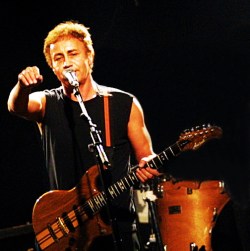
After a lengthy musical career that has included playing bass in The Beatstalkers and in The Only Ones Alan is preparing to release his debut single Four Winds, which comes out on his own IKA Records on December 19tth 2014. Alan’s strong voice is a revelation – singing with Peter Perrett for so long has clearly left its mark and there’s some Bowie in the mix. Keyboards feature prominently, as do the guitars of Zal Clemlinson, a friend of Alan’s from way back.
Alan has been playing music since 1962 so it has taken him a while to get round to a solo career: why now? “A solo career has been at the back of my mind for a long time. It was the Beatstalkers reunion at Barrowlands in 2005 that triggered my desire to get the Only Ones back together. Until then I’d never missed playing bass, because I was always doing stuff in my own studio, Field Studio. I spent a lot of 2006 going to and fro, first Mike Kellie said he would do it, then John Perry said he would do it. I saw Peter three times, finally he said yes in September but he was still using drugs at that point and now he can’t even remember me coming to his house to ask him. Sony offered to put some money up because they were putting out the best-of CD. I had been thinking about doing something on my own but the Only Ones took over full on for the next five years.”
“Then things went a bit flat and I was tired of running everything – merchandising, signing contracts, dealing with promoters and then going onstage. So I thought it was time for me to put all this effort into my own material. I have always written and this seemed so long overdue. I’ve got fifty or sixty songs, some recently written and some stockpiled over the years. On the single I’m playing bass, I did most of the drums, little bit of keyboards and all the production. The album will be called Field Of One. Releasing the single is the first step to create an interest in the songs that I do. I’ve already got the next single “Stairway To Hell” planned, using Ted McKenna on drums and Zal on guitar.”
We are talking over the kitchen table in Alan’s Camden cottage a few days after his return from Tokyo, where the Only Ones played three dates with the Flamin’ Groovies. “Japan went really well – the Groovies were great guys. We talked about playing some more co-headlining dates together in the States, and some here in the UK.”
“It was very strange physically going to Japan without Kellie and a bit sad. I was apprehensive at the first couple of rehearsals with Jake from Strange Fruit playing drums but he is such a good, solid drummer and he was very quick to pick up the full set, we probably only had three rehearsals as a full band. We also had Jamie Perrett on rhythm guitar. Peter can run out of energy on stage so if he stops playing Jamie can pick up those rhythms. I always stand on the right onstage, but we decided it would be better for Peter and Jamie to be together so they could hear each other so I moved over to between John and Jake. It felt different playing besides John and he seemed to play differently with fuller chords. I just loved the way he was playing, sort of a more Towshend-y Vibroking sound. Suddenly it felt like a real powerhouse rock band, without blasting out Peter. It went from being one of the worst soundchecks I’ve ever done to one of the best gigs”
The hiatus in Only Ones activity dates back to some unsuccessful recording sessions from 2009-2011 held at at the London studio Fortress and at Wincraft, Steve Winwood’s studio in Gloucestershire. Alan likens the situation to a marriage. “If people who used to be married try to get back together again sooner or later they get to ‘she’s still doing that’. Suddenly it felt like an extension of the third album – we went from doing fantastic gigs to being very uninspiring in the studio. Most of the blame was put on Kellie for the studio not working but it wasn’t all his fault. Then we just drifted apart. When we did the first two Only Ones albums and the Peel sessions we were so on fire – four tracks in three hours, but we can’t do that anymore. But Peter’s new songs are great.”
“We did think about releasing ‘Transfixed’ from Wincraft as a single because that is a recording that kind of works, ‘C Voyageur’ is another possible one. I did a lot of work on Transfixed here in my studio, editing and checking bits and pieces. I’ve always loved Transfixed as a song, plus me and John do the backing vocals onstage, more so than on any other song.”
Alan is now more optimistic about the Only Ones future. “Something had to change. Now there is definitely a renewed appetite to go back into the studio.. Initially there was no suggestion that we would take Jake and Jamie on tour it was going to be just the studio, but then we got the offer from Japan.”
Another exciting project on the horizon is the possibility of releasing the legendary 1979 Only Ones gig from Minneapolis on DVD. Apparently two fans who didn’t know each other recorded the gig, one filming on Super 8mm film and the other recording on tape. Alan has now managed to synchronise the images and the sound which means that for the first time we may get to see a complete Only Ones gig from their first time around, if a suitable means of distribution can be identified. Also on the horizon is an update of Nina Antonia’s book on the Only Ones, to include their more recent activities.
And there might even be some Alan Mair solo gigs. “If I do some dates I might do My Way Out Of Here” This song, written and sung by Alan, closed the Only Ones third album but was never played live. “We recorded My Way Out Of Here and one of John’s songs because at the time Peter wasn’t coming to the studio much. I just got tired of being in the studio, sitting around. Producer Colin Thurston played bass and I played guitar. I was going to keep it for myself but once it was finished Muff Winwood and Howard Thompson from CBS came down and they really liked it. We took a vote as to whether it should go on the album and everyone voted Yes except Peter.” Ironically due to a CBS cock-up the track was mistakenly credited to Peter on the first 20,000 copies of the LP and only now, thanks to the Sony remasters, is Alan getting due credit. He is philosophical about such matters and retains a remarkably positive outlook as he looks forward to releasing more solo material and working with a re-energised Only Ones in 2015.
Omnivore Recordings
Now this is an unexpected delight. The only live Big Star DVD I have ever seen is a grainy lo-fi souvenir of the debut performance of this line up from Columbia University in April 1993, worth watching for Alex Chilton’s masterful non-interview with MTV and a spirited encore of Jeepster. Live In Memphis is a huge advance. Original Big Star members Chilton (guitar, vocals) and Jody Stephens (drums, vocals) had been playing regularly with new recruits Jon Auer (guitar, vocals) and Ken Stringfellow (bass, vocals) for a further 18 months by the time this concert took place at the funky New Daisy Theatre on Beale Street in downtown Memphis. As a result they play with the relaxed ease of a band that knows its songs and knows itself.
The concert was recorded on four cameras, some extremely close to the action giving rise to the sleeve notes claim “this show is better than front row”. Producer is Danny Graflund, who first entered Chilton’s erratic orbit during the making of Big Star Third when he was hired as bodyguard and drinking buddy. Somehow he has charmed a warm and relatively outgoing performance from Chilton, including the world’s lamest version of the Roger Daltrey Microphone Lasso. By contrast Chilton’s guitar playing is effective and economical, exchanging leads and rhythm parts with Jon throughout.
Picture quality is crisp, despite the tapes languishing in a cupboard for twenty years. The music gets off to a slightly murky start with opener In The Street as the desk was not ready and so the song was recorded on video camera microphones. From second track Don’t Lie To Me all is well – Jody sounds almost Bonzoid, the guitars of Alex and Jon intertwine and Ken’s Hofner Violin bass underpins it all. There are some goofs but this just makes the concert warmer and more human. Musical highlights are the harmonies on I Am The Cosmos, Jody’s vocal on Way Out West and a rocking Baby Strange. Intriguingly the CD and LP versions of this concert list a performance of Fire (Springsteen rather than Hendrix): it turns out to be a 35 second fragment which is not included on the DVD for licensing reasons. The band get such a strong reaction that after an impromptu Girl From Ipanema and a sturdy Patty Girl they are persuaded back onstage a third time. Sadly it is to perform Todd Rundgren’s Slut, a grubby tune of which Alex was inexplicably fond.
Alex’s death means that we will never again be able to enjoy these songs sung by him. So it is wonderful to have a permanent record of the band in action, recorded professionally in front of an enthusiastic hometown crowd. Thank you, friends.
Sony Legacy 2CD
The Kinks most ungainly LP title just got even more awkward. Predictably any chance of 50th year anniversary gigs seems to have dribbled away (maybe next year?) so aside from the play Sunny Afternoon the focus is re-releases. A 5CD box set has waddled into sight, which despite restricting itself to the Kinks Golden Years of 1964 – 1971 still manages to avoid including anything interesting to the HardKore Kollector. So instead let me recommend this more modest proposition – an expanded version of the 1970 Lola LP which now includes the soundtrack to the ill-fated film Percy. The 13 tracks from the original Lola… release benefit from a sparkling digital remaster courtesy of Andrew Sandoval and the additional sonic detail shows what a great studio band the Kinks had become, particularly noticeable on the instrumental version of The Contenders where Dave Davies really lets rip. John Goslings organ is prominent (a very KInky thing to say), and the sometimes rickety rhythm section of Mick Avory and John Dalton is bang on throughout. Whilst Ray skewers the music biz on Denmark Street, The Moneygoround and Top Of The Pops Dave provides one of his most tender ballads in Strangers. Extra tracks add real value. Best is a new-to-me song called Anytime, which would have been a catchy addition to the original LP. Lovely joint lead vocals from Ray and Dave and almost country picking on the guitars. The other new song here The Good Life has a plodding Stonesy rhythm and a mundane Ray lyric. An alternate version of Lola is all the poorer for missing those familiar strident opening chords but an unreleased Apeman has lots more Dave (including a Chuck Berry break in the middle) and is more fun than the familiar version, if less commercial.
Lola gave the Kinks their biggest hit for 4 years so what did their legendarily-useless management do? Saddle them with writing the soundtrack to the film Percy, a vehicle for Hywel Bennet whose dismal plot is based around a penis transplant. The complete commercial failure of the film has resulted in the Kinks soundtrack LP being the most overlooked in their career. None of the tracks appear to have any lyrical relationship to the film itself, making me wonder how much material was written to order as opposed to being stray songs that Ray had lying around. It is patchy, in the way of most soundtracks but there are some real gems. Pye released a terrific 4 track EP in 1971 containing God’s Children, The Way Love Used To Be, Moments and Dreams and these four tracks are indeed the best songs here by some distance. You do need to hear John Dalton extolling the virtues of Willesden Green, but you only need to hear it once. Completely shows the Kinks could play a 12 bar blues just as boringly as could any of their contemporaries.
Percy freed the KInks from their straightjacket of a contract with Pye and they fled to greater artistic freedom at RCA who in 1971 released Muswell Hillbillies, which sleevenote writer Peter Doggett describes here as “magnificent”. I never liked the cod music-hall and country-and-NorthLondon of that LP and I liked the interminable concept albums and Amerikan Orientated Rock that followed even less. Aside from an occasional gem (Celluloid Heroes, Sitting In My Hotel Room) Lola.. and Percy marked the end of my fascination with the Kinks. This release does those two records proud and brings the Pye era to a dignified close.
Angel Air SJPCD450
Recorded live at the Royal Albert Hall on April 8th 2004 this 39 track 2CD set offers an encyclopedic overview of songs written by or associated with the much-missed Ronnie Lane. It’s a fabulous body of work, with equal emphasis placed on Ronnie’s time with the Small Faces, Faces and his solo career with Slim Chance. The expected classics are here but a spotlight is shone on overlooked gems such as B-side Done This One Before, here faithfully reproduced by Ocean Colour Scene. The atmosphere of the evening does not transfer to CD so we are left with the performances only. Unfortunately too many of these are respectful but pedestrian pubrock, the exceptions being the most experienced performers. Paul Weller fronts a careful reading of The Poacher, where the original intricate arrangement is accurately recreated live. Pete Townshend revives Heart To Hang On To from Rough Mix, the album he made with Lane, and it’s a fine passionate performance done here with Sam Brown. Steve Ellis manages the tricky Afterglow well whilst Chris Farlowe is an inspired choice to front an emphatic encore of All Or Nothing. Ronnie Wood revisits his Plynth intro for Stay With Me, but the rest of his performance lacks lustre. All credit to tireless Small Faces promoter John Hellier for pulling the evening together. If you were there this makes a great souvenir but otherwise it’s likely to drive you back to the originals.
By guest writer John Perry
Bantam
Press 366p £20
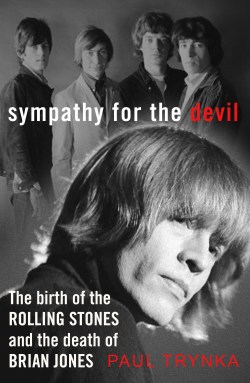
So many new books about the Rolling Stones are published each year that duplication becomes the norm. Most simply recycle the familiar story from other, older Stones histories. Myth accumulates, errors proliferate and the quality of information is degraded. Paul Trynka’s biography of Brian Jones is something quite different: a thorough and, above all, well-researched trawl through the old, old story. The author speaks to most of the primary sources still living and turns up enough new information to satisfy hardened Stones-watchers.
Brian Jones has not been especially well-served by biographers. With so much futile energy expended on his unresolved death – and silly conspiracy theories developed to help sell second-rate paperbacks – it is good to read an account that focuses upon Jones’ part in bringing Blues and R&B into the mainstream. Brian’s is a complex personality to unravel. Almost universally liked by his contemporaries (McCartney, Hendrix, Townshend et al) and almost universally disliked by his own band; only Bill Wyman ever seemed to have a good word to say for him. Trynka is sympathetic to Brian; rather less so to Jagger/Richards, the victors in the slow-burning, internecine struggle that saw Jones gradually sidelined, ridiculed and rendered obsolete in the band that he’d founded. The author rightly points out the almost Stalinist revisions that saw Brian’s contribution written out of the band’s 50th anniversary celebrations. One can only speculate why, even after 50 years, the two principal Stones still feel the need to dismiss Jones’ achievements. No money in it, perhaps.
Jones’ number was up the moment Andrew Oldham entered the picture. Oldham took an almost instant dislike to him at the Crawdaddy Club and lost no time promoting Jagger/Richards as head Stones while giving Jones the freeze out. Ironically, had Brian lived into the 1970’s, he would probably have haunted the same diminishing circles as Loog Oldham; forever doomed to try and top his earlier work. Second acts aren’t unknown in rock’n’roll but striking gold twice is unusual.
When reading biography, one generally skips the early years, passing over childhood and school and starting where the action begins. Not the case here. Paul’s account of Brian’s Cheltenham childhood (and quite remarkably fertile) teens is one of the most original parts of the book and every bit as readable as more familiar scenes in Morocco and Monterey. Without making excuses for Brian’s many failings the author examines Jones’ evident self-destructiveness and his crippling lack of confidence. There are two schools of thought here. One, the Stones Authorised Version supported by Glyn Johns and the late Ian Stewart, holds that Brian was two-faced and brought about his own fate through reckless drug use and lack of self-discipline. The other camp maintains that Jagger/Richards and Andrew Oldham quite deliberately ground Jones down, once they’d taken from him everything they could use. As George Harrison puts it, there was nothing much wrong that wouldn’t have been cured by a little kindness.
There are a couple of points where I take issue with Paul. The first is the claim that it was Jones, not Ry Cooder, who taught Keith Richards open G tuning – the guitar sound that defines the Stones from ‘Honky Tonk Women’ on. Yes, Brian played slide guitar in open G as far back as ‘Little Red Rooster’ (1965) and probably much earlier. The Chess Records sessions are dominated by this style – but Brian plays a straight Muddy Waters-style open G (c.f. ‘I Cant Be Satisfied’) not the staggered, syncopated 5-string version of open G that Richards unquestionably adapted from Ry Cooder. This latter style, with it’s strange new chord shapes, first appears in 1969 and is fundamentally different in conception and execution. That Cooder is the true source is easily demonstrated; try and find one Stones recording with that ‘Honky Tonk Women’ style, that predates Ry Cooder’s 1968 sessions for the band. You won’t. Cooder is hired; Richards figures out his chord shapes, does a sponge job on the tapes, and in a flash the Mark 2 Stones sound arrives, fully formed.
None of this diminishes Brian’s earlier role. As the author points out, in 1962 England, Jones and Alexis Korner were probably the only people playing bottleneck blues. Within five or six years the Great British Blues Boom was in full plod as a thousand Beat Groups morphed into ‘Blues Bands’, thumping out clunky versions of Elmore James. The trail leads back, through folk clubs and blues societies, to Brian’s pioneering bottleneck. That Jones was hounded by the cops and the gutter press is undeniable. Those who wished to see the upstart Stones done down, quickly realised that Jones was the weakest link; a much easier target than the well organised Mick Jagger and the mentally tougher Keith Richards. Jones was systematically harassed until his nerve broke. Trynka covers the busts and trials in convincing detail. I wish he’d used the term ‘the Establishment’ a little less freely: some less vague and emotive term such as ‘the authorities’ might have been better. Nobody doubts that some very dirty work went down in the reaction to 1967’s flamboyant displays – Chelsea nick might as well have been Chelsea Flower Show as far as planting was concerned – but sometimes bent coppers are just bent coppers looking for a bribe; not every duplicitous nark is a part of an Establishment plot. Indeed, if you look at the Lewes trial that followed the infamous 1967 Redlands bust, the ‘Establishment’ figures are mostly in the Stones camp. Their barrister, Sir Nigel Havers QC and William Rees-Mogg, the Times editor who penned the influential ‘Who Breaks A Butterfly’ first leader, were infinitely more ‘Establishment’ than the Sussex coppers and the rather silly Judge Block – leading light of the Horsham Ploughing and Agricultural Society, whose summing up in the trial violated so many basic tenets of jurisprudence that a successful appeal was almost guaranteed.
There are some minor errors in the account of Brian’s drug use. Pharmaceutical cocaine was never legal (in Jones’ lifetime) except on prescription. And Mandrax, that archetypal late-60’s drug, was not a sleeper but an hypnotic; an important distinction since Mandies effectively allowed people to walk around whilst asleep. The drug became synonymous with people falling downstairs, crashing into walls, and knocking out teeth, but Trynka correctly dates the acceleration in Jones’ decline to his switch from barbiturates to Mandrax. Those bloated, zombie-like photos of late-period Brian convey the message perfectly. But these are very minor quibbles.
You should read this if you love the Stones first line-up, recognise Brian Jones for the star he was, or enjoy the ease with which he moved between accordion, harpsichord, sitar, dulcimer, marimbas, recorders, vibraphone and mellotron, transforming some pretty prosaic songs into magical recordings. Paul’s book seems likely to become the standard work.
John Perry, Somerset 2014
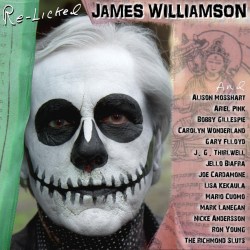
Iggy and the Stooges guitarist James Williamson has just released his Re-Licked CD (Leopard Lady Records), featuring a selection of vintage Stooges songs that have never previously been captured in a studio to James’ satisfaction. Vocals on these new recordings are supplied by a variety of guests, with James on lead guitar throughout.
“Most of these songs were written after Raw Power was released and we had been dropped by Mainman and we were beginning to tour the US under new management. We were still under the belief that CBS/Columbia Records would pick up their option for us to record a second album for them. All of this was around the1973-74 timeframe. We wrote these songs fairly quickly and were playing them live, as was our usual way. Of course, they would be bootlegged as was very common in those days. However, the record company decided not to pick up the option for us to do the album, so all that remained was the bootlegs, although a couple of things like Johanna did show up on the Kill City LP. There are also a couple of songs included on this album from early demo sessions before Raw Power, namely I Got a Right and I’m Sick of You, one of the earliest songs I ever wrote with Iggy.”
So why do this project now? “I have always wanted to hear these songs recorded properly, I feel that they are some of our best writing, certainly a tribute to the song writing of Iggy Pop and James Williamson. Iggy and I discussed doing this before we did ‘Ready to Die’ in 2013, but decided against it as the obvious comparisons between the young Stooges and the older Stooges would surely be drawn. Instead after our final tour date last September, I decided to try a new arrangement of ‘Open Up and Bleed’ that I had come up with while on tour. I sought out a female singer who could really belt out a song the way the Janis Joplin used to and found Carolyn Wonderland, who is a singer with the voice that Janis would have wished she had had. Once that went so well, I decided to go ahead and do a full blown album of all of this material.”
Re-Licked is a comprehensive collection of the pre Kill City material. “I did pretty much all of the songs from that period of time, at least the ones that were do-able. I selected the singers based on their own styles, availability, interest and enthusiasm and was very pleased with the results.” The singers James selected include Lisa Kekaula from the BellRays, who performed a similar role in the MC5 / DKT touring project. “I had heard about DKT only after I had already done the track with Lisa. It’s a cool concept that works really well with the right singers…in my case, I wasn’t trying to make this a version of the Stooges but rather an interpretation of the songs.”
Re-Licked contains some gems, but inevitably it is an uneven selection. The lead-off single ‘Open Up And Bleed’ is a highpoint, Carolyn’s’ soulful wail counterpointed by some delicate accoustic guitar picking. Slower, less well known songs such as She Creatures Of The Hollywood Hills and Til The End Of The Night do better than the likes of Cock In My Pocket and other raucous rockers. The only uptempo track that convinces is Wet My Bed where James flaunts his best Chuck Berry riffs. Also recommended is Wild Love, where Mark Lanegan and Alison Mosshart channel a sleaze-rock Sonny and Cher. Overall Re-Licked is well worth a listen: properly recorded and no longer mired in sub-bootleg mire, the songs do indeed shine through.
Sadly a live version of Re-Licked seems unlikely. “Well, I would love to play this material live, but with 14 well known working singers, it’s nearly impossible logistically. That said, if some promoter wants to put together a showcase in a major city like London, Paris, NYC, LA or Sydney…I’d be thrilled to do it as I know the singers and musicians would be as well. We could tour as James Williamson And…” Apparently Iggy views the project with mixed feelings. “Well, he has vacillated from wishing it all success, to saying he was never asked, to back to wishing it well and thanking all the singers…he’s likely heard the singles so far, but very few people have heard the album yet. I’ll send him one after it gets released. Just for the record he has been asked to participate but has not responded.”
And why is James known as Strait James Williamson these days? “It’s a kind of inside joke. In the song ‘The Dum Dum Boys’ Iggy sang the line “James, he’s gone straight”…so I named my music publishing company Strait James Music, Straight isn’t distinctive enough for a publishing name” .
 Only Rock 'n' Roll