
Available now from http://www.1960s.london

Can – In Concert At The BBC 1973
Tracklisting
Side One
- I’m So Green
Side Two
- Pinch
Tracks written by Can ( Czukay / Karoli / Liebezeit / Schmidt / Suzuki )
Recording Details
Tracks recorded for BBC Radio In Concert live at The Paris Theatre, London on February 19th 1973, transmitted March 3rd
Recording Quality
Excellent throughout
Personnel
Holger Czukay – bass
Irmin Schmidt – keyboards
Michael Karoli – guitars
Jaki Liebezeit – drums
Damo Suzuki – vocals
Sleevenotes
“Music of nuance, endlessly listenable and performed with an ear for detail so finely developed that it makes the majority of top-flight Anglo-American outfits look about as sensitive as a bunch of Sumo wrestlers trying to waltz.” Ian McDonald, writing about Can in the NME (January 1974).
For a band that ceased to exist in 1979, Can continue to exert a significant influence over today’s music scene. Public Image Limited, The Fall, Primal Scream, Siouxsie and the Banshees, Pete Shelley, Brian Eno, Happy Mondays and Radiohead have all cited Can as an influence. Even LCD Soundsystem and Oasis have recorded Can-influenced material.
To understand Can’s continued popularity and significance we need to look at how and why the band formed. Keyboard player Irmin Schmidt was a classical musician, conducting orchestras by the early 1960s but also fascinated by Ligeti, La Monte Young and the Velvet Underground. Studying composition at the Stockhausen International Summer School for New Music he met music teacher and bass player Holger Czukay. Said Schmidt ”Jaki Liebezeit, our drummer, had been playing free jazz in the most advanced group in Europe, while Michael (Karoli) had been playing guitar for pure pop groups. Damo (Suzuki, vocalist) who joined us later, had just been singing in the streets. The group really came about by chance in ’68. We all came together because we were fed up with what we had been doing before. We just wanted to be with other people exploring different musical fields. The only thing we had in common was that we all wanted to play music that was spontaneous.”
This love of spontaneity and the band members ability to interact musically in real time meant that Can stood apart from their UK and US contemporaries. Whereas ‘progressive rock’ behemoths aimed in concert to recreate exact facsimiles of their increasingly lengthy and complex LPs, Can were more interested in catching something more fleeting and more vital. Schmidt was adamant that every Can performance would be unique. “When you’re inventing onstage that means you’re totally dependent on everything that surrounds you, from the first moment you come on the reaction of the public and feeling it gives you, the lights, sound, acoustics. Everything is influencing you and of course every time it’s different. The location is different, the public is different, so you immediately react to that.”
In 1971 the single Spoon became a top ten hit in Germany after being used as the theme song to the television mini-series Das Messer. The success of the single allowed Can to establish their own Inner Space studio in North Rhine-Westphalia. Here they recorded the rest of their third album for United Artists, Ege Bamyasi (November 1972). Promoting this LP during their second UK tour in February 1973, Can recorded expanded versions of the tracks I’m So Green and Pinch for In Concert. No attempt was made to recreate the original studio tracks. Instead, in the words of long-time Can watcher Kris Needs “familiar riffs, melodies or grooves appear fleetingly like passing scenery on a train.”
There are some constant elements. Schmidt’s keyboards veer from elegiac melody lines to violent rhythmic stabbing. Suzuki’s vocal improvisations use words for sound rather than meaning. Czukay’s precision bass lines hold the band together, underpinned by the relentless power and pace of Liebezeit’s motorik drumming. Karoli’s guitar glides melodically over the music before switching to scratchy funk.
This version of the band would only record one further LP (Future Days, 1973) before Suzuki left the band to marry his girlfriend and become a Jehovah’s Witness. A re-issue programme starting in 2021 has resulted in five live LPs covering the period 1973-1977. Leaving out this fine recording is inexplicable and we are happy to remedy the omission.
Sleevenotes: Ivan T Moore


Kraftwerk – Gondel Kino Bremen 1971
Tracklisting
Side One
- Heavy Metal Kids
- Ruckzuck
Side Two
- Von Himmel Hoch
- Rückstoss Gondoliere
All tracks written by Ralf Hütter and Florian Schneider
Personnel
Florian Schneider – flute, electronics
Michael Rother – guitar, electronics
Klaus Dinger – drums
Recording details
All tracks recorded live at Gondel Kino, Bremen on June 25th 1971 and broadcast on Bremen Radio
Recording quality
Excellent throughout
Sleevenotes
Writing in UK newspaper The Telegraph, Neil McCormick wrote that “Kraftwerk might be the most influential group in pop history“. In 2005 NME wrote: “‘The Beatles and Kraftwerk’ may not have the ring of ‘the Beatles and the Stones’, but nonetheless, these are the two most important bands in music history“. AllMusic wrote that their music “resonates in virtually every new development to impact the contemporary pop scene of the late 20th century.”
The image of Kraftwerk that exists today is that of four immobile men on stage who are dressed identically and all play keyboards. The music they produce contains melody but it is draped over a relentless chugging beat. However in their early days, Kraftwerk were a very different proposition. Founders Ralf Hütter and Florian Schneider met as classical music students at the Düsseldorf Conservatory and recorded Tone Floats, an LP of free-form improvisation under the name Organisation zur Verwirklichung Gemeinsamer Musikkonzepte (Organisation for the Realisation of Common Music Concepts). In 1970 Hütter and Florian began making music under the name Kraftwerk (German for ‘power station’), adding drummer Klaus Dinger and adopting a more disciplined musical approach. By the time of this concert Hütter is absent, having temporarily left the band to focus on his university studies. Dinger and Schneider are joined by guitarist Michael Rother.
In interviews the band claimed a musical affinity with the Detroit proto-punk scene of the late 1960s, citing the Stooges and MC5 for special praise. The tracks recorded here bear this out to some extent, with some very heavy guitar and pounding drums. Heavy Metal Kids may be a title that was intended ironically but it is very accurate (and no relation to Todd Rundgren’s song of the same name). Initially played at a slow pace this dirge has more in common with Black Sabbath than Terry Riley. Dinger’s drums provide a secure backdrop for Rother’s guitar explorations. The track gets more exciting as it speeds up before finishing abruptly. The next two tracks appeared on Kraftwerk 1. In complete contrast the introduction to Ruckzuck (‘right now’) isperformed by Schneider on flute before Rother plays a very catchy riff: the interplay between flute and guitar runs right through the song, resulting in a more dynamic version than the original track.The audience clap along spontaneously whilst Dinger channels Moe Tucker. Von Himmel Hoch (‘from heaven above’) at first seems more of the same slow-paced guitar lope that Neil Young was then perfecting with Crazy Horse until Dinger steps up the pace. Finally Rückstoss Gondoliere features what sounds like a distorted electric violin, or maybe a violin bow on guitar strings.
This line-up of Kraftwerk was short-lived as Rother and Dinger would leave to form Neu! later in 1972. Hütter would rejoin Schneider for the LP Kraftwerk 2 (1972)where the industrial rhythms of opening track Klingklang showed the way ahead, both for Kraftwerk and (eventually) for modern music. It was the following LP Autobahn (1974) and its single of the same name that would finally expose Kraftwerk to an audience beyond Germany. An invitation from David Bowie to be the support act on his Station To Station tour followed: it was declined. Their affect on Bowie was significant (as was that of Neu!), and from him they influenced synth-pop bands such as Ultravox, Soft Cell and The Human League. The music of Kraftwerk also struck a chord with American dance DJs in key cities such as New York and (especially) Detroit where Kraftwerk’s rhythms became a key constituent of Techno. The music presented here represents a road not taken for Kraftwerk but offers a fascinating view of other possibilities.
Sleevenotes: Otto Barne
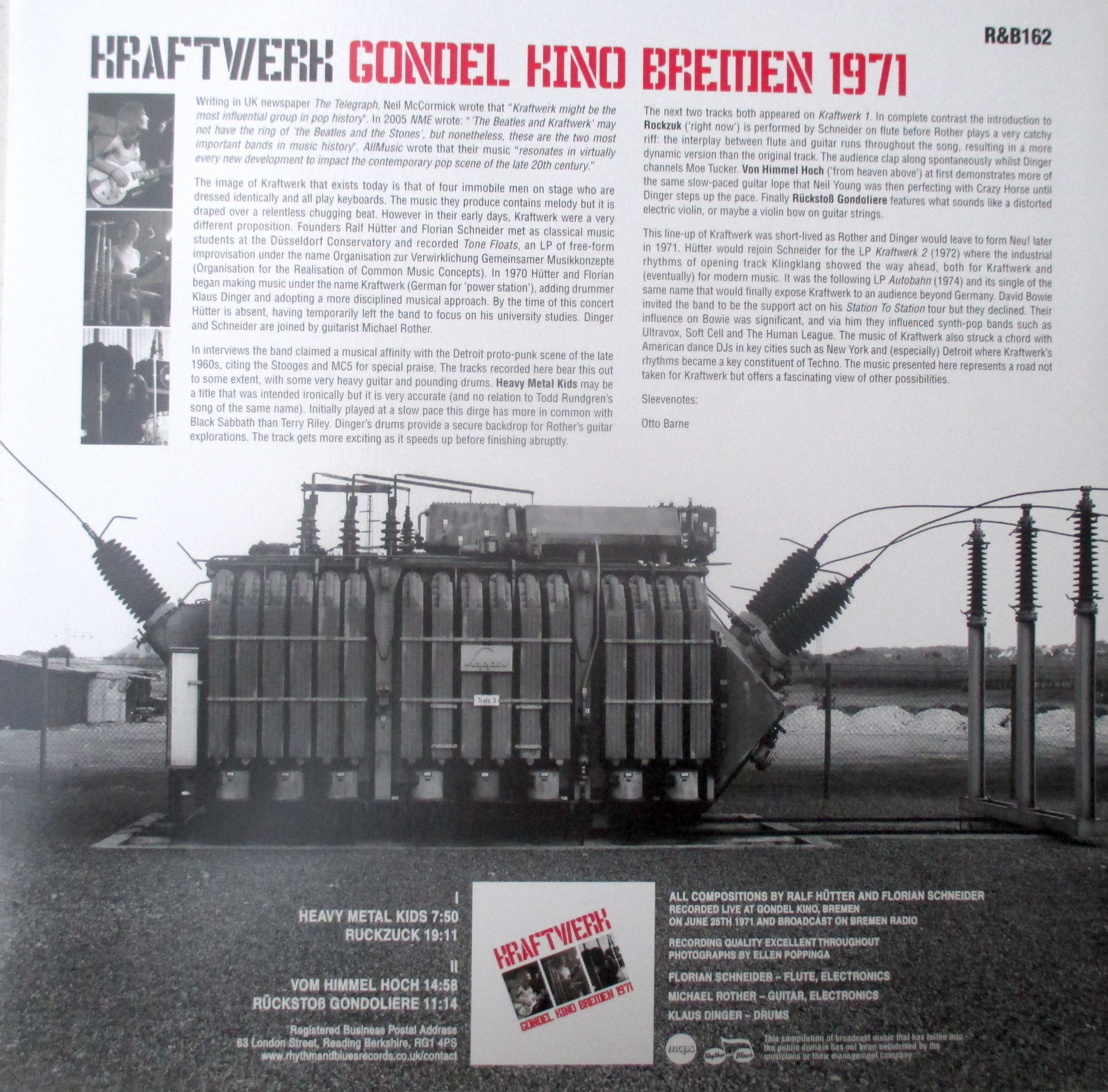
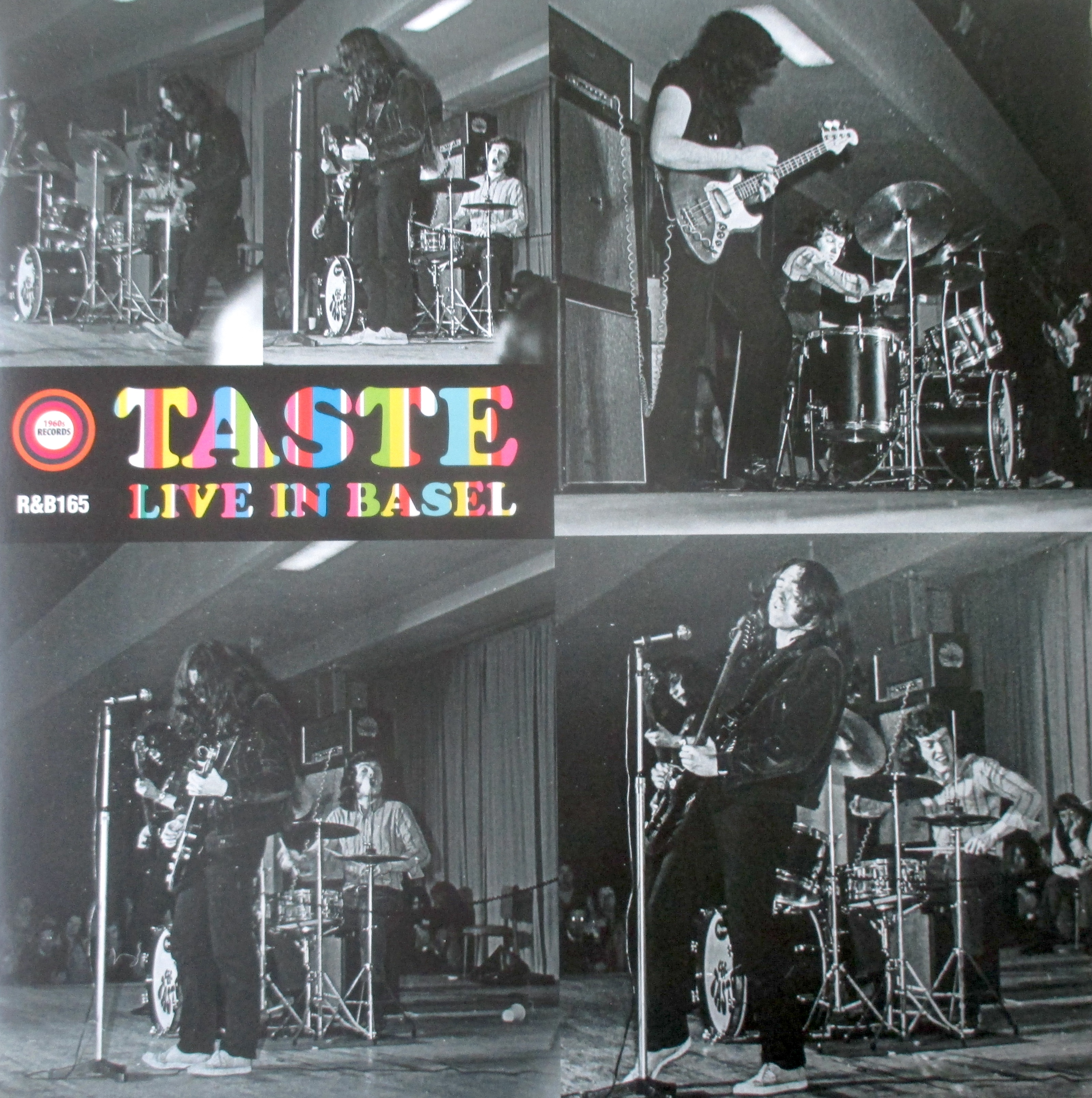
Taste – Live in Basel 1970
Side One
1. Morning Sun (Gallagher)
2. Sugar Mama (trad arr. Gallagher)
3. I’ll Remember (Gallagher)
4. Walkin’ Blues (House)
Side Two
1. Eat My Words (Gallagher)
2. Railway And Gun (Gallagher)
3. What’s Going On (Gallagher)
4. Same Old Story (Gallagher)
Recording Details
All tracks recorded live at the Stadhalle, Basel on February 1st 1970 and broadcast on Swiss radio
Personnel
Rory Gallagher – guitar, vocals, harmonica
Richard “Charlie” McCracken – bass
John Wilson – drums
Sound Quality
Excellent throughout
Sleevenotes
“Taste is from the new wave of British Blues bands, breaking through the slavish rote of their predecessors into a new form that can only be called progressive blues. In other words they use black American music as the starting point from which to forge their own song forms and embark on subtle improvisational forays. Taste is evolving into much more than just another heavy voltmeter trio…”
Lester Bangs, Rolling Stone (1970)
Our first release by Taste – Radio and TV Broadcasts (R&B99) – focused on their earliest studio recordings from 1968 and 1969. By 1970 Taste had developed into a fearsome live act, as shown by this recording taken from their spring European tour. Five tracks are taken from Taste’s second studio album On the Boards (1970): two are from debut LP Taste (1969). Their version of Son House’s Walkin’ Blues was never released on a Taste studio LP.
Taste’s reputation as hard-rocking blues-rockers had resulted in praise from John Lennon who attended a Marquee gig and said “I heard Taste for the first time the other day and that bloke is going places.” Eric Clapton was similarly impressed and insisted that Taste support Cream at their farewell Royal Albert Hall concerts. According to Donal Gallagher, Rory’s brother and road manager, Rory was asked to take over from Clapton in a second version of Cream but “Rory wouldn’t have a bar of it.” Despite two well-received LPs on a major record label and headlining tours in the UK and abroad the band were being paid a miserly weekly salary by manager Eddie Kennedy. According to Donal, a backstage visitor asked him about the beer and food provided for the band and crew. His reply was “This band don’t get any. What’s it to you? He replied ‘I’m Peter Grant and I manage bands and Taste should be treated better than this.’ ”
These off-stage problems were not discernible from Taste’s onstage performance in Basel. The band can barely wait for the MC to finish his introductions before launching into Morning Sun. Quiet sounding choruses are interspersed with rocking verses, Gallagher playing with the intensity of a set-closer rather than a set-opener. A brief “thank you, good evening, welcome” before the traditional Sugar Mama starts off with Rory unaccompanied before being joined by the rhythm section of McCracken (bass) and Wilson (drums) for a slow-paced blues reminiscent of the first Jeff Beck Group. A short introduction to the band precedes I’ll Remember which includes an uncharacteristically busy Gallagher soloing over a jazzy backing. Walkin’ Blues is played by Gallagher solo on bottleneck.
Eat My Words builds to a slide-driven crescendo, followed by a quieter passage when Rory plays both guitar and harmonica simultaneously, ending with a rave-up similar to that achieved by his beloved-Yardbirds. The introduction to Railway And Gun is quiet, before the song develops into a heavier, swinging twelve-bar featuring some of Gallagher’s most impassioned soloing of the night. What’s Going On is another number featuring alternate quiet and loud passages – the rhythm section are an integral part of this number whilst Gallagher investigates how long he can hold a single note. For an encore the band play a short and sharp version of fan-favourite Same Old Story complete with a melodic Gallagher solo.
Later that summer Taste would triumph at The Isle Of Wight Festival but it was not enough to overcome the disputes with Eddie Kennedy and tensions between Rory, McCracken and Wilson. Taste played their final gigs in Belfast on New Year’s Eve 1970 after which Gallagher signed a solo recording contract with Chrysalis Records and made much more great music. An example of this is our release of Rory Gallagher In Concert At The BBC (R&B145): think of it as an after-Taste!
Sleeve Notes
Marie Thyme-Hautelle, with thanks to Garth Cartwright
Great to see so many record shops stocking Trash’s new single Matter Of Time ahead of its official release on Record Store Day (April 12th) – details here
In addition to the limited edition 7″ vinyl (only 350 copies) there will also be a download version available – I see Juno are already listing this
Demand will undoubtedly increase following the Trash article in the new edition of Record Collector Magazine magazine, available later this month.
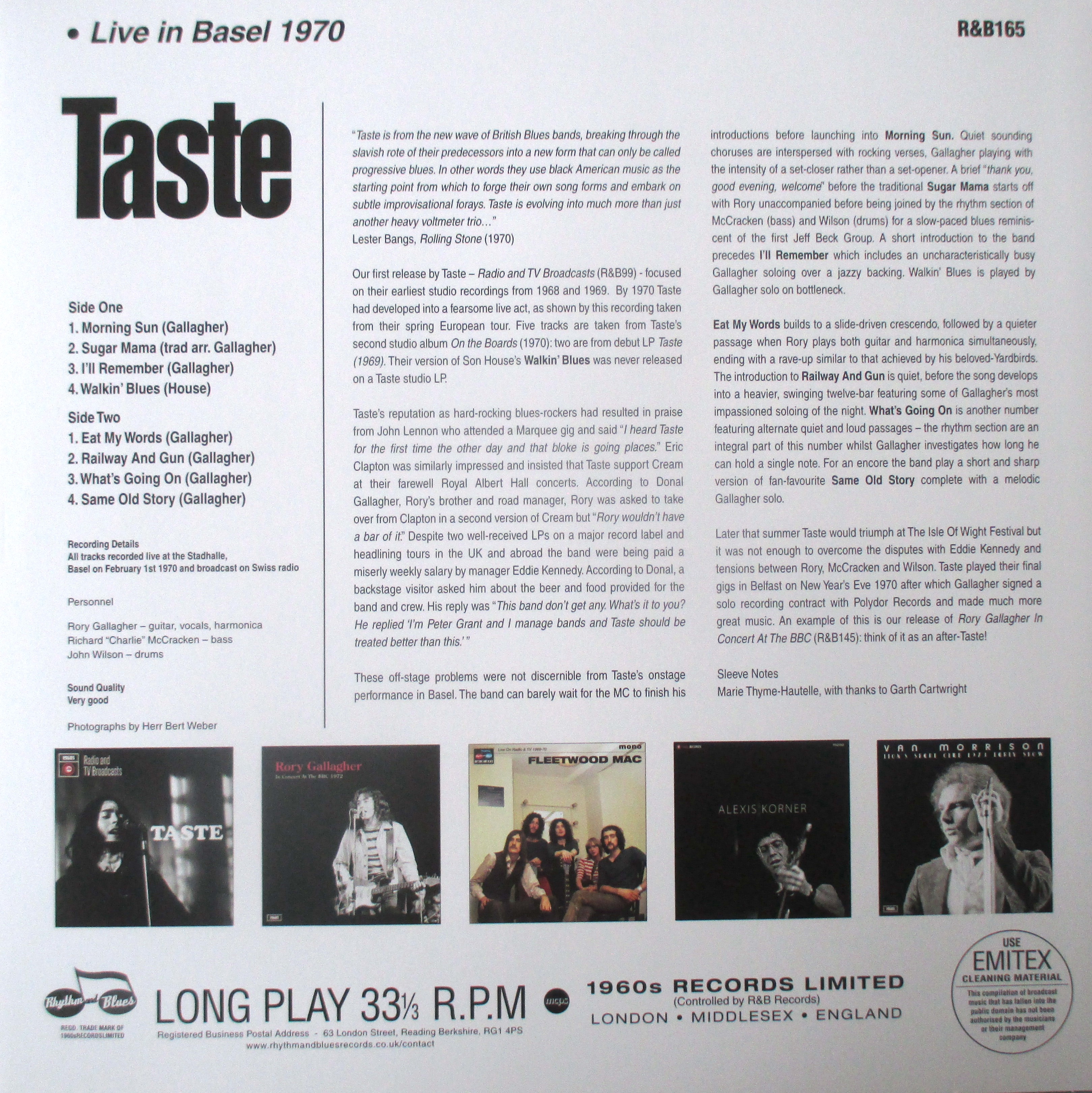
As we approach the release of our new single, here’s a summary of the last 49 years! Done in the style of the legendary Pete Frame, but more a Family Twig…
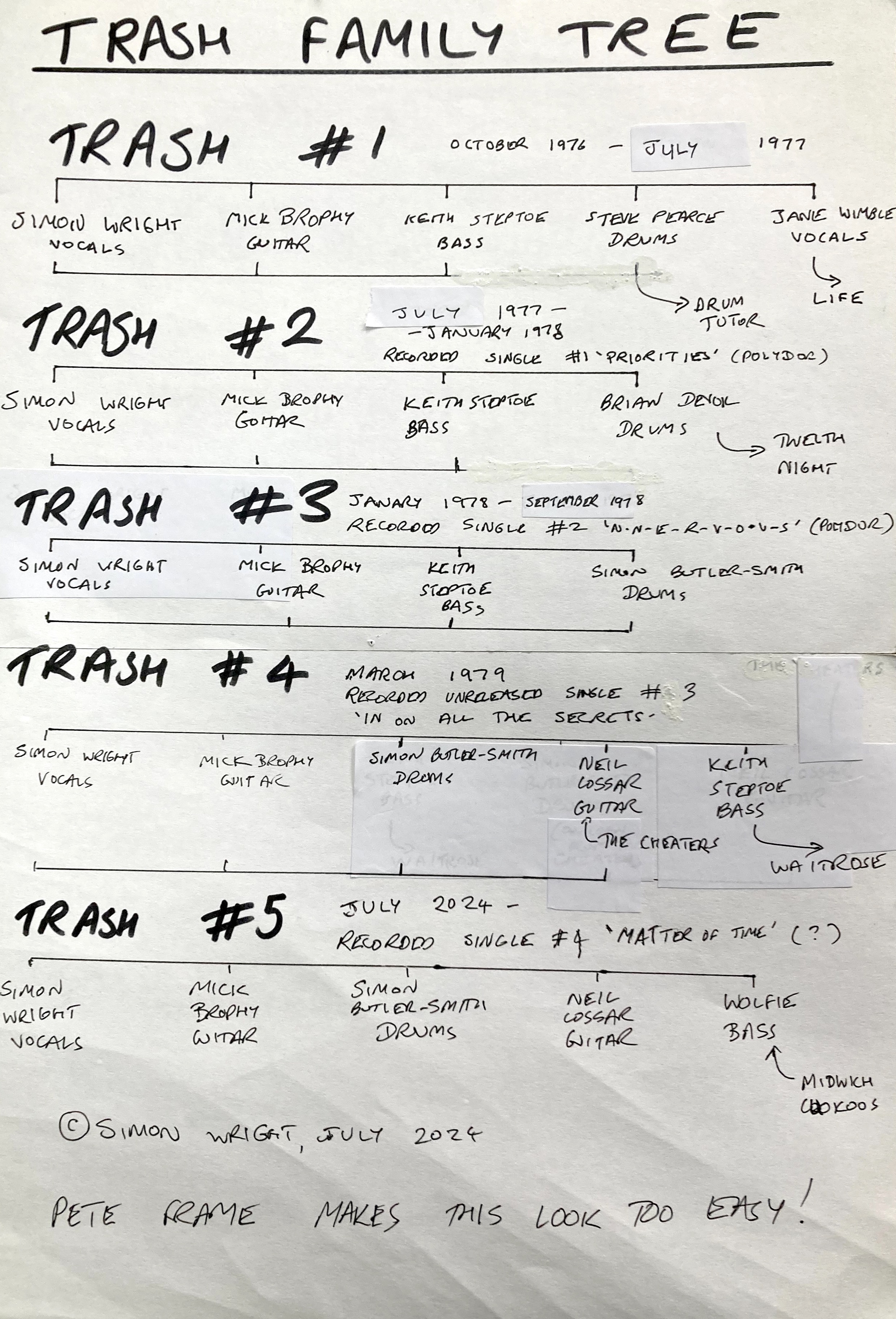
Keith has asked me to point out that he did not go to work for Waitrose as I suggested. After Trash he joined the band General Accident, followed by Steve Dream and the Blitz Sisters. My apologies for the mistake.
Order now from http://www.1960s.london

At The BBC 1970-72
The Pink Fairies
Side One
1.The Snake (Pink Fairies)
2. Lucille (Collins, Richard)
3. Johnny B. Goode (Berry)
4. Uncle Harry’s Last Freak-Out (Pink Fairies)
Side Two
1. Do It (Pink Fairies)
2. Tomorrow Never Knows (Lennon, McCartney)
3. 3/5 Mile In Ten Seconds (Balin)
4. I Saw Her Standing There (Lennon, McCartney)
5. Portobello Shuffle (Pink Fairies)
6. Walk Don’t Run (Smith)
Recording Details
All tracks recorded for BBC Radio as follows:
Side One
Tracks 1 & 2 recorded for Top Gear on 10 & 24/11/70, broadcast on 28/11/70
Tracks 3 & 4 recorded for In Concert on 14/10/71, broadcast on 16/11/71
Side Two
Tracks 1 – 3 recorded for Sounds Of The Seventies (Mike Harding) on 8/2/71, broadcast on 16/2/71
Tracks 4 – 6 recorded for Sounds Of The Seventies (Pete Drummond) on 29/3/72, broadcast 6/4/72
Personnel
Paul Rudolph – Guitar, vocals
Duncan ‘Sandy’ Sanderson – Bass
Russell Hunter – Drums
John ‘Twink’ Alder – Drums (Side One, Tracks 1 & 2 and Side Two Tracks 1-3)
Trevor Burton – Guitar (Side One, Tracks 3 & 4)
Recording Quality
Very Good throughout
Sleeve Notes
The first wave of UK punk bands were keen to namecheck US high energy rock’n’roll renegades such as The MC5, The Stooges and The New York Dolls as key influences on their sound. To this exclusive club can be added a single UK band: The Pink Fairies, of whom John Lydon was a fan.
The Pink Fairies evolved out of The (Social) Deviants, an underground band founded in 1967 by vocalist and journalist Mick Farren who was gradually joined by Hunter, Sandy and guitarist Paul Rudolph. A disastrous Canadian tour saw Farren parting company from the rest of the band who on returning to the UK added a second drummer in Twink and re-named themselves the Pink Fairies. In his autobiography Give The Anarchist A Cigarette Mick Farren explains the origins of the band’s name. “Back at the Speakeasy our particular clique formed ‘The Pink Fairies Motorcycle Gang and Drinking Club’, a hard core of Pretty Things and Deviants that would be augmented by the usual suspects: Viv Prince, Steve Took and occasionally “Legs” Larry Smith and Viv Stanshall. The fun began under the guise of ‘getting up to jam’ which in reality meant a mass stage invasion followed by about forty minutes of shrieking cacophony until all players declared themselves exhausted and retired to the bar, leaving a debris of bottles, glasses and distressed equipment. The name would ultimately be appropriated and truncated by Twink for a supposedly commercial rock band”.
Talking to Bucketfull of Brains magazine in 2011 Sandy ruminated on what made the Fairies special. “That we sounded different to other UK bands was an after-effect of the Deviants going to Vancouver and then proceeding down the West Coast of the States, that had a real influence on me. Even the covers bands were musically very talented and were very competent musicians. During our last month in the US we stayed in a house in San Francisco that had a music room so you got up, had something to eat and then made music as opposed to here where it was ‘let’s book a rehearsal room for next Tuesday.’ And of course Paul was from Vancouver and when he joined the Fairies we morphed into a different entity from the tail end of the beat boom.” Russell agreed “When we got back to London we tried to recreate that vibe and approach playing music in the way that other musicians played jazz. Not the complexity of jazz but we’d have a verse structure, and a bridge structure and an idea of how it was going to end and then nightly we’d launch into whatever and sometimes when that works it is absolutely magic.”
Some of that magic can be heard here, although the BBC Panel that passed their first Top Gear session as suitable for broadcast commented on “a most ugly, heavy noise” and “not for general use”. Debut single The Snake showcased the double drum line-up to great effect whilst a cover of Little Richard’s Lucille demonstrated the band’s ability to play effective no-frills rock’n’roll. Four tracks presented here never appeared on a Fairies studio album. Lucille is one, and another is the band’s version of Jefferson Airplane’s 3/5 Mile In Ten Seconds. Do It was the other side of the Fairies debut single and this version recorded for a 1971 Sounds Of The Seventies is thoroughly punky in both words and music. The Beatles Tomorrow Never Knows receives a complete overhaul, Rudolph playing backwards guitar forwards whilst drums and bass duplicate the lurching rhythms of the original.
John Peel was a supporter of the band, and he introduced their 1971 In Concert appearance.Tensions within the band had seen Twink ejectedbut the band were joined on this occasion by ex-Move bassist Trevor Burton, here playing guitar.
An ebullient Johnny B.Goode opened the broadcast: the closing number was mistakenly claimed by Peel to be Uncle Wally’s Last Freak-Out (sic). This track from debut LP Never Never Land was a collection of old Deviants riffs designed to be open-ended in live performance. The relatively compact version here still allows for a drum solo and gives Paul Rudolph space to solo. A second Sounds Of The Seventies session drew on second LP What A Bunch Of Sweeties (1972). I Saw Her Standing There got a tough update, Portobello Shuffle described the band’s Ladbroke Grove neighbourhood and a lengthy exploration of The Venture’s instrumental Walk Don’t Run added a novel vocal section.
Paul Rudolph left the band immediately after the release of …Sweeties and was replaced by Mick Wayne (briefly) and then by Larry Wallis (permanently). Larry added more melody and structure to the band’s music in time for third LP Kings Of Oblivion (1973), a prophetic title which ended the first era of Fairydom. There were subsequent sporadic reunions and collaborations as documented in Rich Deakin’s book Keep It Together! (2008, new edition in preparation). Sadly Mick Farren, Larry, Russell and Sandy are no longer with us, although their spirit remains with us via this fine LP.
“Up The Pinks!”
With thanks to the late Tim Rundall
Sleeve Notes: C.T. Keeds


At The BBC 1967-68
Tomorrow
Tracklisting
Side One
- Revolution (Hopkins, Howe)
- Three Jolly Little Dwarfs (Hopkins, Burgess)
- Colonel Brown (Hopkins, Burgess)
- Real Life Permanent Dream (Hopkins)
- My White Bicycle (Hopkins, Burgess)
- Revolution (stereo mix)
- Colonel Brown (stereo mix)
Side Two
- Strawberry Fields Forever (Lennon, McCartney)
- The Incredible Journey Of Timothy Chase (Hopkins)
- Now Your Time Has Come (Hopkins, Burgess)
- Blow Up (West)
- Am I Glad To See You (West)
Sound Quality
Excellent Throughout
Recording Details
Side One Recorded for BBC Radio Top Gear on 21.9.67 and transmitted 1.10.67
Side Side Two Tracks 1-4 recorded for BBC Radio Top Gear on 31.1.68 and transmitted 4.2.68
Side Two Track 5 recorded for the soundtrack of the film Blow Up (1966) but not included on the original soundtrack
Personnel
Keith West – vocals
Steve Howe – guitar
John ‘Junior’ Wood – bass
John ‘Twink’ Alder – drums
Except Side One, Track 6 – Kippington Lodge
Sleevenotes
“In the early days of British psychedelia three bands were consistently cited as first generation figureheads of the London-based underground sound: Pink Floyd, The Soft Machine and Tomorrow. Although Tomorrow were less recklessly innovative and imaginative, their song writing was accomplished with adroit harmonies, psychedelic guitar work and adventurous structures and tempo changes.” Richie Unterberger, AllMusic Guide To Rock (2002)
The roots of Tomorrow lie with Four Plus One, a four piece R&B/soul group. After one unsuccessful single for Parlophone the band was renamed The In Crowd, Steve Howe eventually taking the place of guitarist Les Jones. The In Crowd recorded two songs especially for Michelangelo Antonioni’s ground-breaking 1966 film Blow Up, Am I Glad To See You and Blow Up. The band were meant to feature in the film, playing live on a set based around the Ricky Tick club in Windsor. They were replaced by the short-lived Beck/Page line-up of The Yardbirds and the In Crowd songs were let off the original soundtrack release. Am I Glad To See You was a fine song with a pulsing, guitar-driven rhythm, delicate harmonies and a cool false ending. The In Crowd did not release any records before changing their name to Tomorrow. As Tomorrow they appeared in another Swinging Sixties movie Smashing Time, where they were renamed The Snarks. However once again their music did not feature in the film, the music used was that of the group Skip Bifferty.
Finally in May 1967 Tomorrow issued their debut single My White Bicycle and it was worth the wait. The title refers to the white-painted bicycles left around Amsterdam for anyone to use at will, a forerunner of today’s Lime bikes. West came up with the pithy lyric “moving fast everything looks great”, summing up 1967 London perfectly. Despite the catchy melody, a driving rhythm courtesy of Twink and Junior and some innovative guitar work from Steve Howe the song was only an ‘underground’ hit. A 1975 cover version by Nazareth would reach the top twenty in 1975. Tomorrow’s second unsuccessful single of 1967 was Revolution, a less commercial proposition with a bizarre vocal introduction of “animal, vegetable or mineral?” and repeated calls for “Revolution! Now!”
Tomorrow were not immune to contemporary twee flower-power whimsy and Three Jolly Little Dwarfs is a prime example. Written by vocalist Keith West (under his real name Keith Hopkins) and his schoolfriend Ken Burgess the lyrics were written by West whilst experimenting with LSD. Colonel Brown was an attempt at profiling a character, along the lines that Ray Davies was doing with The Kinks. Real Life Permanent Dream was more convincing, lyrical guitar and love or confusion lyrics. These five tracks were recorded for Top Gear in September 1967.
Tomorrow started recording an album in spring 1967: Parlophone did not release the self-titled LP until February 1968 and crucial momentum was lost. Another challenge was Keith West having a huge solo hit all over Europe with Excerpt From “A Teenage Opera”. This was the idea of Mark Wirtz, who had produced and arranged My White Bicycle. The opera would have involved all members of Tomorrow but it was never completed although two further excerpts were released as singles, both written by Keith West and Ken Burgess. The track Sam was credited to Keith West but did not chart.
Paul McCartney was very impressed with Excerpt… saying “I think it was just that one record that made you realise that it didn’t have to be the same tempo or the same key all the way through, you could cut like a film.” When the single reached number two in the UK charts promoters began billing the band as “Tomorrow Featuring Keith West” and insist the band perform Excerpt… during their live shows.
Despite the tension this created within the band, a second session for BBC radio was recorded in early 1968 to promote their LP. The band’s version of Strawberry Fields Forever was slower and heavier than the original with more excellent guitar from Howe. The Incredible Journey Of Timothy Chase was another character-based song, with a strong melody and a stop-start arrangement. Now Your Time Has Come featured precise harmonies and a raga-esque guitar break.Finallythe band revisited their time as The In Crowd for Blow Up,a catchy number that would have got the mods dancing at the Ricky Tick.
Tomorrow split up later that year. Twink and Junior briefly formed The Aquarian Age. Junior then played with Jeff Beck and Twink joined the Pretty Things (in time for the S.F. Sorrow album) before becoming notorious as part of The Pink Fairies. Keith West pursued a solo career whilst Steve Howe moved on to Bodast, before joining prog-rock legends Yes. Howe’s subsequent success has helped to raise the profile of Tomorrow, who are now seen as an innovative and pioneering band in their own right.
Sleeve notes: Hal & Lucy Nations
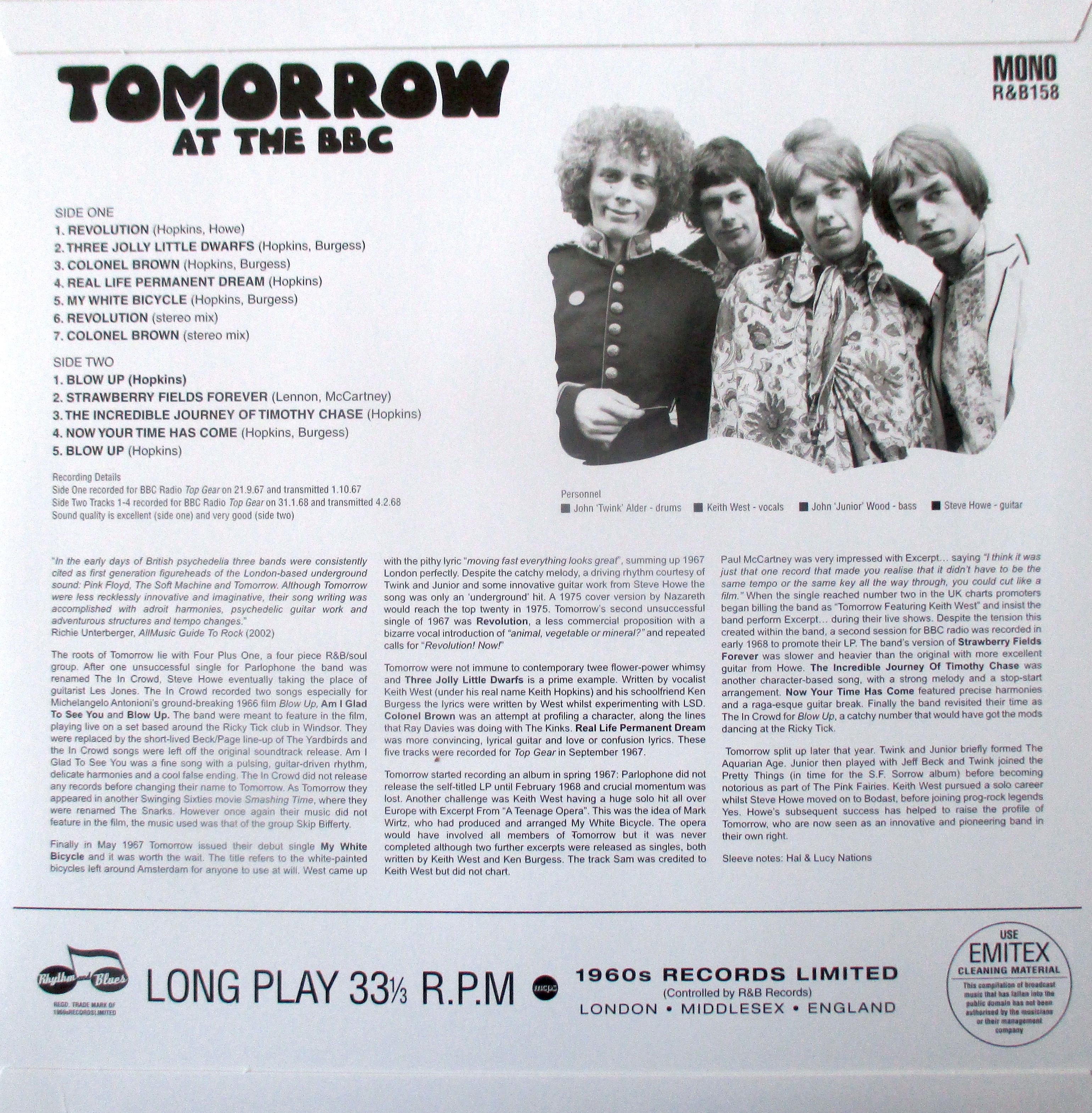

Simon Dupree & the Big Sound
Live at the BBC 1967 – 1969
Tracklisting
Side One
1. I See The Light (Ezell, Rabon, Durrill)
2. Reservations (Hammond)
3. L-O-V-E (Jackie Edwards)
4. There’s A Little Picture Playhouse (Hine)
5. Kites (Hackaday, Pockriss)
6. What You Gonna Do? (King, Smith)
7. A Lot Of Love (Banks, Parker)
8. Day Time Night Time (Hugg)
9. Kites (Hackaday, Pockriss)
Side Two
1. So You Want To Be A Rock ‘n’ Roll Star (McGuinn, Hillman)
2. For Whom The Bell Tolls (King, Smith)
3. Stained Glass Window (Grady, Zekley)
4. Part Of My Past (King, Smith)
5. You’re So Good To Me (Wilson)
6. Thinking About My Life (Shulman, Shulman)
7. Beg, Borrow Or Steal (Ronnie Weiss)
8. Ground-Hog (Traditional)
Recording Details
Side One
Tracks 1 – 3 recorded for Easy Beat on 22.02.67, transmitted 18.03.67
Tracks 4 – 5 recorded for Saturday Club on 30.10.67, transmitted 4.11.67
Tracks 7 – 9 recorded for The David Symonds Show on 04.12.67, transmitted 11.12.67
Side Two
Tracks 1 – 3 recorded for Pete’s People on 27.03.68, transmitted 30.03.68
Tracks 4 – 5 recorded for David Symonds Show on 27.03.68, transmitted 11.05.68
Tracks 6 – 7 recorded for Radio 1 Club on 16.10.68, transmitted 23.10.68
Track 8 recorded for The Johnny Walker Show on 06.11.69, transmitted on 15.11.69
Recording Quality
Excellent throughout
Personnel
Derek Shulman: Vocals
Phil Shulman: Saxophone, trumpet, vocals
Ray Shulman: Guitar, violin, trumpet, vocals
Peter O’Flaherty: Bass guitar
Eric Hine: Keyboards
Tony Ransley; Drums
Sleevenotes
R’n’B bands – beware the curse of the Unexpected Pop Hit! Long John Baldry ended up in cabaret after Let The Heartaches Begin topped the singles chart in November 1967. Similarly Simon Dupree & the Big Sound were a hard-working, hard-driving soul band raised on Wilson Pickett, Don Covay and Otis Redding until their management persuaded them to record Kites. The song went top ten in late 1967 but with its mellotron and oriental lyrics it gave a completely unrepresentative view of the band. This LP gives a more rounded view of the music the band recorded together before they evolved into progrock stalwarts Gentle Giant. Recording quality is excellent throughout, reflecting the expertise of BBC engineers and producers.
The band was formed by the three Shulman brothers – Derek, Ray and Phil. They started playing straight r’n’b around the Portsmouth area, first as The Howling Wolves and then as The Road Runners. The band’s agent John Bedford suggested Simon Dupree & the Big Sound as a flashy name that would get them better club dates and soon they were on £300 a night. Suitably impressed, producer Dave Paramor signed the band to EMI’s Parlophone label in 1966. Initially the band relied on outside writers with debut single I See The Light originally a hit for The Five Americans, whilst follow-up Reservations was written by Albert Hammond. Neither made much impression on the charts so the band asked their management to come up with a song to provide them with genuine chart break through. According to nostalgiacentral.com “manager John King went to Robin Music and came back with Kites. The band hated the song, recorded it under duress in two-and-a-half hours and went off to tour Sweden. Written by the old-school team of Lee Pockriss and Broadway lyricist Hal Hackaday, Kites was transformed by the group from a traditional romantic ballad to a kitsch but spellbinding slice of British flower-power, replete with gongs, woodblocks, finger cymbals, Mellotron and swirling wind effects. Derek Shulman’s sonorous lead vocal was counterbalanced beautifully by actress Jacqui Chan’s evocative but incomprehensible spoken contribution.” Despite her exotic appearance Jacqui could not speak Chinese so a local restauranteur wrote a few lines for her to recite phonetically. The result was a Top 10 single over Christmas 1967 which transformed the band’s fortunes.
Throughout the band’s career they had a close relationship with BBC radio, recording at least nine sessions for different shows. The versions of I See The Light and Reservations here show how they could produce highly danceable versions of their studio material with tight arrangements, prominent organ, lively ensemble vocals and tight brass arrangements. Reservations even made it into Eddie Piller’s recent British Mod Sounds Of The 1960s compilation. L-O-V-E was written by Jackie Edwards, who had penned Keep On Running for the Spencer Davis Group. Another Spencer Davis connection is the riff from (Ain’t That) A Lot Of Love which had been a hit for Homer Banks in 1966, and would chart again in 1999 when covered by Simply Red. Keyboardist Eric Hine penned There’s A Little Picture Playhouse which starts with an impressive piano flourish.
The songwriting duo of Eve King and Paul Smith wrote What You Gonna Do?, For Whom The Bell Tolls and Part Of My Past. Eve King was the sister of the Shulman brothers and was married to BBC producer John King: Paul Smith was a relative of John. What You Gonna Do and Part Of My Past were blue-eyed soul ballads. For Whom The Bell Tolls was the unsuccessful follow-up to Kites, a more intricately arranged song reminiscent of what The Left Banke were doing in the US. Day Time Night Time had already been a hit for Manfred Mann. The band can be seen performing a suitably sweaty version in an episode of the Man Alive TV documentary series originally screened on June 29th 1967. Entitled The Ravers, the programme focussed on the salacious antics of the female followers of the band. The band can also be seen playing I Saw The Light in a small club: the interviewer refers to lead singer Derek as Simon throughout.
By 1968 the band’s taste in covers was becoming more adventurous. The Byrds’ So You Want To Be A Rock’n’Roll Star was faithfully recreated, and Brian Wilson’s You’re So Good To Me featured some impressive harmonies. Stained Glass Windows was another import from the US: the song was originally written by Don Grady and Gary Zekley for the band Yellow Balloon and saw a return to a more baroque sound. Thinking About My Life carried a rare Shulman/Shulman writing credit and made effective use of acoustic guitar. Beg, Borrow Or Steal was originally recorded by Texas punkers Mouse And The Traps: this version introduces a noticeably heavier guitar-based sound which does justice to the Nuggets-type riff (The Plimsoulls would record an equally excellent version in 1983). A very 1969 version of the traditional Ground-Hog features the same guitar-centric approach. It was recorded just prior to the band disbanding, disillusioned at being seen as one-hit wonders.
Back in November 1968 a mysterious single called We Are The Moles (Part 1 and Part 2) had been released by Parlophone, who gave no hint as to the identity of the artists with both sides of the single credited as written, performed and produced by The Moles. Speculation was rife that the Moles were the Beatles: it was Syd Barrett who allegedly spilt the beans that The Moles were actually Simon Dupree & the Big Sound. The record itself is an attractive slice of UK psyche and is much sought after today.
The Shulman brothers would return to recording as Gentle Giant, recording eleven studio albums between 1970 and 1980. But that is very much another story…
Sleevenotes: Pam Urge
Special thanks to Syd Kreft

Matter Of Time will be released by R&B Records on Saturday 12th April (Record Store Day) as a limited edition 7″ vinyl pressing and as a digital download.
Credits: Photography by Alison White, Design by Duncan Bamford @InsightIllustration
47 years after their last single, cult* rockers Trash are back!
To follow their 1978 single N-N-E-R-V-O-U-S, Trash will release a freshly-recorded song Matter Of Time as a vinyl 7” on April 12th 2025 in time for Record Store Day.
A-side of the single is Matter Of Time (Ballad Of Trash 13.07.24), B side is Matter Of Time (Tin And Tambourine version). The drive, power and catchiness of the A side is reminiscent of The Clash Give ‘Em Enough Rope era, whilst the more mellow B side has a Ronnie Lane vibe. Said Alan Mair of The Only Ones “great tune, vocals and lyrics, and the guitar solo is right up my street. And I like the acoustic version as well.”
Trash never achieved the success predicted by the pop pages of The Reading Chronicle, despite being signed to Polydor and being produced by the late Shel Talmy (Who, Kinks) and Nigel Gray (Police, Siouxsie). Guitarist and songwriter Mick Brophy has produced a song that sends out a message of hope to ageing rockers of all haircuts. Drummer Simon Butler-Smith had not played for the last 38 years (kit stored at his mums) but recorded his parts in a single take. Vocalist Simon Wright has spent the lost decades making chocolate and is inexplicably an adviser to the government on organic food.
The single is released on 7” vinyl by Rhythm And Blues Records. Label owner Nick Duckett has been a supporter of Trash since 1978, when he reviewed their appearance at his birthday party for the NME. Serial number of the single release is RANDB2024, available via Cargo. A digital download of the single will also be available.
For more information, review copies and hi-res photos of the band please email simon@onlyrockandroll.london
Full band info at www.onlyrockandroll.london/category/trash
*= Trash singles didn’t sell at the time but now go for £20 a pop. And the band has featured on Soul Jazz and Cherry Red punk compilations in the last couple of years.
Ends

Second Edition of It’s The Truth available now!
If you have already bought a copy of my book – thank you and congratulations ! You now have a Limited First Edition!
For everyone else a Second Edition is now available, so here is the perfect Christmas present for The Only Ones fan in your life (maybe it’s you?)
You can tell it’s the Second Edition because it says Second Edition on the front cover. It contains the following changes from the First Edition:
- One typo corrected
- Fourteen facts amended or brought up to date
- A four page Selected Discography added
Physical booksellers may still have copies of the First Edition in stock, but if you are ordering online and wish to ensure you get the Second Edition please make sure you order the version with ISBN 9781068571626 and a publication date of 2024.
Amazon have the Second Edition listed as https://www.amazon.co.uk/Its-Truth-Making-Only-Ones/dp/1068571624/ref=sr_1_1?crid=Q67WS25NTX79&dib=eyJ2IjoiMSJ9.qf82QjPynifH53Lk1KamS8s0UQ3ExHJ49KWuRDvlawk.qLOxZPOcezN90QX6BQeuKmuYgBXAF4maE7Q2PDunr8M&dib_tag=se&keywords=it%27s+the+truth+simon+wright&nsdOptOutParam=true&qid=1734361181&sprefix=it%27s+the+truth+simon+wright%2Caps%2C83&sr=8-1
Other retailers are available. The Kindle edition has also been upgraded.
Leicester Square Vue, November 21st 2024
The Rolling Stones
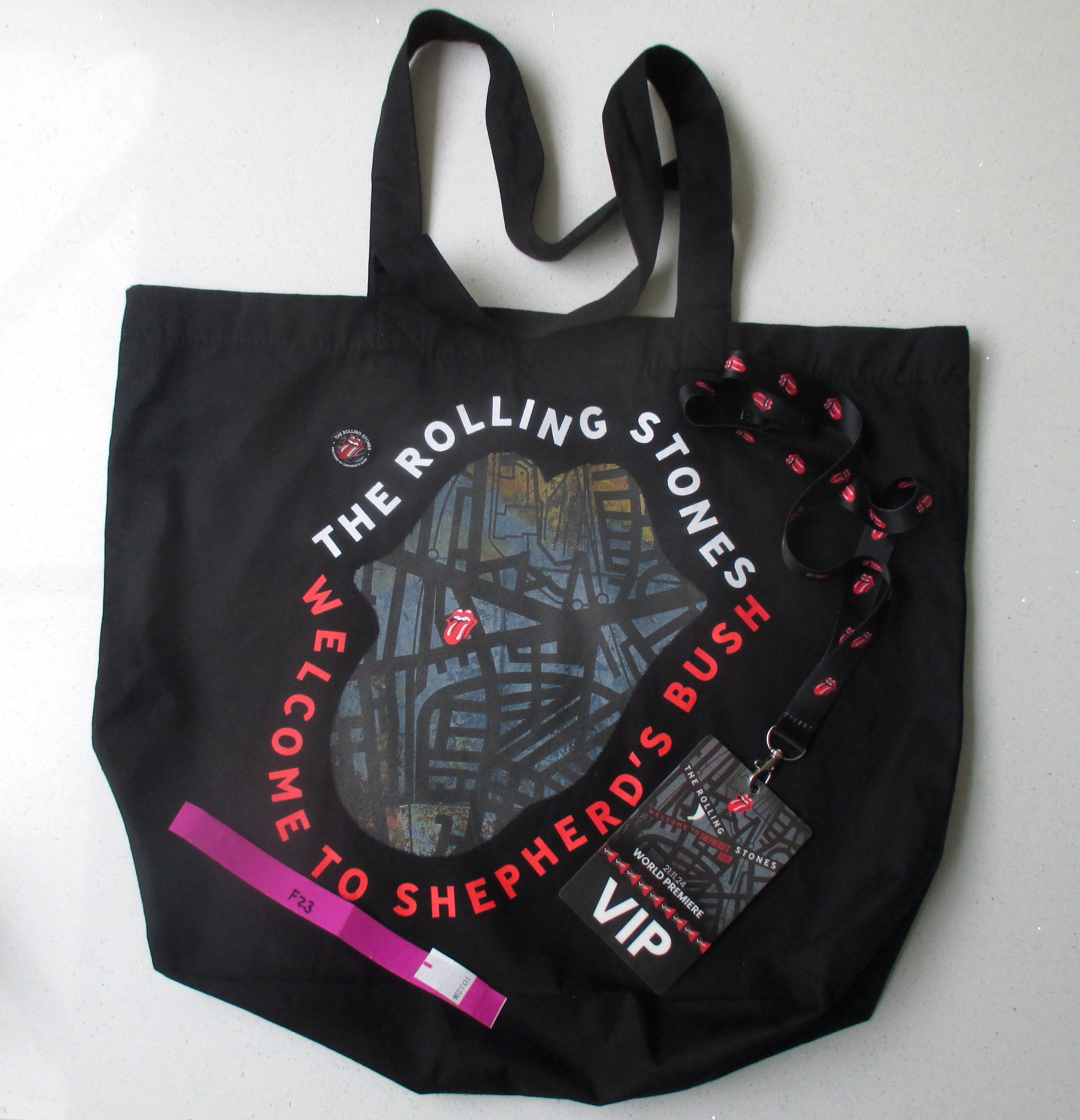
Hard to believe that it is 25 years since I was scurrying around central London in the early hours, looking for clues as to where tickets for the Stones’ Shepherds Bush Empire June 8th 1999 gig would be going on sale. A lorry unloading crash barriers outside the Tower Records Piccadilly store at 6am was all the clue I needed, and I joined my fellow Stones fanatics in a makeshift queue. Having got the all-important wrist band I had an anxious 36 hours whilst I ensured I did not lose it, including a shower with the relevant wrist carefully positioned outside the shower stall. Finally show time. Apparently Sheryl Crow supported but I remember nothing of her set. Somehow by the time the Stones emerged I had weasled through the crowd and was one row back from the front on Ronnie Wood’s side.
Seeing the band at such close quarters was fantastic, an experience I relived on Thursday night at the Leicester Square Vue where the 90 minute concert movie Welcome To Shepherds Bush had its premiere. We had just found our seats when Sara texted that there were free drinks in the bar upstairs so we took a quick detour. Veteran Stones PR Bernard Doherty introduced the screening, highlighting some of the high spots from the gig and passing swiftly over the after party.
Shattered was an uncompromising opening number and served notice that the band were going to be operating in “uncharted territory” to quote Mick Jagger. This was only partly true. The closing duo of Brown Sugar and Jumping Jack Flash were played as if the band had already migrated up the road to Wembley Stadium. Whilst Tumbling Dice had a rolling rhythm it has not achieved in recent years, Honky Tonk Women was distinguished only by a Crow / Jagger duet. Although the rest of the set was built around rarely played live numbers, I remember being disappointed at the time that they included recent tracks like Brand New Car and Moon Is Up. Saint Of Me justified its inclusion through the audience continuing to sing the refrain way after the band had stopped playing.
Other choices were more satisfying. Melody had only been played once before at the El Mocambo gig whilst Route 66 had a snap, crackle and pop that could have been transported from 1964. The highlight for me was I Got The Blues, where the band played with restraint and the four-piece brass section were the perfect foil to Jagger’s Otis Redding-style vocal. Keith’s You Got The Silver was a rarity then and was played beautifully by him and Ronnie Wood. The ensuing Before They Make Me Run featured Leah Wood on backing vocals, a fact that I had not noticed at the time.
Watching the film of the gig is bittersweet. Keith plays a lot more solos than we have seen in recent years. Lisa Fischer is no longer part of the band, and I miss her sassy interplay with Jagger. An even bigger hole has been left by Charlie Watts but there are lots of great shots of him in action, always looking bemused and slightly distracted as he nails another number without breaking sweat. The sound in the cinema was well balanced with even Chuck Leavell’s piano audible in the mix. Split-screen imagery is used a lot but it works, frequently highlighting how what is happening onstage is being received by the audience.
A show of hands revealed a fair few of the Leicester Square audience had actually been at the gig. As we clutched our goodie bags and headed out into the cold London night, the evening felt like a celebration that both we and the band are still upright after all these years.

Available now from http://www.1960s.london

(Ronnie’s Last Stand)
The Faces Live at Edmonton Sundown June 4th 1973
Tracklisting
Side One
- Cindy Incidentally (Stewart, Wood, McLagan)
- Angel (Hendrix)
- True Blue (Stewart, Wood)
- I’d Rather Go Blind (Foster, Jordan)
- Borstal Boys (McLagan, Wood, Stewart)
Side Two
- Jealous Guy (Lennon)
- You Wear It Well (Stewart, Quittenton) /
- Maggie May (Stewart, Quittenton)
- Twistin’ The Night Away (Cooke)
- Memphis, Tennessee (Berry)
- We’ll Meet Again (Parker, Charles)
Personnel
Rod Stewart – vocals
Ronnie Wood – guitar, vocals
Ronnie Lane – bass, vocals
Ian McLagan – keyboards
Kenney Jones – drums
Recording Details
All tracks recorded live at the Edmonton Sundown on June 4th 1973 and broadcast as the Mike Mansfield Television special Ooh La La
Recording Quality
Excellent throughout
Sleevenotes
With the March 1973 release of studio album number four Ooh La La The Faces were at the height of their popularity and the LP went straight to number one in the UK charts. However the even greater solo success of singer Rod Stewart had caused tensions within the band. Speaking to Melody Maker Stewart ill-advisedly criticised the new LP as “a bloody mess…a disgrace”. Keyboards player Ian McLagan responded that “he could have contributed more to it but he didn’t so he had even less of a reason to criticise.” Bass player Ronne Lane was feeling disillusioned with the music industry in general and with Rod Stewart in particular. and decided that he would leave the band he had co-founded. The May 19th edition of Sounds magazine announced that The Faces were to headline three gigs at the 3,500 capacity Edmonton Sundown in North London on June 1st, 3rd and 4th. When, the following week, the same magazine announced that “Plonk Quits Faces” and that these gigs would be his last, demand went through the roof with fans queuing for over seven hours for tickets.
The Faces manager Billy Gaff was keen to commemorate Lane’s final appearance and commissioned director/producer Mike Mansfield to film the last night. A lavish set featured lush potted palms and a silver candlestick on Mac’s Steinway piano. Kenny Jones’ drums were white, black and pink striped, like liquorice allsorts. The band were preceded by a troupe of twelve can-can girls, prancing and cartwheeling in a very non-PC way. Crowd shots show the Faces faithful fans at their most fervent – as many girls as boys, tartan scarves everywhere and a few home-made “Farewell Ronnie We Love You” signs.
A perusal of the setlist shows a further source of unease: six songs are from Rod Stewart’s solo albums whilst a mere three were recorded as The Faces. Mansfield omits the first numbers – possibly Miss Judy’s Farm and Silicone Grown – and we join the band for Cindy Incidentally. The song is based on a McLagan piano riff (“Memphis played backwards”) and reached number two when released as a Faces single. Stewart is looking restrained in a sparkly vest and white satin strides, Lane is wearing a green three-piece tonic suit whilst guitarist Ronnie Wood favours an extraordinary, toreador-inspired two piece. Even the roadies are formally dressed and appropriately look like old-school bar tenders. Scarves are held aloft for Angel, the Hendrix ballad that Stewart had made his own but here sung extensively by the audience. Whilst True Blue had appeared on Stewart’s solo album Never A Dull Moment (1972) it was a Wood/Stewart composition and the studio backing had been provided by The Faces. The song fits into the Faces live set beautifully and its presence would have improved Ooh La La, fuelling the suspicion that Stewart was keeping the best material for his solo career. Lane, Wood and Stewart all harmonise around a single microphone and Wood blasts off on his trademark black and silver Tony Zemaitis guitar as the tempo of the song picks up. I’d Rather Go Blind had been associated with Etta James and Chicken Shack: here it is a tour de force for Stewart’s vocal prowess and a tasteful Ronnie Wood coda, underpinned by McLagan’s organ. The opening riff to Borstal Boys gets a great crowd response with Kenney Jones driving the song and Stewart opting for a lie-down halfway through. Mac honky-tonks, Ronnie Wood plays a short slide guitar solo that distils what he used to do every night on Plynth and Rod does his impersonation of a drum majorette using his special lightweight mic stand.
Side Two opens with a version of John Lennon’s Jealous Guy, based on Donny Hathaway’s live arrangement: inexplicably it was never included on a Faces studio LP. During a medley of You Wear It Well and Maggie May Rod gives up singing the opening lines and lets the crowd do it for him. All night Ronnie Lane had been pacing the stage playing his melodic bass lines and singing the occasional backing vocal but very much keeping himself to himself. Now Stewart addresses him as “Old Pal” and asks “Shall we do Twistin’ The Night Away before they close?”. To which Ronnie looks at his watch and says ruefully “Too late. They closed”. Twistin’ The Night Away makes for a thunderous set-closer, with Kenny’s rat-a-tat drums and the crowd going nuts whilst the band are deluged in confetti. For an encore Rod asks the audience to chose between Memphis and Losing You. He adjudges that Memphis has the greater vocal support. Introduced by McLagan’s barrelhouse piano, the song builds in momentum as it speeds up. Finally the band gather at the front of the stage with their arms around each other for a slightly ironic rendition of We’ll Meet Again
“That last night at Edmonton was absolutely fucking fantastic. I was up in the balcony and it was moving. I was shitting meself because I thought it was all going to collapse. Ronnie left there that night and he came with me in the motor and we went to Tramp. He sees Marc Bolan, goes up to him and says, ‘You haven’t got a job for an out of work bass player, have ya?’”. Stan Lane, from Had Me A Real Good Time (Andy Neil)
Sleevenotes: Mathias Rosey

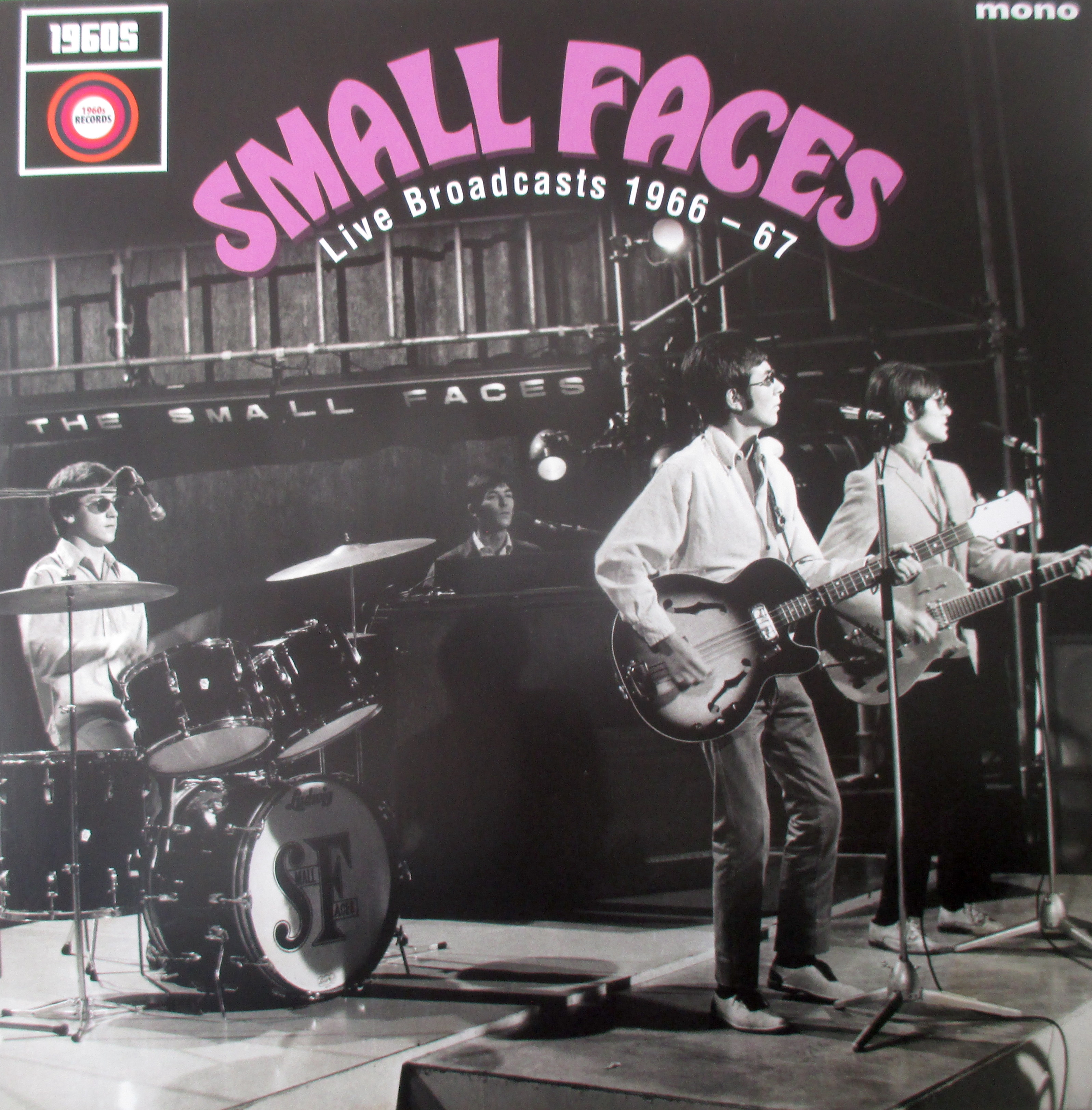
Broadcasts 1996 – 67
The Small Faces
Tracklisting
Side One
- Hey Girl (Marriott, Lane)
- All Or Nothing (Marriott, Lane)
- What’cha Gonna Do About It (Potter, Samwell)
- Sha-La-La-La-Lee (Lynch, Shulman)
- You Really Got A Hold On Me (Robinson)
- All Or Nothing (Marriott, Lane)
- Sha-La-La-La-Lee (Lynch, Shulman)
- I Can’t Make It (Marriott, Lane)
- All Or Nothing (Marriott, Lane)
Side Two
- Sha-La-La-La-Lee (Lynch, Shulman)
- What’cha Gonna Do About It (Potter, Samwell)
- Comin’ Home Baby (Dorough, Tucker)
- You Need Loving (Marriott, Lane)
- Shake (Cooke)
- You Really Got A Hold On Me (Robinson)
- Plum Nellie (Booker T & The M.G.’s) /
- You Need Loving (Marriott, Lane) /
- Baby Please Don’t Go (Williams)
Recording Details
Side One
Tracks 1 – 4 recorded at the Offenbach Stadhalle for HT TV Beat Beat Beat on September 28th 1966
Track 5 recorded for the BBC The Joe Loss Radio Show on March 11th 1966
and transmitted live
Track 6 recorded for BBC Top Of The Pops ’66 Part 2 on December 14th 1966, transmitted on December 27th
Track 7 recorded for BBC TV Top Of The Pops ’66 Part 1 on December 13th 1966, transmitted on December 26th
Tracks 8 & 9 recorded for Associated TV The Morecambe & Wise Show at Elstree Studio Centre, Hertfordshire on April 18th 1967 and broadcast on October 22nd.
Side Two
Tracks 1- 4 recorded for the BBC The Joe Loss Radio Show on January 14th 1966 and transmitted live
Track 5 recorded for the BBC The Joe Loss Radio Show on March 11th 1966
and transmitted live
Track 6 recorded for BBC Saturday Club on March 14th and transmitted on March 19th
Tracks 7 – 9 recorded at The Marquee, London by the Canadian Broadcasting Corporation (CBCTV) on March 22nd 1966
Personnel
Steve Marriott – Guitar, vocals
Ronnie Lane – Bass, vocals
Ian McLagan – Keyboards, vocals
Kenney Jones – Drums
Recording Quality
Very good throughout
Sleevenotes
“In many ways the Small Faces have been the group that sums up all groups: they have that classic group gift for self-delusion. They’ve thought themselves artists when they’ve only been loons, they’ve talked endlessly about getting themselves together and making masterpieces, but somehow they wound up in the discotheques instead. Finally none of the crap mattered: they’ve meant fun and they’ve lasted. Little and fierce and pantomime, they’ve come to be one of my most favourite acts.”
Nik Cohn (1970) WopBopaLooBopLopBamBoom
Was there ever a better pop group than the Small Faces? Brilliant songwriting, great musicianship, innovative recordings, fashionable gear, on-stage dynamism – they had it all, as this compilation shows.
The opening four tracks on Side One come from an early German TV appearance, filmed in front of a youthful, clean-cut crowd of dancers. Hey Girl was the first successful single to be written by Steve Marriott and Ronnie Lane. Marriott is in perpetual motion whilst the gruff backing vocals are shared between a dapper Lane and Ian McLagan. All Or Nothing was the band’s only number one single, displacing the Beatles’ Yellow Submarine. The alternating quiet and loud passages showed a new sophistication and showcased the controlled power in Marriott’s lead vocal. Debut single What’cha Gonna Do About is delivered with a punky intensity: no surprise that the song featured at early Sex Pistols gigs. Sha-La-La-La-Lee benefits from a live performance with Marriott yelling “One more!” to rally the troops. The impact that the Small Faces had in 1966 was illustrated by the BBC asking them to play both Sha-La-La-La-Lee and All Or Nothing on their summary of the year’s top hits. Top Of The Pops ’66 aired on BBC TV over successive nights at the end of December, one song per night.
The Morecambe & Wise Show was primetime UK Saturday night television in 1967, so a guest spot was great exposure. After a tortuous introduction from Eric Morecambe the band play I Can’t Make It. The hair is longer, there are cravats and extended shirt collars. The version of All Or Nothing highlights Kenney’s explosive drumming, he now has Small Faces writ large on his bass drum. There is even a little bow from Steve and Ronnie at the end.
The Joe Loss Radio Show is a rich source of live recordings from 1966. A typical session would start with a rehearsal at 10:00, with the session itself transmitted live between 13:00 and 14:00. The session from January featured perennials Sha-La-La-La-Lee and What’cha Gonna Do About It. More unusual was the band’s version of Comin’ Home Baby. Originally a hit for Mel Torme, the song was originally a jazz instrumental written by bassist Ben Tucker of The Dave Bailey Quintet. Ben subsequently persuaded his friend Bob Dorough to write a lyric but the Small Faces’ version is performed as a lively instrumental. The final song is Willie Dixon’s You Need Love, later to be retitled You Need Loving on the Small Faces debut LP and given a cheeky Marriott/Lane writing credit. The final “woman…you need…love” vocal may sound familiar to Led Zeppelin, who were equally cavalier with songwriting credits.
The band were back in the Joe Loss radio studio in March to record a further two tracks, both covers of American r’n’b artists: the band grew up listening to Stax and Motown and it shows. This recording of Smokey Robinson’s You Really Got A Hold On Me was inexplicably omitted from the official BBC Sessions release. Taking the song at a slower pace than the Miracles original allows Marriott to testify. For Sam Cooke’s Shake McLagan’s organ is to the fore, interspersed with Kenney Jones’ drum breaks. At the same session a further version of You Really Got A Hold On Me was recorded and transmitted live.
Also in March the Small Faces made their debut at the legendary London club The Marquee, at its original location in the basement of the Academy Cinema on Oxford Street. Part of their performance was filmed for a Canadian TV documentary. After a brief snippet of Booker T & The M.G.’s instrumental Plum Nellie the bandpower through You Need Loving. Big Joe Williams’ Baby Please Don’t Go was best known from the version recorded by Them. Here Marriott cuts loose on lead guitar, ably supported by McLagan’s organ and the peerless Lane/Jones rhythm section.
“The best mod-rockers? Maybe. The Small Faces somehow made all their originality safe underneath perfect pop singles.” Brian Hogg, Bam Balam magazine (1977)
Sleevenotes: Rolan Over


Live at Fillmore East
The Beach Boys
Tracklisting
Side One
- Heroes And Villains (B Wilson, Parks)
- Do It Again (B Wilson, Love)
- Cotton Fields (Ledbetter)
- Help Me, Rhonda (B Wilson, Love)
- Wouldn’t It Be Nice? (B Wilson, Love, Asher)
- Your Song (John, Taupin)
Side Two
- Student Demonstration Time (Leiber, Stoller, Love)
- Good Vibrations (B Wilson, Love)
- California Girls (B Wilson, Love)
- I Get Around (B Wilson, Love)
- It’s About Time (D Wilson, Jardine, Burchman)
- Wouldn’t It Be Nice? (B Wilson, Love, Asher)
- Cool, Cool Water (B Wilson, Love)
Recording Details
Side One and Side Two tracks 1-5 recorded during the closing week of the Fillmore East, New York on June 27th 1971 and broadcast live on FM radio stations WNEW and WPLJ.
Side Two tracks 6 & 7 recorded live in New York and broadcast on The David Frost Show on May 7th 1971
Personnel
Carl Wilson – guitar, vocals
Alan Jardine – guitar, vocals
Bruce Johnston – bass, keyboards, vocals
Dennis Wilson – vocals, drums
Mike Love – vocals, percussion
Daryl Dragon – keyboards, synthesizer
Dennis Dragon – percussion
Mike Kowalski – drums
Sleevenotes
“You know, they’re pretty fucking good.” That was Bob Dylan’s verdict on watching the Beach Boys perform as special guests of the Grateful Dead during their April 1971 residency at Bill Graham’s Fillmore East. Having signed to Reprise in 1970 the band’s first LP for their new label was Sunflower, a strong selection of songs written by the whole group. New manager Jack Rieley ended the wearing of matching attire onstage and promoted Carl Wilson to band leader. He also encouraged the band to write more ecological and socially aware lyrics, a process that would culminate with the release of Surf’s Up in August 1971.
The final night at the Fillmore was an invitation-only event. The scheduled acts – the Allman Brothers, Albert King and the J.Geils Band – were joined by special guests Edgar Winter’s White Trash, Mountain, Country Joe and the Beach Boys. This concert came towards the end of the Surf’s Up recording sessions: the only track included is Student Demonstration Time, the band’s rewrite of the Robins’ Riot In Cell Block #9. Brian Wilson was on hiatus from touring and Dennis Wilson was unable to drum, having accidentally punched his hand through a plate glass window. Bolstered by replacement musicians the band are on fine form both vocally and instrumentally, as demonstrated by set-opener Heroes And Villains. Do It Again benefits from an extended introduction and the use of a horn section. The groups peerless vocal harmonies are showcased on Cotton Fields, supported by some groovy organ and the horns again. Carl Wilson’s lead vocal drives a mid-paced version of Help Me Rhonda. An exuberant Wouldn’t It Be Nice? is warmly received. The next song is a real rarity – Bruce Johnston singing Elton John’s Your Song, a US hit the previous year. Student Demonstration Time turns out to be a rollicking live number, with sirens and honky-tonk piano and some effective saxophone honking. Set closer is a remarkable Good Vibrations that captures much of the complexity of the recorded version, right down to the flute, whilst still rocking out.
The enthusiastic audience response brings the band back for a three number encore. A double whammy of California Girls and I Get Around provides a heady dose of nostalgia: the performances are vibrant and enthusiastic. The final song is the only selection from Sunflower. It’s About Time brings the Beach Boys up to date, some incisive rhythm guitar providing a gritty base for their trademark harmonies.
As a bonus we include two live tracks from The David Frost Show. Theversion of Wouldn’t It Be Nice sticks to the studio arrangement, although there are some changes to the lyrics. More unusual is the performance of Cool, Cool Water. Although released on Sunflower the track evolved from the song Love To Say Dada recorded for Smile. The track had been released as a single in March 1971. Bruce Johnstone moves from bass to keyboards as he helps with the intricate harmonies.
Introducing the band at the Fillmore Bill Graham described the Beach Boys as “one of the great, great, great sounds”. The release of Surf’s Up would result in a critical re-appraisal of the band, but this fine quality recording demonstrates that all the necessary components were already in place for their artistic renaissance.
Sleevenotes
Carol Lynne-Noh

St. John At Hackney Church
October 31st 2024
View: Standing, Stage Right
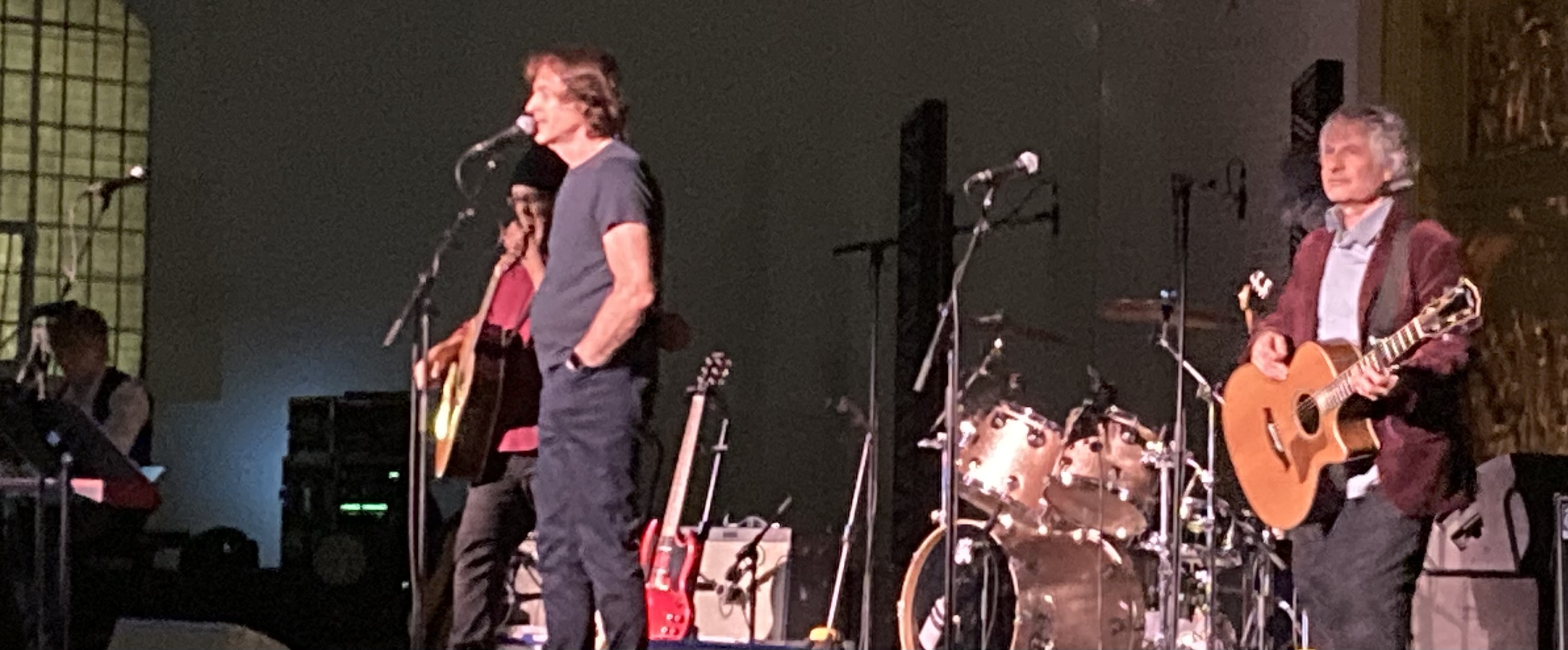
Drummer Jody Stephens is the only original member of Big Star still alive, so to celebrate the 50th anniversary of their sophomore LP Radio City he was joined by Big Star fans Mike Mills (REM), Chris Stamey (dB’s), Jon Auer (Posies) and Pat Sansone (Wilco). A sold-out audience in this imposing venue enjoyed thirty-one songs over two hours. Guitars, bass, keyboards and lead vocals were swapped throughout, with Jody singing The India Song and Blue Moon to an enthusiastic response. Most of Alex Chilton’s songs from Radio City were played before the interval whilst the second half of the show focused on his songwriting partner Chris Bell, culminating in a powerful I Am The Cosmos and a delicate You And Your Sister. Mike Mills’ cowbell was an integral part of set-closer In The Street, whilst the encore of Thank You Friends said it all.
Review written for Record Collector magazine
And that Record Collector review as it appeared in print (January 2025)

 Only Rock 'n' Roll