
DJ Set, The Scala, April 25th 2016
Here are the records I played on Monday. In honour of the Groovies 50th anniversary all the records I played were released in 1966. I attempted to alternate UK and US, hits and misses. If you were there, I hope you enjoyed my selection.
Paperback Writer – Beatles
Why? – Byrds
I’m Not Like Everybody Else – Kinks
Walk Away Renee – Left Banke
Batman – Who
Friday On My Mind – Easybeats
I Had Too Much To Dream Last Night -Electric Prunes
I Feel Free – Cream
Hey Joe – Leaves
Hey Joe – Jimi Hendrix Experience
Night Of Fear – Move
Outside Chance – Turtles
I Can’t Control Myself -Troggs
Sunday Morning -Velvet Underground
This Is Where I Belong – Kinks
Don’t Look Back – Remains
Mothers Little Helper – Rolling Stones
Little Girl – Syndicate of Sound
Don’t Bring Me Down – Animals
You Didn’t Have To Be So Nice – Lovin’ Spoonful
I Saw Her Again – Mamas and the Papas
Younghusband
Gimme Some Loving – Spencer Davies Group
7 And 7 Is – Love
All Or Nothing – Small Faces
(I’m Not Your) Stepping Stone – Monkees
Have You Seen Your Mother, Baby, Standing In The Shadow? – Rolling Stones
Sometimes Good Guys Don’t Wear White – Standells
Substitute – Who
Happenings Ten Years Time Ago – Yardbirds
Highway 61 Revisited – Bob Dylan
Dead End Street – Kinks
The Flamin’ Groovies
Setlist here http://www.setlist.fm/setlist/flamin-groovies/2016/scala-london-england-13f13131.html
NB Not played but listed on the setlist were Jumping Jack Flash, Jumpin’ In The Night and Let It Rock
My thanks to Barry and Otis for setting this up.
Clinton Heylin
Route Publishing (2016)
Who knows when they are being historic? Maybe witnessing England at Wembley in 1966, or watching a motorcade in Dallas just after noon on November 11th 1963 you would feel at the time that you were in the epicentre of the world. But what about events which only acquire significance in retrospect? I did not feel historic in 1976 watching the Sex Pistols every Tuesday in May at the 100 Club in Oxford Street. They were just another fine rock’n’roll band playing for not much money in a small club a short ride on the Bakerloo line from my bedsit in Queens Park. I had no idea how important they were to become, and neither did anyone else (including Malcolm McLaren, whatever he said subsequently).
Forty years on it’s all very different. We now know that the Sex Pistols were the accelerant that caused widespread conflagration and consternation. Now commonplace is the punk credo of “if you don’t like what’s on offer, do something better yourself”. Seizing the means of production started with punk bands releasing their own records and has lead to everyone being able to release music, produce a film or publish a novel. Despite this most accounts of the Punk Revolution restrict themselves to recycling the same, over-familiar sources. Despite an appallingly impractical cover, Jon Savage’s England’s Dreaming (1991) has thus far offered the best account.
Enter Clinton Heylin. Restricting his focus to the period November 1975- December 1976 gives Clinton a number of clear advantages. Firstly this was the most exciting time, before the journeymen musician cut their hair and attempted to join the party. Punk was essentially a live phenomenon, and this period was the liveliest. Clinton captures the atmosphere of sparsely attended gigs and rapidly-emptying venues very well. Having such a narrow time period to excavate allows him to go beyond the reminiscences of the usual suspects – Coon, Kent, Ingham, the Bromleys – and search out the stories of casual punters, like me and my friends. We stumbled across the Sex Pistols by accident in November 1975. Situationist T shirt slogans meant nothing to us: we were just grateful to find a band playing Substitute and Watcha Gonna Do About It with conviction and attack. Our story is here (pages 39-40) and so is the story of many other early punk fans, thanks to Clinton’s fastidious research and forensic examination of many previously unutilised original sources.
Clinton moves quickly through the year, his pace matches the speed at which the scene develops. Peter Lloyd’s colour photos are equally fresh and look like the type of photos I would have taken at these gigs (had I owned a camera). Imagine – a time when gigs went unrecorded ! The whole book is a glorious reminder of the romance of the pre-internet era, when it was possible to go a gig with no idea of what you were going to see or hear. Around this time I saw the Sex Pistols, the Clash, the Ramones, the Jam, the Damned, the Buzzcocks, Subway Sect, Patti Smith and the Banshees interspersed with Neil Young, the Rolling Stones, the Who, Little Feat, Blue Oyster Cult, Roy Harper, the Flamin’ Goovies, Commander Cody and His Lost Planet Airmen, the Count Bishops, Alex Harvey, Van Der Graaf Generator, Kevin Ayres and The Pink Fairies. It was all just music. There was no punk look and you saw the same longhairs at every gig. Only now can we get some sense of how it all fits together, and the varying significance of the different bands then in action. Clinton and Route are to be congratulated for putting these thirteen months under the microscope and observing the fascinating creatures scurrying around.
Remarquable Records RMQ1
Double Vinyl LP
Pedro and the gang at Remarquable have really pulled out the stops on their latest release. The pressing itself is on really thick vinyl, with a limited number pressed in black/yellow/red splatter.
First disc is a straight repress of the titular ten track LP. Originally released by Real in 1978 this is the first repress from the original master tapes. LP number two tidies up all the other extant tracks from the same sessions – Dead or Alive, Hurtin’, You Can’t Put Your Arms Around A Memory (single version), The Wizard and So Alone (a take allegedly curtailed by Jonny falling off his chair). Sound quality is stunning throughout.
Within a straight reproduction of the original LP sleeve (slightly more yellow?) lurks a 16 page brochure which mimics the original inner printed bag and reproduces contemporary promo material and press releases. It also includes a short piece written by long-time Thunders supporter Nick Kent for Warners in-house mag What’s Happening in which he compares the opening Pipeline to Kick Out The Jams. It would have been good to have Nick’s NME LP review from around this time, but now we’re nitpicking.
And the music? Peerless. The most cohesive LP that Thunders ever made, it’s up there with the first two Dolls LPs and the remastered Heartbreakers LAMF as a career highspot. The title is ironic, as this intoxicating mix of raunch and romance is played by a series of guests (including Phil Lynott, Steve Marriott, Peter Perrett and Mike Kellie) who never outstay their welcome. Making it 75% of the Only Ones was John Perry who played bass on early takes of …Memory but was excluded from the finished version for being too ornate. Full sleeve credits reveal the band on Marc Bolan’s The Wizard to include legendary scenemeister BP ‘ Beep’ Fallon and Traffic’s Chris Wood. It is difficult to imagine what these three have in common, beyond the obvious. Barrie Masters (of Eddie and the Hot Rods) now receives a vocal credit for Downtown.
So stick on Chatterbox, crank up the volume and be amazed by the almost total lack of commercial success and recognition received by So Alone at the time of release. Well done Remarquable for shining a light on this record, a towering achievement and a template for many, lesser talents that followed.

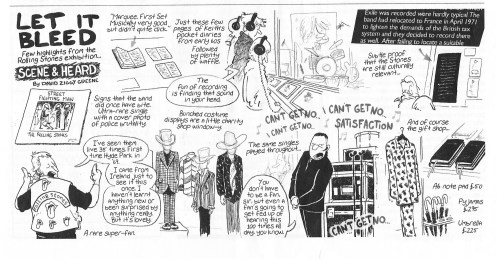
This week Private Eye ran it’s jaundiced gaze over Exhibitionism twice – here are the results!
The Totally Legendary Flamin’ Groovies will return to the Scala on April 25th
More info here https://www.atpfestival.com/newsview/1602051540
Once again I’ll be DJing, playing only vinyl singles released in 1966 – any requests ?

Also the Groovies have just released their best record since 1979 , especially Let Me Rock – the first song that Cryil and Chris wrote together and finally we have a decent studio version
Get it from Burger Records – also available on cassette, hipsters! http://burgerrecords.11spot.com/flamin-groovies-crazy-macy-pre-order.html
“Trouble Boys. The True Story Of The Replacements” Bob Mehr
Da Capo Press 2016 (hardback)
“They fuck you up, your mum and dad.
They may not mean to, but they do.
They fill you with the faults they had
And add some extra, just for you.”
Reading Bob Mehr’s exhaustive new book on The Replacements has made me reflect on the price our musical heroes pay for their fame and fortune – or in this case for their semi-obscurity and poverty. Mehr goes through the early lives of the band in forensic detail and is excellent at identifying how their family life had a massive influence on how their “career” has played out. Drummer Chris Mars seems to have had a reasonably stable upbringing and accordingly seems relatively unscathed – he is now a successful artist with no involvement with music. However for guitarist / singer / songwriter Paul Westerberg, bassist Tommy Stinson and guitarist Bob Stinson early-life trauma has lead to long-term problems with relationships, alcohol and drugs, with Bob dying tragically young as a result. Maybe happy, secure, well-adjusted, emotionally resilient individuals don’t form groups (or maybe they do and turn into Dire Straits or Level 42 or someone else equally unlistenable). The uncomfortable reality is that my record collection is peopled with screwed-up individuals who self-medicated themselves into oblivion and/or an early grave but made some fine rock’n’roll along the way.
Long-term Mats fan Mehr had a suspicion that the bands early lives were crucial. “I had a sense, instinctively, that there was more to the band’s personal stories that would shed light on their music and career. That was part of why I wanted to write the book in the first place. People so often talk about the Replacements’ wild behavior and self-destructive actions – they’ve been glorified and vilified in equal measure for that. But I felt like no one had really asked “why?” Why did they do what they did? Why did they live they way they did? So for me, I wanted to know the answer to that, and I sensed that I would find what I was looking for in their childhoods, formative years and early backgrounds. I didn’t know how deep and dark and difficult the story would be, but I was prepared to find out.”
This was only possible because Mehr took his time. “When I first sold the book to Da Capo in 2009, my editor there asked ‘How long do you think it will take?’ I told him, with undue confidence, ‘Two years – a year to research and a year to write.’ In the end it took me closer to seven years. But, as the saying goes, ‘Man makes plans and God laughs.’ The only disadvantage to the long gestation period was the pain I put my poor editor through with endless requests for deadline extensions. I think, however, that the book itself benefited tremendously from all the years of research and trust building that occurred between myself, the band, their families and the various other key principals in the story. Because I was able to develop relationships with them over time, and do such deep and ongoing research, I believe it prompted everyone to give of themselves – in terms of honesty and genuine reflection – just as seriously. Hence, why I think the book is such a penetrating portrait: the credit is really due to all those who decided to speak, often for the first time, about their lives with such depth and candour.’
The other consequence of so much research is that this is a lengthy read by rock bio standards – 474 pages. Did Mehr come under any pressure from publisher Da Capo to shorten the book? “The book certainly was much longer in its first draft – if you can believe that – than the finished version. That’s probably not an uncommon situation for a narrative biography. A writer’s tendency, having done all the research, is to want to show all that work off. Often that instinct doesn’t serve the bigger purpose of the narrative. I was fortunate to have great editors – including fellow author Michaelangelo Matos (a native Minnesotan, who penned the essential dance music history “The Underground is Massive”), who helped cut from the original longer manuscript without losing the essence of the book. In the end, everything that was important or critical to understanding the Replacements’ journey remained in the book. There were a selection of end notes that I had to cut at the last minute – these were more tangential, anecdotal or simply fun facts that were lost for the sake of space. But I’m hoping to include/restore them as ‘bonus material’, should there be a paperback edition.”

This is actually the third book on the Replacements, the first two (All Over But the Shouting: An Oral History / Waxed Up Hair And Pointed Shoes) having been written by Jim Walsh. What does Mehr make of them? “Jim is a good writer, friend and helped on my project, providing interview material and support. I think he was bold in that he made the first attempt to tell the band’s story with his oral history. Probably anyone who tried to do it first was going to be met with some combination of suspicion and derision from Paul and the group regardless of what the finished product was like. I think All Over was a legitimate effort to tell the story from Walsh’s particular perspective – that of a Minnesotan and contemporary of the band’s (Walsh’s own group REMs shared bills with the Replacements early on). But, obviously, I had the added advantage of the band’s participation and many years to develop the story as a narrative history.”
Mehr challenges, or at least re-positions, some of the key incidents in Walsh’s books, notably the alleged “take a drink or get off my stage” altercation between Westerberg and a newly-sober Bob Stinson. “I don’t refute that the incident itself took place. What I was trying to correct was the chronology and actual relevance of the incident, which was misreported and misunderstood. I had to do that with many episodes in the band’s history. In telling Bob Stinson’s story it was crucial for people to realize that his life and death were far greater and more complex than anything that happened in the Replacements or on a stage somewhere. I wanted to humanize him, to make him whole, so that people could grasp what a tragic and in many ways triumphant life he led during his 35 years.”


First Replacements manager Peter Jesperson was another key figure whose personal struggles are described in great detail here. “Peter Jesperson was absolutely key in making this project possible from the very beginning. And yes, the book does get into some difficult, often painful aspects of his life and personal history. That was a sacrifice on his part, but I believe that his love for the band, and his desire to give people a better understanding of their creative contributions and legacy, was more important to him than anything. Peter is that sort of person: he’s a true believer in music and in the Replacements, so I feel he’s happy or proud of the book, even though it’s a probably a difficult read in some ways, because it cuts so close to the bone. I would say the reactions from Paul and Tommy have been much the same. Tommy was particularly gratified – “inspired” was his word – about the first section of the book (which is all I know he’s read for certain), and how I dealt with the very sensitive Stinson family history and his relationship with Bob and the early roots of the band. Paul read the whole book – or so he told me. I would never use the word “pleased” to describe Paul – and, honestly, I don’t think normal emotional responses could possibly apply to seeing your entire life, including the very woolly years of your 20s, described in such detail. But as a reader and student of biographies and history, I think Paul understands what my job was and that I took my responsibility seriously. And that I tried to give the band a book worthy of the band’s legacy”
How about a movie, maybe along the lines of the Runaways pic? “I don’t have any expectation that this story will make it to the screen, big or small. It’s probably too tough and complex a tale to be given a Hollywood treatment. I would love to see someone like Andrew Dominik direct – I think he could make a very exciting rock and roll film. Casting the parts would be the toughest aspect – as I can’t think of any working actors offhand who have the requisite charm and humor and danger in them to accurately portray the Replacements. That’s kind of what makes the band so great – they were more charismatic and exciting than any actor could ever be.”
What did Mehr think of the Replacements reunion tour? “I went to a handful including the first show at Riot Fest in Toronto in 2013, and the band’s big Twin Cities’ homecoming at Midway Stadium. I was there both as a fan and their biographer. But having those dual roles did nothing to diminish my enjoyment. Each of the shows I saw was fantastic for different reasons. I think the most remarkable thing about the reunion is that the Replacements did not diminish their legend at all, but actually enhanced it. That’s a neat trick for any group to pull off, especially after 20-plus years away.”
These days does Mehr prefer Paul Westerberg and Tommy Stinson solo or as part of the Mats ? “Oh, I find everything each of them does fascinating on a musical and personal level – particularly after the experience of becoming the ‘Mats biographer. I feel towards Westerberg as I do Dylan — I’m always curious and excited for anything he puts out. Even if I don’t ultimately love it, it’s still infinitely interesting to me to see where his muse and music go. Tommy is someone who deserves far more credit for his music and songwriting than he gets. The Bash & Pop record and the Perfect LP (which I have the original 1996 mix, which I prefer to the belatedly released and remixed version) are among my most beloved albums. I’m very eager to hear his next solo record – which based on some early material I’ve heard – is shaping up to be his absolute masterpiece.”
So what’s next ? “I think it’s evident, given Paul’s work with Juliana Hatfield in the I Don’t Cares and Tommy’s solo efforts, that the Replacements are on hold for the time being. But my gut sense – and it’s pure speculation – is that there might be more to their story yet. As for me, given the years I spent writing the book, I feel duty bound to promote it, with events and appearances for the balance of this year at least. Then I’ll look to get started on my next project. Frankly, I’ll have a hard time finding a subject as rich, colorful and fascinating as the Replacements. They’re a tough act to follow.”


The Replacements Fan Questionnaire, completed by Bob Mehr and Peter Jesperson
- Favourite LP
Mehr “I’ll go with Tim – it was the record that hit me hardest during my teen years, and which remains closest to my heart (and contains some of Westerberg’s finest songs). Though I have soft spot for the sheer musical and stylistic abandon of Hootenanny as well.”
Jesperson “My favourite Mats LP is Let It Be, though I love all of the first four, from top to bottom”
- Favourite Gig
Mehr “The first reunion show in Toronto. Having, at that point, been working on the book for several years, to suddenly be whisked to Canada, and be standing side stage as the band came back to life before my very eyes was a truly surreal and remarkable experience.”
Jesperson “So hard to pick a favourite gig, I saw them play hundreds of times, there were so many phenomenal ones … on the nights they did the brilliant shows they were capable of, I didn’t think it possible there was a better rock & roll band on the planet at that moment. A couple of shows that stand out to me are – one, in 1982, the Mats were opening for the premier Twin/Tone band of the day, The Suburbs, at my old high school. I was standing with one of my former English teachers and the school Principal when the band walked onstage and opened with “Fuck School.” I don’t know why I didn’t see that coming, it seems so obvious now but, it caught me completely off-guard. We all, my then-present company included, had a good laugh! Another gig that sticks in my mind was the show they did at Irving Plaza in NYC in December of 1984. That was the week the band was on the cover of the Village Voice and just days after they got shit-faced drunk and did one of their all-cover-songs sets in front of many of the city’s A&R community at what was supposed to have been an “unannounced” gig at CBGB (they played under a pseudonym – Gary & The Boners). They came out on stage at Irving Plaza like they had something to prove and opened with a blazing version of the Kiss song “Rock and Roll All Nite.” I happened to be up in the balcony VIP section when they came on and it was hilarious to see the expressions on everyone’s faces there – a number of them clearly thought at first that the band was making fun of the song. But they played it straight and delivered a balls-to-the-wall version that was, no matter how you looked at it, undeniably great rock and roll. And they kept it up for the whole set – it was one of the best I ever saw them do.
- Favourite Incident That Turned Out To Be Untrue
Mehr “During the making of All Shook Down, the Replacements’ were staying at the Hyatt House on Sunset. Another guest there was the King (and Queen) of rock and roll, Little Richard. He kept a permanent residence, two suites in fact, at the hotel that happened to be on either side of Paul Westerberg’s room. One story that made the rounds suggested a rather close encounter between Little Richard and Tommy Stinson. As the tale went, Stinson came to Westerberg’s room one night, in a messy state, demanding more of whatever they’d ingested earlier in the evening. It turned out he was pounding on the wrong door, when it opened to reveal Little Richard in a silk kimono. The flamboyant Richard looked Tommy up and down and exclaimed “Well, hell-o room service. Come on in!” Stinson was frozen. He had not been prepared to meet a giant bi-sexual rock legend in full readiness at the Riot House, and made haste back to his room. Alas, this story – related by several people, most colorfully by the Georgia Satellites’ Dan Baird – proved to be apocryphal. As far as Stinson could remember the only encounters he had with Little Richard were in the lobby of the hotel, where they chatted and he got him to sign an autograph.”
- Favourite Story That Turned Out To Be True
Mehr “Too many to count. That’s the funny thing with the Replacements – most of the famous stories one would totally assume were embellished, exaggerated or apocryphal, turned out to be absolutely true.”
Jesperson “There are just so many it’s hard to choose just one … but the time very early on when Longhorn owner Hartley Frank pulled us all outside of the bar to try to convince the band that the gig he was offering them on short notice for little money and with no time to promote it was a good idea. I opposed it, the band trusted me and effectively told Hartley that, from then on, he had to talk to me when he wanted to book the band … it was funny and it was one of the first great moments of solidarity between the band and I.”
- What would have happened if Rod Stewart had recorded Sixteen Blue?
Jesperson “Geez, the mind reels. It could have been great, in terms of validation and made other people take them more seriously. But it also could have been detrimental – a large influx of money to them in 1984, especially since the largest portion would’ve gone to Paul as the only writer on that song, may have driven a wedge between them. “
- There is still good unreleased Twin Tone material, both studio and live – would you ever put it out ?
Jesperson “I don’t think there is much good unreleased Twin/Tone material any more. We used the good stuff on the reissues we did for Rhino in 2008. Though we suspect that Paul has a lot of unreleased home recordings and there could be some real gems there. It’s just taken a while to get around to putting out unreleased Replacements recordings of any kind, partially because there wasn’t a huge demand and partially because live tapes and bootlegs have circulated for years so the real fans already have a lot of it. But I think there will be some cool archival Replacements releases in the years to come.”
Simon Wright 24.03.16
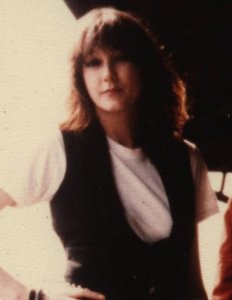
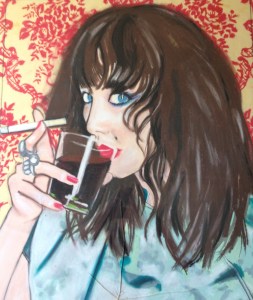
Rock’n’roll muse Maria McCormack has died at the age of 61.
Her outgoing character and hedonistic lifestyle inspired rock musicians including Wilko Johnson (Dr Feelgood), Phil Lynott (Thin Lizzy), Lemmy (Motorhead) and Glen Matlock (Sex Pistols) as well as the painter Edward Bell (best known for his Bowie album covers).
Maria’s father, a career soldier from Newcastle upon Tyne, married an Irish girl from Derry and emigrated to Australia where Maria was born in 1954. The family soon returned to Britain and Maria grew up first in Newcastle Co. Down where, as a natural tomboy, she wandered the Mourne Mountains. When the Troubles started, the family returned to England, settling in Wembley. Maria’s uncle, John Hume, became a key player in the Northern Ireland peace process.
After school Maria worked in Town Planning but by 1973 the lure of music and musicians was irresistible. At the Speakeasy and the newly opened Dingwalls Dancehall – frequently in cahoots with her brother Michael – she befriended many key figures from the worlds of music and the underground press, including the late publisher, poet and philanthropist Felix Dennis. Felix was quick to spot the commercial potential of Kung Fu, and Maria joined him in late-night drives around London, selling his new Bruce Lee magazine to cinema queues.
At one point Maria was simultaneously working as a librarian in High Wycombe and as a dancer at the Windmill Theatre in Soho. She also played bass in all-female rock band Sleek. Fellow dancer and Sleek founder Voyna Crofts said of Maria “She was so lovely, and talented and gorgeous, she could do anything she wanted”.
In 1987 Maria met guitarist John Perry (The Only Ones) who remained her partner until her death on 9th March. After meeting John she returned to higher education and gained a degree in Social Sciences from Royal Holloway & Bedford College, University of London.
Spinal Tap’s dictum of “have a good time, all the time” certainly applied to Maria. The after-effects of this, coupled with undiagnosed coeliac disease, meant that in recent years Maria was unwell most of the time and it was only through John’s steadfast support that she lasted as long as she did. On the rare occasions she could be persuaded out she was good company – entertaining, generous and kind-hearted. She is survived by John and her three brothers.
An online version of this obituary has now been published by The Guardian here http://www.theguardian.com/music/2016/mar/28/maria-mccormack-obituary
The print version of The Guardian ran a similar version on 22.04.16 (see below)
Simon Wright 16.03.16
Dave Davies, Islington Assembly Halls, December 18th 2015
First the bad news: Dave Davies currently has the worst haircut in rock’n’roll – bald at the front, long at the back. However everything else about this gig was tremendous.
The Assembly Halls is resolutely old-school (you can get married here) with a high ceiling, elevated stage and sprung wooden-floor. Throughout a generous 18-song set there was room to groove for an enthusiastic audience.
Having brother Ray scoot on for an encore of You Really Got Me was always going to be an attention-grabbing gambit (first time on stage together since 1996 blah blah). Ray looked as though he had a cab running – he didn’t even bother to take off his coat and flat cap. Momentous, but an event that risks overshadowing what went before. Dave went diving for pearls from his back catalogue and in addition to a good selection of Kinks hits he came up trumps with Strangers, Young And Innocent Days, This Man He Weeps Tonight and She’s Got Everything (progenitor of the Woman From Tokyo riff, fact fans).
Dave (first guitar, vocals) was sympathetically backed by Dennis Diken on drums (Smithereens) plus Jonathan Lea on second guitar and occasional bass and Tom Currier on bass and keyboards, the latter especially effective on a jaunt through Death Of A Clown complete with a duo of female backing singers. Everyone involved is a rabid Kinks fan, making this tour a labour of love.
The twinkle in Dave’s eye was unmistakeable as he finished the main set with his theme tune, I’m Not Like Everybody else. To have survived all the traumas outlined in his autobiography Kink (recommended) and come out smiling and rocking at the age of 68 is a stunning achievement, and something we were all delighted to applaud tonight.
Setlist
Ripping Up Time
All Day And All Of The Night
She’s Got Everything
Creepin Jean
Tired Of Waiting
Front Room
See My Friends
In You I Believe
Strangers
Flowers In The Rain (no, not that one)
Young And Innocent days
This Man He Weeps Tonight
Death Of A Clown
Living On A Thin Line
Dead End Street
Where Have All The Good Times Gone?
I’m Not Like Everybody Else
You Really Got Me (with RDD)
That encore https://m.youtube.com/watch?v=2yWZizDPNAY
This EP represents the second salvo in Remarquable Records’ Thunders re-release programme – an even better package than its predecessor, Real Times. The sleeve takes its design cues from the “…Memory” single and features a live shot of Johnny and Patti Paladin on the rear, probably from when the Living Dead revue had a residency at the Speakeasy. Inside a fold-out poster offers generous sleeve notes and some unseen photos. The record itself is pressed in eyeball-frazzling yellow vinyl, and the package is completed by a free download.
All four tracks here were produced by Steve Lillywhite at Island studios, Sprng 1978. Backing JT are Phil Lynot on bass, French teen whizz-kid Henri Paul on guitar and Mike Kellie from the Only Ones on drums. The title track is a stripped down version with Lynot on backing vocals: however unlike the more familar So Alone version he does not sing one of the verses. London Boys is Thunders response to the Sex Pistols’ New York: a decent version but the song itself is deficient.
On Side Two Thunders fans will be intrigued by the semi-instrumental New York. The riff is a hybrid of Willie Dixon’s Spoonful and JTs own Cosa Nostra, the latter not officially released until 1983’s Hurt Me. It’s an excellent showcase for Johnny’s guitar work and at 5.15 the longest track here. Finally Hurtin’ is a rare Paul / Thunders co-write and a longer version than appears on the B-side of “…Memory”.
Sound is sparkling throughout. A valuable package. Congratuations to Pedro and all at Remarquable.
Next from Remarquable (January 2016) is a revamped version of So Alone, one of my all-time favourite LPs. Rockin’ good news…

On many of the gigs I have been to in recent years I have been accompanied by Simon Dunn, who sadly died in the early hours of Monday 16th November 2015.
Simon Dunn and I coincided over a love of two things: natural foods and the Rolling Stones. Over dinner before a Sainsbury’s organic dairy meeting I got talking to Simon for the first time about something other than work and realised his deep love of rock’n’roll was a match for my own. There followed a series of excursions: The Who in Southampton, Pete Townshend in Brick Lane and the Stones all over the place, most recently Zurich. His party animal tendencies dimmed in recent years but he was always up for a music-related chat. We even managed to get some work done occasionally, although sadly Fairtrade cigarettes never happened. Simon was a passionate champion of small brands and carefully shepherded their growth: Ecover, Whole Earth, Cawston Press and Jordans were just some of his success stories. He was lucky to find his ever-supportive wife Alyson, and he knew it.
The above photo was taken in Dublin on 17/8/07, the night before seeing the Stones at Slane Castle ( https://onlyrockandroll.london/2012/03/13/got-to-scrape-that-shit-right-off-your-shoes/.) The Guinness is in focus, Simon is a bit fuzzy which seems about right.
 Only Rock 'n' Roll