Teenage Cancer Trust Benefit
View: Right Down The Front (Arena F)
Royal Albert Hall, March 25th 2022
A more accurate description would be Townshend/Daltrey Unplugged, albeit with a band featuring Who stalwarts Simon Townshend and Billy Nicholls on guitar and vocals plus bass-player Phil Spalding, Charlie Hart on fiddle, Andy Cutting playing the accordion, Geraint Watkins on keyboards and longtime collaborator Jody Linscott exuberant on percussion. The opening salvo of Substitute and The Kids Are Alright demonstrated how many of the early Who songs work really well when played only on acoustic guitar. Repeated attempts at Squeeze Box in a variety of keys suggested that the two hours rehearsal time claimed by Townshend was generous, but the version of Tattoo that followed was gorgeous. From then on it was a mixture of the well known (Who Are You, Behind Blue Eyes, Pinball Wizard, Eminence Front) and the more obscure (Let My Love Open The Door, Real Good Looking Boy). Beads On One String received its live debut, dedicated to the people of Ukraine. The double whammy of Baba O’Reilly and Won’t Get Fooled Again brought the capacity crowd to their feet, the latter performed by Daltrey and Townshend as an intimate duet. A fascinating sidelong glance at the Who, which devoid of the Sturm und Drang of their normal electric performances demonstrated the strength of their songbook.
This review written for Record Collector magazine
Thanks to the sterling work of Keith Steptoe we can now be found on Spotify (whatever that is) here
And the Soul Jazz LP featuring Priorities is allegedly being released in time for Record Store Day next month, we shall see…

Available now from http://www.1960s.london
Side One
1. (I Don’t Want To Discuss It) You’re My Girl (Cooper, Beatty, Shelby)
2. Bad ‘n’ Ruin (McLagan, Stewart)
3. It’s All Over Now (Womack, Womack)
Side Two
1. Had Me A Real Good Time (Lane, Stewart, Wood)
2. (I Know) I’m Losing You (Whitfield, Holland, Grant)
3. Richmond (Lane)
4. Bad ‘n’ Ruin (McLagan, Stewart)
Recording Details
Side One Tracks 1-3 and Side Two Tracks 1 & 2 recorded live for BBC Radio John Peel’s Sunday Concert on May 13th 1971 and broadcast May 23rd 1971
Side Two Tracks 3 & 4 Live vocals over a backing track, recorded for BBC TV Top Of The Pops April 28th 1971 and broadcast April 29th 1971
Personnel
Rod Stewart – lead and backing vocals
Ronnie Lane – bass, backing vocals, lead vocals
Ron Wood – lead guitar, slide guitar, backing vocals
Ian McLagan – Hammond organ, pianos, backing vocals
Kenney Jones – drums and percussion
Sleevenotes
1971 was a fantastic year for the Faces, as critical acclaim and commercial success coincided. The profile of singer Rod Stewart was also in the ascendant, which would prove helpful to begin with but a problem in due course. Our previous two LPs (R&B 71 and R&B ??) documented the band’s live activities in 1970. As we move into 1971 we see more reliance on the band’s own material and greater self-confidence onstage. The band’s progress continued to be documented through their close relationship with BBC TV and radio and with DJ John Peel in particular.
Sunday Concert kicked off with a lengthy rendition of live staple I Don’t Want To Discuss It (Rhinoceros via Delaney & Bonnie via Little Richard), which they had recorded for Stewart’s second solo album Gasoline Alley, released in June 1970. Here Stewart repeated the call-and-response vocal style he had used in the Jeff Beck Group with Ron Wood’s guitar doing the responding. The same LP provided a rousing version of It’s All Over Now with McLagan’s bar-band piano introducing a strutting version of the Valentinos / Stones classic with Wood on slide and solo spots for Lane and McLagan. Sandwiched between the two was Bad’n’Ruin, a highlight of second Faces LP Long Player, released in February 1971. Stewart announced that it was the first time the band had played the song live and that “it might fall apart in the middle”: it didn’t, even during the tricky decelerating ending. Had Me A Real Good Time was by now the band’s anthem, with some of Stewart’s wittiest lyrics and a snatch of Auld Lang Syne in the middle. The Faces version of the Temptations (I Know) I’m Losing You would eventually appear on Stewart’s third solo LP in July 1971, the massively successful Every Picture Tells A Story. Stewart announces it as “one of the best standards that we ever do” and he’s right, even a Kenney Jones drum solo cannot derail the song’s momentum.
The two bonus tracks are from BBC’s popular TV chart programme Top Of The Pops. Although focussed on singles, by April 1971 an Album Of The Week feature had been introduced, giving the Faces a chance to plug Long Player. Opening track Bad’n’Ruin was an obvious choice with Rod cavorting in a pink jacket, Kenney Jones sporting a questionable moustache and Ronnie Wood playing a guitar made out of a toilet seat complete with toilet roll. A less obvious track was Ronnie Lane’s singing his acoustic ballad Richmond, written on tour in the US on how he would sooner be at home. This too would cause problems in the future.
But let us leave the Faces in Spring 1971, very much on the way up, making wonderful music and knowing there was more to come…
Sleevenotes
Deborah Ree
Available from http://www.1960s.london

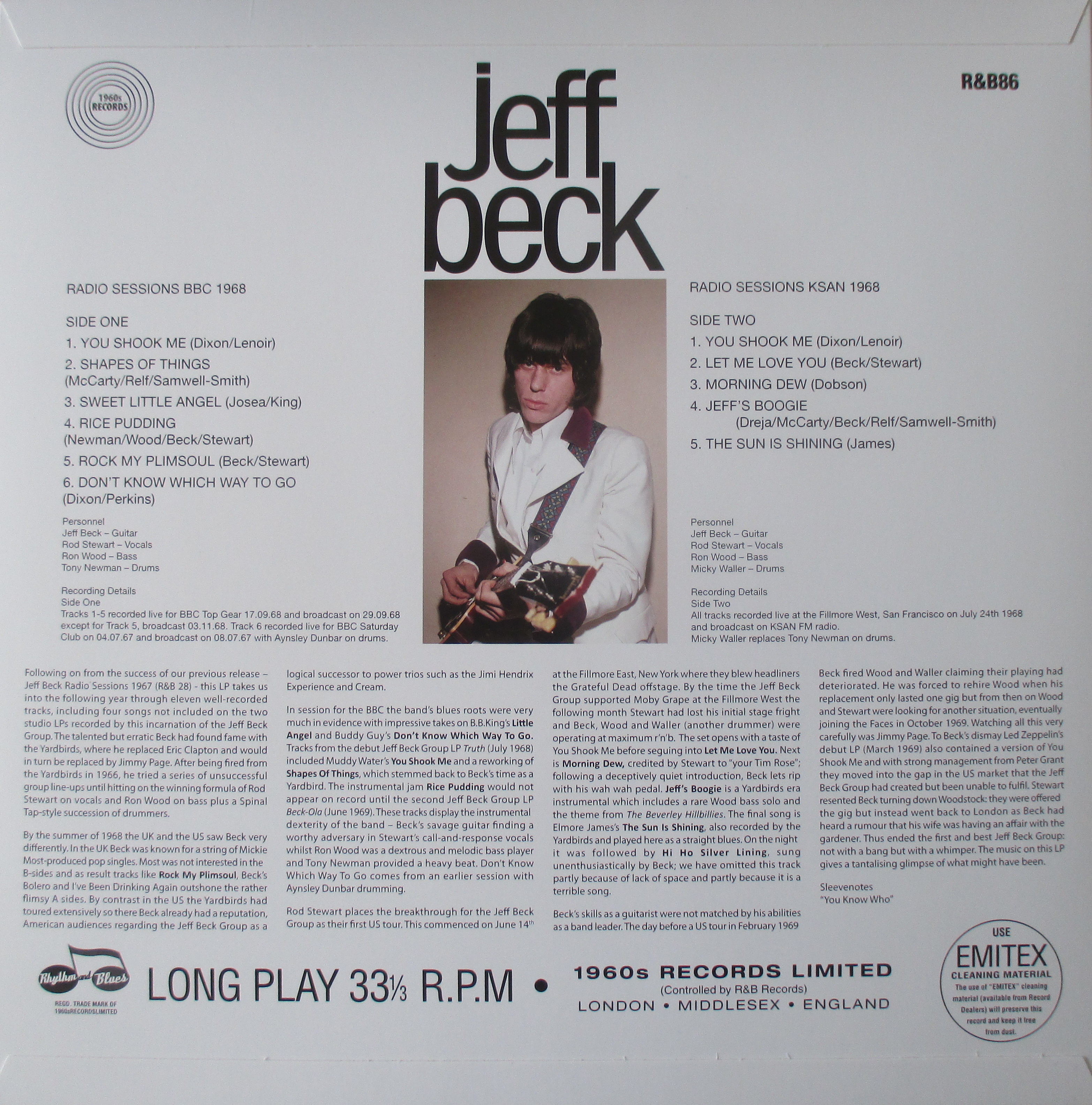
The Jeff Beck Group with Rod Stewart – Radio Broadcasts 1968
Side One
- You Shook Me (Dixon, Lenoir)
- Shapes Of Things (McCarty, Relf, Samwell-Smith)
- Sweet Little Angel (Taub, King)
- Rice Pudding (Newman, Wood, Beck, Stewart)
- Rock My Plimsoul (Beck, Stewart)
- Don’t Know Which Way To Go (Dixon, Perkins)
Side Two
- You Shook Me (Dixon, Lenoir)
- Let Me Love You (Beck, Stewart)
- Morning Dew (Dobson)
- Jeff’s Boogie (Dreja, McCarty, Beck, Relf, Samwell-Smith)
- The Sun Is Shining (James)
Personnel
Jeff Beck – Guitar
Rod Stewart – Vocals
Ron Wood – Bass
Tony Newman – Drums (Side One, Tracks 1-5)
Aynsley Dunbar – Drums (Side One, Track 6)
Micky Waller – Drums (Side Two)
Recording Details
Side One
Tracks 1-5 recorded live for BBC Top Gear 17.09.68 and broadcast on 29.09.68 except for Track 5, broadcast 03.11.68
Track 6 recorded live for BBC Saturday Club on 04.07.67 and broadcast on 08.07.67
Side Two
All tracks recorded live at the Fillmore West, San Francisco on July 24th 1968 and broadcast on KSAN FM radio
Sleevenotes
Following on from the success of our previous release – Jeff Beck Radio Sessions 1967 (R&B 28) – this LP takes us into the following year through eleven well-recorded tracks, including four songs not included on the two studio LPs recorded by this incarnation of the Jeff Beck Group.
The talented but erratic Beck had found fame with the Yardbirds, where he replaced Eric Clapton and would in turn be replaced by Jimmy Page. After being fired from the Yardbirds in 1966 he tried a series of unsuccessful group line-ups until hitting on the winning formula of Rod Stewart on vocals and Ron Wood on bass plus a Spinal Tap-style succession of drummers.
By the summer of 1968 the UK and the US saw Beck very differently. In the UK Beck was known for a string of Mickie Most-produced pop singles. Most was not interested in the B-sides and as result tracks like Rock My Plimsoul, Beck’s Bolero and I’ve Been Drinking Again outshone the rather flimsy A sides. By contrast in the US the Yardbirds had toured extensively so there Beck already had a reputation, American audiences regarding the Jeff Beck Group as a logical successor to power trios such as the Jimi Hendrix Experience and Cream.
In session for the BBC the band’s blues roots were very much in evidence with impressive takes on B.B.King’s Little Angel and Buddy Guy’s Don’t Know Which Way To Go. Tracks from the debut Jeff Beck Group LP Truth (July 1968) included Muddy Water’s You Shook Me and a reworking of Shapes Of Things, which stemmed back to Beck’s time as a Yardbird. The instrumental jam Rice Pudding would not appear on record until the second Jeff Beck Group LP Beck-Ola (June 1969). These tracks display the instrumental dexterity of the band – Beck’s savage guitar finding a worthy adversary in Stewart’s call-and-response vocals whilst Ron Wood was a dextrous and melodic bass player and Tony Newman provided a heavy beat. Don’t Know Which Way To Go comes from an earlier session with Aynsley Dunbar drumming.
Rod Stewart places the breakthrough for the Jeff Beck Group as their first US tour. This commenced on June 14th at the Fillmore East, New York where they blew headliners the Grateful Dead offstage. By the time the Jeff Beck Group supported Moby Grape at the Fillmore West the following month Stewart had lost his initial stage fright and Beck, Wood and Waller (another drummer) were operating at maximum r’n’b. The set opens with a taste of You Shook Me before seguing into Let Me Love You. Next is Morning Dew, credited by Stewart to “your Tim Rose”: following a deceptively quiet introductionBeck lets rip with his wah wah pedal. Jeff’s Boogie is a Yardbirds era instrumental which includes a rare Wood bass solo and the theme from The Beverley Hillbillies. The final song is Elmore James’ The Sun Is Shining, also recorded by the Yardbirds and played here as a straight blues. On the night it was followed by Hi Ho Silver Lining, sung unenthusiastically by Beck: we have omitted this track partly because of lack of space and partly because it is a terrible song.
Beck’s skills as a guitarist were not matched by his abilities as a band leader. The day before a US tour in February 1969 Beck fired Wood and Waller claiming their playing had deteriorated. He was forced to rehire Wood when his replacement only lasted one gig but from then on Wood and Stewart were looking for another situation, eventually joining the Faces in October 1969. Watching all this very carefully was Jimmy Page. To Beck’s dismay Led Zeppelin’s debut LP (March 1969) also contained a version of You Shook Me and with strong management from Peter Grant they moved into the gap in the US market that the Jeff Beck Group had created but been unable to fulfil. Stewart resented Beck turning down Woodstock: they were offered the gig but instead went back to London as Beck had heard a rumour that his wife was having an affair with the gardener. Thus ended the first and best Jeff Beck Group: not with a bang but with a whimper. The music on this LP gives a tantalising glimpse of what might have been.
Sleevenotes: “You Know Who”
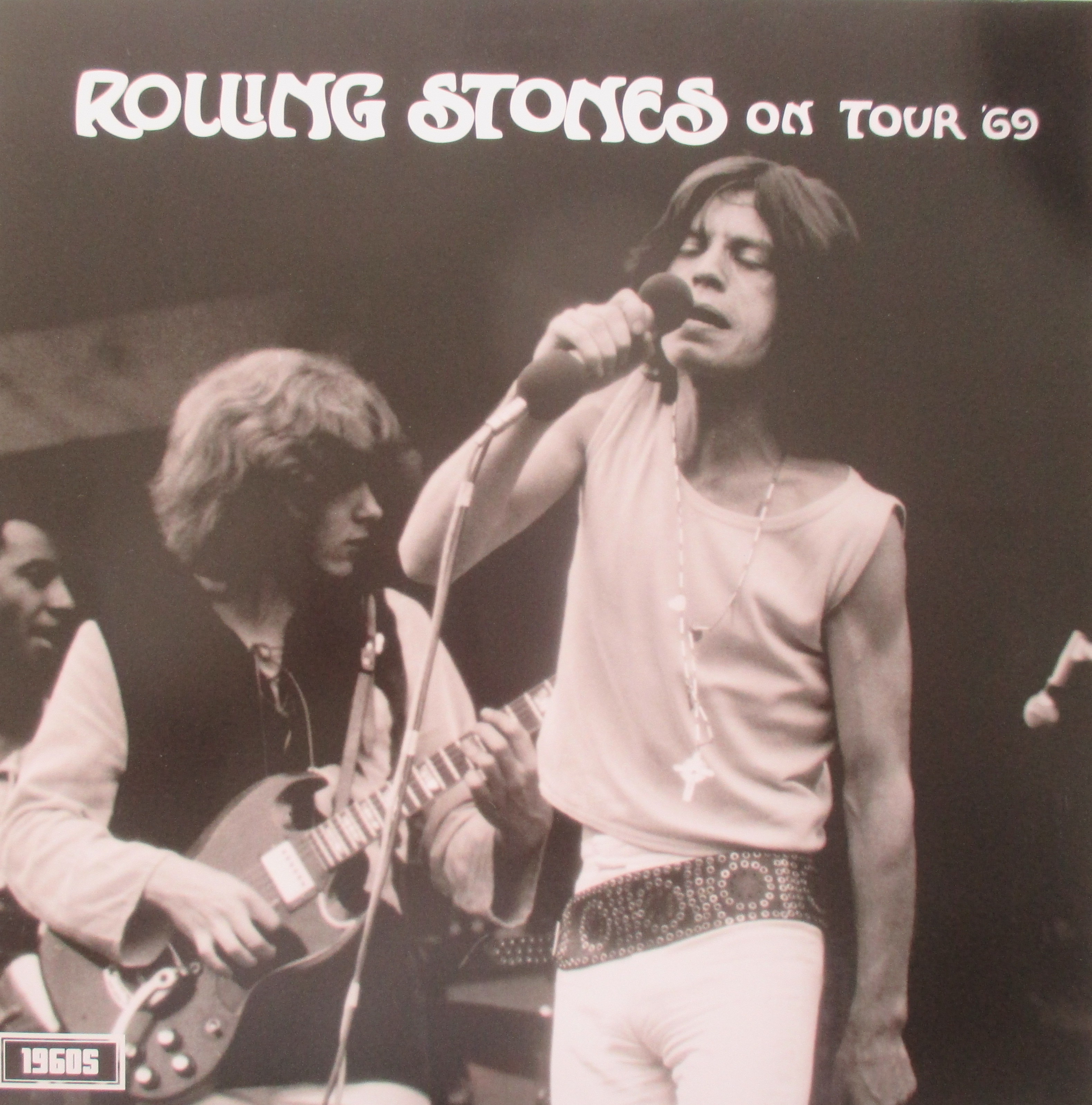
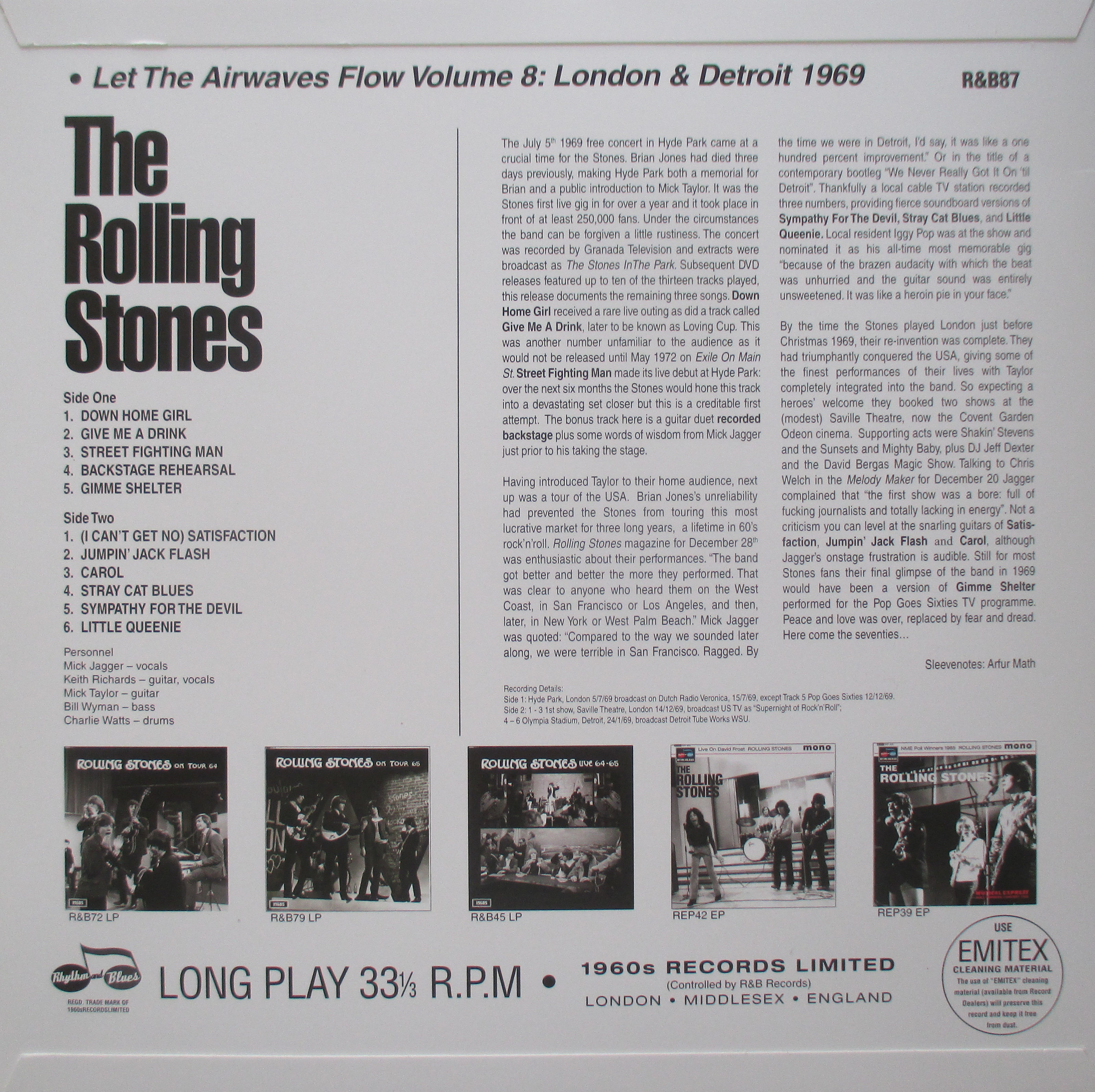
Let The Airwaves Flow Volume 6: London & Detroit 1969
The Rolling Stones
SIDE ONE
- Down Home Girl (Leiber/Butler)
- Give Me A Drink (Jagger/Richards)
- Street Fighting Man (Jagger/Richards)
- Backstage Rehearsal with Mick Jagger (interview)
- Gimme Shelter (Jagger /Richards)
SIDE TWO
- (I Can’t Get No) Satisfaction (Jagger/Richards)
- Jumpin’ Jack Flash (Jagger/Richards)
- Carol (Chuck Berry)
- Sympathy For The Devil (Jagger/Richards)
- Stray Cat Blues (Jagger/Richards)
- Little Queenie (Chuck Berry
Recording Details
Side 1
Tracks 1 – 4 recorded live in Hyde Park, London July 5th 1969 broadcast on Dutch Radio Veronica, July 15th 1969
Track 5 broadcast Pop Goes Sixties December 12th 1969
Side 2
Tracks 1 – 3 1st show, Saville Theatre, London December 14th 1969 broadcast US TV as “Supernight of Rock’n’Roll”
Tracks 4 – 6 recorded live at the Olympia Stadium, Detroit on November 24th 1969 and broadcast on Detroit Tube Works WSU
Personnel
Mick Jagger – vocals
Keith Richards – guitar, vocals
Mick Taylor – guitar
Bill Wyman – bass
Charlie Watts – drums
Sleevenotes
The July 5th 1969 free concert in Hyde Park came at a crucial time for the Stones. Brian Jones had died three days previously, making Hyde Park both a memorial for Brian and a public introduction to Mick Taylor. It was the Stones first live gig in for over a year and it took place in front of at least 250,000 fans. Under the circumstances the band can be forgiven a little rustiness. The concert was recorded by Granada Television and extracts were broadcast as The Stones InThe Park. Subsequent DVD releases featured up to ten of the thirteen tracks played, this release documents the remaining three songs. Down Home Girl received a rarelive outing as did a track called Give Me A Drink, later to be known as Loving Cup.This was another number unfamiliar to the audience as it would not be released until May 1972 on Exile On Main St. Street Fighting Man made its live debut at Hyde Park: over the next six months the Stones would hone this track into a devastating set closer but this is a creditable first attempt. The bonus track here is a guitar duet recorded backstage plus some words of wisdom from Mick Jagger just prior to his taking the stage.
Having introduced Taylor to their home audience next up was a tour of the USA. Brian Jones unreliability had prevented the Stones from touring this most lucrative market for three long years, a lifetime in 60’s rock’n’roll. Rolling Stones magazine for December 28th was enthusiastic about their performances. “The band got better and better the more they performed. That was clear to anyone who heard them on the West Coast, in San Francisco or Los Angeles, and then, later, in New York or West Palm Beach.” Mick Jagger was quoted: “Compared to the way we sounded later along, we were terrible in San Francisco. Ragged. By the time we were in Detroit, I’d say, it was like a one hundred percent improvement.” Or in the title of a contemporary bootleg “We Never Really Got It On ‘til Detroit”. Thankfully a local cable TV station recorded three numbers, providing fierce soundboard versions of Sympathy For The Devil, Stray Cat Blues, and Little Queenie. Local resident Iggy Pop was at the show and nominated it as his all-time most memorable gig “because of the brazen audacity with which the beat was unhurried and the guitar sound was entirely unsweetened. It was like a heroin pie in your face.”
By the time the Stones played London just before Christmas 1969 their re-invention was complete. They had triumphantly conquered the USA, giving some of the finest performances of their lives with Taylor completely integrated into the band. So expecting a heroes’ welcome they booked two shows at the (modest) Saville Theatre, now the Covent Garden Odeon cinema. Supporting acts were Shakin’ Stevens and the Sunsets and Mighty Baby, plus DJ Jeff Dexter and the David Bergas Magic Show. Talking to Chris Welch in the Melody Maker for December 20 Jagger complained that “the first show was a bore: full of fucking journalists and totally lacking in energy”. Not a criticism you can level at the snarling guitars of Satisfaction, Jumpin’ Jack Flash and Carol, although Jagger’s onstage frustration is audible. Still for most Stones fans their final glimpse of the band in 1969 would have been a version of Gimme Shelter performed for the Pop Goes Sixties TV programme. Peace and love was over, replaced by fear and dread. Here come the seventies…
Sleevenotes: Arfur Math
Out now from http://www.1960s.london
Selected Extracts From The Original Soundtrack
All music composed and played by Brian Jones
Personnel
Brian Jones: sitar, organ, guitar, recorder, bass, banjo, dulcimer, harmonica
Jimmy Page: guitars
Nicky Hopkins: piano
Kenney Jones: drums
Peter Gosling: keyboards, Mellotron, vocals
Mike Leander: orchestra
Glyn Johns: engineering
Recording Details
Recorded January – February 1967 @ IBC and Olympic Studios, London. Broadcast on ZDF TV 1969
Sleevenotes
In early 1967 Brian Jones found time in between Stones tours to record the soundtrack to the film Mord und Totschlag (A Touch Of Murder), starring his then- partner Anita Pallenberg as Marie. In the film Marie shoots her ex-boyfriend with his own gun after he attempts to beat her up. Instead of reporting this to the police she hires two men to help her dump the body in a construction site near an autobahn. Although the film was entered into the 1967 Cannes Film Festival it is known today chiefly for its soundtrack. The tracks on this EP provide you with the musical highlights from the soundtrack, which has never officially been released.
Talking to Rolling Stone in 2012 collaborator Jimmy Page said “Brian knew what he was doing. It was quite beautiful. Some of it was made up at the time; some of it was stuff I was augmenting with him. I was definitely playing with the violin bow. Brian had this guitar that had a volume pedal – he could get gunshots with it. There was a Mellotron there. He was moving forward with ideas.” In the film’s official press release, director Volker Schlöndorff was delighted with the results. “Brian’s music has worked so marvellously. His special music fits the film wonderfully – and I do not think anyone but he could have done it.”
William Perks


Writing in Record Collector magazine for May 2022 Ian McCann really liked this record:

A three hour session outdoors with bonfire and mulled Abundance cider. It’s great to be back!
The Swag – Link Wray
I Hear you Knocking – Dave Edmunds
Acquiesce – Oasis
Let It Rock – Rolling Stones
I’m A Believer – Monkees
Tusk – Fleetwood Mac
Gangsters – Specials
Roadhouse Blues – Doors
Is She Really Going Out With Him? – Joe Jackson
Get It On – T.Rex
It’s My Party – Lesley Gore
Nothing Compares 2 U – Sinead O’Connor
Last Nite – Strokes
White Man In Hammersmith Palais – Clash
You Know I’m No Good – Amy Winehouse
Happy Together – Turtles
Back In The USSR – Beatles
Sheena Is A Punk Rocker – Ramones
Walk Like An Egyptian – Bangles
Heroes – David Bowie
Heart Of Glass – Blondie
Town Called Malice – Jam
Reward – Teardrop Explodes
This Charming Man – Smiths
Lazy Sunday – Small Faces
Something In The Air – Thunderclap Newman
Lola – Kinks
Walk On The Wild Side – Lou Reed
Leader Of The Pack – Shangri La’s
Love is the Drug – Roxy Music
Loaded – Primal Scream
Unfinished Sympathy – Massive Attack
Miss You – Rolling Stones
Mony Mony – Tommy James & The Shondells
Go Your Own Way – Fleetwood Mac
I Love The Sound Of Breaking Glass – Nick Lowe
I Can’t Stand Up For Falling Down – Elvis Costello
Gimme Some Loving – Spencer Davis Group
Money – Barrett Strong
All The Young Dudes – Mott The Hoople
Sex & Drugs & Rock & Roll – Ian Dury
London Calling – Clash
Jumping Jack Flash – Rolling Stones
Let’s Dance – Chris Montez
Last Train To Clarkesville – Monkees
Shout – Isley Brothers
Brass In Pocket – Pretenders
Once In A Lifetime – Talking Heads
Amy Winehouse – Rehab
Ghost Town – Specials
Woke Up This Morning – Alabama 3
Because The Night – Patti Smith
Pump It Up – Elvis Costello
John I’m Only Dancing – David Bowie
7 Nation Army – White Stripes
Dance To The Music – Sly & The Family Stones
Jeepster – T.Rex
Layla Part Two – Derek & The Dominoes
Available now from http://www.1960s.london
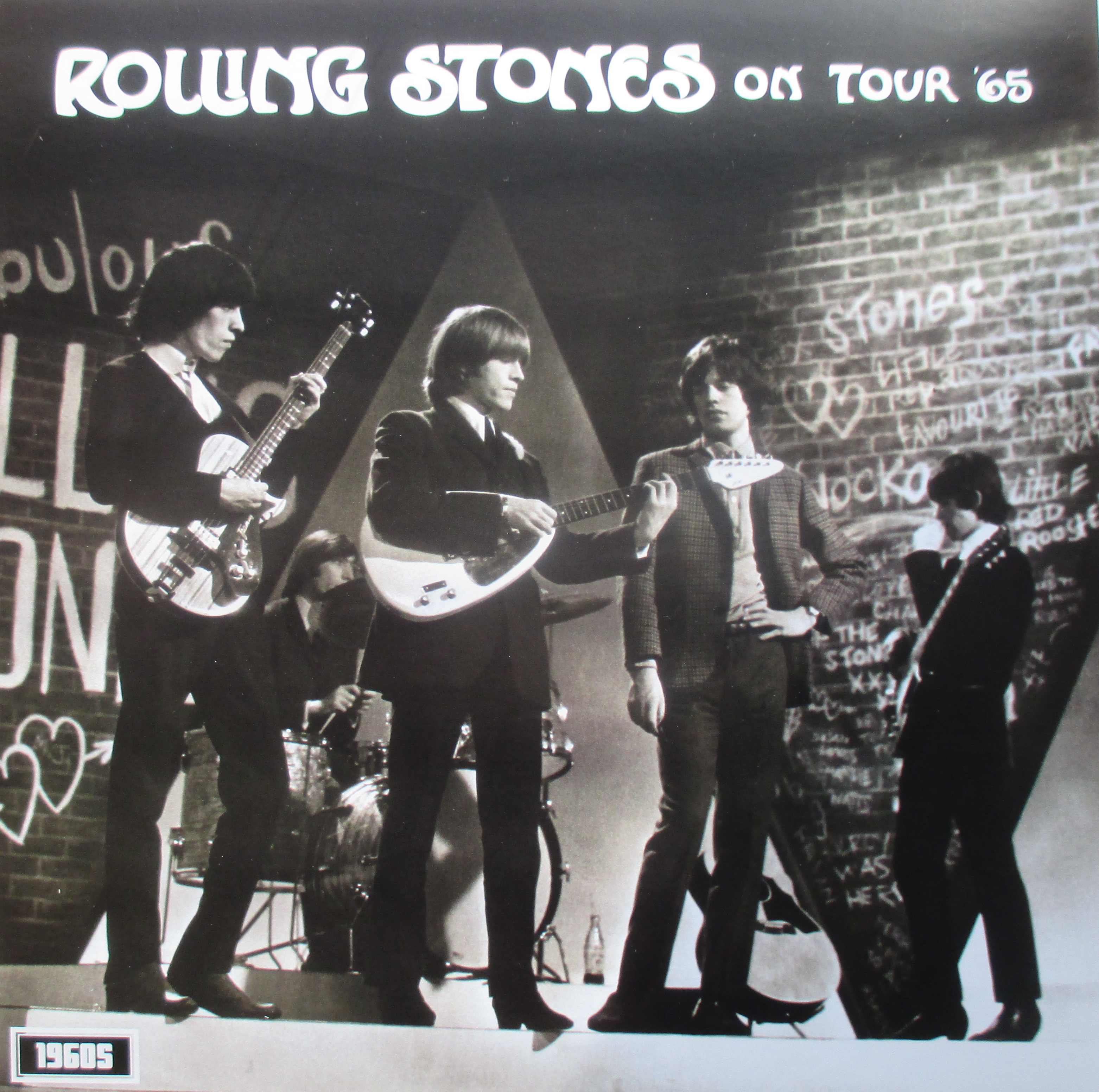
Let The Airwaves Flow Volume 7: On Tour ’65 Germany and More
The Rolling Stones
Side A
- Everybody Needs Somebody To Love (Russell, Burke, Wexler)
- Pain In My Heart (Neville)
- Around And Around (Berry)
- Time Is On My Side (Meade)
- I’m Movin’ On (Snow)
- The Last Time (Jagger, Richard)
- (I Can’t Get No) Satisfaction (Jagger, Richard)
- I’m Alright (McDaniel)
Side B
- (I Can’t Get No) Satisfaction (Jagger, Richard)
- She Said Yeah (Jackson, Christy)
- Get Off My Cloud (Jagger, Richard)
- (I Can’t Get No) Satisfaction (Jagger, Richard)
- I’m Alright (McDaniel)
- Little Red Rooster (Willie Dixon)
- Get Off My Cloud (Jagger, Richard) / Satisfaction (Jagger, Richard) / I’m Movin’ On (Snow)
Side One
Tracks 1 – 8 recorded live in the Ernst Merck Halle, Hamburg, Germany on September 13th (second show) and broadcast on German TV
Side Two
Tracks 1 – 3 Recorded for Hullabaloo US TV, New York, 11th November
Tracks 4 & 5 Recorded live at Halle Munsterland, Munster, Germany (first show) on September 11th and broadcast on German TV (ZDF) Schaufenster Deutschland and Deutsche Wochenschau
Track 6 Rehearsal recorded live and broadcast January 6th on UTV Belfast Six Five
Track 7 Recorded live in Waldbuhne, Berlin, Germany on September 15th and broadcast on German TV SFB Berliner Abendschau on September 16th
Personnel
Mick Jagger – Vocals, harmonica, maracas
Keith Richard – Guitar, vocals
Brian Jones – Guitar, tambourine
Bill Wyman – Bass
Charlie Watts – Drums
Sleevenotes
The Rolling Stones first visit to Germany was a “riotous five city affair” (Bill Wyman) with thousands of screaming fans greeted by the police using water cannons. An Essen policeman claimed “I’ve seen nothing like this since the old days of a Nazi or Communist rally.” The Berlin date ended in a full-scale riot: the excerpts of Get Off My Cloud, Satisfaction and I’m Moving On included here come from a German TV news programme scandalised by the damage done to the venue. Equally seismic was Brian Jones meeting Anita Pallenberg for the first time after the Munich gig.
Everybody Needs Somebody To Love makes for an impassioned opener to the Hamburg set, with Jagger testifying during Pain In My Heart. The recording is so clear you can hear Jagger’s handclaps on Around And Around before the guitars of Richard and Jones muscle in and take over. Time Is On My Side features Keith Richard’s languid backing vocals providing a charming if slightly ragged harmony. A rare live outing for I’m Moving On includes Brian Jones on slide duetting with Jagger’s harmonica whilst Richards holds down the rhythm. A very polite Charlie Watts introduces The Last Time – more joint Jagger/Richardvocals and chiming twin guitars. The band stomps through Satisfaction before finishing with I’m Alright, Bill Wyman’s bass carrying the rhythm as Jagger works the crowd into a frenzy. Two songs from Munster reveal Jagger making full use of a big stage to rouse a predominantly-seated audience during Satisfaction. Jones is in imperious form, shaking a tambourine to get the crowd going during the closing I’m Alright.
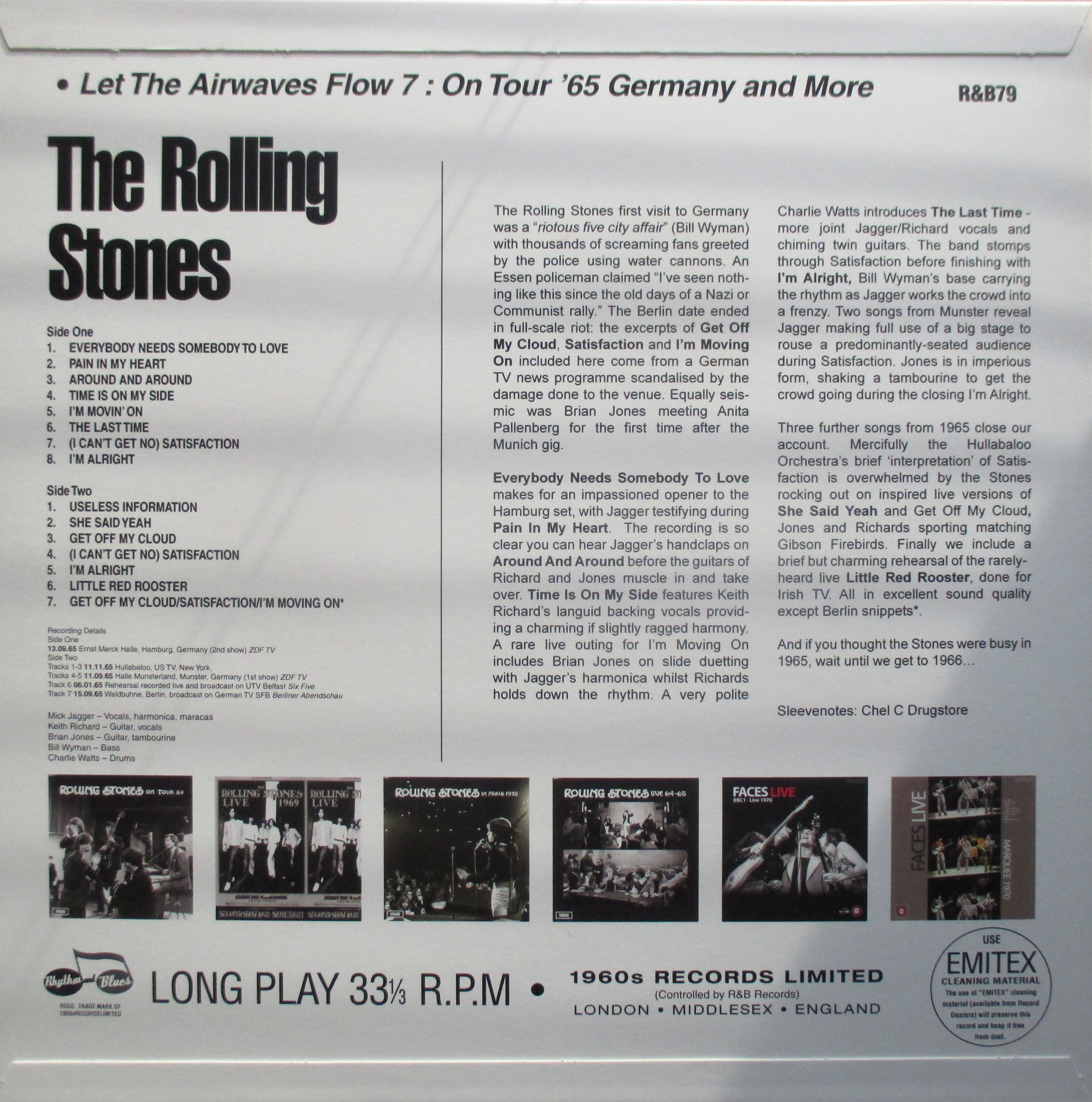
Three further songs from 1965 close our account. Mercifully the Hullabaloo Orchestra’s brief ‘interpretation’ of Satisfaction is overwhelmed by the Stones rocking out on inspired live versions of She Said Yeah and Get Off My Cloud, Jones and Richards sporting matching Gibson Firebirds. An added delight is a brief but charming rehearsal of the rarely-heard live Little Red Rooster, done for Irish TV. Sound quality on this release is excellent throughout, although the Berlin song fragments betray their origin as news footage.
And if you thought the Stones were busy in 1965, wait until we get to 1966…
Sleevenotes: Chel C Drugstore
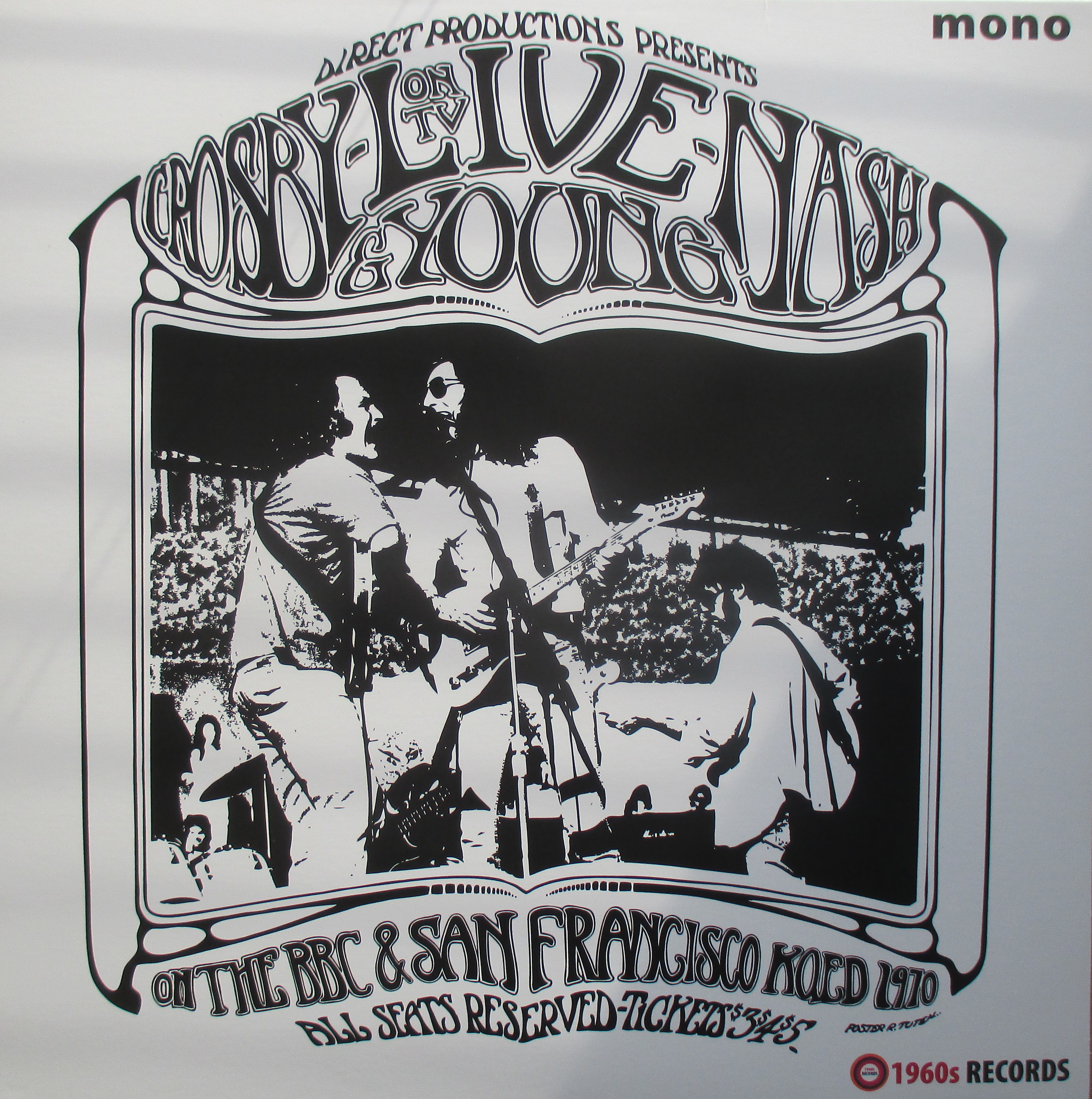
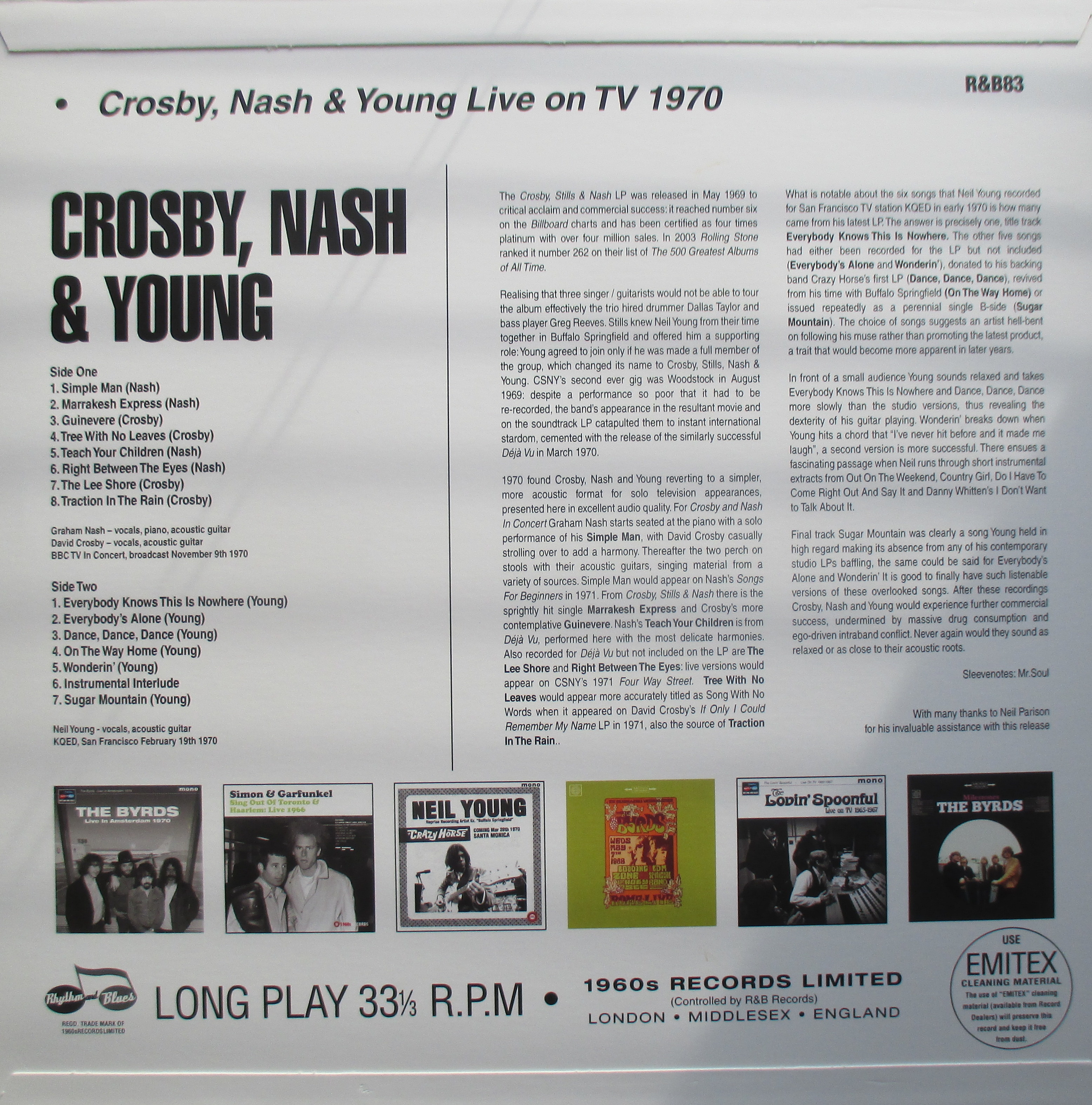
Crosby, Nash & Young Live On TV1970 a
Tracklisting
Side One
1. Simple Man (Nash)
2. Marrakesh Express (Nash)
3. Guinevere (Crosby)
4. Tree With No Leaves (Crosby)
5. Teach Your Children (Nash)
6. Right Between The Eyes (Nash)
7. The Lee Shore (Crosby)
8. Traction In The Rain (Crosby)
Side Two.
- Everybody Knows This Is Nowhere (Young)
- Everybody’s Alone (Young)
- Dance, Dance, Dance (Young)
- On The Way Home (Young)
- Wonderin’ (Young) /
- Instrumental Interlude
- Sugar Mountain (Young)
Recording Details
Side One Tracks 1-8 recorded for BBC TV In Concert, broadcast November 9th 1970
Side Two Tracks 1-7 recorded for KQED, San Francisco on February 19th 1970
Personnel
Graham Nash – vocals, piano, acoustic guitar (Side One Tracks 1 – 8)
David Crosby – vocals, acoustic guitar (Side One Tracks 1- 8)
Neil Young – vocals, acoustic guitar (Side Two Tracks 1 – 7 )
Sleevenotes
The Crosby, Stills & Nash LP was released in May 1969 to critical acclaim and commercial success: it reached number six on the Billboard charts and has been certified as four times platinum with over four million sales. In 2003 Rolling Stone ranked it number 262 on their list of The 500 Greatest Albums of All Time.
Realising that three singer / guitarists would not be able to tour the album effectively the trio hired drummer Dallas Taylor and bass player Greg Reeves. Stills knew Neil Young from their time together in Buffalo Springfield and offered him a supporting role: Young agreed to join only if he was made a full member of the group, which changed its name to Crosby, Stills, Nash & Young. CSNY’s second ever gig was Woodstock in August 1969: despite a performance so poor that it had to be re-recorded, the band’s appearance in the resultant movie and on the soundtrack LP catapulted them to instant international stardom, cemented with the release of the similarly successful Déjà Vu in March 1970.
1970 found Crosby, Nash and Young reverting to a simpler, more acoustic format for solo television appearances, presented here in excellent audio quality. For Crosby and Nash In Concert Graham Nash starts seated at the piano with a solo performance of his Simple Man, with David Crosby casually strolling over to add a harmony. Thereafter the two perch on stools with their acoustic guitars, singing material from a variety of sources. Simple Man would appear on Nash’s Songs For Beginners in 1971. From Crosby, Stills & Nash there is the sprightly hit single Marrakesh Express and Crosby’s more contemplative Guinevere. Nash’s Teach Your Children is from Déjà Vu, performed here with the most delicate harmonies. Also recorded for Déjà Vu but not included on the LPare The Lee Shore and Right Between The Eyes: live versions would appear on CSNY’s 1971 Four Way Street. Tree With No Leaves would appear more accurately titled as Song With No Words when it appeared on David Crosby’s If Only I Could Remember My Name LP in 1971, also the source of Traction In The Rain..
What is notable about the six songs that Neil Young recorded for San Francisco TV station KQED in early 1970 is how many came from his latest LP. The answer is precisely one, title track Everybody Knows This Is Nowhere. The other five songs had either been recorded for the LP but not included (Everybody’s Alone and Wonderin’),donated to his backing band Crazy Horse’s first LP(Dance, Dance, Dance), revived from his time with Buffalo Springfield (On The Way Home) or issued repeatedly as a perennial single B-side (Sugar Mountain).The choice of songs suggests an artist hell-bent on following his muse rather than promoting the latest product, a trait that would become more apparent in later years.
In front of a small audience Young sounds relaxed and takes Everybody Knows This Is Nowhere and Dance, Dance, Dance more slowly than the studio versions, thus revealing the dexterity of his guitar playing. Wonderin’ breaks down when Young hits a chord that “I’ve never hit before and it made me laugh”, a second version is more successful. There ensues a fascinating passage when Neil runs through short instrumental extracts from Out On The Weekend, Country Girl, Do I Have To Come Right Out And Say It and Danny Whitten’s I Don’t Want to Talk About It
Final track Sugar Mountain was clearly a song Young held in high regard making its absence from any of his contemporary studio LPs baffling, the same could be said for Everybody’s Alone and Wonderin’ It is good to finally have such listenable versions of these overlooked songs.
After these recordings Crosby, Nash and Young would experience further commercial success, undermined by massive drug consumption and ego-driven intraband conflict. Never again would they sound as relaxed or as close to their acoustic roots.
Sleevenotes: Mr.Soul
With many thanks to Neil Parison for his invaluable assistance with this release
Available now from http://www.1960s.london
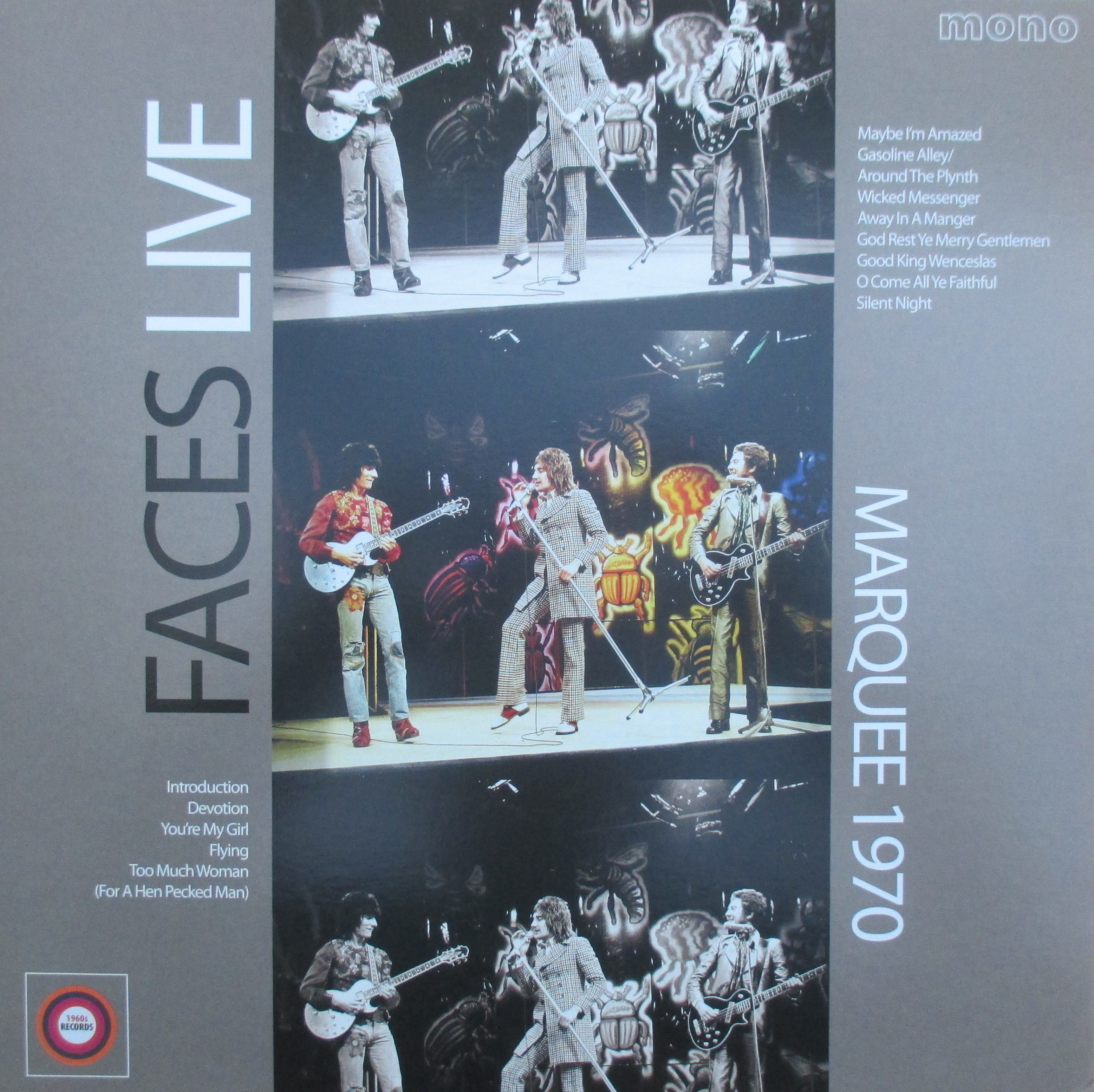
Side One
- Wicked Messenger (Dylan)
- Devotion (Lane)
- (You’re My Girl) I Don’t Want To Discuss It) ( Cooper, Beatty, Shelby)
- Flying (Stewart, Wood, Lane)
- Too Much Woman (For A Hen Pecked Man) (Turner) /
- Street Fighting Man (Jagger, Richards)
Side Two
1. Maybe I’m Amazed (McCartney)
2. Gasoline Alley (Stewart, Wood) /
3. Plynth (Stewart, Wood)
4. God Rest Ye Merry Gentlemen (Traditional)
5. Away In A Manger (Traditional)
6. Good King Wenceslas (Traditional)
7. Silent Night (Traditional)
8. O Come All Ye Faithful (Traditional)
Recording Details
Side One
Track 1 recorded for BBC Dave Lee Travis on March 10th 1970, broadcast March 15th
Tracks 2-6 recorded for Swing In (German WDR TV) live at the Marquee 7th December 1970
Side Two
Tracks 1-3 recorded for Swing In (German WDR TV) live at the Marquee 7th December 1970
Tracks 4 -8 recorded for BBC as The Top Gear Carol Concert on December 8th 1970 and broadcast on December 26th
Personnel
Side One Tracks 1 – 6, Side Two Tracks 1-3
Rod Stewart – lead and backing vocals
Ronnie Lane – bass, backing vocals, lead vocals
Ron Wood – lead guitar, slide guitar, backing vocals
Ian McLagan – Hammond organ, pianos, backing vocals
Kenney Jones – drums and percussion
Side Two
Tracks 4 – 8 David Bedford (piano and organ) and vocals from: Marc Bolan, June Child, Ivor Cutler, Sonja Kristina, (solo on track 7), Romey Young, Rod Stewart (solo on track 5), Robert Wyatt (duet on track 6), Mike Ratledge, Ron Wood , Ronnie Lane (duet on track 6), John Peel, Sheila Ravenscroft, Kenny Jones, Ian McLagan, Pete Buckland, Bridget St John.
Sleevenotes
Our second release from The Faces brings together a variety of tracks recorded in 1970 and broadcast on radio and TV. The version of Wicked Messenger is taken from the band’s very first radio session and it a focussed and compact version of the Dylan song.
The next selection of tracks are taken from the second half of a gig at the original Marquee Club (Wardour Street) filmed for German television. The ballad Devotion includes a lovely section where Rod Stewart and Ronnie Lane sing in unison. The tempo increases on a riff-driven (You’re My Girl) I Don’t Want To Discuss It which is from Stewart’s second solo album Gasoline Alley, released in June 1970. Despite audience calls for Tin Soldier(!) debut Faces single Flying is next, Ron Wood’s lead guitar and Ian McLagan’s organ combining well here with the harmonies of Lane and Wood. The cover of Ike & Tina Turner’s Too Much Woman (For A Hen Pecked Man) never made it onto a Faces studio LP despite it being a mainstay of their live set, frequently as part of a medley – tonight with a snatch of the Stones Street Fighting Man, another Stewart solo track. Ronnie Lane sings the introduction to Paul McCartney’s Maybe I’m Amazed before Stewart joins in and Ronnie Wood plays two elegant solos. The pregnant pause in the middle of the song fools the audience who start clapping before the band returns. Gasoline Alley features McLagan and Lane harmonising before Ronnie Wood uses Plynth to showcase his prowess on slide guitar. A cracking set, recorded when the band still drank pints of bitter rather than pints of Courvoisier .
Finally we include John Peel’s Christmas Carol concert from December 1970. This was a one-off, never attempted before or since. Peel and producer John Walters rounded up the usual suspects and recorded five traditional carols for broadcast on Boxing Day. Keyboard accompaniment was provided by classically-trained David Bedford, then a member of Kevin Ayers and The Whole World : characteristically Kevin Ayers was contracted to appear but never showed up. All the Faces plus road manager Pete Buckland were present and incorrect – Rod sings Away In A Manger beautifully, whilst Sonja Kristina (Curved Air) contributes a solo Silent Night. Ronnie Lane duets with Robert Wyatt (Soft Machine) on Good King Wenceslas and the entire ensemble attempt God Rest Ye Merry Gentlemen and O Come All Ye Faithfull. Alcohol may have been consumed.
A suitably celebratory note with which to end our review of the Faces broadcast activities in 1970. Coming soon – the Faces in 1971, where commercial success and artistic recognition coincide…
B. Lynde-Horse

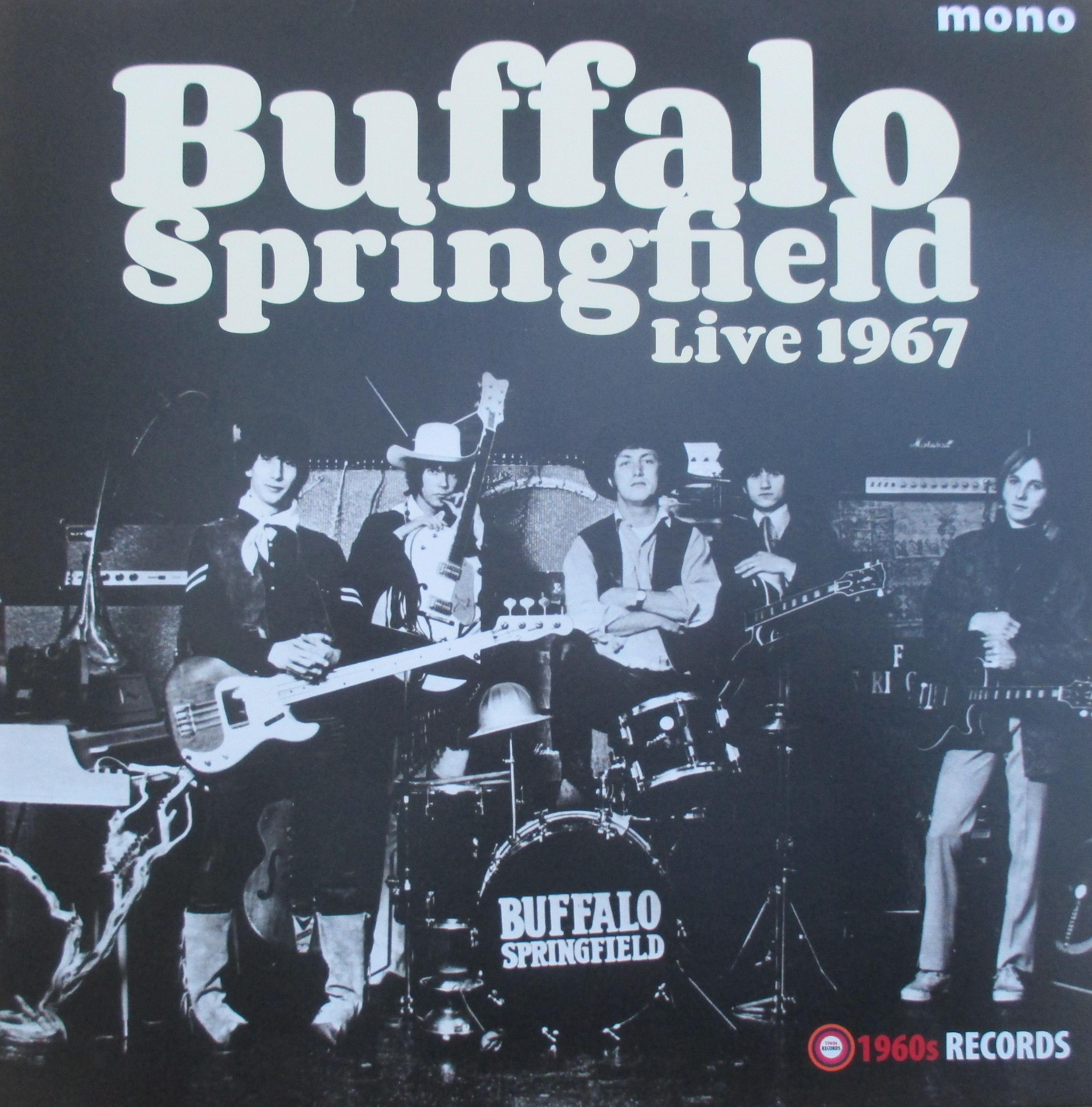
Side One
1.Pay the Price (Stills)
2.Nowadays Clancy Can’t Even Sing (Young)
3.For What It’s Worth (Stills)
4. Mr.Soul (Young)
5. Rock & Roll Woman (Stills)
6. For What It’s Worth (Stills)
7. Interview with Dick Clark
Side Two
- For What It’s Worth (Stills)
- Nowadays Clancy Can’t Even Sing (Young)
- Rock & Roll Woman /
- Bluebird (Stills)
- A Child´s Claim To Fame (Furay)
- Pretty Girl Why (Stills)
- For What It’s Worth (Stills) / Mr.Soul (Young)
Recording Details
Side One
Tracks 1- 4 recorded live at the Hollywood Bowl and broadcast by Rock Radio Powerhouse KHJ on April 29th
Track 5 recorded live for the Popendity TV programme at the Warwick Theatre Studios, Providence, Rhode Island, broadcast on ABC November 16
Track 6 recorded live for the Smothers Brothers TV programme on February 17th at CBS TV City, Hollywood, broadcast February 26th
Track 7 American Bandstand interview with Dick Clark, broadcast January 21st
Side Two
Tracks 1- 6 recorded live at the Monterey International Pop Festival on June18th
Track 7 recorded live for the Hollywood Palace TV programme on January 20th 1967, broadcast April 8th
Personnel
Stephen Stills – guitar, keyboards, vocals
Neil Young – guitar, vocals (Side One Tracks 1-7, Side Two Track 7)
Dewey Martin – drums, vocals
Richie Furay – guitar, vocals
Bruce Palmer – bass guitar (Side One and Side Two tracks 1-6)
David Crosby – guitar, vocals (Side Two Tracks 1-6)
Doug Hastings – guitar (Side Two Tracks 1-6)
Dick Davies – bass (Side Two track 7)
Sleevenotes
“While not really a folk-rock band the prodigiously talented Buffalo Springfield deserve special mention both for caring enough to preserve the very best qualities of the form and for conscientously consolidating them into inspired if idiosyncratic rock’n’roll. Like the Byrds, the Buffalo could either hang back on a song until all its juices boiled over or just come right out and say it. Although the group had a short but troubled career, their melodies not their maladies linger on’”
Paul Nelson, Rolling Stone
Named after a steamroller seen from their manager’s window, Buffalo Springfield was the sound of experienced folk-singers plugging in to go electric, in much the same way as the Byrds formed after seeing A Hard Days Night. Neil Young was from Toronto, Canada. He split up his second electric band The Squires to become a folk singer. On tour in Ontario Neil Young found himself on the same bill as The Company, a spin-off group from the Au Go Go Singers who included Stephen Stills (from Dallas) and Richie Furay (from Ohio). In 1966 Neil joined The Mynah Birds with bass player and fellow Canadian Bruce Palmer. Neil then decided to relocate to Los Angeles to try to find Stephen Stills, and was driving his distinctive hearse along Sunset Boulevard with Bruce one day in April 1966 when he was spotted by Stills and Furay. The band was completed by Nashville session drummer Dewey Martin, another Canadian from Ontario. You can hear Neil Young explain some of this to Dick Clark in an American Bandstand interview.
Buffalo Springfield was a mercurial group beset by managerial and personal disagreements throughout their career, which only lasted from April 1966 to May 1968. Although the band managed to produce three successful studio LPs both Stills and Furay have claimed the group were much better live. This compilation brings together the TV and radio broadcasts from 1967 to allow you to explore that claim.
The Springfield’s appearance at the Hollywood Bowl was part of a three hour concert organised by Rock Radio Powerhouse KHJ in celebration of their second year as a Top 40 station. The rest of the eclectic bill comprised The Fifth Dimension, Brenda Holloway, Johnny Rivers, The Seeds and The Supremes, reserved seats $0.93. The Springfield were on early with a short set as they had another gig at The Fillmore in San Francisco the same night. Pay The Price makes for a confident upbeat opener with some good unison vocals and spiky guitar solos. Nowadays Clancy Can’t Even Sing is slower and more reflective with more strong harmonies and intertwined guitar parts. Hit single For What It’s Worth was left off the first Springfield LP before being hurriedly added: once again the mix of vocal harmonies and multiple guitars is very effective. Forthcoming single Mr Soul makes its first public appearance with a committed lead vocal from Neil Young ably supported by Stills and those duelling guitars again. Stills’ Rock & Roll Woman was a highlight of second LP Buffalo Springfield Again. An uncredited David Crosby helped to write the song, allegedly about Grace Slick. More of those intoxicating harmonies are allied to a catchy tune, albeit one that only reached 44 on the Billboard charts when released as a single.
The Monterey International Pop Festival was a major event which helped establish both Jimi Hendrix and the Who in America. Rolling Stone publisher Jann Wenner said “Monterey was the nexus – it sprang from what the Beatles began, and from it sprang what followed.” What should have been a triumphant appearance by the Springfield was marred by Neil Young having temporarily left the band. His place was taken by Doug Hastings, from Seattle band The Daily Flash. Also sitting in for this gig was David Crosby. Under the circumstances the band did a good job. They were introduced by an effusive Peter Tork, who had known Stills’ since the latter’s teeth prevented him from becoming a Monkee. On Nowadays Clancy Can’t Even Sing Richie Furay takes the lead vocal, working well with Stills’ on the verse and Crosby adding a supportive harmony. Martin and Palmer can be heard as a fine rhythm section, leaving space for some jazzy guitar fills. Rock & Roll Woman gives Crosby some space, before evolving into Bluebird, a showcase for Stills’ lead guitar. In contrast Furay sings a brief version of his A Child’s Claim To Fame, where the bands country influences become more apparent. The final Monterey song Pretty Girl Why is only available as a song fragment, it is included here to complete the set,
Finally two further TV appearances. The version of For What It’s Worth recorded for The Smothers Brothers is notable visually for Stills’ magnificent Stetson as well as a very literal interpretation of the lines “there’s a man with gun in his hand” and “hooray for our side”. After a smarmy introduction from Hollywood Palace host Tony Martin Stills kicks off with What It’s Worth before handing over to Young and his impressively fringed jacket for Mr Soul. Why was Bruce Palmer sitting with his back to the camera? Because it wasn’t Bruce – in another personnel change he had been replaced by Dick Davies.
Brian Hogg, Bam Balam magazine: ”Buffalo Springfield is the farewell to L.A folk rock, the last before its mutation into something different.” Different, but not necessarily better
Sleevenotes: Stan Peed
Special thanks to Neil Parison

The 1991 release of Screamadelica was a welcome change after the musical sterility of much of the 1980s. This new compilation illustrates its gestation, illuminated by revealing quotes from Bobby Gillespie and Andrew Innes contained in Jon Savage’s excellent sleevenotes.
These 16 demos and alternative versions were written over 18 months and recorded in 4 different studios, frequently revealing a gentler side to the band. Come Together receives a folk-rock treatment. Two takes of the peerless Higher Than The Sun show a major Beach Boys influence, as do three versions of Inner Flight where you can hear Henry Olson constructing vocal harmonies in real time. Damaged is a raw electric version whilst Movin’ On Up lacks its eventuall Bo Diddley / Magic Bus rhythm. The first version of I’m Coming Down sounds like a VU third album electric ballad, whilst the second has a terrific backwards guitar solo. The initial Shine Like Stars is set to an uptempo rhythm track, later to be completely re-worked. Three takes of Don’t Fight It Feel It illustrate how the song progressed with the Beatles Hey Bulldog steal being more prominent here. The final track Screamadelica sounds like it belongs on a separate LP with its Isaac Hayes / Gamble & Huff vibe.
Demodelica provides a fascinating and (crucially) musically rewarding insight into the creation of Screamadelica, illustrating how the songs were built and some of the roads not taken. It reminds me of the Alice In Wonderland exhibition at the V&A where you can see out-takes and alternative versions of John Tenniel’s illustrations, providing a new perspective on a familiar masterpiece.


Saturday 18th September
Merchandise: Books (not signed)
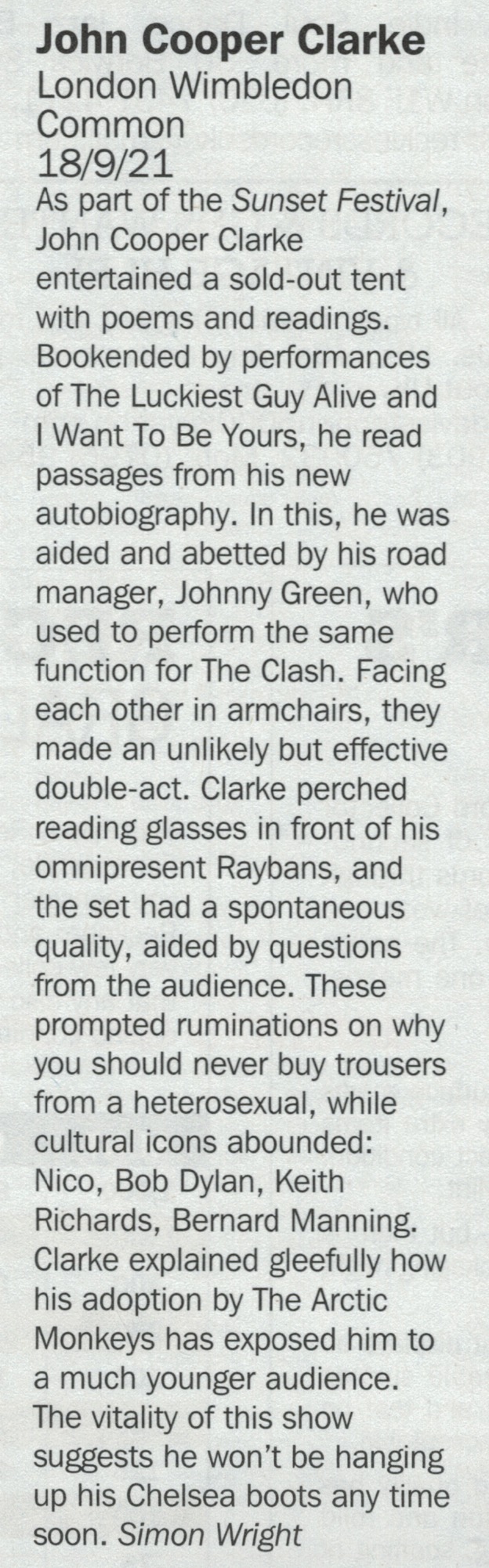
The Wombles had competition tonight as John Cooper Clarke entertained a sold-out tent with poems and readings. Bookended by perfomances of The Luckiest Guy Alive and I Want To Be Yours, Clarke read passages from his new autobiography. In this he was aided and abetted by his road manager Johnny Green, who used to perform the same function for The Clash. Facing each other in cream IKEA armchairs they made an unlikely but effective double act. Clarke is still stick thin with anarchic hair but he now perches reading glasses in front of his omnipresent Raybans. The set had a loose spontaneous quality, aided by questions from the audience. These prompted ruminations on living in Stevenage and why you should never buy trousers from a heterosexual. Cultural icons abounded with Nico, Bob Dylan, Keith Richards and Bernard Manning all making an appearance. Clarke explained gleefully how his adoption by The Arctic Monkeys has exposed him to a much younger audience. Live performance is Clarke’s raison d’etre, the vitality of tonight’s show suggests he will not be hanging up his shiny-black Chelsea boots any time soon.
This review was written for Record Collector magazine, where in the December 2021 edition it appeared like this: